Authentic Puka Shells Necklace: A Technical Guide to Grading and Care
Discover the technical differences in authentic puka shells necklace grading, stringing methods, and how to identify genuine cone snail beads.

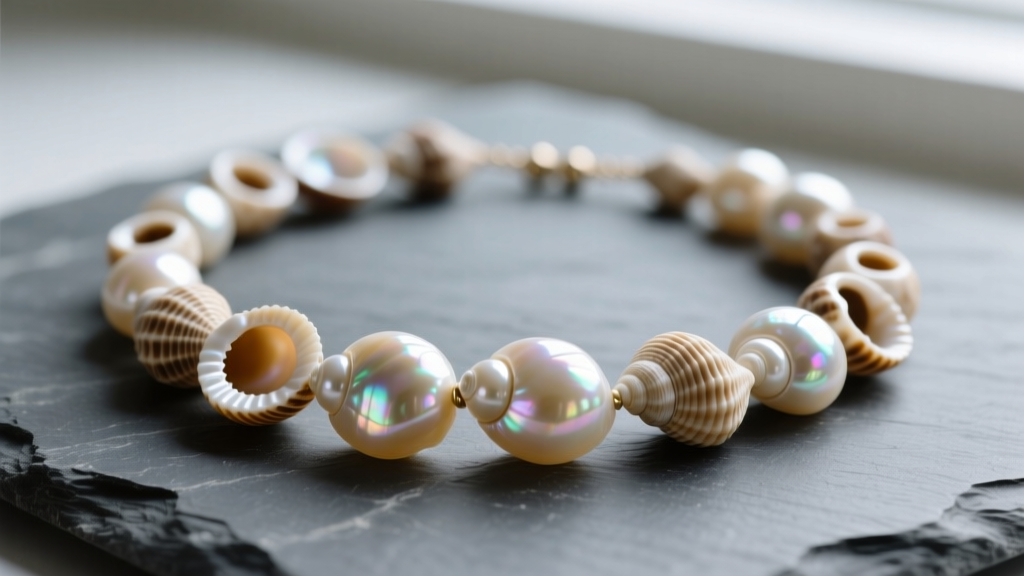
The Anatomy of True Puka: Biological Origin and Gemology
The term 'puka' translates directly to 'hole' in the Hawaiian language, referring to the naturally occurring aperture found at the apex of certain cone snail shells. When constructing an authentic puka shells necklace, master jewelers and traditional artisans rely exclusively on ocean-tumbled specimens of the Conus miliaris or Conus sponsalis species. Over years of being battered against coral reefs and basaltic shorelines, the toxic tip of the cone snail's spire is worn away, leaving a smooth, naturally hollowed dome.
From a gemological perspective, true puka shells are composed of aragonite, a crystalline form of calcium carbonate. According to the Gemological Institute of America (GIA), organic gems like aragonite possess a Mohs hardness of 3.5 to 4.0 and a specific gravity of approximately 2.7. This relative softness makes them highly susceptible to scratching and chemical etching, demanding specific stringing and maintenance protocols that differ vastly from silicate-based gemstones.
The mass market is currently saturated with 'heishi' imitations. These are typically crafted from the Dentalium (pipe organ shell) or even dyed plastics, sliced into flat discs, and mechanically center-drilled. Differentiating a genuine puka shells necklace from a heishi imitation requires examining the hole geometry. Natural puka holes are rarely perfectly centered; they follow the spiral growth axis of the original snail, resulting in an asymmetrical, slightly conical aperture that is wider on the concave underside than on the domed top.
Technical Grading System for Puka Beads
Unlike faceted diamonds graded by the 4Cs, puka shells are evaluated based on dome integrity, color uniformity, and the condition of the natural apex hole. The Conchologists of America notes that finding perfectly matched, high-dome specimens requires sorting through thousands of ocean-tumbled shells. Below is the industry-standard grading matrix used by specialized organic gem dealers.
| Grade | Dome Profile | Hole Geometry | Size Range | Market Valuation |
|---|---|---|---|---|
| Gem (A+) | High, symmetrical dome; no chips | Natural, clean edges, off-center | 10mm - 14mm | $80 - $150 / inch |
| Commercial (A) | Medium dome; minor edge wear | Natural, slight micro-fractures | 8mm - 10mm | $30 - $60 / inch |
| Heishi (B/C) | Flat, sliced profile | Mechanically drilled, centered | 4mm - 8mm | $5 - $15 / strand |
When sourcing a premium puka shells necklace, buyers should demand 'Gem' or 'A+' grade beads. These exhibit a pronounced three-dimensional dome that catches the light, whereas commercial and heishi grades lay flat against the skin, lacking the structural depth that defines authentic Hawaiian jewelry.
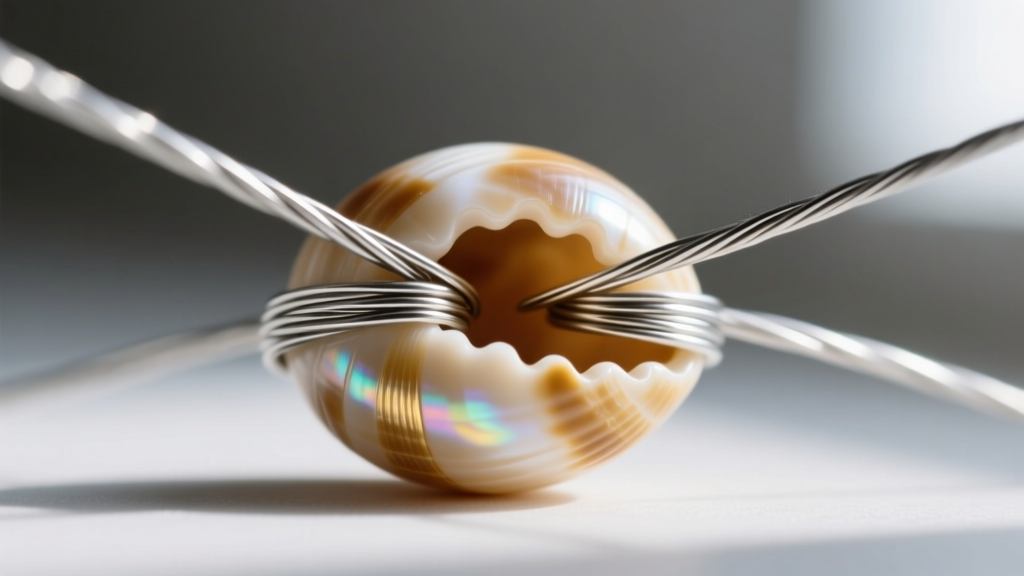
Stringing Architecture: Wire, Cord, and Knotting
Because the natural hole of a puka shell follows the shell's internal spiral, the interior edges of the aperture are often microscopically sharp and abrasive. Traditional silk thread, while standard for pearls, will degrade rapidly when pulled taut against the calcium carbonate edges of a puka shell. Furthermore, the natural salts retained within the shell matrix can accelerate the rotting of organic fibers.
Tensile Strength and Material Selection
For modern, durable puka shells necklace construction, jewelers utilize a 49-strand micro-wire, typically measuring 0.018 inches in diameter. This specific strand count provides the necessary tensile strength (often exceeding 20 lbs) while maintaining the fluid drape required for a necklace that rests properly on the clavicle. Brands like Beadalon or Soft Flex are industry standards for this application.
If a knotted design is preferred for a more traditional aesthetic, synthetic high-denier cords such as Serafil polyester or PowerPro braided fishing line must be used. When knotting between each bead to prevent total loss in the event of a break, the jeweler must employ a surgeon's knot rather than a standard square knot, as the slick nature of polyester requires the extra friction to hold against the irregular, off-center holes of the puka beads.
Clasp Integration and Abrasion Prevention
The transition from the flexible stringing material to a rigid metal clasp is a critical failure point. The abrasive nature of the shell edges near the clasp will eventually saw through wire or cord. To mitigate this, a 2mm sterling silver or 14k gold-filled 'French wire' (also known as gimp) must be threaded over the stringing material at the terminal ends. This coiled metal sheath takes the friction of the shell edges and the clasp jump ring, extending the lifespan of the necklace by decades.
Calcification and Long-Term Maintenance
Organic gems require strict environmental controls to maintain their structural integrity. The aragonite structure of a puka shells necklace is highly reactive to acidic environments. The natural pH of human sweat, combined with everyday cosmetics, perfumes, and aerosol hairsprays, can cause a slow chemical reaction that dissolves the outer layer of the shell, resulting in a dull, chalky appearance known as calcification degradation.
'Never subject organic shell jewelry to ultrasonic cleaners. The high-frequency cavitation bubbles will exploit the micro-fractures inherent in ocean-tumbled shells, causing catastrophic shattering of the aragonite crystalline structure.'
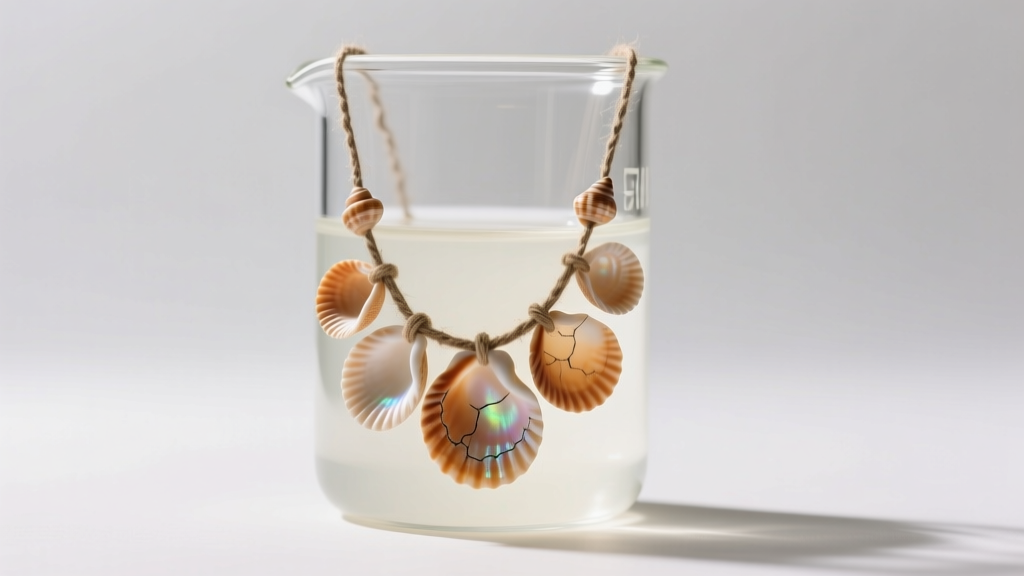
Proper Cleaning Protocols
To safely clean a vintage or heavily worn puka shells necklace, avoid all commercial jewelry dips, which are often mildly acidic or contain ammonia. Instead, prepare a neutral cleaning bath using distilled water and a single drop of pH-neutral dish soap. Submerge the necklace for no more than three minutes to loosen sebum and environmental debris.
Use a cosmetic brush with ultra-soft natural bristles to gently agitate the surface of the domes. Do not scrub the natural holes, as this can dislodge fragile interior spirals. Rinse thoroughly under a gentle stream of room-temperature distilled water to ensure no tap-water minerals (like chlorine or fluoride) are left to deposit on the porous shell surface. Pat dry with a microfiber cloth and allow the necklace to air dry completely in a shaded, well-ventilated area before storing it in a breathable cotton pouch. Avoid airtight plastic bags, which can trap moisture and promote mold growth on any residual organic matter trapped within the shell's apex.
Conclusion: Valuing Authenticity in Organic Jewelry
Investing in a genuine puka shells necklace is an exercise in appreciating natural geological and biological forces. By understanding the gemological properties of aragonite, recognizing the asymmetrical hallmarks of the Conus apex, and employing advanced 49-strand stringing architectures, collectors and jewelers can preserve these oceanic artifacts for generations. True puka is not merely a relic of 1970s surf culture; it is a highly specialized organic gemstone that demands respect, technical precision, and meticulous care.


