Step-by-Step Guide to Styling a Green Flower Necklace
Learn how to style, layer, and care for a green flower necklace. Discover chain pairings, neckline guides, and material-specific cleaning tips.

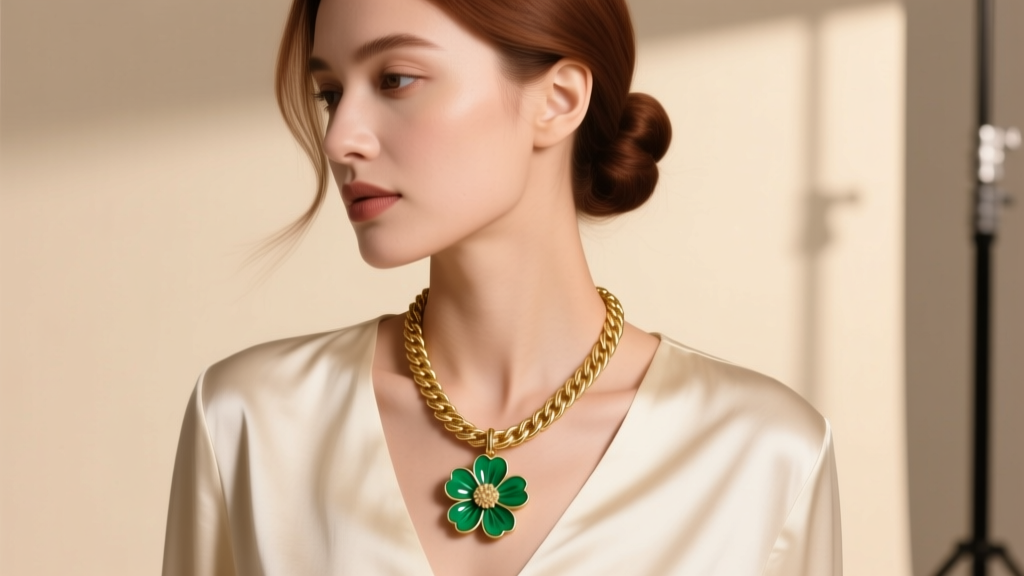
The Enduring Appeal of Botanical Jewelry
The botanical motif has dominated jewelry design since the Victorian era, but few pieces capture the imagination quite like a green flower necklace. Whether crafted from vivid Plique-à-jour enamel, deeply carved nephrite jade, or polished malachite, the green floral pendant bridges the gap between vintage romance and modern earthy aesthetics. However, styling a statement floral piece requires more than simply throwing it over a t-shirt. The interplay between the pendant's visual weight, the chain's gauge, and the wearer's neckline dictates whether the piece looks like a cohesive style choice or an afterthought.
In this comprehensive guide, we will break down the exact steps to curate, layer, and maintain your green floral jewelry, ensuring it remains a cornerstone of your wardrobe for decades.
Step 1: Identify Your Material and Visual Weight
Before selecting a chain or a neckline, you must understand the material composition of your green flower necklace. The gemstone or medium dictates not only how you clean it, but how it drapes and catches the light.
- Carved Jade (Jadeite or Nephrite): Typically features a matte to semi-gloss luster. Jade is tough (Mohs 6.5-7) but heavy. A 25mm carved jade lotus or peony requires a sturdy chain, ideally an 18-gauge (1.0mm) or 16-gauge (1.3mm) box or rope chain to support the weight without breaking.
- Malachite Inlay: Known for its striking concentric green banding. Malachite is exceptionally soft (Mohs 3.5-4) and heavy. Floral pendants made of malachite are often set in sterling silver or gold bezels to protect the fragile edges. These pieces command a premium, with vintage 1970s malachite daisy pendants often retailing between $400 and $1,200.
- Enamel over Gold or Silver: Offers a glossy, opaque, or translucent finish. Enamel floral necklaces (like the iconic mid-century Trifari or Dior daisy chains) are lightweight but highly susceptible to chipping if knocked against hard surfaces. They pair best with delicate 20-gauge (0.8mm) cable or herringbone chains.
- Chrysoprase: A rare, apple-green chalcedony that is often cabochon-cut and set into the center of a gold floral frame. It provides a vibrant, translucent pop of color that mimics spring foliage.
Step 2: Match Chain Length and Pendant Scale to Your Neckline
The geometry of your top or dress must complement the drop length of your necklace. A green flower necklace acts as a focal point; if it lands awkwardly on a seam or collar, it disrupts the visual flow of your outfit.
| Neckline Type | Ideal Chain Length | Pendant Scale & Style Recommendation |
|---|---|---|
| V-Neck | 18 to 22 inches | Medium to large pendants (15mm-25mm). The V-shape naturally frames the floral drop, drawing the eye downward. Use a Y-chain or a single pendant on a snake chain. |
| Scoop Neck | 16 to 18 inches | Small to medium pendants (10mm-15mm). The pendant should rest just above the fabric line to avoid looking tangled in the hem. |
| Boatneck / Bateau | 20 to 24 inches | Long, dramatic drops or layered botanical pieces. The wide horizontal neckline requires vertical length to balance the proportions. |
| Collared Button-Down | 14 to 16 inches | Choker-style or short princess length. Worn unbuttoned at the top, a small green enamel flower on a delicate 16-inch chain adds a subtle, refined touch. |
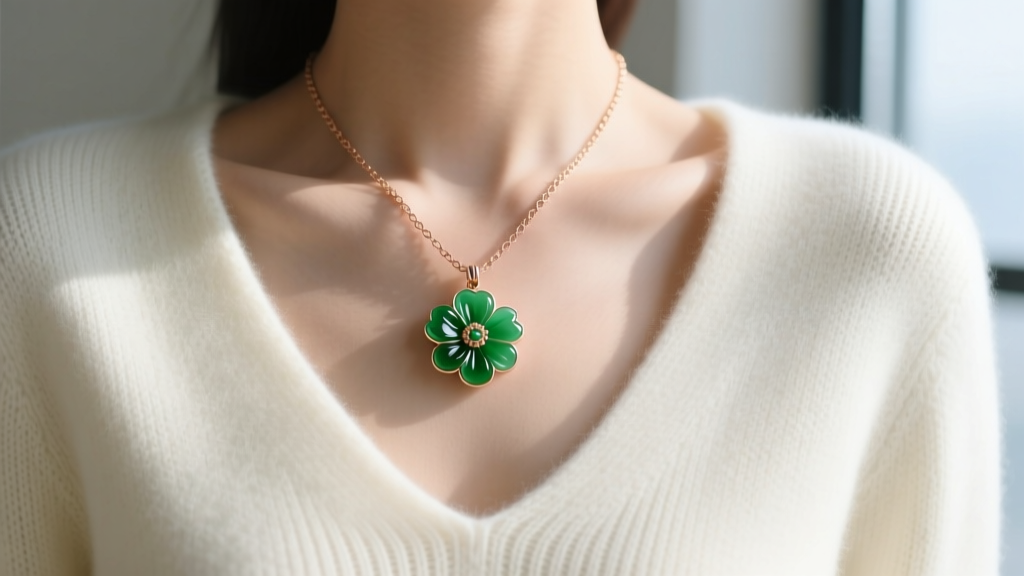
Step 3: The Art of Layering Botanical Pendants
Layering a green flower necklace requires a strategic approach to prevent the floral motif from getting lost among competing charms. The golden rule of necklace stacking is the Rule of Thirds, which relies on varying lengths, textures, and visual weights.
The 3-Piece Layering Formula
- The Base Layer (14-15 inches): Start with a lightweight, texture-rich chain without a pendant. A 1.2mm herringbone or a 1.5mm Figaro chain in yellow or rose gold provides a subtle metallic foundation that catches the light without competing with the flower.
- The Focal Layer (16-18 inches): This is where your green flower necklace lives. Ensure the chain is distinctly different from the base layer. If your base is a flat herringbone, use a rounded 2mm cable or rope chain for the floral pendant. The pendant should ideally be between 12mm and 20mm to maintain elegance without overwhelming the chest.
- The Anchor Layer (20-22 inches): Finish with a simple, heavy geometric shape to ground the organic floral design. A plain gold bar, a simple signet coin, or a minimalist tube bead on a 1.5mm box chain works perfectly. Avoid adding other nature-inspired charms (like leaves or butterflies) to this layer, as it will make the stack look cluttered and costume-like.
Pro-Tip on Clasps: When layering, swap out standard spring-ring clasps for lobster claws on your heavier chains. Spring rings are notorious for catching on the links of adjacent chains, leading to frustrating tangles and potential metal fatigue over time.
Step 4: Cleaning and Preserving Green Botanical Jewelry
Proper maintenance is critical, especially because the green materials commonly used in floral jewelry have vastly different chemical sensitivities. Using the wrong cleaning method can permanently ruin a vintage or high-end piece.
Material-Specific Care Protocols
For Malachite and Turquoise Florals:
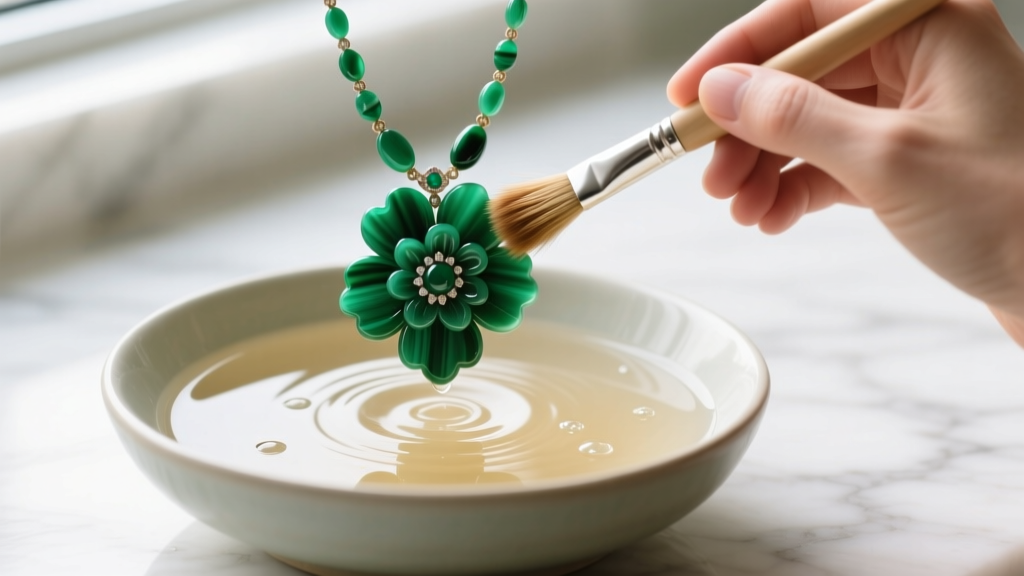
Never use ultrasonic cleaners, steamers, or commercial jewelry dips. Malachite is highly porous and sensitive to acids, ammonia, and even prolonged exposure to water. According to the Gemological Institute of America (GIA), malachite should only be wiped gently with a dry, untreated microfiber cloth. If it loses its polish over time, it must be professionally repolished by a lapidary.
For Jade and Chrysoprase Florals:
These silicate minerals are much more durable. You can clean them using a solution of lukewarm water and a few drops of pH-neutral dish soap. Use a soft-bristled baby toothbrush to gently agitate dirt from behind the pendant and within the chain links. Rinse thoroughly and pat dry. Avoid harsh chemicals, as they can degrade the wax or polymer coatings often applied to enhance jade's luster.
For Enamel Florals:
Enamel is essentially fused glass. While it is safe from chemical damage, it is highly vulnerable to thermal shock and physical impact. Clean enamel necklaces with a damp cloth and mild soap. Never soak an enameled piece, as water can seep beneath the metal settings and cause the base metal to rust or expand, which will crack the enamel. For deep cleaning and structural checks, consult a professional jeweler, as recommended by Jewelers of America.
Final Thoughts on Curating Your Floral Collection
A green flower necklace is more than a fleeting trend; it is a wearable piece of art that connects the wearer to the natural world. By respecting the physical properties of the materials, carefully matching chain gauges to pendant weights, and thoughtfully layering your pieces, you elevate a simple accessory into a masterclass of personal style. Whether you are wearing a carved jade peony to a formal dinner or a bright enamel daisy for a weekend brunch, the right styling techniques ensure your botanical jewelry always blooms.


