Authenticating a Vintage Murano Glass Necklace: Buyer Guide
Learn how to authenticate, price, and buy a vintage Murano glass necklace. Discover key glassmaking techniques, eras, and red flags in our expert guide.

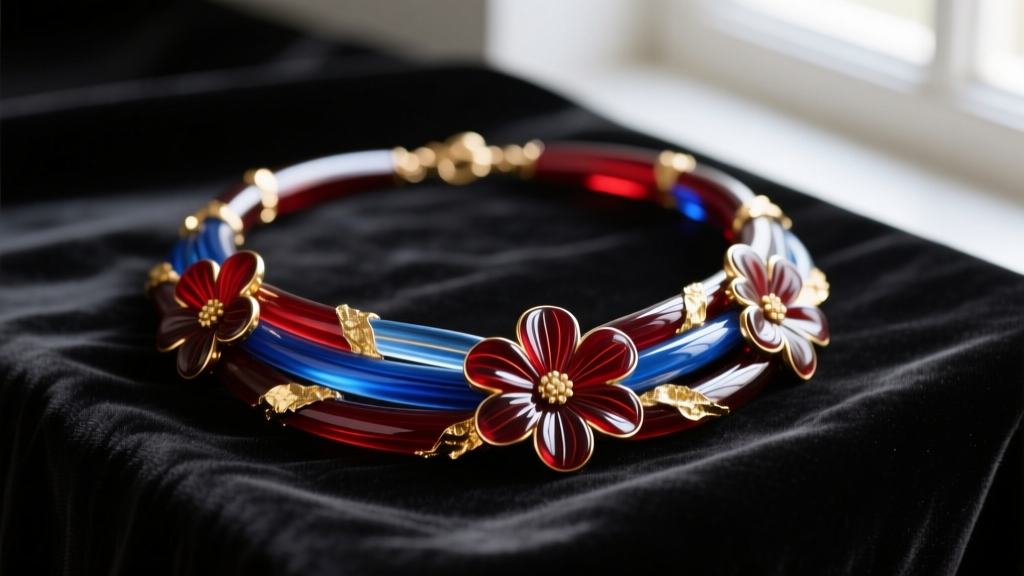
The Allure of Venetian Glass: Why Provenance Matters
The pursuit of a genuine vintage Murano glass necklace is an exercise in wearable art history. Originating from the Venetian island of Murano, these pieces are not mere costume jewelry; they are masterclasses in silica manipulation, metallic reduction, and thermal shock management. For collectors and style enthusiasts in 2026, the market is saturated with mass-produced imitations from overseas that mimic the vibrant aesthetics of mid-century Italian glass. Understanding the precise chemical and physical markers of authentic Murano glass is essential for building a collection that holds both historical and financial value.
True Murano glass relies on high-purity silica sourced historically from the Ticino River, combined with soda ash and specific metallic oxides for coloration. According to the Murano Glass Museum, the island's artisans have guarded these proprietary color formulas and furnace techniques for over seven centuries. When you purchase a vintage piece, you are acquiring a artifact of this unbroken lineage.
Decoding Mid-Century Murano: Key Eras and Techniques
The most highly sought-after vintage Murano glass necklaces date from the 1950s through the 1970s. During this post-war economic boom, Murano's glasshouses (or fornaci) experimented with radical new techniques that translated beautifully into jewelry. Recognizing these specific methods is your first line of defense against fakes.
Millefiori (Thousand Flowers)
Millefiori involves bundling multicolored glass rods (canes), fusing them together in a furnace, and stretching the molten bundle to reduce its diameter. The resulting cane is sliced into cross-sections, revealing intricate floral or geometric patterns. In authentic vintage necklaces, these slices are often encased in clear glass or fused into large, polished beads. Fakes often use printed plastic or surface-applied decals that lack the three-dimensional depth and microscopic striations of genuine fused glass canes.
Sommerso (Submerged Glass)
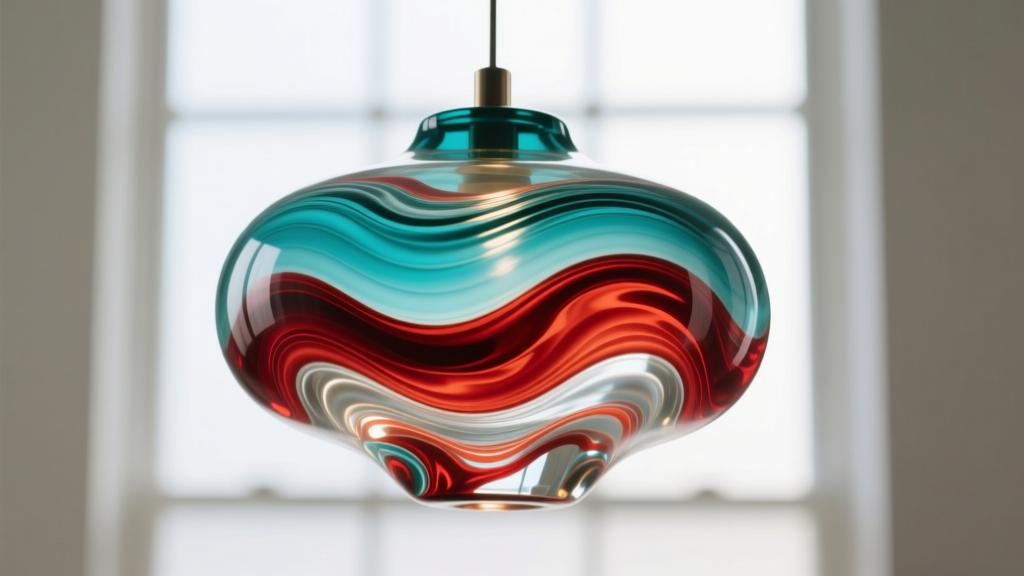
Pioneered in the late 1930s but popularized in the 1950s by the Seguso family, Sommerso involves dipping a gather of colored glass into a pot of contrasting molten glass, then encasing it in a thick layer of clear crystal. In pendants, this creates a striking optical illusion where inner layers of ruby red or aquamarine appear to float within a heavy, flawless ice-like block. The transition between the colored core and the clear casing must be razor-sharp; any bleeding or muddy gradients indicate a modern, mass-produced imitation.
Avventurina (Goldstone Glass)
Avventurina is a notoriously difficult technique requiring the precise reduction of copper in the glass melt. As the glass cools slowly, microscopic copper crystals precipitate out, creating a shimmering, metallic gold-fleck effect suspended within brown, green, or clear glass. Genuine vintage Avventurina beads exhibit a deep, internal glitter that shifts with the light. Modern imitations often use cheap metallic glitter mixed into resin or low-grade glass, which looks flat and overly uniform under a jeweler's loupe.
Bullicante (Controlled Bubbles)
While bubbles are generally considered flaws in glassmaking, the Bullicante technique intentionally traps a precise grid or layer of air bubbles within the glass. Artisans achieve this by rolling a hot glass gather over a bed of metal spikes, then encasing it in more glass. In vintage pendants, these bubbles are uniform and strategically placed to catch the light, contrasting sharply with the chaotic, accidental bubbles found in cheap, poorly annealed factory glass.
The Authentication Checklist: Spotting Fakes vs. Genuine Art
Authenticating a vintage Murano glass necklace requires a multi-sensory approach. You must evaluate the weight, temperature, and optical properties of the glass, alongside the hardware used to string it. The Corning Museum of Glass notes that Venetian glass has a distinct specific gravity and refractive index that differs markedly from modern lead-free crystal or plastic resins.
| Authentication Marker | Genuine Vintage Murano | Modern Imitation / Fake |
|---|---|---|
| Weight & Temperature | Heavy for its size; feels distinctly cool to the touch and warms slowly against the skin. | Lightweight (if plastic/resin); warms to body temperature almost instantly. |
| Internal Striations | Visible tooling marks, slight asymmetry, and organic flow lines under 10x magnification. | Perfectly symmetrical, molded seams, or completely sterile interiors. |
| Pontil / Drill Marks | Drill holes may show slight chipping or tooling scars; large pendants may have a polished pontil scar. | Perfectly clean, laser-drilled holes; no pontil marks or mold injection points. |
| Labels & Etching | Often unmarked (sold wholesale to jewelers), or features acid-etched 'Vetro Murano' or maker signatures. | Features cheap, modern foil stickers reading 'Made in Murano' or 'Murano Style'. |
Crucial Note on Labels: Many buyers mistakenly believe that a lack of a 'Vetro Murano' sticker indicates a fake. In reality, during the mid-century boom, master glasshouses like Venini, Barovier & Toso, and Salviati frequently sold unfinished beads and pendants wholesale to international jewelers, who then strung them and applied their own brand clasps. An unmarked piece with exceptional craftsmanship and period-correct hardware is often more authentic than a piece bearing a modern, easily replicated foil sticker.
Evaluating Condition: Flaws, Cracks, and Hardware
Condition drastically dictates the value of vintage glass jewelry. Glass is an amorphous solid, meaning it is highly susceptible to surface degradation and mechanical stress over decades of wear.
Glass Integrity and 'Crizzling'
Inspect the glass under a bright LED light using a 10x triplet loupe. Look for crizzling—a network of fine, silvery cracks on the surface caused by an unstable glass recipe (too much alkali). While more common in 18th-century glass, poorly formulated mid-century art glass can occasionally suffer from this. Avoid pieces with deep surface scratches, as glass cannot be polished without altering the artisan's original faceted or sculpted geometry. For bead necklaces, examine the drill holes; micro-chipping around the hole edges is common in vintage wound beads and is generally acceptable, provided it hasn't compromised the bead's structural integrity.
Findings and Clasps
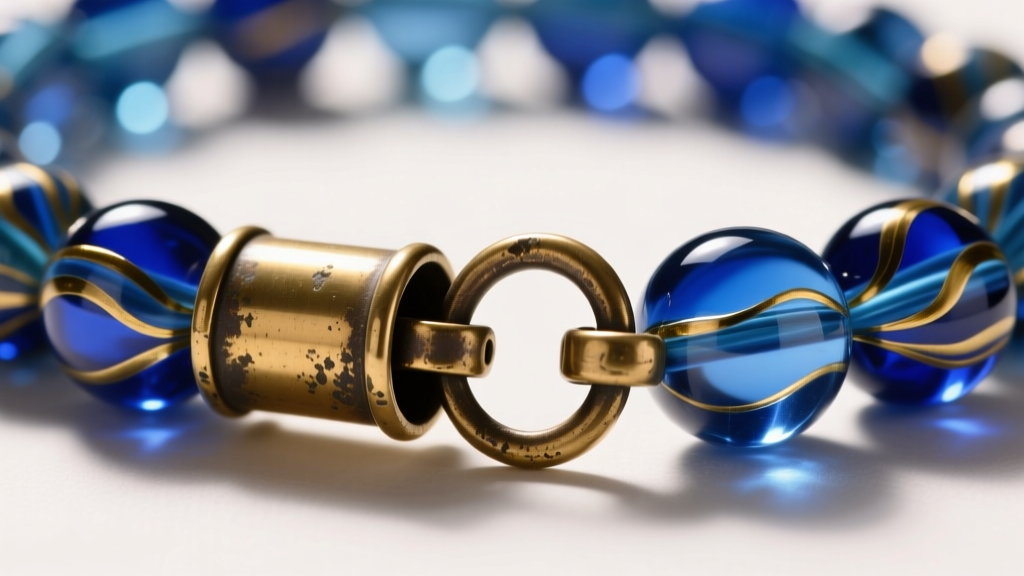
The hardware is a vital chronological anchor. A genuine 1950s Murano bead necklace will typically feature a brass barrel clasp or a simple brass hook-and-eye closure, often exhibiting a rich, dark patina. By the 1960s and 70s, gold-filled box clasps with safety figures became the standard for higher-end pieces. If a supposedly 'vintage' Murano necklace is strung on modern tiger-tail wire with a cheap, soldered lobster clasp and shiny, machine-stamped jump rings, it has either been heavily restrung or is an outright modern fabrication.
Market Valuation: What You Should Pay in 2026
Pricing a vintage Murano glass necklace depends heavily on the technique, the attribution to a specific fornace (glasshouse), and the complexity of the design. Here is a current market framework for buyers:
- Tier 1: Unattributed Millefiori & Wound Beads ($75 – $250)
Mass-produced but authentic vintage bead necklaces. Valued for their vibrant aesthetics and wearability. Prices scale with the rarity of the cane patterns (e.g., intricate star-shaped canes command premiums over standard floral dots). - Tier 2: Sommerso & Bullicante Pendants ($300 – $850)
Larger, sculptural pendants featuring complex layering. Value increases if the piece exhibits extreme clarity in the crystal casing and bold, contrasting color combinations like cobalt and uranium yellow. - Tier 3: Attributed Masterworks ($1,200 – $4,500+)
Necklaces and pendants definitively attributed to masters like Archimede Seguso, Carlo Scarpa (for Venini), or Ercole Barovier. These pieces are often documented in exhibition catalogs and feature experimental techniques like Filigrana (embedded glass threads) or rare Avventurina blends.
Where to Source Genuine Pieces Safely
Sourcing authentic Murano glass requires navigating past modern tourist traps and drop-shippers. Reputable platforms like 1stdibs and specialized vintage jewelry dealers on Etsy offer buyer protections and detailed provenance documentation. When buying from auction houses, always request a condition report and high-resolution macro photos of the drill holes and internal glass structures.
Expert Care Tip: Never use ultrasonic cleaners or harsh chemical dips on vintage Murano glass. The high-frequency vibrations can shatter internal stress points in Sommerso pieces, and chemicals can strip the delicate metallic finishes on Avventurina beads. Clean your necklaces only with a soft, lint-free microfiber cloth and warm, soapy water, drying them immediately.
Ultimately, collecting vintage Murano glass necklaces is about appreciating the intersection of chemistry, physics, and high fashion. By training your eye to recognize the subtle imperfections, masterful layering, and period-correct hardware of genuine Venetian glass, you can build a jewelry collection that is as historically significant as it is visually stunning.


