Queen of Necklace Repair: Fixing Tangles and Broken Clasps
Is your multi-strand queen of necklace tangled or breaking? Learn expert troubleshooting for heavy clasps, wire fraying, and anti-tangle storage.

The "Queen of Necklace" Dilemma: Why Statement Collars Fail
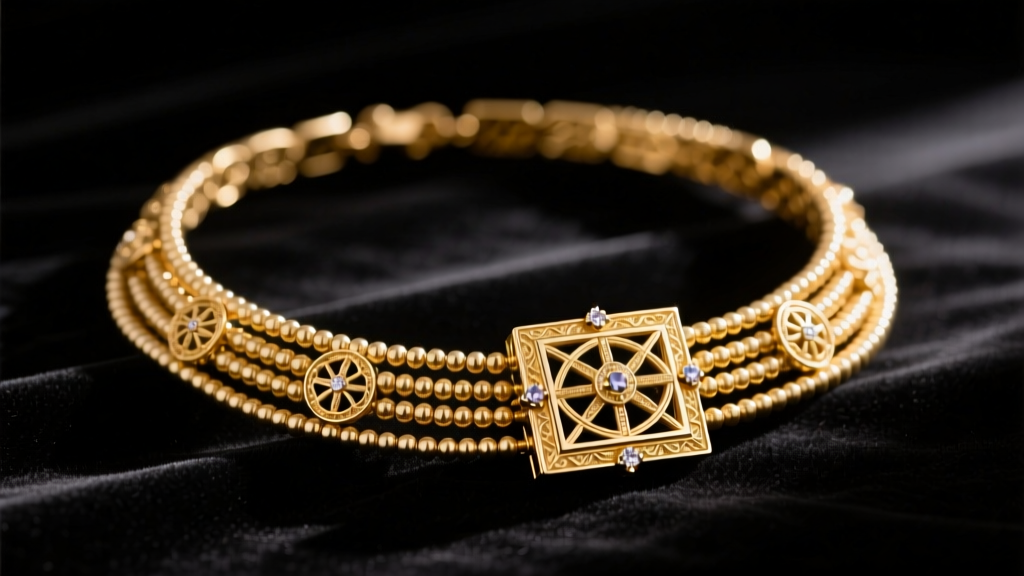
In the world of fine jewelry, the queen of necklace styles—multi-strand collars, heavy gemstone bibs, and ornate cascading collarettes—represent the pinnacle of statement dressing. These pieces are designed to command attention, sitting flush against the décolletage and framing the face with dramatic flair. However, their architectural complexity and substantial weight (often ranging from 80 to 150 grams) make them highly susceptible to mechanical failure. If you own a heavy multi-strand piece, you have likely experienced the frustration of snapped wires, tangled strands, or bent clasps.
Troubleshooting these failures requires moving beyond basic jewelry care and understanding the physics of tension, friction, and metallurgy. According to the Gemological Institute of America (GIA), the most common point of failure in heavy necklaces is not the stringing material itself, but the findings—the clasps, jump rings, and crimps that connect the piece. This guide provides a masterclass in diagnosing and repairing the most common structural failures of heavy statement collars.
Troubleshooting Clasp Failures on Heavy Multi-Strand Pieces
The most frequent complaint regarding the queen of necklace designs is clasp failure. A standard 12mm lobster claw clasp, while perfectly adequate for a 15-gram pendant chain, is fundamentally unsuited for a 100-gram multi-strand collar. The internal spring wire in a typical lobster clasp is approximately 0.4mm thick. Under the dynamic kinetic load of walking, bending, and shifting, the spring fatigues, or the lever arm bends outward, causing the clasp to pop open unexpectedly.
Upgrading from Lobster to Box Clasps with Safety Latches
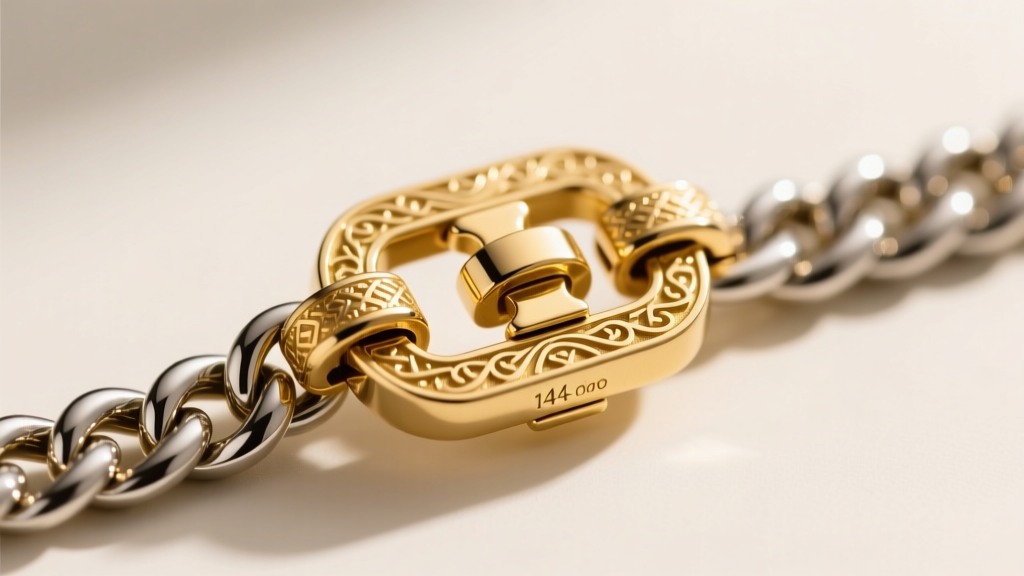
To permanently solve clasp failure, you must upgrade to a tongue-and-groove box clasp (also known as a push clasp). For heavy collars, an 18mm to 22mm box clasp forged from solid 14k gold or sterling silver provides a mechanical lock that relies on friction and tension rather than a fragile spring. Furthermore, a high-quality box clasp should feature dual figure-8 safety latches on the sides. These secondary wires act as a fail-safe; even if the primary tongue mechanism is accidentally depressed, the safety latches will catch on the opposing ring, preventing the necklace from falling to the floor.
Crucially, the jump rings connecting the clasp to the necklace strands must be soldered closed. An open 20-gauge jump ring will pull apart under 50 grams of lateral tension. Always use 18-gauge (1.0mm) or 16-gauge (1.3mm) soldered jump rings for heavy findings, a standard heavily recommended by professional suppliers like Rio Grande.
Solving the Multi-Strand Tangle Nightmare
The "spaghetti effect"—where multiple strands of a collar necklace twist, knot, and choke the wearer—is caused by varying strand lengths and the natural rotation of cylindrical beads. When strands are cut to the exact same length, they compete for the same space on the neck, leading to constant friction and knotting.
Strand Graduation and Separator Bars
The professional solution involves two structural changes. First, ensure the strands are properly graduated. The innermost strand should sit at the collarbone (approx. 14 inches), with each subsequent outer strand increasing by 0.75 to 1 inch. Second, integrate multi-hole separator bars. These are small, rigid metal bars (usually 15mm x 3mm) with 3, 4, or 5 holes, spaced every 2 to 3 inches along the back of the neck. They force the strands to remain parallel and prevent them from crossing over one another. Halstead Bead offers excellent 14k gold-filled separator bars that resist tarnish while providing the necessary rigidity to keep heavy stone strands aligned.
| Symptom | Root Cause | Professional Fix |
|---|---|---|
| Strands twist into a thick rope | Strands are identical in length; lack of spacing | Re-string with 0.75" graduation; add 3-hole separator bars every 2 inches |
| Knots form near the clasp | Excess slack in the final 2 inches of wire | Use a multi-strand end bar (fan clasp) to pull strands taut before the box clasp |
| Beads grind against each other | Missing knotting or silicone spacers | Insert 1mm clear silicone spacer beads between heavy gemstones |
Wire Fatigue and Bead Fraying: Prevention and Repair
When a queen of necklace suddenly snaps, the culprit is almost always the internal stringing wire. Many commercial multi-strand necklaces are strung on cheap 7-strand nylon-coated stainless steel wire with a diameter of .015". While this wire has a tensile strength of roughly 15 pounds, it lacks the flexibility required for heavy, rigid gemstones. Over time, the sharp edges of bead holes (especially natural stones like turquoise or lapis lazuli) saw through the thin nylon coating and shear the steel core.
The 49-Strand Upgrade and Proper Crimping
For heavy statement pieces, you must upgrade to a 49-strand micro-braided stainless steel wire with a diameter of .024" (such as Soft Flex or Zebra wire). The 49-strand construction provides a tensile strength of up to 40 pounds and a drape that mimics silk thread, allowing the heavy collar to conform to the neck without creating rigid, stress-fractured kinks.
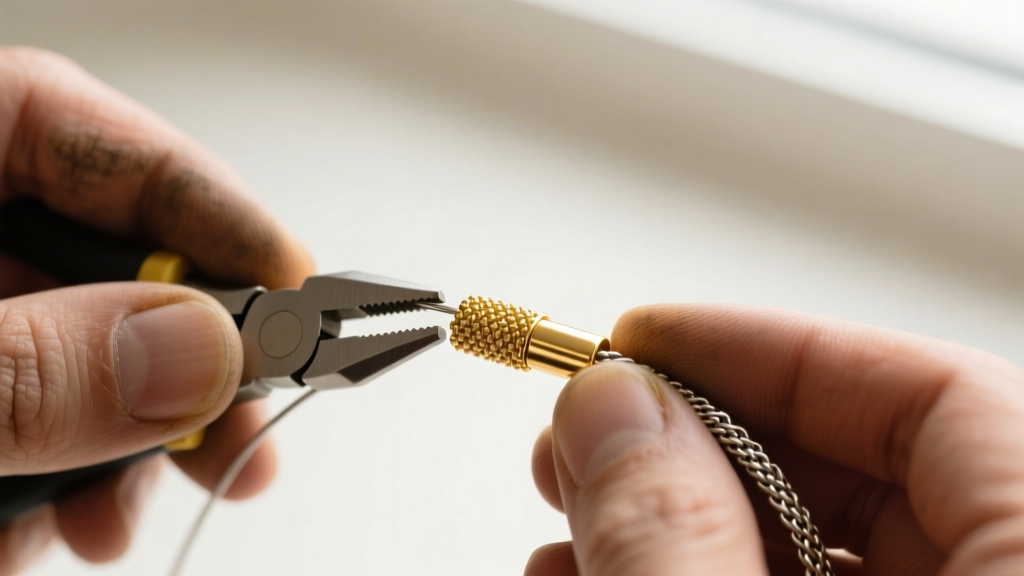
Equally important is the crimping technique. Never use round crimp beads on heavy wire; they tend to roll and slip. Instead, use 2x2mm sterling silver or gold-filled tube crimps. To secure them, utilize a "magic crimp tool," which folds the tube inward and rounds it into a perfect 2mm bead. This creates a 360-degree friction lock on the wire without shearing the nylon coating, ensuring the heavy bib remains intact for decades.
Skin Irritation from Heavy Findings
Because the queen of necklace styles sit flush against the skin, they trap body heat and perspiration. If the findings (clasps, extender chains, and crimp covers) are made from base metals like brass, copper, or nickel-silver, the sweat will cause rapid oxidation. This not only results in the dreaded "green skin" effect but can trigger severe contact dermatitis, especially in the sensitive hollow of the throat.
The Fix: If you are re-stringing or repairing a heavy collar, insist on hypoallergenic findings for any component that touches the skin. Replace base-metal extender chains with ASTM F136 implant-grade titanium or solid 18k yellow gold. While this increases the repair cost, it eliminates the risk of allergic reactions and ensures the metal will not corrode and weaken over time.
Summary Checklist for Longevity
To ensure your statement collar remains a wearable masterpiece rather than a jewelry box casualty, follow this maintenance checklist:
- Storage: Never toss a multi-strand collar into a drawer. Store it flat in a polyethylene zip bag with an anti-tarnish strip, or hang it on a velvet T-bar stand to maintain the wire's memory.
- Inspection: Every six months, gently pull the wire near the crimps. If you see more than 2mm of bare wire protruding, the crimp is slipping and requires immediate professional re-crimping.
- Cleaning: Avoid ultrasonic cleaners for multi-strand bibs, as the high-frequency vibrations can shatter tension-set stones and fray nylon wire coatings. Use a soft, damp microfiber cloth instead.
By addressing the mechanical realities of heavy jewelry, you can rescue your favorite statement pieces from the repair bench and wear them with absolute confidence.


