How to Choose the Right Necklace Lengths: Step-by-Step
Discover how to choose and layer necklace lengths perfectly. Our step-by-step guide covers measuring, styling, and pairing with any neckline.


The Anatomy of Necklace Lengths: Standard Measurements
Choosing the correct necklace lengths is the foundation of personal jewelry styling. A chain that sits beautifully on one person may look disproportionate on another due to variations in neck circumference, torso length, and shoulder slope. Understanding standard industry measurements is your first step toward mastering proportions. According to the Gemological Institute of America (GIA), jewelry manufacturers adhere to specific length categories, each designed to interact with the body's natural geometry in distinct ways.
Below is the definitive breakdown of standard necklace lengths, their metric conversions, and the chain gauges that work best for each category. Keep in mind that these measurements refer to the chain itself; a pendant will add an additional 0.5 to 1.5 inches to the total visual drop.
| Length Category | Inches | Centimeters | Best Neckline Pairing | Recommended Chain Weave & Gauge |
|---|---|---|---|---|
| Collar | 12-13" | 30-33 cm | Boatneck, Off-shoulder | 3mm-5mm Herringbone or Snake |
| Choker | 14-16" | 35-40 cm | V-neck, Scoop, Square | 1.5mm-2mm Box or Cable |
| Princess | 17-19" | 43-48 cm | Crew, High-neck, Button-down | 2mm-3mm Curb or Rolo |
| Matinee | 20-24" | 50-60 cm | Business attire, Plunging | 4mm-6mm Paperclip or Figaro |
| Opera | 28-36" | 71-91 cm | Evening wear, Turtleneck | 2mm-4mm Rope or Beaded |
| Rope/Lariat | 37"+ | 94+ cm | Deep V, Wrap dresses | 1.5mm-3mm Wheat or Box |
Step 1: How to Measure Your Neck for Custom Lengths
Relying solely on your height or clothing size is a common mistake that leads to ill-fitting jewelry. To find your ideal baseline necklace lengths, you need to take precise physical measurements. Here is the professional method used by bespoke jewelers:
- The String Method: Wrap a soft, flexible tailor's measuring tape (or a piece of non-stretch string) around your neck where you normally like your jewelry to sit. If using string, mark the meeting point with a pen and measure it flat against a steel ruler.
- Establish Your Baseline: Measure the base of your neck (usually 13-14 inches for most women). This is your absolute minimum for a tight collar.
- Add the Comfort Allowance: For a standard choker, add 1 to 2 inches to your base neck measurement. For a princess length that rests on the collarbone, add 3 to 4 inches.
- Account for Pendants: If you plan to wear a pendant, measure the bail (the loop that attaches the pendant to the chain). A 15mm bail will drop the focal point of the necklace nearly an inch lower than the chain's stated length.

Pro Tip: When ordering custom lengths, always consider the clasp. A standard lobster clasp adds about 0.5 inches to the total length, while a spring ring adds slightly less. For chains thicker than 2.5mm, always opt for a heavy-duty lobster or magnetic clasp to support the weight of the metal.
Step 2: Pairing Necklace Lengths with Specific Necklines
The relationship between your clothing's neckline and your jewelry can either elevate your outfit or create visual clutter. The goal is to create parallel lines or complementary geometric shapes. Here is a step-by-step framework for pairing necklace lengths with common necklines:
The V-Neck and Plunging Necklines
Follow the geometry of the fabric. A V-neck demands a necklace that mirrors its angle. Opt for a Princess length (17-19 inches) featuring a Y-drop or a distinct pendant that rests exactly in the center of the V. Avoid chokers here, as they will visually "cut off" the elongating effect of the V-neck.
The Crew Neck and T-Shirts
Crew necks sit high and tight, creating a horizontal block of fabric. You have two choices: sit above the fabric line with a 14-inch choker, or drop entirely below it with a 22-inch Matinee. Wearing a 16-inch chain over a tight crew neck often results in the chain getting swallowed by the collar's ribbing.
The Scoop Neck
Scoop necks expose the collarbone and upper chest. This is the most forgiving canvas. A 16-inch to 18-inch Princess length works beautifully, especially if the chain follows the curve of the neckline. According to styling experts at Kay Jewelers, delicate 1.2mm cable chains in this length range provide an elegant, understated look that doesn't compete with the exposed skin.
Step 3: The 2026 Layering Formula (Rule of Thirds)
Layering is no longer just about throwing multiple chains together; it requires architectural precision. The most common failure mode in layering is tangling, which occurs when chains of similar weaves and lengths rub against each other, creating friction knots. To master layered necklace lengths, follow the "2-Inch Separation Rule" and the "Mixed Weave Protocol."
The 2-Inch Separation Rule: Never layer necklaces that are less than 2 inches apart in length. A 14-inch, 16-inch, and 18-inch stack will lay perfectly flat without overlapping. A 14-inch, 15-inch, and 16-inch stack will tangle within minutes.
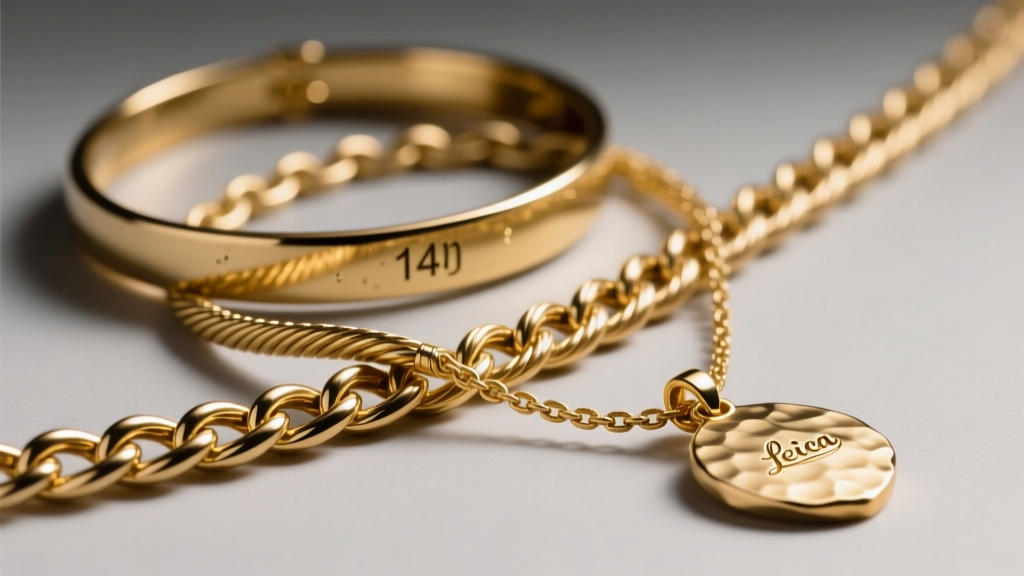
The Mixed Weave Protocol
To further prevent tangling and add visual depth, you must vary the chain weaves and gauges across your layers. A perfect three-layer stack looks like this:
- Base Layer (14"): A 1.5mm Box chain. Box chains have smooth, flat surfaces that glide over the skin and resist catching on body hair or fine fabrics.
- Middle Layer (16"): A 2.5mm Rope chain. The twisted texture catches the light differently and provides a physical barrier that prevents the base layer from sliding up.
- Focal Layer (18-20"): A 4mm Paperclip chain featuring a solid geometric pendant. The larger links add weight, anchoring the entire stack and pulling the center of gravity downward.
Troubleshooting Common Length Disasters
Even with precise measurements, physics can interfere with how necklace lengths behave in the real world. Here is how to troubleshoot the three most annoying necklace problems:
1. The Spinning Clasp
If your clasp constantly migrates to the front of your neck, your necklace is too light in the front or too heavy in the back. This is incredibly common with delicate 14k gold chains (under 2 grams) featuring small pendants. The Fix: Thread a tiny 2mm silicone stopper bead onto the chain near the clasp to add friction against the skin, or upgrade to a heavier pendant to anchor the front.
2. The Hair Snag
Snake chains and herringbone weaves look incredibly sleek, but their microscopic overlapping scales act like velcro to fine hair. If you wear your hair down, these weaves will constantly pull. The Fix: Reserve snake chains for up-dos or strapless evening wear. For daily wear with loose hair, switch to a rounded weave like a Rolo or a Wheat chain, which have smooth, continuous profiles that hair slides right off.
3. The Pendant Flip
When a lightweight pendant flips upside down, it's usually because the bail (the loop) is too large for the chain gauge, allowing the pendant to slide through and invert. The Fix: Ensure your chain gauge is at least 70% of the bail's inner diameter. If you have a 5mm bail, use a chain that is at least 3.5mm thick, or have a jeweler solder a small jump ring inside the bail to reduce the gap.
Final Thoughts on Proportions
Mastering necklace lengths is an exercise in understanding your own body's architecture and the physical properties of metals. By taking exact measurements, respecting the 2-inch layering rule, and matching chain weaves to your daily lifestyle, you can curate a jewelry collection that looks intentional, feels comfortable, and remains tangle-free. Whether you are investing in a heavy 24-inch matte gold rope chain or a delicate 15-inch diamond-cut cable, precision in length is what separates amateur accessorizing from true personal style.


