Red White and Blue Necklace Buying Guide: 2026 Patriotic Styles
Discover how to choose a premium red white and blue necklace in 2026. Compare gemstones, enamel types, and chain metals for lasting patriotic style.

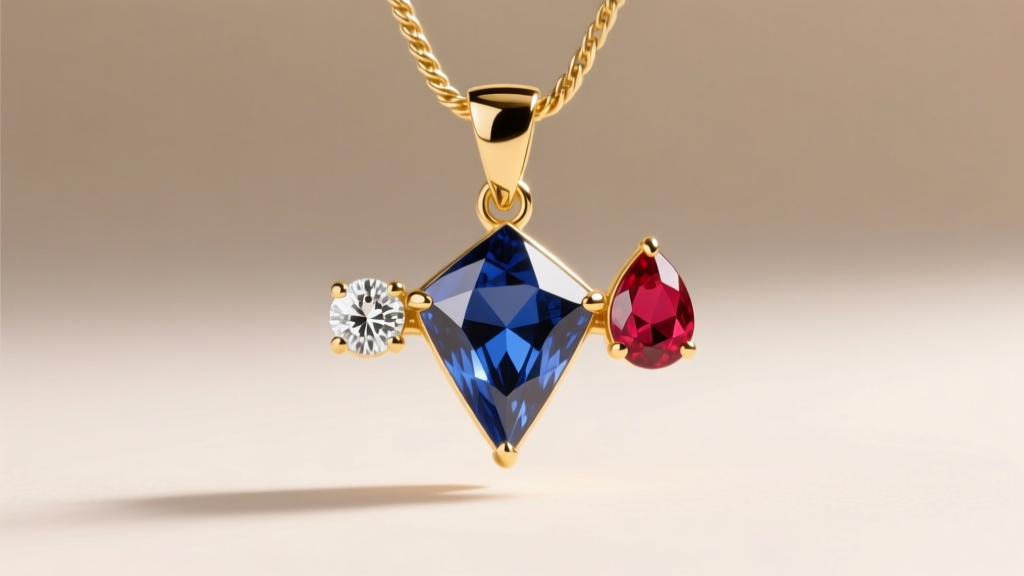
Patriotic and nautical jewelry has historically been plagued by cheap, mass-produced costume pieces that tarnish, fade, or break before Labor Day. However, the 2026 jewelry market has seen a massive shift toward sophisticated, year-round Americana and maritime elegance. Today, a high-quality red white and blue necklace is less about novelty and more about intentional color-blocking using premium gemstones, vitreous enamels, and durable precious metals.
Whether you are shopping for a subtle tricolor station necklace for everyday wear or a bold, enameled statement piece for national holidays, understanding the material science behind these multi-color designs is critical. This buying guide breaks down exactly what to look for regarding gemstone grading, enamel firing techniques, and chain hardware to ensure your investment lasts a lifetime.
The Color Triad: Sourcing Authentic Gemstone Elements
When building or buying a gemstone-based red white and blue necklace, the durability and optical properties of the stones are paramount. Because these necklaces often feature three distinct stones in close proximity, their refractive indices and Mohs hardness ratings must be compatible to prevent uneven wear and scratching.
The Red Element: Rubies vs. Alternatives
For the red component, ruby is the undisputed champion. As a variety of corundum, ruby scores a 9 on the Mohs scale, making it exceptionally resistant to daily abrasion. According to the Gemological Institute of America (GIA), the most prized rubies exhibit a "pigeon's blood" red fluorescence. However, for patriotic jewelry, slightly more saturated, darker reds (often found in Mozambican rubies) provide a striking contrast against white metals. If natural rubies exceed your budget, lab-created flame-fusion rubies offer identical chemical and physical properties at a fraction of the cost, without the ethical sourcing concerns.
The Blue Element: Sapphires and Montana Teals
Blue sapphires (also corundum, Mohs 9) are the standard for the blue element. While traditional Ceylon sapphires offer a bright, cornflower blue, 2026 trends heavily favor Montana sapphires. These stones often exhibit a unique teal-blue or steely-blue saturation that feels distinctly modern and rugged. The GIA Sapphire Guide notes that Montana sapphires are naturally traceable and typically require no heat treatment, making them a favorite for ethically minded buyers.
The White Element: Diamonds, White Sapphires, and Moonstone
Diamonds (Mohs 10) are the default white element, offering unmatched brilliance. However, white sapphires and high-quality rainbow moonstone are increasingly popular for buyers seeking a softer, more diffused white glow that complements the deep reds and blues without overpowering them.
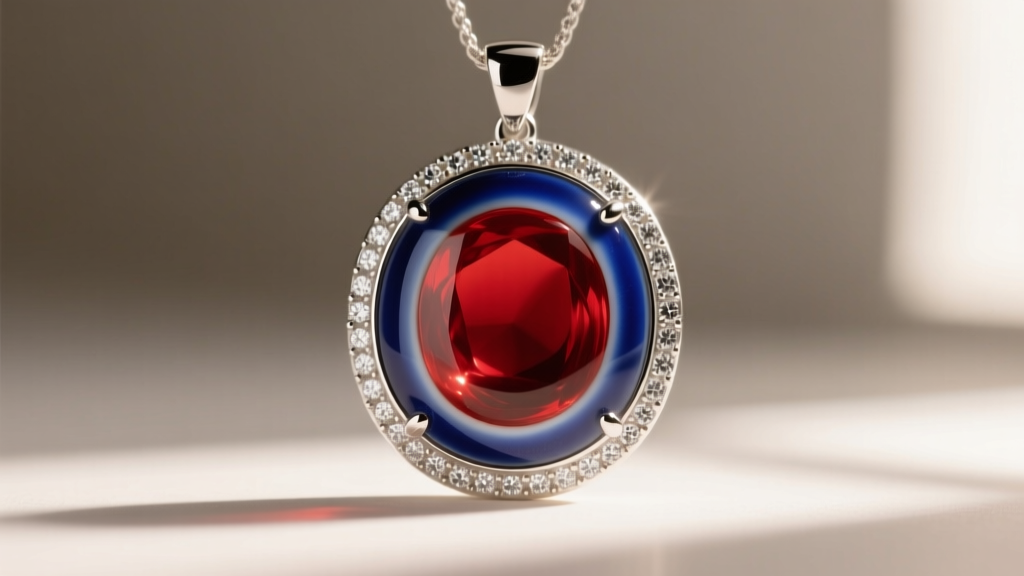
Enamel Techniques for Patriotic Pendants
Not every red white and blue necklace relies on gemstones. Enameled pendants—featuring flags, anchors, or geometric color-blocking—are highly sought after. The buying trap here is confusing cold enamel with vitreous enamel.
- Vitreous Enamel (Kiln-Fired): This is the hallmark of fine jewelry. Glass powder is fused to a metal base (usually sterling silver or 18k gold) at temperatures between 1,400°F and 1,650°F. The result is a permanent, scratch-resistant, and UV-stable glass surface that will never yellow or peel. Techniques like cloisonné (using fine gold wires to separate colors) and champlevé (carving troughs into the metal) are indicators of master craftsmanship.
- Cold Enamel (Epoxy Resin): Often found in fashion jewelry, cold enamel is a two-part epoxy that cures at room temperature. While initially vibrant, epoxy resins are prone to micro-scratches, will degrade when exposed to harsh chemicals (like chlorine or perfume), and inevitably yellow under prolonged UV sunlight exposure. Avoid cold enamel if you want a heritage piece.
Metal Foundations and Hardware Integrity
The metal holding your red, white, and blue elements together dictates the necklace's longevity and skin-compatibility. White metals are the traditional choice to complete the patriotic triad, but they require specific treatments.
Rhodium Plating Thickness: If you are buying a sterling silver or white gold necklace, it is likely plated with rhodium to achieve a bright, mirror-like white finish. The industry standard for quality plating is between 0.75 and 1.0 microns. Anything thinner will wear off in months, revealing the yellowish tint of white gold or the tarnish-prone nature of raw silver.
Allergy Warnings: Be cautious of 14k white gold alloyed with nickel, which causes contact dermatitis in roughly 15% of the population. The Federal Trade Commission (FTC) Jewelry Guides mandate accurate metal stamping, but they do not require the disclosure of specific alloy mixes. Always ask the jeweler if their white gold is nickel-free (alloyed with palladium instead) or opt for platinum, which is naturally white, hypoallergenic, and requires no rhodium plating.
2026 Value and Durability Matrix
Use this matrix to align your budget with the appropriate material tier for your red white and blue necklace.
| Material Tier | Red/Blue Elements | White Element | Metal Base | Price Range (2026) | Best For |
|---|---|---|---|---|---|
| Entry-Level | Cold Enamel / Glass | Cubic Zirconia | Sterling Silver (Thin Plate) | $80 - $250 | Occasional holiday wear |
| Mid-Tier | Lab-Grown Ruby/Sapphire | White Topaz / Lab Diamond | Sterling Silver (Heavy Plate) | $400 - $900 | Daily wear, nautical themes |
| Premium | Natural Montana Sapphire, Mozambique Ruby | Natural Diamond (VS/G) | 14k Palladium White Gold | $1,500 - $3,500 | Heirloom pieces, milestones |
| Luxury | Burmese Ruby, Kashmir Sapphire | Flawless Natural Diamond | Platinum 950 | $8,000+ | Investment, haute joaillerie |
Chain Gauges and Clasp Mechanics
A multi-gemstone pendant can easily weigh between 4 and 8 grams. Pairing a heavy pendant with an inadequate chain is a common failure point.
For pendants under 5 grams, a 0.9mm to 1.2mm cable chain provides a delicate, elegant look while maintaining sufficient tensile strength. For heavier, multi-stone patriotic pendants or enameled medallions, upgrade to a 1.5mm to 2.0mm rope or box chain. Box chains are particularly recommended because their interlocking square links resist kinking and distribute weight evenly.
Discard the standard spring-ring clasp. They are notoriously difficult to operate one-handed and feature a weak internal spring that fails over time. Insist on a lobster clasp with a minimum length of 12mm, or a secure fold-over clasp for chains thicker than 1.5mm.

Care and Maintenance Protocols
Maintaining a multi-material red white and blue necklace requires specific care, particularly when mixing gemstones, metals, and enamels.
- Ultrasonic Cleaner Warnings: Never place an enameled necklace in an ultrasonic cleaner; the high-frequency vibrations will shatter the glass enamel. Furthermore, if your rubies or sapphires have been fracture-filled (a common treatment for lower-grade stones), the ultrasonic waves can dislodge the filler, ruining the stone.
- Chemical Exposure: Chlorine in swimming pools will permanently pit and degrade the copper alloys inside sterling silver and lower-karat golds. Always remove your necklace before swimming.
- Routine Cleaning: The safest method for all red, white, and blue jewelry is a lukewarm bath of distilled water and a few drops of pH-neutral dish soap. Agitate gently with a soft-bristled baby toothbrush, paying special attention to the pavilion (underside) of the gemstones where lotion and dead skin cells accumulate and block light refraction.
By prioritizing vitreous enamels, ethically sourced corundum gemstones, and properly gauged precious metal chains, you can secure a red white and blue necklace that transcends seasonal novelty and becomes a permanent, elegant fixture in your jewelry wardrobe.


