White Necklace Men: Troubleshooting Tarnish, Snaps, and Fit
Troubleshoot common issues with your white necklace men styles. Expert fixes for tarnish, chain snaps, rhodium wear, and skin reactions.

The Core Dilemma: Why White Metals Fail
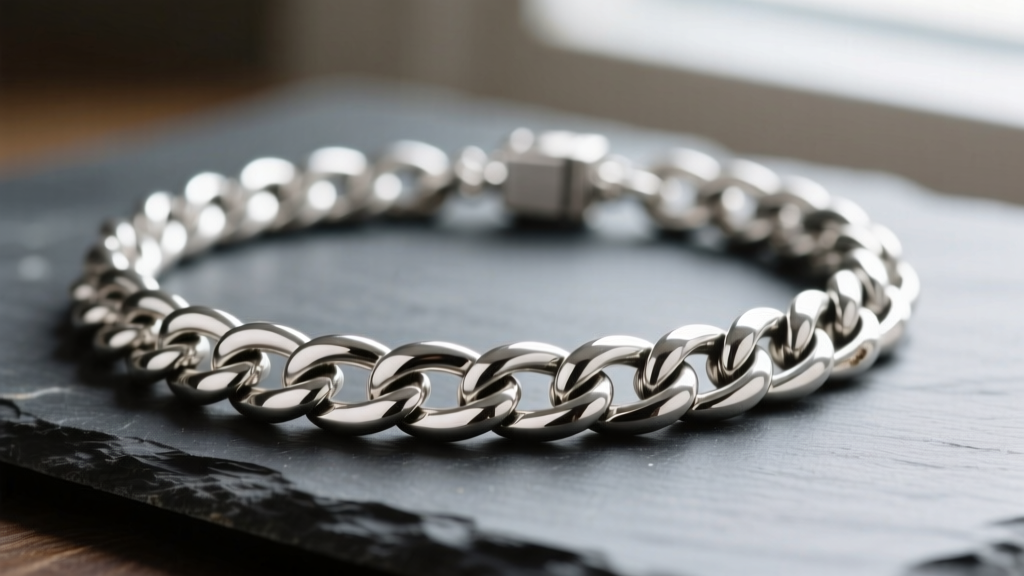
The search for the perfect white necklace men can wear daily often leads to a frustrating cycle of maintenance, unexpected breakages, and skin irritation. Unlike yellow gold, which is relatively stable, 'white' metals in jewelry are actually complex alloys or plated materials. Sterling silver oxidizes, white gold relies on a microscopic layer of rhodium that eventually wears away, and platinum, while indestructible, develops a matte patina that many mistake for damage. Understanding the metallurgy behind your chain is the first step in troubleshooting these inevitable issues.
Material Breakdown: Silver vs. White Gold vs. Platinum
Before you can fix a problem, you must identify the exact metal composition of your necklace. According to the Gemological Institute of America (GIA), the term 'white gold' is technically a misnomer, as gold is naturally yellow and must be alloyed with white metals like nickel, palladium, or silver to achieve a pale hue, before being plated.
| Metal Type | Composition | Vickers Hardness (HV) | Avg. Price (22' 4mm Chain) | Primary Failure Mode |
|---|---|---|---|---|
| 925 Sterling Silver | 92.5% Silver, 7.5% Copper | 60-70 HV | $120 - $250 | Sulfide tarnishing, bending |
| 14k White Gold | 58.3% Gold, Nickel/Palladium | 120-140 HV | $800 - $1,400 | Rhodium wear, clasp fatigue |
| 950 Platinum | 95% Platinum, 5% Ruthenium | 110-130 HV | $2,500 - $4,000+ | Surface scratching (patina) |
Troubleshooting Problem 1: Tarnish and 'Yellowing'
The most common complaint among men wearing white chains is a gradual color shift. However, the chemical cause depends entirely on the metal.
The Rhodium Re-Plating Fix (White Gold)
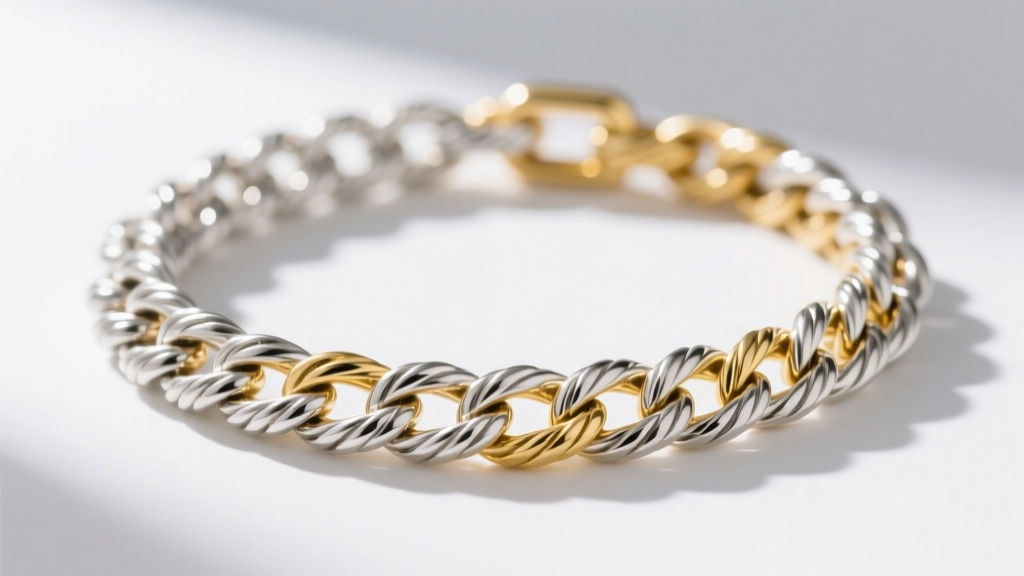
If your 14k or 18k white gold necklace is turning yellow around the clasp or the back of the neck, the rhodium plating has worn off. Rhodium is a platinum-group metal applied via electroplating to give white gold its brilliant, mirror-like white finish. Friction from collars and skin acids strip this layer over 12 to 24 months.
The Fix: Take the chain to a bench jeweler for a re-plate. This typically costs between $40 and $80. Do not attempt to polish it yourself, as abrasive compounds will only accelerate the removal of the remaining rhodium.
Silver Sulfide Removal (Sterling Silver)
Sterling silver turns black due to a reaction between the 7.5% copper alloy and sulfur compounds in the air and sweat, creating silver sulfide.
The Fix: Avoid commercial silver dips, which contain harsh thiourea and can damage any gemstone accents. Instead, use an electrochemical reduction bath. Line a glass bowl with aluminum foil (shiny side up), place the necklace inside, and add 1 tablespoon of baking soda and 1 teaspoon of salt. Pour boiling water over the chain. The aluminum acts as a sacrificial anode, pulling the sulfur off the silver and transferring it to the foil. Rinse and dry immediately.
Troubleshooting Problem 2: Clasp Failures and Snapping
A heavy white metal chain is only as strong as its weakest link, which is almost always the clasp. Men's chains, particularly Cuban links or thick rope chains, carry significant kinetic weight. When a chain snags on a shirt or gets pulled, the shear force is applied directly to the clasp's spring mechanism.
Jeweler's Rule of Thumb: The clasp's wire gauge must be equal to or thicker than the chain's links. A 5mm chain weighing 80 grams paired with a standard 4mm spring-ring clasp is a guaranteed failure point.
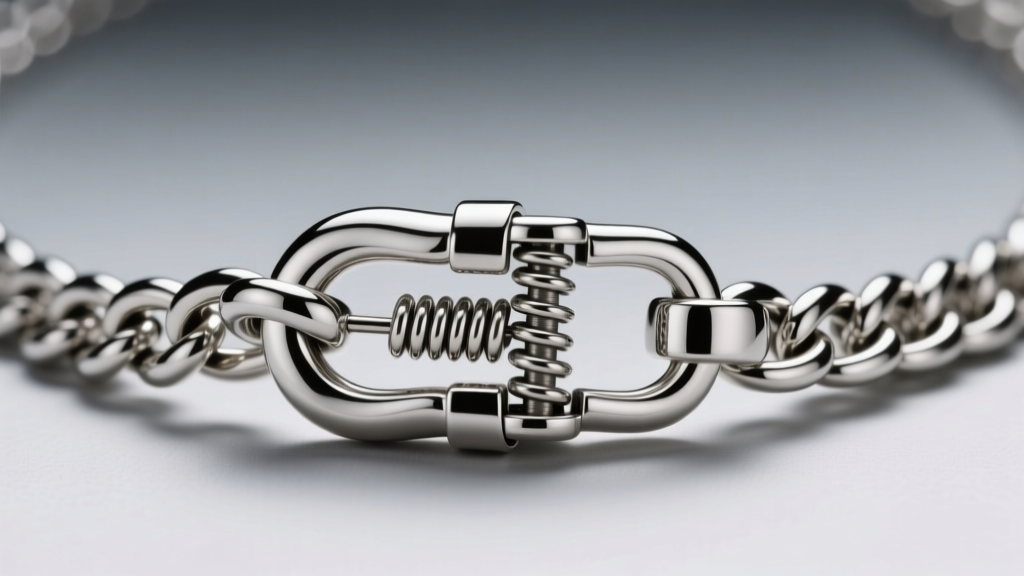
The Fix: Upgrade your hardware. Replace standard spring-ring clasps with a solid-cast lobster clasp or, for chains over 50 grams, a box clasp equipped with a figure-8 safety catch. If you are wearing a high-value platinum or white gold chain, consult the Jewelers of America directory to find a certified bench jeweler who can laser-weld a custom, heavy-duty lock mechanism that matches the chain's tensile strength.
Troubleshooting Problem 3: Skin Discoloration and Allergies
Waking up with a green or red ring around your neck is a hallmark of metallurgical incompatibility.
- Green Skin (Silver): This is not a sign of 'fake' silver. It is the copper in 925 sterling silver reacting with the acidic pH of your sweat, creating copper chloride. Fix: Coat the inside of the chain links with a micro-thin layer of clear nail polish, or have a jeweler apply a protective rhodium flash to the silver.
- Red, Itchy Skin (White Gold): This is almost always a nickel allergy. Many 10k and 14k white gold alloys use nickel as a bleaching agent. Fix: You must switch to a palladium-alloyed white gold, or upgrade to 950 platinum, which is naturally hypoallergenic.
Proportion and Styling Fixes
Beyond physical damage, the most frequent 'problem' men face is a necklace that looks disproportionate to their frame. A chain that is too thin looks fragile, while one that is too thick can appear ostentatious if not styled correctly.
- The 2mm - 3mm Gauge: Best for 16' to 18' lengths. Sits at the collarbone. Ideal for layering with pendants or wearing under an unbuttoned Oxford shirt.
- The 4mm - 6mm Gauge: The sweet spot for men's standalone chains. A 22' length in this width rests perfectly on the upper chest, visible above a crewneck t-shirt but easily tucked under a blazer.
- The 8mm+ Gauge: Statement pieces. Due to the density of white metals (especially platinum, which is roughly 60% heavier than 14k gold by volume), an 8mm platinum chain can weigh over 150 grams. Ensure your neck and collar can support the physical weight before purchasing.
Final Verdict
Maintaining a white necklace men can rely on requires proactive care rather than reactive frustration. If you want a zero-maintenance, brilliant white chain and have the budget, 950 platinum is the ultimate choice, requiring only occasional ultrasonic cleaning. If you prefer the sharp, reflective look of white gold, budget for a $50 rhodium re-plating every two years. And if you choose the affordability of sterling silver, embrace the electrochemical aluminum-foil cleaning method to keep your chain pristine without stripping its surface. By matching the metal's metallurgical reality to your lifestyle, your chain will remain a staple rather than a burden.


