Gold Square Pendant Necklace Guide: Karats, Alloys & Edge Durability
Compare 10k, 14k, and 18k alloys for your gold square pendant necklace. Learn how metallurgical properties affect edge durability, pricing, and wear.

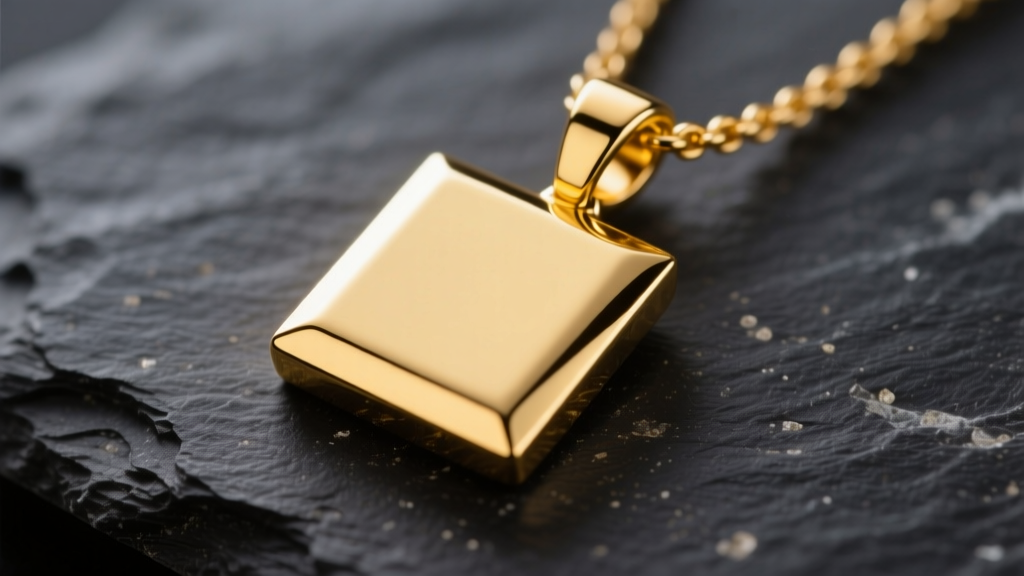
The Geometry Problem: Why Square Pendants Demand Specific Alloys
When selecting a gold square pendant necklace, most buyers focus exclusively on color and carat weight, entirely overlooking the structural implications of geometry. Unlike circular or oval pendants, which distribute kinetic energy evenly across a curved surface, a square pendant features four 90-degree corners and broad, flat planes. This geometric profile creates distinct stress concentration points. When a square pendant strikes a hard surface—such as a desk edge or a doorframe—the impact force is localized entirely on those sharp corners or flat faces.
If the gold alloy is too soft, the corners will rapidly blunt, round off, or dent, destroying the crisp, modern aesthetic of the piece. Conversely, if the pendant is hollow and stamped from thin sheet metal, the flat planes are highly susceptible to irreversible concave denting. Therefore, choosing the right metallurgical composition and manufacturing method is not merely a matter of budget; it is a structural necessity for geometric jewelry. According to the Gemological Institute of America (GIA), the alloy metals mixed with pure gold dictate not only the color but the Vickers hardness (HV) of the final piece, which directly correlates to edge retention.
Metallurgical Breakdown: 10k vs. 14k vs. 18k Gold
Pure 24k gold is exceptionally malleable, registering a mere 25-30 on the Vickers hardness scale. It is entirely unsuitable for a square pendant, as the corners would deform within weeks of daily wear. To achieve structural integrity, gold is alloyed with metals like copper, silver, zinc, and palladium. Below is a comparative analysis of the most common karats used for geometric pendants.
| Karat | Gold Purity | Primary Alloys | Vickers Hardness (HV) | Edge Durability | Avg. Price (3g Solid) |
|---|---|---|---|---|---|
| 10k Gold | 41.7% | Copper, Silver, Zinc | 170 - 190 HV | Exceptional (Crisp edges) | $110 - $160 |
| 14k Gold | 58.3% | Copper, Silver | 140 - 160 HV | High (Optimal balance) | $180 - $260 |
| 18k Gold | 75.0% | Copper, Silver, Palladium | 115 - 130 HV | Moderate (Prone to blunting) | $280 - $400 |
10k Gold: The High-Tension Workhorse
10k gold contains the highest proportion of alloy metals, granting it superior tensile strength and scratch resistance. For a gold square pendant necklace that will be worn daily in active environments, 10k gold will maintain its razor-sharp 90-degree corners longer than any other karat. However, the lower gold content results in a slightly paler yellow hue and a higher risk of copper-induced skin oxidation for those with metal sensitivities.
14k Gold: The Optimal Balance for Geometric Shapes
14k gold is the industry standard for fine geometric jewelry. With a Vickers hardness hovering around 150 HV, it provides ample resistance against corner blunting while retaining the rich, warm saturation expected of fine jewelry. When alloyed with a higher copper-to-silver ratio, 14k yellow gold achieves both an appealing color and a slight bump in structural rigidity, making it the most reliable choice for preserving the architectural lines of a square pendant.
18k Gold: Luxury with Structural Compromises
While 18k gold offers a deep, luxurious color and high hypoallergenic properties, its relative softness makes it a risky choice for sharp-edged geometry. If you opt for an 18k gold square pendant, it should be reserved for occasional wear. Daily friction against clothing and occasional impacts will inevitably cause the sharp corners to soften and round over time, subtly altering the pendant's intended silhouette.
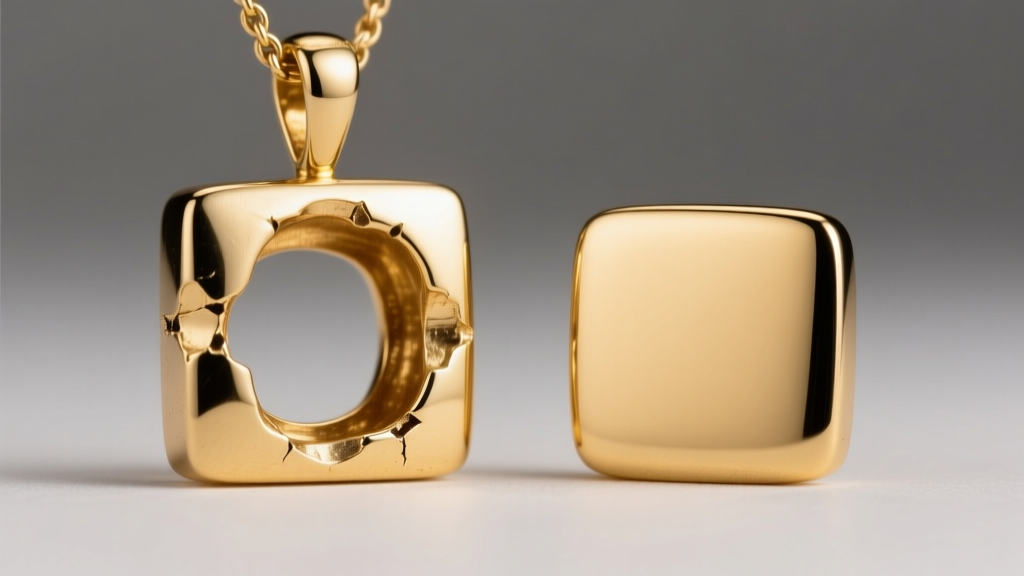
Solid vs. Hollow vs. Stamped: Internal Structures
Beyond the karat, the internal construction of the pendant dictates its survival against flat-plane impacts. The Federal Trade Commission (FTC) mandates strict guidelines on how jewelry is labeled, but terms like 'solid' can sometimes be misunderstood by consumers. Here is how manufacturing methods impact square pendants:
- Lost-Wax Cast (Solid): The gold is poured into a mold, creating a dense, heavy piece. A solid cast square pendant weighing 3 to 5 grams will survive drops and impacts without denting. The edges can be polished repeatedly without compromising the structure.
- Stamped Sheet Metal: Created by punching a sheet of gold with a hydraulic press. These are lightweight and feature sharp edges, but the flat faces are incredibly thin (often under 0.8mm). A single drop onto a tile floor will cause a permanent concave dent on the flat plane.
- Electroformed (Hollow): This process creates large, voluminous pendants that are surprisingly lightweight. While visually impressive, hollow square pendants are structural nightmares. The flat surfaces act like drum skins; even moderate pressure from leaning against a table can cause the gold shell to collapse inward.
Color Alloys and Structural Integrity
The color of your gold square pendant necklace also influences its durability due to the specific alloy metals required to achieve that color.
- White Gold: Alloyed with nickel, palladium, or manganese. White gold is generally harder and more scratch-resistant than yellow gold of the same karat. However, it requires rhodium plating. As the plating wears off on the sharp corners first, the pendant will require periodic re-plating to maintain its uniform color.
- Rose Gold: Achieved through a high copper content (up to 20-25% in 14k). Copper is a remarkably hard metal, making rose gold inherently more durable and resistant to edge-blunting than yellow or white gold variants. It is an excellent, low-maintenance choice for sharp geometric shapes.
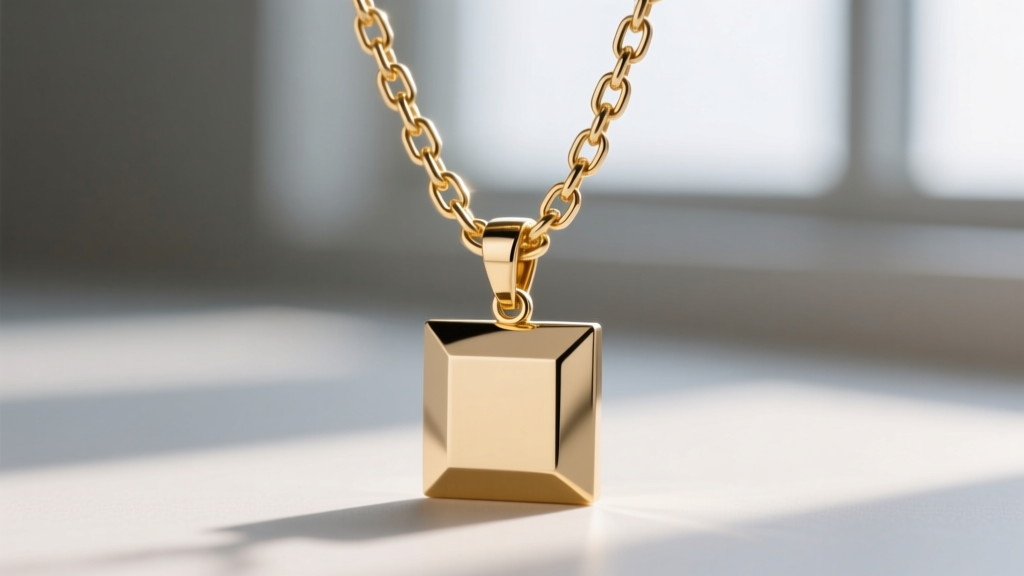
Chain Pairings: Matching Tensile Strength to Pendant Weight
A heavy, solid-cast gold square pendant requires a chain that complements its geometry while providing sufficient tensile strength. The bail (the loop connecting the pendant to the chain) on a square pendant is often subjected to lateral torque as the flat pendant flips and twists during wear.
- Box Chains (1.2mm - 1.5mm): The square interlocking links of a box chain perfectly mirror the geometry of the pendant. A 1.5mm solid 14k box chain offers a high tensile strength (often exceeding 15 lbs of pull force) and resists kinking, making it the premier aesthetic and structural match.
- Wheat Chains (1.5mm - 2.0mm): Braided and highly durable, wheat chains distribute the weight of a heavy square pendant evenly across the collarbone. They are virtually immune to kinking and provide a textured contrast to the smooth, flat planes of the pendant.
- Curb / Cuban Chains: While strong, flat curb chains can sometimes clash visually with the modern minimalism of a square pendant. If chosen, opt for a diamond-cut curb to introduce light refraction that matches the polished facets of the pendant's edges.
Maintenance Protocols for Sharp-Edged Gold Jewelry
Maintaining the crisp lines of a gold square pendant necklace requires specific polishing techniques. Never use a motorized rotary tool or a stiff-bristled polishing wheel on the corners of a square pendant; the high friction will rapidly melt away the sharp 90-degree angles, turning your square into an octagon or oval.
Expert Maintenance Tip: To polish the flat planes and corners of a geometric gold pendant, use a high-quality micro-abrasive jeweler's cloth (such as a Sunshine cloth). Fold the cloth tightly to create a hard, straight edge, and polish linearly along the flat faces. Use the sharp crease of the folded cloth to gently buff the 90-degree corners without rounding them over.
Furthermore, avoid ultrasonic cleaners if your square pendant features any tension-set stones or if it is constructed from stamped sheet metal, as the high-frequency vibrations can fracture tension settings or exacerbate micro-fractures in thin gold sheets. By respecting the metallurgical limits and geometric vulnerabilities of your jewelry, your square pendant will retain its architectural precision for decades.


