How to Clean and Maintain Your Core Drill Necklace
Learn how to properly clean, maintain, and protect your core drill necklace. Expert tips for tungsten, steel, and silver geological pendants.

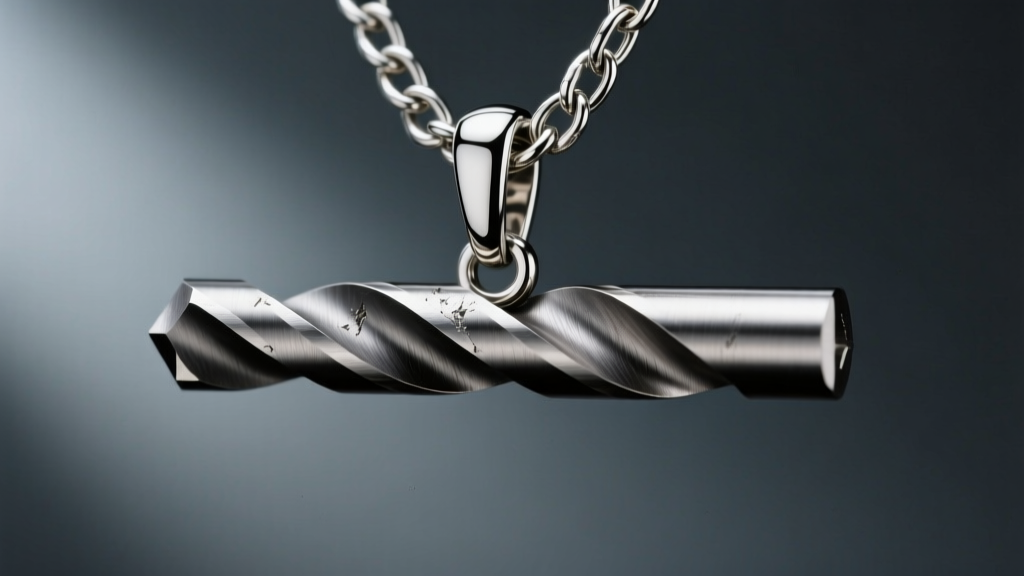
Core drill necklaces occupy a unique and rugged niche in the jewelry world. Whether you wear a repurposed tungsten carbide diamond drill bit from a mining operation, a high-speed steel (HSS) geological cutter, or a meticulously cast sterling silver replica, these pendants are badges of honor for engineers, geologists, and industrial professionals. However, the very design that makes them striking—deep flutes, hollow cylinders, and heavy mixed metals—makes them notorious traps for skin oils, environmental dust, and moisture.
Maintaining a core drill necklace requires more than a quick wipe with a cloth. Because these pendants often combine extreme hardness with hidden vulnerabilities (like the cobalt binders in carbide or the oxidation risks of raw steel), a tailored approach to care is essential. According to the Gemological Institute of America (GIA), understanding the specific metallurgical and composite properties of your jewelry is the first step in preventing irreversible damage during cleaning.
Identifying Your Core Drill Pendant Material
Before applying any solvent or mechanical agitation, you must identify the exact material of your core drill pendant. The cleaning protocol for a raw steel bit will destroy a resin-encased geological core sample. Below is a breakdown of the most common materials used in these specialized necklaces and their primary vulnerabilities.
| Material | Hardness (Mohs) | Primary Vulnerability | Recommended Cleaner |
|---|---|---|---|
| Tungsten Carbide | 9.0 - 9.5 | Chipping from impacts; binder corrosion | Alkaline degreaser / Ultrasonic |
| High-Speed Steel (HSS) | 7.5 - 8.0 | Flash rust / Oxidation | Mineral oil / Mild brass brush |
| Sterling Silver Cast | 2.5 - 3.0 | Sulfur tarnish / Scratching | Silver polishing cloth / Mild soap |
| Resin-Encased Core | 2.0 (Resin) | UV yellowing / Chemical clouding | Microfiber / Isopropyl alcohol |
Step-by-Step Cleaning Protocols
Tungsten Carbide and Raw Steel Bits
Tungsten carbide is technically a cermet (a ceramic-metal composite). While the tungsten grains are incredibly hard, they are held together by a cobalt or nickel binder. This binder can be degraded by prolonged exposure to harsh acids, bleach, or chlorine. To clean the deep flutes of a carbide or raw steel core drill bit, avoid household bathroom cleaners. Instead, use an alkaline degreaser like Simple Green diluted 1:10 with warm water. Soak the pendant for 15 minutes to loosen trapped drilling mud and sebum, then agitate it using an ultrasonic jewelry cleaner set to 40 kHz. The high-frequency cavitation will safely blast debris out of the hollow core and cutting flutes without scratching the metal.
Crucial Warning: If your pendant is made of raw, uncoated high-speed steel, do not leave it soaking in water-based solutions for extended periods, as flash rust can begin forming within minutes. Dry it immediately with compressed air or a lint-free cloth, and apply a micro-layer of 3-in-One mineral oil to displace moisture.
Sterling Silver and Gold Cast Replicas
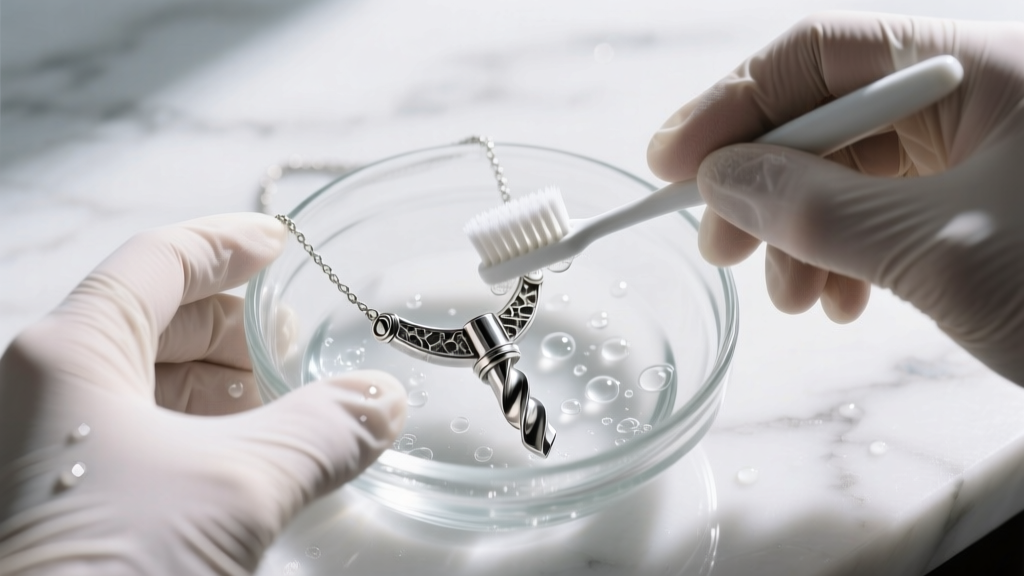
Many jewelers cast exact replicas of diamond core bits in 925 sterling silver or 14k gold. These are highly susceptible to sulfur-induced tarnishing, especially in the deep recesses of the drill flutes where polishing cloths cannot reach. According to Jewelers of America, liquid silver dips can be too harsh for textured jewelry, often leaving a chalky white residue in crevices. Instead, use a soft-bristled baby toothbrush with a few drops of phosphate-free dish soap (like Dawn) and warm water. For stubborn tarnish in the flutes, use a wooden toothpick or a soft brass bristle brush. Brass has a lower Mohs hardness than silver, meaning it will scrub away silver sulfide without scratching the precious metal underneath.
Resin-Encased Geological Core Samples
Some core drill necklaces feature an actual cylindrical core sample of rock, mineral, or ice suspended in clear epoxy resin. Ultrasonic cleaners and chemical degreasers will cause the resin to craze, crack, or turn opaque. Clean these exclusively with a damp microfiber cloth. If the resin surface becomes cloudy from skin oils, wipe it gently with a 50/50 mix of distilled water and 90% isopropyl alcohol, then buff dry. Never expose resin pendants to direct, prolonged sunlight, as UV radiation will cause the epoxy to yellow permanently over time.
Chain Maintenance and Hardware Mechanics
The most common point of failure for a core drill necklace is not the pendant itself, but the chain and bail. Authentic steel and carbide core drill bits are exceptionally dense, often weighing between 25 and 60 grams. A standard 1.5mm sterling silver cable chain has a tensile breaking point of roughly 10 to 15 pounds under static weight. However, the kinetic shock of a heavy pendant swinging and catching on clothing generates dynamic force that can easily snap a thin chain.
To safely support a heavy core drill pendant, upgrade to a chain with a minimum width of 3.0mm to 4.5mm. Stainless steel Figaro, Cuban curb, or Rope chains offer the highest tensile strength and resist stretching. Furthermore, inspect the bail—the loop connecting the pendant to the chain. Heavy steel pendants act like a friction saw against soft silver jump rings. Always use a hardened steel split ring, or have a professional jeweler solder a heavy-duty, thick-gauge sterling silver bail directly to the top of the pendant to prevent catastrophic loss.
Storage and Environmental Hazards
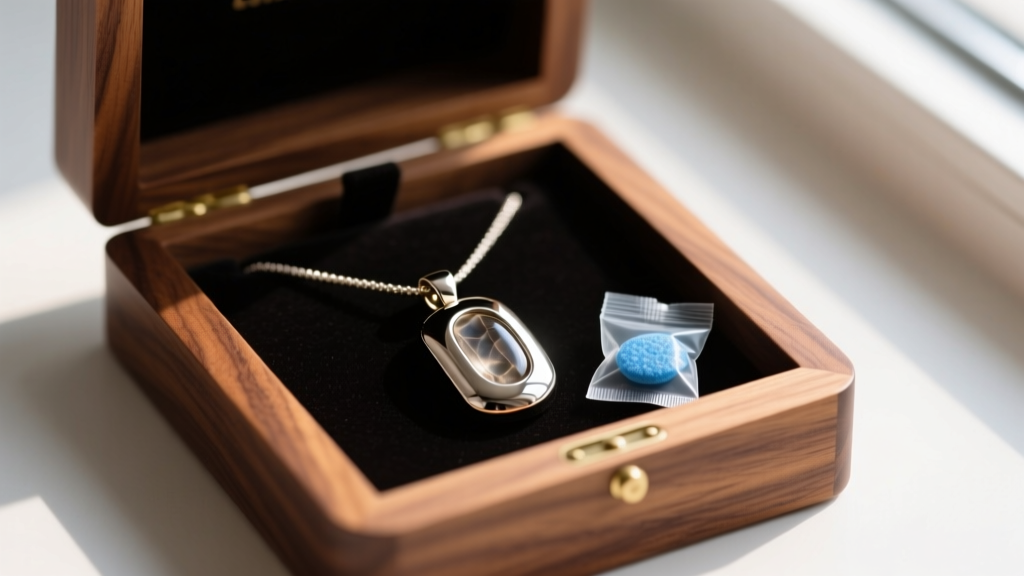
Proper storage is critical for preserving the integrity of industrial and geological jewelry. Raw steel core drill bits must be stored in a low-humidity environment. Keep the pendant in a sealed polyethylene bag with a 5-gram silica gel desiccant packet to prevent ambient moisture from triggering oxidation. If you live in a coastal or high-humidity environment, lightly coat the steel pendant in Renaissance Wax or mineral oil before long-term storage.
For sterling silver cast replicas, store the necklace in an anti-tarnish fabric pouch, such as Pacific Silvercloth, which absorbs atmospheric sulfur compounds before they can react with the silver. Never store your core drill necklace loosely in a drawer where the heavy pendant can swing and scratch softer jewelry pieces or chip its own carbide edges against hard surfaces.
Troubleshooting Common Issues
- Flash Rust on Steel Bits: If you notice orange spotting on a raw steel core drill pendant, do not use steel wool, which will embed iron particles and worsen the rust. Soak the pendant in white vinegar for exactly 10 minutes to dissolve the iron oxide. Scrub gently with a brass brush, then neutralize the acid by soaking it in a baking soda and water paste for 5 minutes. Rinse, dry completely, and re-oil.
- Cloudy or Scratched Resin: If your resin-encased core sample has surface scratches, you can restore optical clarity using wet-sanding. Progress through 2000, 3000, and 5000-grit wet/dry sandpaper, followed by buffing with a specialized plastic polish like Novus No. 2. Do not use standard metal polishing compounds, as their abrasives will embed in the resin.
- Tarnish in Deep Flutes: For silver cast necklaces where black tarnish is deeply impacted in the drill threads, create a paste of baking soda and water. Apply it to the threads, let it sit for three minutes, and agitate with a wooden skewer. The mild alkalinity helps lift the sulfur bonds without abrading the silver casting.
By respecting the material science behind your core drill necklace and adhering to these targeted maintenance protocols, you can ensure that your piece remains a pristine, wearable testament to the earth and the engineering required to explore it.


