The Ultimate Necklace Holder DIY Guide for Tangle-Free Jewelry Care
Learn how a necklace holder DIY project prevents tangling and tarnish. Expert tips on safe materials, chain gauges, and integrated cleaning stations.

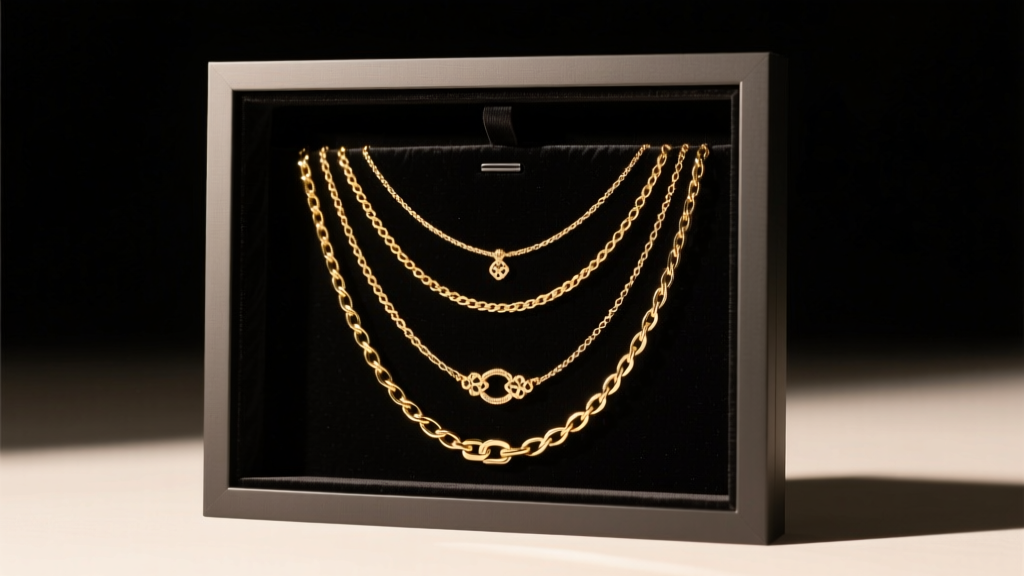
When it comes to jewelry care, most enthusiasts focus heavily on polishing cloths and ultrasonic cleaners, completely overlooking the environment where their pieces spend 90% of their time. Improper storage is the silent killer of delicate chains and the primary catalyst for severe tarnish. If you have ever spent twenty minutes untangling a knotted mess of 14k gold cable chains, you already know the frustration. But beyond the annoyance, tangling causes micro-abrasions, metal fatigue, and eventual breakage. This is where a strategic necklace holder diy project becomes an essential component of your jewelry maintenance routine.
Building your own storage solution is not merely an aesthetic craft project; it is a calculated intervention in the preservation of your collection. By controlling the materials, spatial distribution, and environmental exposure, you can drastically extend the lifespan of your necklaces. In this comprehensive guide, we will explore the science of jewelry degradation and provide an expert-level blueprint for constructing a DIY holder that actively protects, preserves, and facilitates the cleaning of your most prized pendants and chains.
The Hidden Damage of Improper Storage
Before picking up a hammer and nails, it is crucial to understand the chemical and physical threats lurking in standard jewelry boxes. According to the Gemological Institute of America (GIA), environmental factors and physical friction are the leading causes of premature wear in fine jewelry.
Metal-on-Metal Friction and the Mohs Scale
When necklaces are tossed into a communal drawer, they do not just tangle; they scratch. The Mohs scale of mineral hardness dictates that harder materials will permanently mar softer ones. A diamond pendant (Mohs 10) resting against a 22k gold chain (Mohs 2.5-3) will act like sandpaper, slowly grinding away the gold links over time. Even identical materials can suffer from friction-induced wear, leading to weakened clasps and thinned jump rings.
The Chemistry of Tarnish and Off-Gassing
Sterling silver (925) tarnishes when it reacts with hydrogen sulfide and moisture in the air, forming black silver sulfide. However, many DIY builders unknowingly accelerate this process by using the wrong base materials. Raw woods, particularly oak and cedar, emit acetic acid vapors as they naturally off-gas. In an enclosed space, these acidic vapors will rapidly corrode silver, copper, and even degrade the nacre of freshwater pearls. The American Institute for Conservation strictly advises against using unsealed wood or standard PVC plastics for long-term artifact and jewelry storage due to these volatile organic compounds (VOCs).
Material Selection for Your Necklace Holder DIY Project
To build a preservation-grade holder, you must select materials that are chemically inert or properly sealed. Below is a comparison of common DIY materials and their safety profiles for fine jewelry.
| Material | Tarnish / Damage Risk | DIY Workability | Expert Recommendation |
|---|---|---|---|
| Raw Oak / Cedar | High (Acetic acid off-gassing) | Easy | Avoid entirely for enclosed storage. |
| MDF / Plywood | Medium (Formaldehyde/acid risks) | Easy | Must be sealed with zero-VOC polyurethane. |
| Kiln-Dried Maple | Low (Minimal off-gassing) | Moderate | Excellent choice when finished with a water-based sealant. |
| Acrylic / PETG | Very Low (Chemically inert) | Hard (Requires laser cutter) | Ideal for modern, airtight shadow box inserts. |
| Standard Felt | High (Often contains sulfur/dyes) | Easy | Never use; opt for acid-free archival felt. |
For the backing fabric, always source acid-free, unbleached cotton flannel or archival-quality polyethylene foam. Avoid standard craft felt, which is frequently dyed with sulfur-based compounds that will turn sterling silver black within weeks.
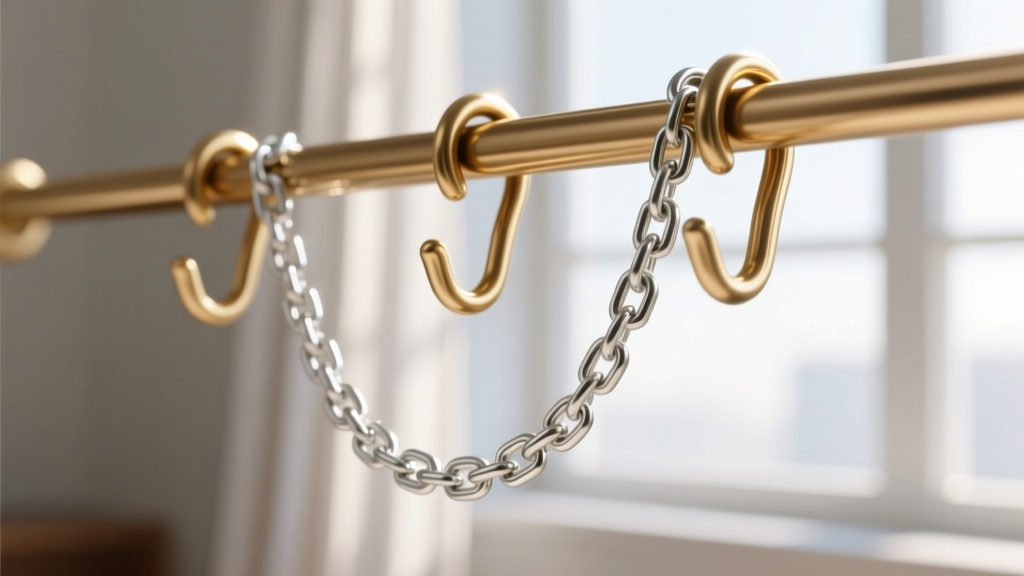
Step-by-Step: The Anti-Tarnish Shadow Box Build
The most effective and visually striking necklace holder diy design is the sealed shadow box. This design limits dust accumulation and allows you to integrate anti-tarnish strips seamlessly.
Dimensional Planning
Standard necklaces range from 16 inches (choker) to 24 inches (opera length). To prevent overlapping, you need a minimum vertical drop of 26 inches for your longest chains. A custom-built shadow box measuring 24 inches wide by 30 inches high provides ample space for a tiered hanging system.
Hook Selection and Chain Gauge Compatibility
This is where most DIY projects fail the E-E-A-T test. Standard hardware store cup hooks are typically 1.5mm to 2.0mm thick. If you attempt to hang a delicate 0.6mm box chain or a 0.8mm cable chain over a thick metal hook, the top link will warp, kink, and eventually snap under the pendant's weight.
Pro-Tip: Never hang fine chains directly on bare steel or thick brass hardware. Instead, purchase 18-gauge brass wire to bend custom, narrow J-hooks, or slide a 2mm piece of polyethylene foam tubing over standard cup hooks to create a soft, wide resting surface that supports the chain links without bending them.
Space your hooks exactly 3.5 inches apart. This specific measurement ensures that even necklaces with wide, asymmetrical pendants (like a 2-inch baroque pearl drop) will not collide with neighboring chains when the door is closed or moved.
Integrating a Maintenance and Cleaning Station
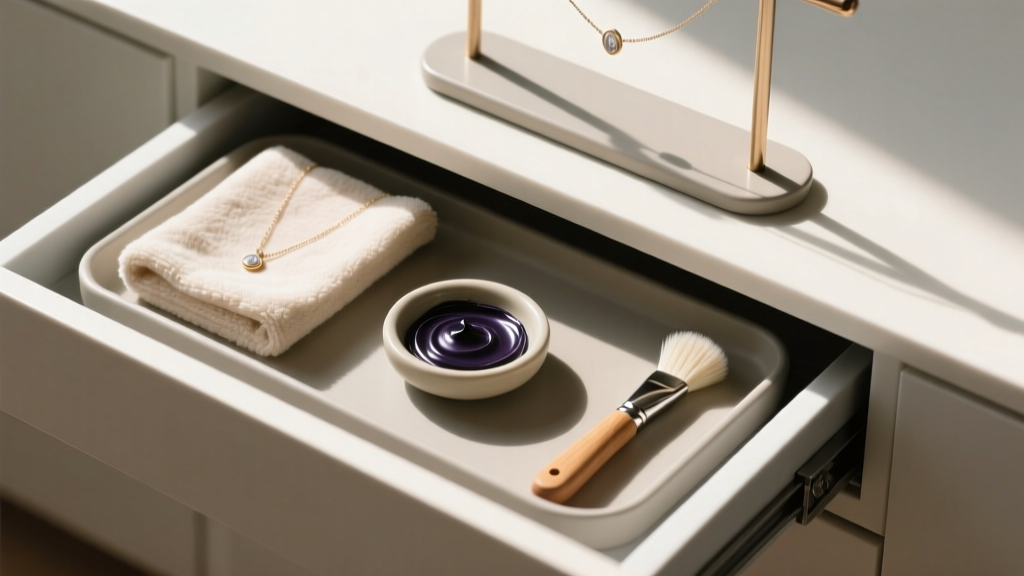
A true jewelry care setup goes beyond passive storage. By modifying your DIY holder, you can create an active maintenance hub. Dedicate the bottom 4 inches of your shadow box to a pull-out drawer lined with microfiber.
This drawer should house your daily care toolkit:
- Silver Polishing Cloths: Impregnated with micro-abrasives and anti-tarnish agents (e.g., Hagerty or Sunshine cloths).
- Soft-Bristled Brushes: A baby-hair toothbrush for gently scrubbing diamond pavé settings where lotion and dead skin cells accumulate.
- Anti-Tarnish Strips: 3M copper-based anti-tarnish tabs that absorb airborne hydrogen sulfide. Replace these every 6 months.
- Clasp Lubricant: A micro-drop of synthetic watch oil for stubborn lobster clasps and spring rings.
Routine Care Checklist for Your Organized Collection
Now that your necklaces are suspended safely in a chemically inert environment, maintaining them becomes a frictionless process. Follow this schedule to keep your collection pristine:
Weekly Maintenance
- Wipe down any 14k or 18k gold chains worn directly against the skin with a dry, lint-free microfiber cloth before hanging them back on the DIY holder. This removes acidic sweat and body oils that degrade gold alloys over time.
- Inspect the jump rings on your most-worn pendants. Use a pair of flat-nose pliers to ensure the gap remains tightly closed; a 0.2mm gap is enough for a fine chain to slip through and be lost.
Bi-Annual Deep Care
- Replace the anti-tarnish strips hidden behind the fabric backing of your shadow box.
- For diamond and sapphire pendants (hardness 9-10), remove them from the holder and soak in a solution of warm water and a few drops of ammonia-free dish soap. Use your soft brush to clean beneath the gallery of the setting, rinse in distilled water, and dry completely before returning to the padded hooks.
- Never use ultrasonic cleaners on emeralds, opals, or pearls, as the high-frequency vibrations can shatter inclusions or strip the nacre.
Common DIY Mistakes That Damage Delicate Chains
As you finalize your necklace holder diy build, avoid these critical errors that compromise the structural integrity of your jewelry:
1. Using Magnetic Hooks: Neodymium magnets are popular in DIY builds for their ease of installation. However, strong magnetic fields can magnetize the steel springs inside lobster clasps, causing them to stick open or fail to retract properly. Always use mechanical screw-in hooks.
2. Ignoring Weight Distribution: Heavy gemstone pendants (like a 20-carat amethyst drop) placed on the top row of a poorly anchored shadow box can pull the fabric backing away from the wood. Always anchor your hooks directly into the wooden frame or a rigid MDF backing board, never just through the decorative fabric layer.
3. Overcrowding for Aesthetics: It is tempting to hang 30 necklaces on a single board for a maximalist visual display. Resist this urge. Overcrowding restricts airflow, trapping ambient humidity against the metal and accelerating oxidation, particularly in humid climates. Treat your jewelry with the same spatial respect you would afford fine art.
By approaching your storage solution as a vital piece of preservation equipment rather than a simple organizational tool, you ensure that every time you reach for your favorite necklace, it is pristine, untangled, and ready to wear.


