Hearts on Fire Necklace Care: Cleaning & Maintenance Guide
Preserve the brilliance of your Hearts on Fire necklace. Learn expert cleaning methods, safe chemicals, and maintenance tips for 18k gold and platinum.

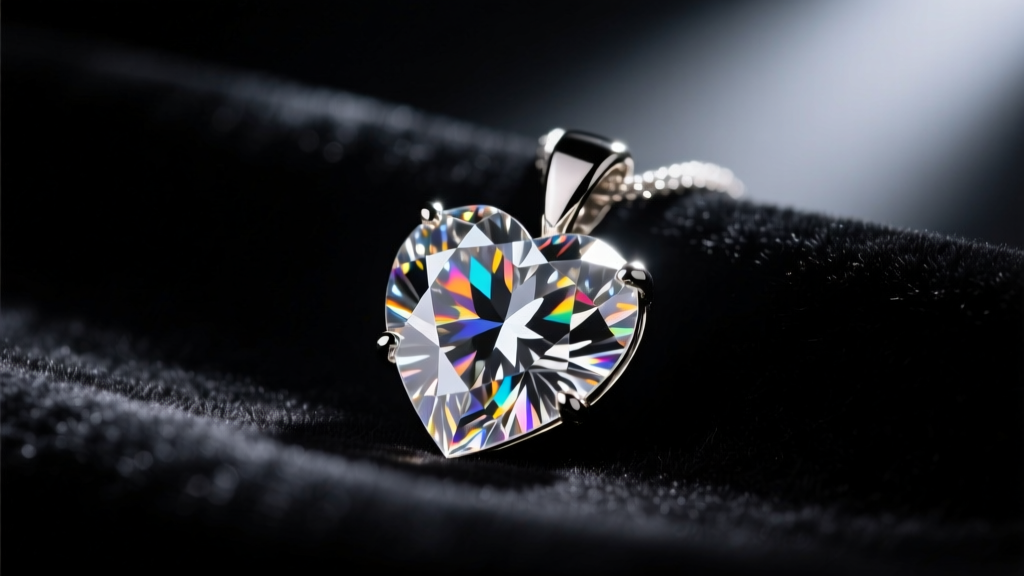
The Science of the Hearts On Fire Cut and Dirt Accumulation
Owning a Hearts on Fire necklace means possessing a masterclass in diamond optics. Unlike standard brilliant cuts evaluated at 10x magnification, Hearts on Fire diamonds are cut at 100x magnification to achieve their proprietary, perfectly symmetrical facet alignment. This precision maximizes light return, creating the brand’s signature scintillation. However, this optical perfection is precisely why rigorous maintenance is non-negotiable.
The pavilion (the bottom half of the diamond) is engineered to reflect light back through the crown. When sebum, cosmetic residue, or hard water minerals accumulate on the pavilion facets, they alter the refractive index at the diamond-air boundary. Instead of reflecting light internally, the diamond begins to leak light out of the bottom, resulting in a dull, lifeless appearance. According to the Gemological Institute of America (GIA), diamonds are naturally lipophilic, meaning they attract and hold onto oils from your skin and lotions far more readily than other gemstones. For a precision-cut stone, even a microscopic layer of oil will visibly degrade its fire and brilliance.
Material Breakdown: 18k Gold vs. Platinum Settings
Before applying any cleaning solution, you must identify the metal of your necklace setting, as Hearts on Fire primarily utilizes 18k gold and platinum. Each metal reacts differently to chemicals and physical abrasion.
18k Gold (Yellow, Rose, and White)
18k gold is 75% pure gold and 25% alloy metals. Yellow and rose gold derive their color from copper and silver alloys, which can oxidize or tarnish slightly over time when exposed to sulfur and chlorine. White gold, however, is alloyed with palladium or nickel and plated with rhodium to achieve a stark white finish. Abrasive cleaning methods will strip this rhodium layer prematurely, exposing the slightly yellowish underlying gold.
Platinum (950 Grade)
Hearts on Fire platinum settings are typically 95% pure platinum and 5% ruthenium or iridium. Platinum is incredibly durable and hypoallergenic, but it is prone to developing a "patina"—a satin-like finish caused by microscopic scratches displacing the metal rather than removing it. While patina is desirable to some, aggressive polishing during cleaning can unintentionally burnish the metal, altering the intended finish of the setting.
The Definitive Home Cleaning Protocol
To safely restore the optical performance of your Hearts on Fire necklace without damaging the precious metal setting, follow this exact, jeweler-approved protocol.
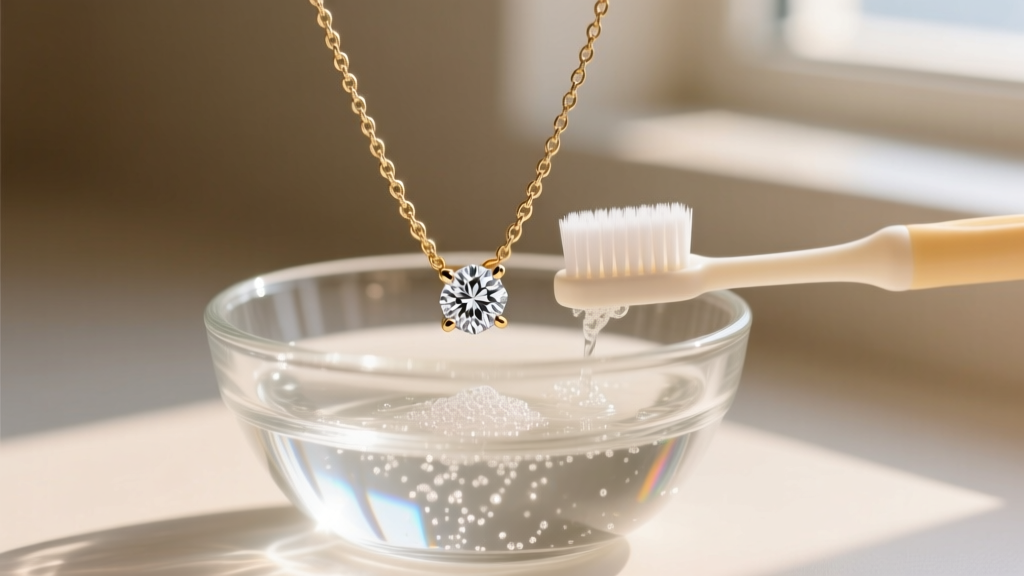
Step 1: Prepare a pH-Neutral Solution
Fill a glass bowl with distilled water. Never use tap water, as the calcium and magnesium in hard water will leave mineral deposits on the diamond facets. Add exactly three to four drops of a mild, pH-neutral dish soap (such as original blue Dawn). Avoid soaps with added moisturizers or citrus degreasers, which can leave a filmy residue or react with gold alloys.
Step 2: The Soak
Submerge the necklace completely and let it soak for 15 to 20 minutes. This allows the surfactants in the soap to break down the lipid bonds of skin oils trapped beneath the girdle of the diamond.
Step 3: Targeted Agitation
Using an extra-soft baby toothbrush (never a standard adult brush, as the bristles can scratch 18k gold), gently sweep the bristles across the back of the diamond (the pavilion). Use light, circular motions to dislodge debris from the prong heads and the gallery wire beneath the stone.
Step 4: The Distilled Rinse and Dry
Rinse the necklace under a gentle stream of distilled water. Pat dry with a lint-free microfiber cloth. Never use paper towels or tissues, as the wood pulp fibers can cause micro-scratches on polished gold and leave lint trapped in the prongs.
Chemical Hazards: What to Keep Away From Your Diamonds
While diamonds rank a 10 on the Mohs hardness scale and are virtually impervious to chemical etching, the alloy metals in your Hearts on Fire setting are highly vulnerable. Below is a matrix of common household chemicals and their specific failure modes on luxury jewelry.
| Chemical Agent | Common Source | Impact on 18k Gold & Platinum Settings |
|---|---|---|
| Chlorine | Swimming pools, bleach | Causes stress corrosion cracking in 18k gold alloys, leading to catastrophic prong failure. |
| Abrasive Pastes | Baking soda, toothpaste | Scratches 18k gold (Mohs 2.5-3) and strips rhodium plating from white gold settings. |
| Ammonia | Glass cleaners | Safe for diamonds and platinum in low doses, but can pit and dull copper alloys in rose gold. |
| Acetone | Nail polish remover | Does not harm diamonds or metals, but will dissolve any temporary jeweler's epoxy used in repairs. |
For comprehensive guidelines on chemical interactions with precious metals, refer to the American Gem Society (AGS) care directives.
Ultrasonic Cleaners and Pave Settings: A Warning
Many luxury owners invest in commercial ultrasonic cleaners for home use. While ultrasonic waves are excellent for shaking dirt out of the microscopic crevices of a solitaire setting, they pose a severe risk to pave or micro-pave Hearts on Fire necklaces (such as the Dream or Iluma collections).
Ultrasonic cleaners operate via cavitation—creating millions of microscopic vacuum bubbles that implode against the jewelry. In micro-pave settings, the diamonds are held by incredibly tiny beads of metal. The high-frequency vibrations from an ultrasonic machine can easily rattle these micro-prongs loose, resulting in lost melee diamonds. If your necklace features any pave work, strictly avoid ultrasonics and stick to the manual soaking and brushing method outlined above.
Professional Servicing and Rhodium Replating
Home cleaning cannot replace professional maintenance. You should take your Hearts on Fire necklace to an authorized retailer or a certified bench jeweler every 12 to 18 months.
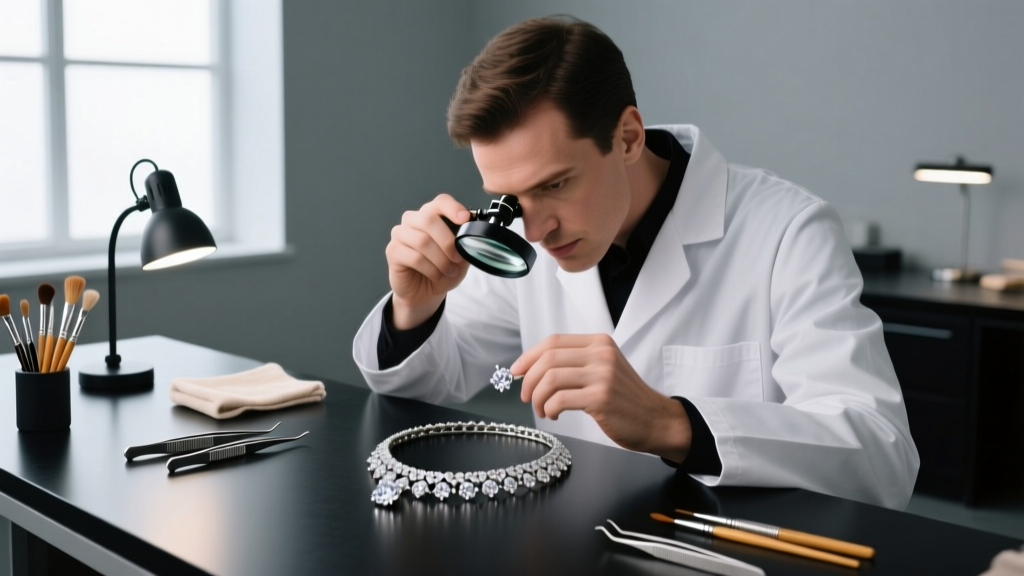
Prong Tightening and Wear Analysis
A jeweler will use a 10x triplet loupe to inspect the gallery and prong heads for metal fatigue. Even platinum prongs can wear thin from friction against clothing. Catching a worn prong before it snaps is the difference between a $50 repair and a devastating loss of a center stone.
Rhodium Dipping for White Gold
If your necklace is crafted in 18k white gold, professional maintenance includes rhodium replating. Over 12 to 18 months of daily wear, the rhodium flash will wear off the high-friction areas (like the bail and the back of the pendant). The jeweler will polish the piece, ultrasonically clean it in professional-grade solutions, and electroplate a fresh layer of rhodium to restore its mirror-like, bright white finish.
Archival Storage Techniques
How you store your Hearts on Fire necklace is just as critical as how you clean it. Diamonds are the hardest natural substance on earth. If you toss your necklace into a communal jewelry box, the diamond pendant will act as a cutting tool, easily scratching the 18k gold chain, the clasp, and any other gemstones it comes into contact with.
Furthermore, diamonds can actually chip other diamonds if their girdles strike each other at the right angle. Always store your necklace in its original Hearts on Fire polyurethane-lined presentation box, or in an individual, soft-flocked jewelry pouch. Ensure the clasp is fastened before storage to prevent the chain from tangling into microscopic knots, which can stretch and weaken the delicate links over time. By combining meticulous home cleaning with disciplined storage and professional oversight, your necklace will retain its flawless, fiery brilliance for generations.


