What Is a Standard Necklace Length? Value & Pricing Guide
Discover what is a standard necklace length and how chain size impacts 2026 gold pricing. Learn to maximize value and avoid custom-length markups.

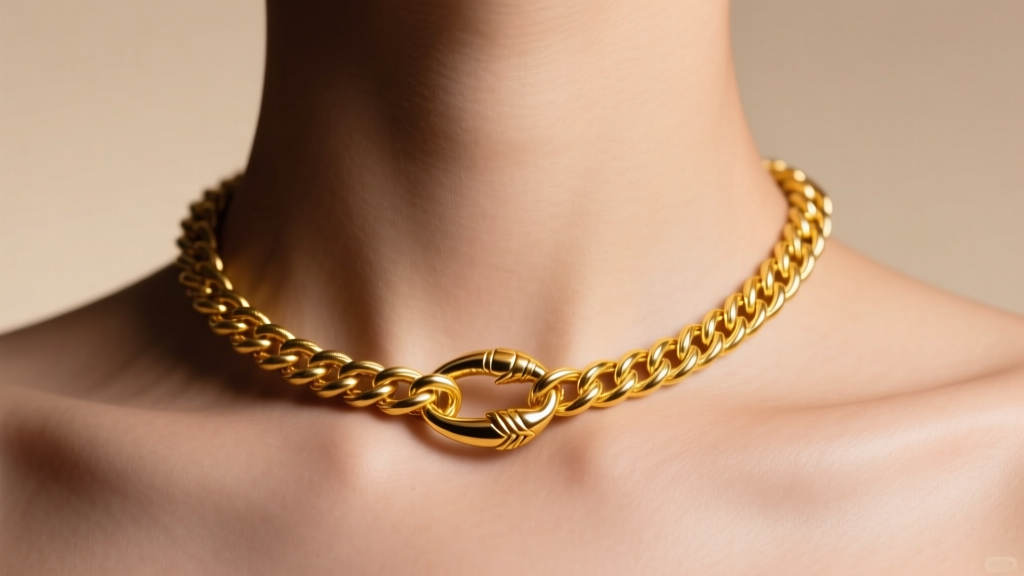
When navigating the fine jewelry market, understanding chain dimensions is about more than just aesthetics; it is a critical financial decision. With precious metal spot prices remaining historically elevated in 2026, every inch of metal directly impacts your out-of-pocket cost. If you have ever asked yourself, what is a standard necklace length, the answer requires looking past the jewelry counter and into the manufacturing realities of gram-weight pricing.
This guide breaks down the industry-standard lengths, analyzes how length dictates baseline cost, and provides a strict value-assessment framework to ensure you are paying for metal quality, not arbitrary retail markups.
The Core Question: What Is a Standard Necklace Length?
The jewelry industry operates on a rigid sizing grid to minimize manufacturing waste and standardize clasp soldering. For women's fine jewelry, the undisputed standard is 18 inches (the Princess length), which sits perfectly at the collarbone. For men's chains, the standard shifts to 20 to 22 inches to accommodate broader neck circumferences and rest comfortably below the Adam's apple.
However, 'standard' encompasses five distinct tiers, each serving a specific anatomical and stylistic function:
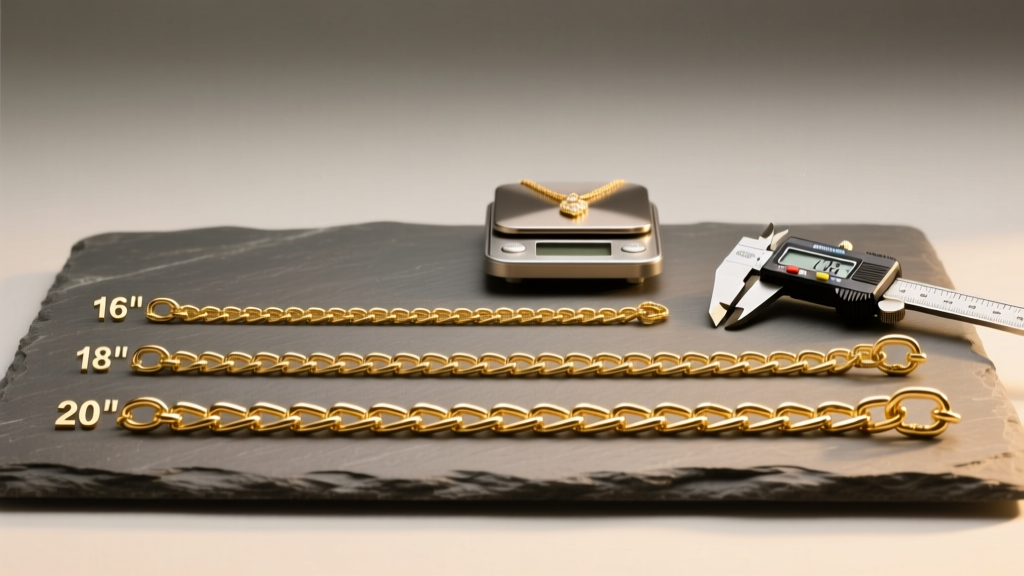
- 16 Inches (Choker/Collar): Sits tightly against the base of the neck. Ideal for lightweight pendants and high-impact, minimal-metal designs.
- 18 Inches (Princess): The most mass-produced length globally. Rests on the collarbone and fits the vast majority of commercial pendant bales.
- 20 Inches (Matinee): Drops just below the collarbone. A versatile length for layering or wearing over crew-neck fabrics.
- 22 Inches (Matinee Drop): Rests on the upper chest. Common for men's chains and heavier, statement pendants.
- 24 Inches (Opera): Falls below the bust line. Typically reserved for lightweight beads, lariats, or heavy, wide-gauge masculine chains.
The Metal Multiplier: How Length Dictates Baseline Cost
To assess value, you must understand that solid gold and silver chains are priced primarily by gram weight, not by the inch. A chain's length, combined with its link profile (e.g., rope, curb, figaro) and gauge thickness, determines its total mass. In 2026, with 14k gold retail prices averaging between $70 and $95 per gram depending on the brand and link complexity, scaling up from an 18-inch to a 24-inch chain can increase the price by 35% to 50%.
| Length | Style Category | Avg. Gram Weight (2.5mm Rope) | Est. 14k Gold Retail (2026) |
|---|---|---|---|
| 16 Inches | Choker / Collar | 5.0g - 6.5g | $375 - $485 |
| 18 Inches | Princess (Standard) | 6.0g - 8.0g | $450 - $600 |
| 20 Inches | Matinee | 7.5g - 9.5g | $560 - $710 |
| 22 Inches | Matinee Drop | 8.5g - 11.0g | $635 - $825 |
| 24 Inches | Opera | 10.0g - 13.0g | $750 - $975 |
Calculating the Gram-Weight Premium
According to the Gemological Institute of America (GIA), the karatage of the alloy dictates the base material cost, but the manufacturing technique dictates the premium. Machine-made standard lengths (like 18-inch cable chains) benefit from economies of scale, keeping the retail markup closer to 2x the melt value. Conversely, a 24-inch chain requires more raw material to be fed through the extrusion and soldering machines, increasing the absolute dollar amount of the manufacturer's margin.
Value Assessment: Standard vs. Custom Lengths
From a strict budget and value perspective, always buy standard lengths. When you request a custom length—say, 19.5 inches to perfectly hit a specific neckline—a jeweler must take a standard 20-inch chain, cut it, remove the factory-soldered clasp, resize the links, and laser-solder a new clasp.
This bench work introduces three financial penalties:
- Labor Fees: Expect to pay $45 to $120 in bench fees for custom resizing and clasp soldering.
- Material Loss: Cutting links results in a minor loss of precious metal, which you have already paid for by the gram.
- Structural Compromise: Factory-soldered links are uniformly treated. Hand-soldered jump rings, if not done by a master bench jeweler, can become brittle failure points over time.
Pro Tip: If you need a chain to sit exactly 19 inches, buy a 20-inch standard chain and have a jeweler add a 1-inch solid gold extender chain to the clasp. This costs under $30 in labor and preserves the structural integrity of the primary chain.
The Choker & Lariat Exception: Budget Hacks for High Impact
If your budget is fixed but you refuse to compromise on metal purity, manipulate the length to your advantage. By opting for a 14-inch or 16-inch choker, you reduce the required gram weight by 20% to 30% compared to an 18-inch princess chain. This mathematical reality allows you to upgrade your material grade without exceeding your budget.
For example, if your hard cap is $800, you might only afford a heavy, 10-gram 14k gold rope chain at 22 inches. However, by dropping to a 16-inch choker, that same $800 budget can secure a 7-gram chain in 18k or even 22k yellow gold. The higher gold purity offers a richer, deeper yellow hue and better hypoallergenic properties, delivering vastly superior intrinsic value and visual impact for the exact same financial outlay.
2026 Buyer’s Framework: Maximizing ROI on Chain Necklaces
When evaluating the true value of a chain, length and gram weight are only half the equation. Use this structural checklist to identify hidden failure modes and overpriced retail traps:
1. The Clasp-to-Weight Ratio
The Federal Trade Commission (FTC) mandates accurate karat marking, but it does not regulate clasp engineering. A common failure mode in longer chains (22 to 24 inches) is an undersized clasp. A heavy 12-gram, 24-inch chain generates significant kinetic momentum when it swings. If it is secured by a standard 5mm lobster clasp, the internal spring mechanism will eventually fatigue and snap. Rule of thumb: Chains over 10 grams require a minimum 9mm to 12mm heavy-duty lobster or a secure box clasp with a safety figure-eight catch.
2. Hollow vs. Solid Links
Retailers often sell 20-inch or 24-inch chains that look exceptionally thick (e.g., 6mm Cuban links) but weigh a suspiciously low 4 grams. These are hollow-core or resin-filled chains. While they offer the visual footprint of a heavy chain at a fraction of the cost, they are virtually impossible to repair if crushed or kinked. For long-term value retention and durability, always verify the gram weight aligns with the visual gauge of the metal.
3. Soldered vs. Unsoldered Links
For chains worn daily with pendants, ensure the links are individually soldered. Unsoldered cable or curb chains will stretch and pull apart under the persistent friction and weight of a pendant bail. Soldered links increase the manufacturing cost by roughly 15%, but they increase the lifespan of the necklace indefinitely.
Final Verdict on Length and Value
So, what is a standard necklace length? It is 18 inches for women and 20 to 22 inches for men. But more importantly, the standard length is the most economically efficient length you can buy. By sticking to the 16, 18, 20, 22, and 24-inch manufacturing grid, you avoid custom bench fees, ensure optimal clasp-to-weight engineering, and benefit from mass-production pricing. In a 2026 market where every gram of gold and silver commands a premium, respecting the standard sizing grid is the smartest way to maximize your jewelry investment.


