How to Authenticate and Style a Genuine Jade Cat Necklace
Learn how to authenticate, grade, and style a genuine jade cat necklace. Expert tips on jadeite vs nephrite, treatments, and chain pairing.

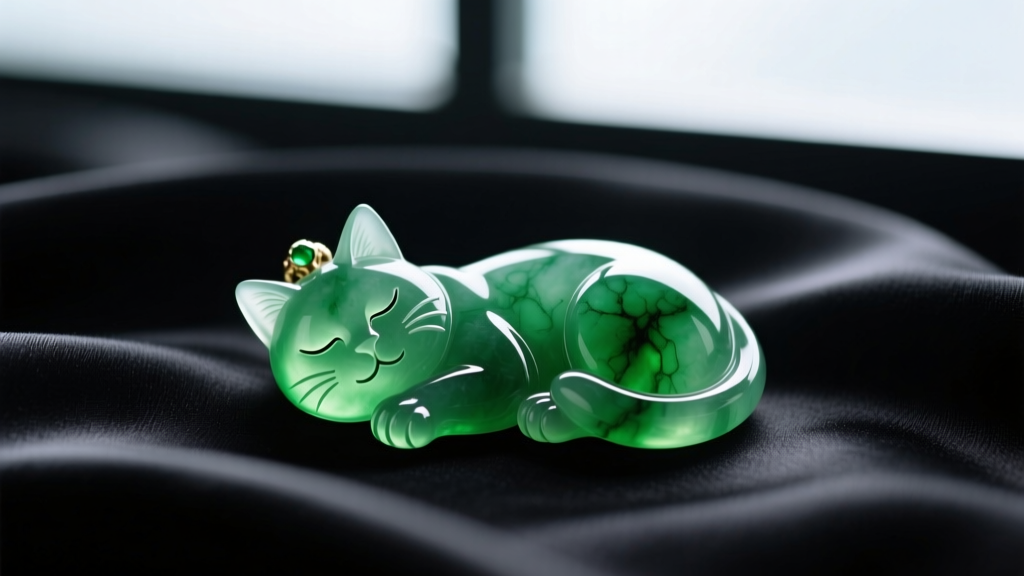
The Cultural and Gemological Appeal of the Jade Cat
The jade cat necklace is more than just a charming piece of animal-inspired jewelry; it is a convergence of deep cultural symbolism and complex gemology. In many East Asian traditions, the cat motif represents agility, independence, and the warding off of negative energy, while jade itself is revered as a stone of heaven, offering protection and longevity to the wearer. However, the modern jewelry market is saturated with glass imitations, dyed serpentine, and heavily treated stones masquerading as high-quality jade. Whether you are inheriting a vintage piece or shopping for a new carved pendant, understanding how to properly authenticate, mount, and style a jade cat necklace is essential for any serious collector or jewelry enthusiast.
Step 1: Differentiating Jadeite from Nephrite
The term 'jade' is an umbrella classification for two distinct metamorphic minerals: Jadeite and Nephrite. According to the Gemological Institute of America (GIA), jadeite is a pyroxene mineral known for its glassy luster and vibrant color spectrum, while nephrite is an amphibole mineral prized for its extreme toughness and oily, matte finish. Identifying which mineral your cat pendant is carved from dictates its value, care requirements, and ideal hardware pairing.
| Property | Jadeite (Hard Jade) | Nephrite (Soft Jade) |
|---|---|---|
| Chemical Composition | NaAlSi2O6 (Pyroxene) | Ca2(Mg,Fe)5Si8O22(OH)2 (Amphibole) |
| Mohs Hardness | 6.5 to 7.0 | 6.0 to 6.5 |
| Specific Gravity | 3.30 - 3.36 | 2.90 - 3.03 |
| Refractive Index | 1.66 (approx) | 1.60 - 1.63 |
| Visual Texture | Granular, glassy, translucent | Fibrous, interlocking, oily luster |
| Common Cat Carving Styles | Intricate, high-polish, detailed facial features | Smooth, rounded, minimalist or ancient motifs |
Step 2: The 4-Point Authentication Protocol
Before stringing your jade cat pendant, you must verify its authenticity. Imitations like aventurine quartz, chrysoprase, and leaded glass are frequently carved into feline shapes and sold to tourists and uninformed buyers.
Visual and Light Inspection
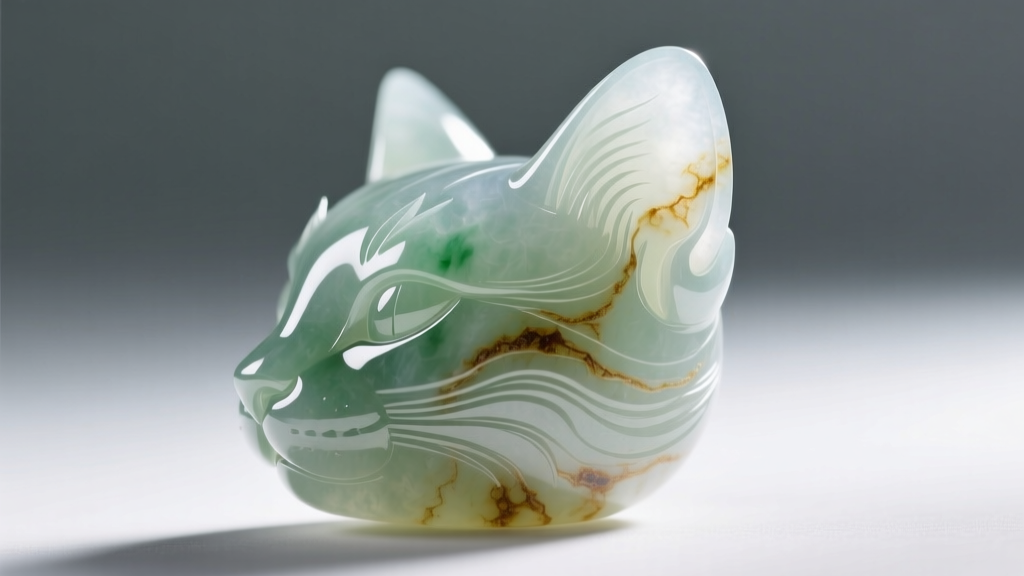
Hold the pendant up to a bright, concentrated LED light. Genuine jadeite will reveal a fibrous or granular internal structure. If you see perfectly round air bubbles, you are holding glass. If the color appears to be concentrated in microscopic fractures or spiderweb-like veins, the stone has likely been dyed. Natural jade exhibits 'color zoning'—subtle, uneven transitions between green, white, or lavender hues that follow the stone's natural crystal habit.
The Temperature and Touch Test
Jade has high thermal inertia. When you pick up a genuine jade cat pendant from a room-temperature table, it should feel distinctly cold to the touch and take several seconds to warm up against your skin. Glass and plastic imitations will feel neutral or warm almost immediately.
The Scratch and Sound Tests
While you should never scratch a finished piece of jewelry, you can perform a sound test. Gently tap the jade cat pendant with a steel needle or another piece of jade. Genuine nephrite and jadeite produce a clear, resonant, bell-like chime. Treated jade (polymer-impregnated) or glass will emit a dull, flat 'clack.' For a comprehensive breakdown of jade testing, refer to the GIA's Jade Quality Factors guide, which outlines advanced spectroscopic testing methods used by gemologists to detect polymer resins.
Step 3: Navigating Jade Treatments (Grades A, B, and C)
Not all genuine jade is created equal. The market categorizes jade into three distinct treatment grades, which drastically affect the value of your cat necklace.
Grade A (Natural): Completely untreated, save for traditional plum wax polishing. This is the only grade suitable for fine jewelry investment. A high-quality Grade A jadeite cat pendant can range from $2,000 to over $50,000 depending on translucency and 'imperial' green saturation.
Grade B (Bleached & Polymer-Impregnated): Acid-washed to remove brown inclusions, then injected with epoxy resin to improve clarity. Over 5 to 10 years, the resin yellows and becomes brittle.
Grade C (Dyed): Chemically dyed to mimic expensive green or lavender hues. The color will fade under prolonged UV exposure.
When purchasing, always demand a certificate from a reputable gemological laboratory (such as GIA, Gubelin, or SSEF) stating that the piece is 'Natural Jadeite' or 'Nephrite' with 'No indications of treatment.'
Step 4: Selecting the Optimal Chain and Bail Hardware
The hardware you choose for your jade cat necklace must balance aesthetics with the physical protection of the stone. Jade is tough, but a hard impact against a metal setting can cause internal fractures.
- Silk Cord (1.5mm - 2.0mm): The traditional and safest choice for jade. A hand-knotted black or deep green silk cord with a sliding macramé closure allows the pendant to sit flush against the skin, preventing it from swinging and chipping. Ensure the cord is pure silk, as synthetic nylon can fray and snap over time.
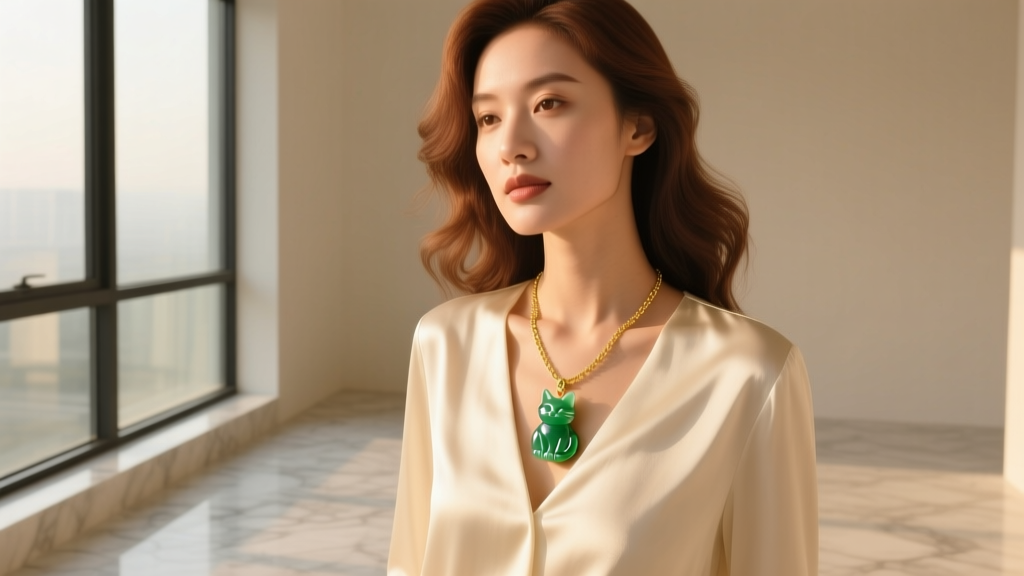
- 18K Gold Rope Chain (1.2mm - 1.5mm): For a modern, elevated look, pair a high-polish jadeite cat with a delicate 18K yellow gold rope chain. The warm undertones of yellow gold complement the cool green of the jade. Avoid chains thicker than 2mm, as they will visually overpower the delicate feline carving.
- The Bail Connection: Never drill a secondary hole through the top of a carved jade cat if it already has a horizontal top-drilled hole. Instead, use a 14K or 18K gold 'wrap bail' or a flexible wire-loop bail that threads through the existing hole, protecting the stone from the stress of a rigid metal jump ring.
Step 5: Styling Your Jade Cat Necklace for Modern Wardrobes
The cat motif can easily skew costumey or overly vintage if not styled correctly. The key to wearing a jade cat necklace in 2026 is contrasting its traditional roots with contemporary, minimalist silhouettes.
Neckline Pairings
The Mandarin Collar: A short, 16-inch silk cord holding a jade cat pendant sits perfectly just below the collarbone when worn with a structured mandarin or mock-neck top, echoing the stone's Asian heritage while maintaining a sharp, modern edge.
The Deep V-Neck: For a more dramatic look, use a 20-to-22-inch gold chain. The elongated V-shape draws the eye downward, allowing the light to catch the translucency of a Grade A jadeite carving.
Layering: Jade is dense and visually heavy. If layering, pair your jade cat necklace with ultra-fine, matte-finish gold chains (like a 1mm box chain) and avoid layering it with other gemstone pendants, which will create visual clutter and risk scratching the jade's polish through friction.
Step 6: Long-Term Care and Ultrasonic Warnings
Proper maintenance ensures your jade cat necklace retains its luster for generations. Human skin oils actually benefit natural nephrite, enhancing its oily sheen over time. However, jadeite requires different care.
Never use ultrasonic cleaners. The high-frequency vibrations can exacerbate microscopic internal fractures (cleavage planes) inherent in carved jade, potentially causing the cat's delicate features—like the ears or tail—to snap off. Furthermore, if your stone is secretly a Grade B treated jade, the ultrasonic waves will shatter the polymer resin matrix, ruining the pendant.
To clean your necklace, use only lukewarm water, a drop of mild, ammonia-free dish soap, and a soft-bristled baby toothbrush. Gently brush the crevices of the cat carving where dust and skin cells accumulate, rinse thoroughly, and dry with a lint-free microfiber cloth. Store the necklace in a soft velvet pouch separate from diamonds or sapphires, which rank higher on the Mohs scale and can easily scratch the jade's polished surface.


