How to Clean and Care for a 14k Gold Rosary Necklace
Learn expert techniques to clean, untangle, and maintain your 14k gold rosary necklace. Discover safe solutions to prevent tarnish and protect links.

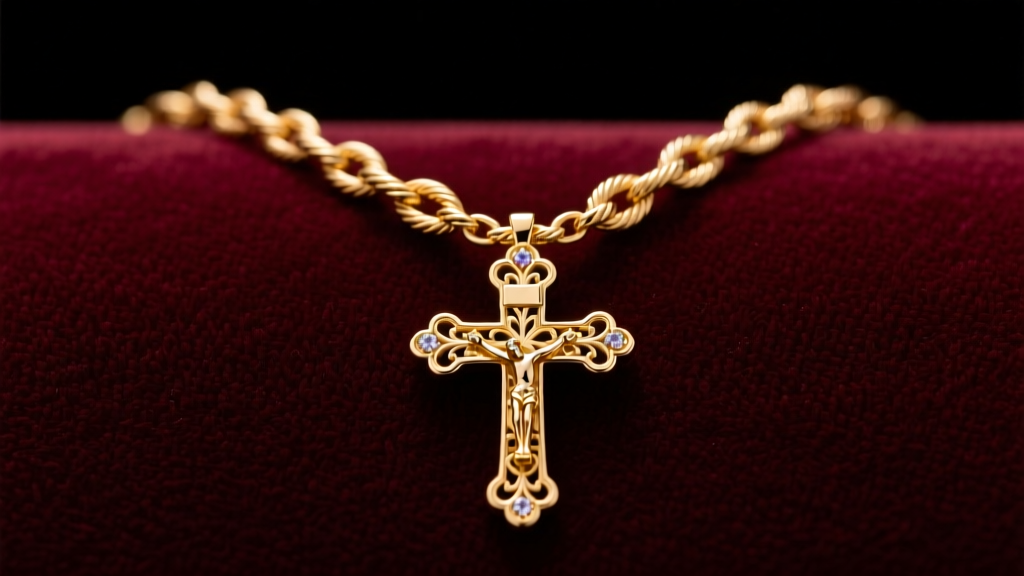
The Metallurgy of 14k Gold: Why Your Rosary Tarnishes
To properly care for a 14k gold rosary necklace, you must first understand its metallurgical composition. Pure 24k gold is entirely inert and will never tarnish, but it is far too soft for the delicate, intricate links required for a rosary chain. Therefore, jewelers alloy pure gold with other metals to increase durability. A 14k gold piece contains exactly 58.3% pure gold and 41.7% alloy metals—typically copper, silver, zinc, and sometimes nickel or palladium.
It is this 41.7% alloy fraction that makes your rosary susceptible to tarnish and discoloration. Copper, which is heavily used in 14k yellow and especially 14k rose gold, reacts readily with sulfur compounds in the air, as well as the natural acids and salts in human sweat. This chemical reaction creates copper sulfide, which manifests as a dull, dark film on the surface of your delicate cable links and ornate crucifix. According to the Gemological Institute of America (GIA), understanding these alloy reactions is the first step in preventing permanent surface damage and maintaining the structural integrity of fine karat gold jewelry.
Daily Wear and Prevention Strategies
A rosary necklace is often worn daily for devotional purposes, exposing it to a constant barrage of environmental and biological contaminants. The pH level of your skin, combined with the application of modern cosmetics, creates a high-risk environment for 14k gold. Lotions, perfumes, and hairsprays contain alcohols and emulsifiers that leave a microscopic, sticky residue on the chain. This residue not only dulls the gold's natural luster but also acts as a magnet for dust and dead skin cells, which become impacted in the tiny crevices of the crucifix and centerpiece.
The 'Last On, First Off' Rule
To minimize chemical exposure, always adhere to the 'last on, first off' rule. Your 14k gold rosary should be the final item you put on after your skincare and fragrance routines have completely dried, and the very first item you remove when you return home. Furthermore, never wear your rosary in chlorinated pools or hot tubs. Chlorine is highly reactive with the copper and silver alloys in 14k gold and can cause 'stress corrosion cracking,' a phenomenon where the microscopic joints of the chain links become brittle and eventually snap under minimal tension.
Step-by-Step Cleaning Guide for 14k Gold Rosaries
When your rosary begins to look dull or feels gritty to the touch, it requires a thorough but gentle cleaning. Rosary chains are notoriously delicate, often stamped from 22-gauge or 24-gauge wire and measuring between 1.2mm and 1.5mm in width. Aggressive scrubbing can easily warp these links or detach the jump rings connecting the crucifix.
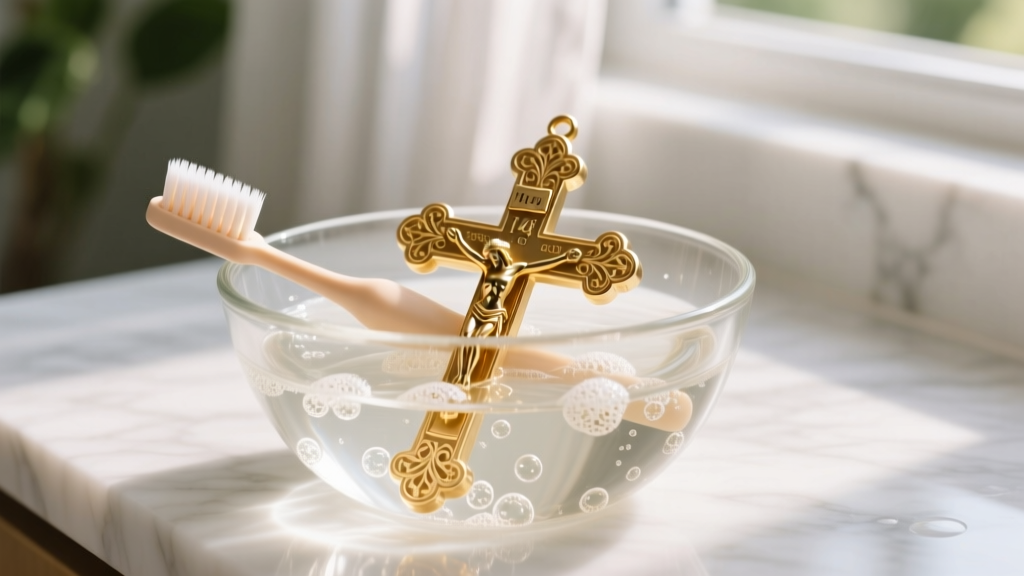
- Prepare the Solution: Fill a small glass bowl with warm distilled water. Tap water contains trace minerals and chlorine that can leave hard water spots. Add three drops of an ammonia-free, mild dishwashing liquid (such as original blue Dawn). Avoid any soaps containing harsh degreasers or moisturizing beads.
- Soak: Submerge the 14k gold rosary necklace in the solution for 15 to 20 minutes. This allows the surfactants to break down the sebum and cosmetic buildup trapped beneath the links and inside the detailed engravings of the centerpiece.
- Agitate Gently: Remove the rosary and lay it flat on a clean microfiber cloth. Using an extra-soft baby toothbrush, gently brush the crucifix, the centerpiece, and the chain links. Always brush in the direction of the chain's natural drape to avoid pushing bristles into the link joints and prying them open.
- Rinse and Dry: Rinse the rosary thoroughly under a gentle stream of lukewarm distilled water. Pat it dry with a lint-free microfiber cloth. Never use paper towels or tissue paper, as the wood fibers can inflict microscopic scratches on the polished gold surface.
Cleaning Agents: What to Use and What to Avoid
Not all jewelry cleaners are safe for karat gold or the gemstones that may adorn your rosary's centerpiece. Refer to the table below to ensure you are using safe chemistry.
| Cleaning Agent | Safe for 14k Gold Rosaries? | Notes & Warnings |
|---|---|---|
| Mild Dish Soap & Distilled Water | Yes (Highly Recommended) | Safe for all 14k gold alloys and most gemstones. |
| Commercial Gold Dip (Thiourea-based) | No | Strips patina, can damage porous stones like turquoise or pearls. |
| Ultrasonic Cleaners (40 kHz) | Conditionally | Safe for plain gold chains; will shatter enamel, opals, or emeralds. |
| Baking Soda & Aluminum Foil Bath | No | Creates a galvanic reaction that can permanently pit 14k gold alloys. |
| Whitening Toothpaste | No | Contains hydrated silica, which is highly abrasive and scratches gold. |
Untangling Delicate Rosary Chains Without Breaking Links
Because rosary chains feature small, uniform links and a heavy pendant, they are highly prone to knotting, especially when stored loosely in a pocket or purse. Pulling on a knot in a 1.2mm 14k gold chain will cause the wire to stretch, thin, and eventually break. If your rosary becomes tangled, do not panic and never use brute force.
Place the knotted section on a hard, flat surface, such as a glass table or an acrylic cutting board. Sprinkle a generous amount of talc-free baby powder or apply a single drop of mineral oil directly onto the knot. The lubricant reduces the friction between the gold links. Take two fine sewing needles (0.5mm gauge) and gently insert the tips into the exact center of the knot. Instead of pulling the ends of the chain, use the needles to slowly tease the center links outward, loosening the tension. As of 2026, professional jewelers frequently use this exact needle-and-lubricant method to salvage severely knotted heirloom chains without requiring soldering repairs.

Long-Term Storage and Professional Maintenance
Proper storage is just as critical as the cleaning process. When you are not wearing your 14k gold rosary necklace, it should never be tossed into a communal jewelry box where it can become scratched by harder gemstones like diamonds or sapphires. Store the rosary in an individual, soft flannel pouch or a resealable polyethylene bag. For maximum tarnish prevention, place a 3M anti-tarnish strip inside the bag. These strips absorb airborne sulfur and hydrogen sulfide, effectively neutralizing the environment and keeping the copper alloys in your 14k gold from oxidizing.
Finally, schedule an annual inspection with a certified bench jeweler. According to Jewelers of America, routine professional maintenance is vital for pieces with moving parts or delicate solder joints. A jeweler will use a steam cleaner to blast away deeply embedded grime, check the structural integrity of the jump rings holding your crucifix, and ensure that any gemstone prongs on the centerpiece remain tight and secure. This proactive approach ensures your 14k gold rosary remains a pristine, enduring symbol of faith for generations to come.


