How to Style and Assemble a Custom Double Pendant Necklace
Learn how to design, assemble, and style a custom double pendant necklace. Master chain gauges, jump ring sizing, and tangle-free layering.

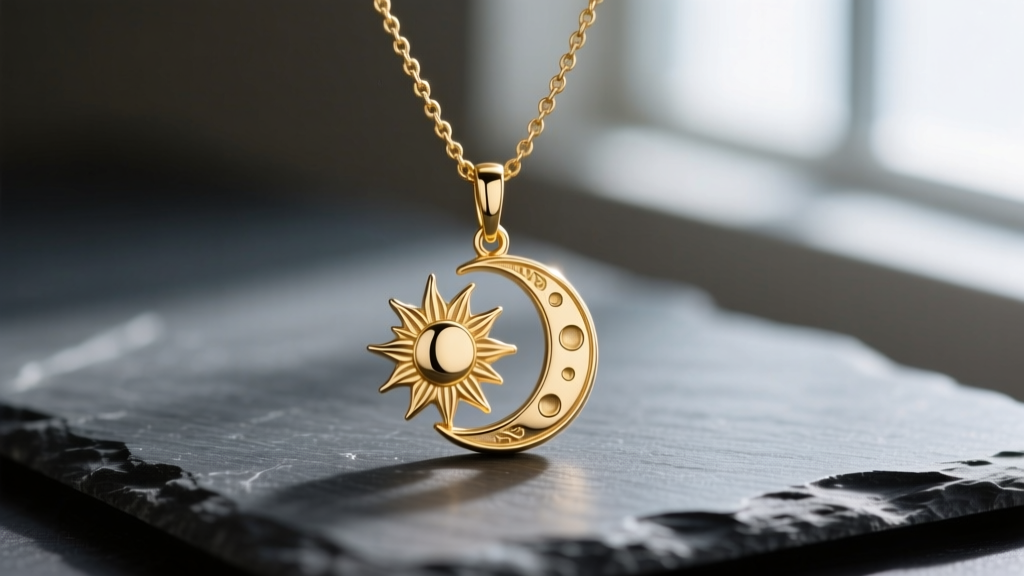
The double pendant necklace has evolved from a simple layering trend into a staple of modern jewelry design. Unlike wearing two separate chains that inevitably tangle and compete for space, a unified double pendant necklace offers a curated, intentional look. Whether you are combining a meaningful initial charm with a birthstone, or pairing a celestial sun and moon motif, engineering this piece requires an understanding of weight distribution, chain metallurgy, and spatial mathematics.
In this comprehensive guide, we will walk through the exact steps to design, assemble, and style a custom double pendant necklace that lays flat, resists tangling, and withstands daily wear. By moving beyond generic jewelry advice, we will explore the specific gauge sizes, jump ring mechanics, and spacing formulas used by professional bench jewelers.
The Anatomy of a Tangle-Free Double Pendant Necklace
A common failure mode in DIY multi-charm necklaces is the 'pendant flip,' where one charm slides over the other, scratching the metal and creating a tangled mess. This happens when both pendants are attached to the exact same chain link or placed too closely together. To prevent this, a properly engineered double pendant necklace utilizes either a fixed-drop Y-chain configuration or a single continuous chain with strategically spaced, fixed attachment points.
The single-chain method is the most versatile for everyday wear. It requires calculating the exact drop distance between the primary (top) pendant and the secondary (bottom) pendant. This drop must be long enough to prevent the bails from colliding during movement, but short enough to maintain the visual cohesion of a single piece. Furthermore, the hardware connecting the pendants to the chain must be meticulously chosen to prevent the bail from slipping into the split of a standard jump ring.
Step 1: Selecting the Right Chain Gauge and Material
The foundation of your double pendant necklace is the chain. Selecting a chain that is too thin will result in stretching or snapping under the dual weight of two pendants. Conversely, a chain that is too thick will overwhelm delicate charms and obscure the neckline. You must match the chain's tensile strength and link structure to the combined gram weight of your pendants.
For materials, 14k gold-filled wire offers the best balance of durability and affordability for custom assembly, featuring a thick outer layer of 14k gold mechanically bonded to a brass core. Sterling silver (925) is softer and more prone to stretching under heavy loads, while 316L surgical stainless steel provides maximum tensile strength for heavier, cast-metal pendants.
| Chain Style & Gauge | Max Weight Capacity | Best Pendant Type |
|---|---|---|
| 0.8mm - 1.0mm Cable Chain | Up to 10 grams | Lightweight stamped charms, thin birthstones |
| 1.2mm - 1.5mm Box Chain | Up to 25 grams | Medium solid pendants, small gemstone clusters |
| 1.8mm - 2.2mm Rope Chain | Up to 45 grams | Heavy cast lockets, large geometric pendants |
When sourcing your chain, always verify the gram weight limit with the manufacturer. According to metallurgical guidelines from the Gemological Institute of America (GIA), consistent stress on under-gauged precious metal chains will cause the links to elongate and eventually fail at the solder joints.
Step 2: Calculating the Drop and Spacing Math
Spacing is the most critical variable in double pendant assembly. If you are working with a standard 18-inch chain, the center point rests at the 9-inch mark. For a visually balanced double pendant, the primary (smaller or higher) pendant should be attached exactly at the center link. The secondary (larger or lower) pendant should be attached 1.5 to 2 inches below the first.
This 1.5-inch drop is the industry standard for a reason: it provides enough clearance so that a standard 8mm bail and a 10mm bail will not overlap when the wearer leans forward. To achieve this on a continuous chain, you must measure the exact length of the chain links. If your 1.2mm cable chain has links that are 2.5mm long, a 1.5-inch drop (approximately 38mm) requires you to skip exactly 15 links between the first and second attachment points.
Step 3: Assembly Techniques for Fixed Pendants
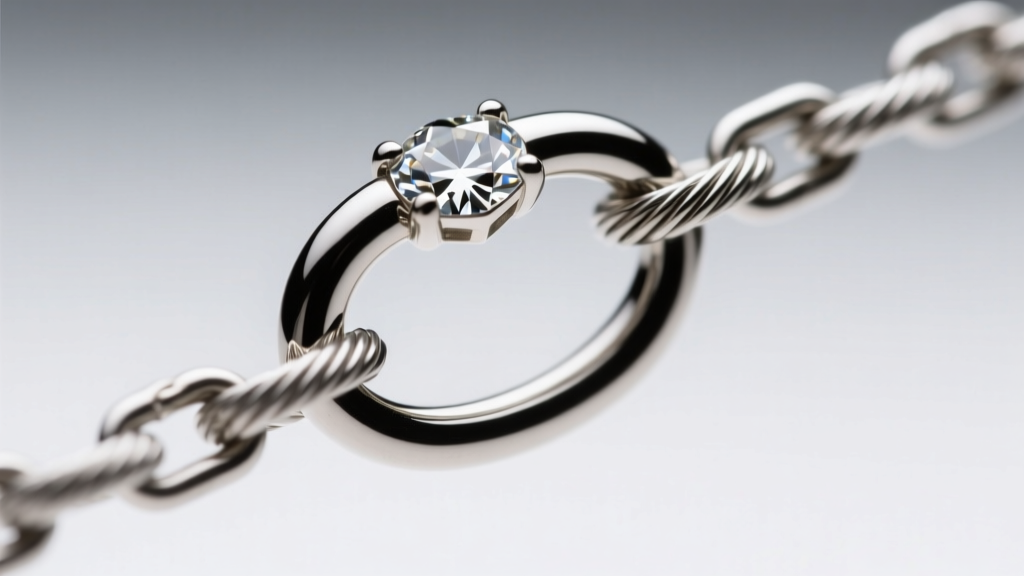
Attaching the pendants requires moving away from standard round open jump rings. Round jump rings have a split that aligns with the chain's movement, creating a hazard where the pendant bail can slip into the gap, saw through the metal, and detach. Professional jewelers utilize oval jump rings or soldered closed rings for permanent pendant attachment.
Here is the step-by-step assembly process using oval jump rings:
- Size Selection: Choose a 20-gauge or 18-gauge oval jump ring with an inner diameter of 4mm or 5mm. The oval shape ensures the split sits on the side, perpendicular to the bail.
- Opening the Ring: Use two pairs of flat-nose pliers. Grip the jump ring on either side of the split and twist laterally (like opening a door). Never pull the ends apart outward, as this distorts the oval shape and weakens the metal's temper.
- Threading: Slide the jump ring through the chain link first, then through the pendant bail. Ensure the split of the oval ring is facing outward, away from the bail's path.
- Closing: Twist the ends back together until you hear a faint 'click' or feel the metal flush against itself. For high-value pendants, apply a microscopic drop of jewelry-grade cyanoacrylate adhesive to the split before closing, or have a bench jeweler laser-solder the ring shut.
For those looking to master advanced wire-wrapping and cold-connection techniques, resources like Jewelry Making Daily offer excellent visual tutorials on securing bails without the use of soldering torches.
Step 4: Styling Your Double Pendant for Different Necklines
Once assembled, the styling of your double pendant necklace dictates its visual impact. Because the piece features two distinct focal points, it interacts differently with garment necklines than a single solitaire pendant. The goal is to frame the charms within the negative space of the clothing, rather than letting them compete with collars or seams.
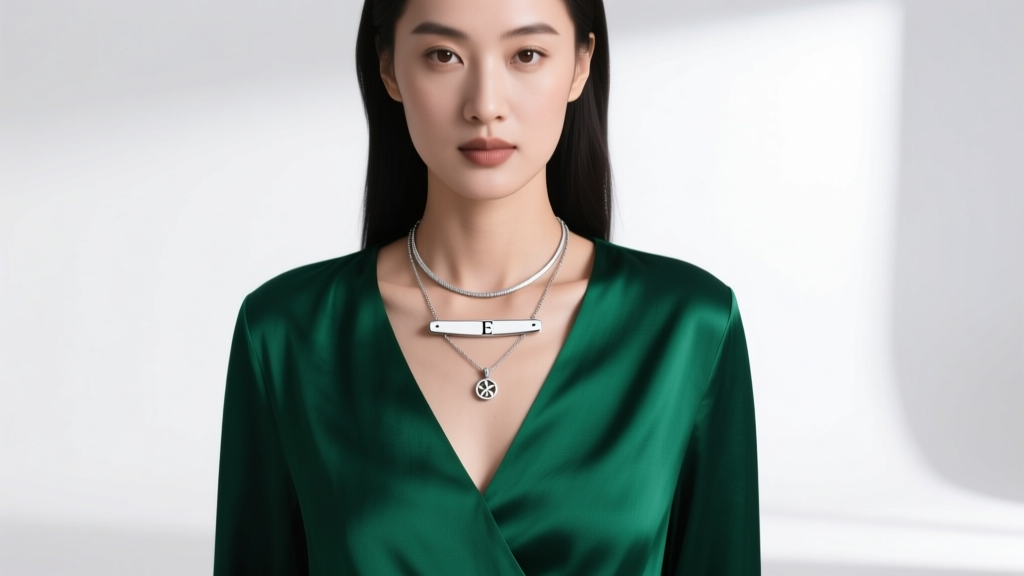
- Deep V-Necks: The ideal canvas. An 18-inch or 20-inch double pendant will naturally follow the geometric lines of the V-neck, drawing the eye downward and elongating the neck. Ensure the bottom pendant rests at least one inch above the hem of the neckline.
- Crew Necks: Opt for a shorter 16-inch choker-length double pendant. The two charms should sit entirely above the collar line to prevent a cluttered look where the metal fights with the fabric's edge.
- Scoop Necks: A 18-inch chain works beautifully here. The wider curve of the scoop neck allows the dual pendants to sit flat against the collarbone and upper chest, creating a balanced, symmetrical presentation.
- Button-Down Shirts: Wear the necklace underneath the collar, resting against the skin, with the top two buttons undone. The double pendant acts as a sophisticated alternative to a tie or scarf.
Troubleshooting Common Wear and Tear Issues
Even with perfect assembly, daily wear introduces friction and stress. The most common issue with double pendant necklaces is chain twisting, which occurs when the two pendants swing at different frequencies during walking, transferring torsional stress to the chain links. To mitigate this, store the necklace flat or hang it vertically from a jewelry stand; never toss it loosely into a drawer where the dual weights will knot the chain.
Another frequent issue is bail wear. The constant friction of the bail rubbing against the jump ring or chain link can eventually wear through softer metals like high-karat gold or pure silver. Inspect the inside of your pendant bails every six months. If you notice a groove forming, take the piece to a jeweler to have a harder metal loop (like platinum or white gold) soldered inside the bail to act as a sacrificial wear layer. By understanding the mechanics of your jewelry, your custom double pendant necklace will remain a flawless, tangle-free statement piece for years to come.


