How to Tell If a Necklace Is Gold: Expert Authentication Guide
Learn how to tell if a necklace is gold with our expert guide. Discover hallmark decoding, physical tests, and tips for authenticating vintage jewelry.


In the current 2026 jewelry landscape, the hunt for archival and vintage gold necklaces has shifted from a niche hobby to a mainstream style pursuit. As trends heavily favor 1970s Italian mesh, 1980s hollow-rope chains, and substantial 1990s curb links, the secondary market is flooded with both genuine heirlooms and highly deceptive counterfeits. For collectors and everyday buyers alike, knowing how to tell if a necklace is gold is no longer just about avoiding scams; it is an essential skill for navigating estate sales, online auctions, and vintage boutiques with confidence.
While modern gold-plating techniques like PVD (Physical Vapor Deposition) can mimic the luster of solid karat gold for years, the intrinsic value, skin-safety, and longevity of solid gold remain unmatched. This comprehensive guide moves beyond superficial visual checks, providing you with a jeweler-level framework to authenticate gold necklaces using hallmark analysis, physical property tests, and advanced verification methods.
The Vintage Gold Rush: Why Authentication Matters Now
The contemporary style radar is dominated by "heirloom hunting." Buyers are actively seeking out discontinued pieces from heritage houses like Cartier, Bulgari, and Margherita Burgunder. However, the high price of raw gold in recent years has incentivized sophisticated counterfeiters to produce brass-core chains with micro-thick gold electroplating that can easily fool the naked eye. A genuine 18K Italian gold herringbone necklace from 1985 holds significant melt value and archival prestige, whereas a modern gold-plated replica holds virtually none. Understanding the structural and chemical realities of gold is your first line of defense in this lucrative market.
Decoding Hallmarks: The First Line of Defense
The most immediate step in authenticating a gold necklace is examining its hallmarks. A hallmark is a microscopic stamp, usually located on the back of the pendant bail, the lobster clasp, or the first jump ring, that certifies the metal's purity. Use a 10x or 20x jeweler's loupe to inspect these areas.
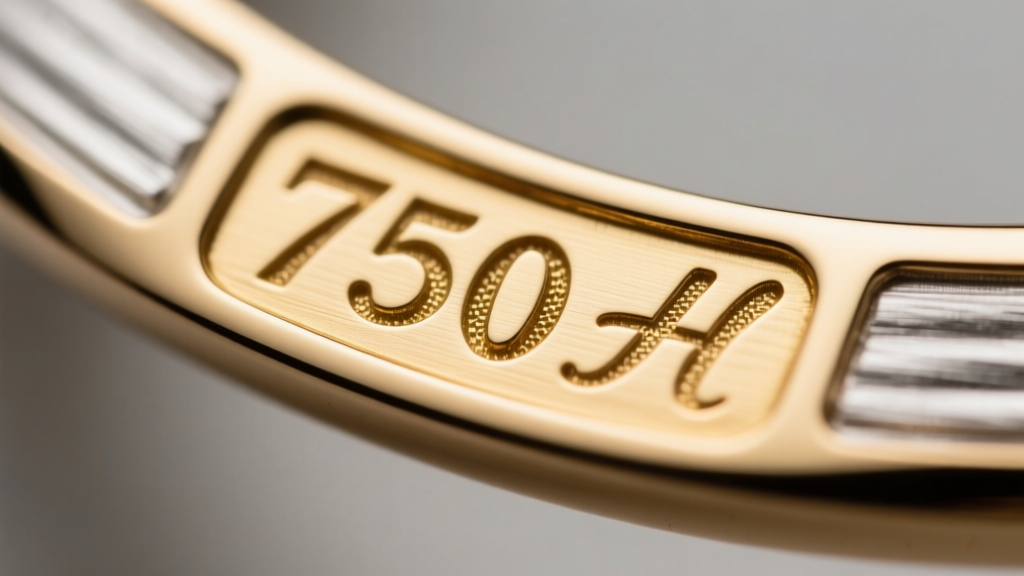
According to the Gemological Institute of America (GIA), gold purity is measured in karats (K) or millesimal fineness. While the US commonly uses the karat system, European vintage pieces—which dominate the current trend cycle—rely on millesimal stamps.
| Karatage | Millesimal Stamp | Gold Purity (%) | Common Alloy Metals & Traits |
|---|---|---|---|
| 24K | 999 | 99.9% | Pure gold. Very soft, deep yellow. Rarely used for durable chains. |
| 22K | 916 | 91.6% | Copper/Silver. Rich yellow, common in Middle Eastern and Indian jewelry. |
| 18K | 750 | 75.0% | Copper/Silver/Palladium. The standard for high-end European vintage chains. |
| 14K | 585 | 58.5% | Copper/Silver/Zinc. Highly durable, standard for US and UK everyday chains. |
| 10K | 417 | 41.7% | High alloy content. Pale yellow, very hard. Minimum US legal standard for 'gold'. |
Expert Insight: Counterfeiters often stamp fake chains with "18K" or "750". However, genuine hallmarks are stamped with a hydraulic press, resulting in crisp, deep, and perfectly aligned edges. If the stamp looks shallow, blurred, or unevenly spaced under a loupe, treat the piece with extreme suspicion.
At-Home Physical Tests for Gold Necklaces
If a necklace lacks a hallmark, or if you suspect the hallmark itself is forged, you must rely on the physical properties of gold. Gold has a unique atomic structure that dictates its weight, magnetism, and chemical stability.
The Neodymium Magnet Test
Gold is a diamagnetic metal, meaning it is weakly repelled by magnetic fields and will never stick to a magnet. To perform this test, you need a strong N52-grade neodymium magnet. Hold the magnet near the chain links. If the chain is attracted to the magnet, it contains ferromagnetic metals like iron, nickel, or cobalt, and is not solid gold.
Warning: The internal spring mechanism inside a lobster clasp or spring ring is almost always made of steel. The clasp will stick to the magnet even on a 100% genuine gold necklace. Always test the actual chain links and pendant body, not the clasp.
The Ceramic Streak Test
Find an unglazed ceramic tile or the unglazed bottom edge of a ceramic coffee mug. Gently drag a discreet, inconspicuous part of the necklace (like the end of a chain link) across the ceramic. Genuine gold will leave a distinct, shiny golden-yellow streak. If the streak is black, dark gray, or greenish, the necklace is likely made of brass, copper, or pyrite.
The Skin Discoloration Check
While not a definitive scientific test, observing how the metal reacts to your skin's pH over a few hours is telling. Base metals like copper and nickel react with sweat and oxygen to leave green or black smudges on your neck. High-karat solid gold (18K and above) is highly unreactive and will never discolor your skin. Note that 10K or 14K gold with high copper content may occasionally leave a faint green mark on individuals with highly acidic sweat, but this is a reaction to the alloy, not a sign of plating.
Advanced Verification: Acid Tests and Specific Gravity
For high-value archival pieces, at-home tests may not provide the certainty required to make a four-figure purchase. Professional jewelers rely on chemical and hydrostatic testing.
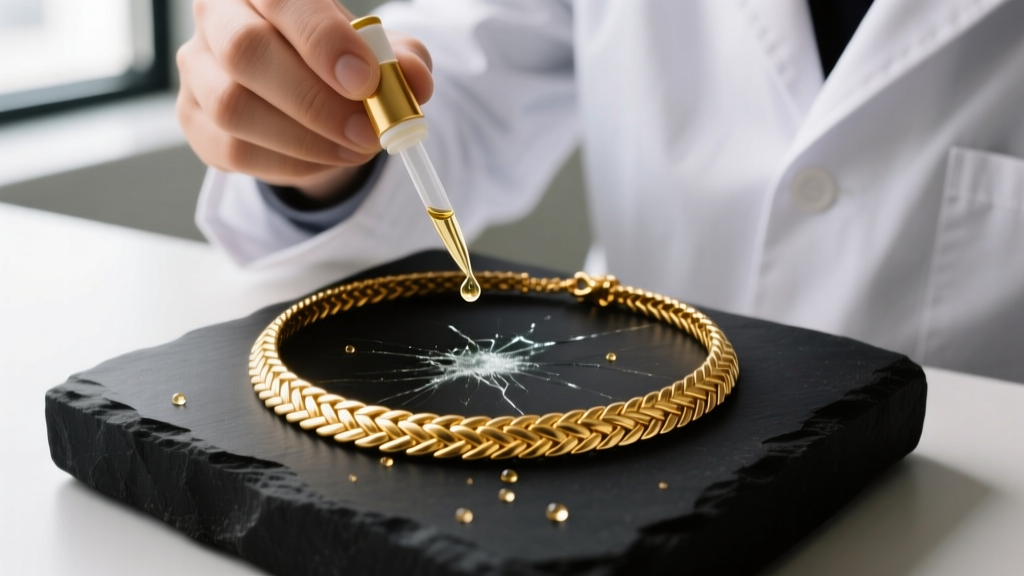
The Nitric Acid Scratch Test
This destructive test involves rubbing the necklace against a black basalt testing stone to leave a microscopic metal streak, then applying a drop of nitric acid solution calibrated to a specific karat (e.g., 14K or 18K testing acid).
- Clear/Unchanged Drop: The metal matches or exceeds the karat of the acid. It is solid gold.
- Turns Green: The acid is eating away base metals (copper/brass). The piece is gold-plated or gold-filled.
- Turns Milky/Cloudy: The base metal is sterling silver. The piece is gold-plated silver (vermeil).
Specific Gravity (Hydrostatic Weighing)
Gold is exceptionally dense. Pure 24K gold has a specific gravity of 19.32 g/cm³. By weighing the necklace in the air and then suspended in distilled water, you can calculate its density. An 18K yellow gold chain should yield a specific gravity between 15.2 and 15.9. If a heavy-looking chain yields a density of 8.5, it is made of brass, regardless of its color. Note: This test is highly inaccurate for hollow chains (like vintage tubogas or puffed mariner links) because the trapped air skews the water displacement metrics.
Spotting Modern Fakes: Plated vs. Vermeil vs. Filled
As you learn how to tell if a necklace is gold, you must also understand the terminology of gold alternatives, which are frequently misrepresented by online sellers.
| Category | Composition | Durability & Value |
|---|---|---|
| Gold Plated (GEP) | Brass or copper base with a microscopic flash of gold (under 0.5 microns). | Low. Will tarnish and wear off within months. Zero melt value. |
| Gold Vermeil | Sterling silver (.925) base plated with at least 2.5 microns of 10K+ gold. | Medium. Hypoallergenic base, but the gold layer will eventually wear thin. |
| Gold Filled (GF) | Brass core with a thick, mechanically bonded outer layer of gold (at least 5% of total weight). | High. Can last decades without wearing through. Often stamped '1/20 14K GF'. |
| Solid Gold | An alloy of pure gold and strengthening metals throughout the entire piece. | Lifetime durability. Holds intrinsic melt value and can be polished indefinitely. |
According to the Federal Trade Commission (FTC) Jewelry Guides, sellers are legally required to disclose if a piece is not solid gold. However, on peer-to-peer vintage platforms, this rule is routinely ignored. Always look for stamps like "HGE" (Heavy Gold Electroplate) or "GF" (Gold Filled), which legally disqualify the piece from being sold as solid gold.
Trend Alert: Navigating Estate and Archival Jewelry Markets
In 2026, the most coveted necklace silhouettes are the 1980s solid gold herringbone and the 1990s oversized Cuban link. When evaluating these specific styles, pay attention to the drape and weight. A genuine 18K herringbone chain possesses a liquid, heavy drape that conforms perfectly to the collarbone. Fakes, often made of plated copper or aluminum, will feel rigid, overly stiff, or suspiciously light for their visual width.
Furthermore, inspect the soldering points where the links connect or where the clasp meets the chain. Solid gold soldering is seamless and matches the color of the chain perfectly. Plated chains often reveal a darker, silvery, or greenish hue at the solder joints where the plating has pooled or burned off during the manufacturing process.
Final Thoughts on Gold Authentication
Mastering how to tell if a necklace is gold requires a synthesis of historical knowledge, visual acuity, and an understanding of metallurgy. While a strong magnet and a jeweler's loupe can eliminate 90% of cheap counterfeits, high-end fakes require professional XRF (X-ray Fluorescence) scanning or acid testing. When investing in trending vintage or contemporary gold necklaces, always buy from reputable dealers who offer a lifetime authenticity guarantee, and never hesitate to walk away from a deal if the piece fails your physical inspections. True style is rooted in quality, and solid gold remains the ultimate standard in jewelry craftsmanship.


