How to Authenticate a Real Amber Necklace: Step-by-Step Guide
Learn how to authenticate a real amber necklace with our step-by-step guide. Master the saltwater, UV, and visual tests to spot fakes easily.

The Rise of Amber Imitations: Why Authentication Matters
Amber has been prized for millennia, valued for its warm, golden hues and its unique ability to trap prehistoric life in pristine detail. However, as the popularity of organic gemstones surges, the market has become saturated with imitations. Today, buyers frequently encounter copal (immature tree resin), dyed plastics, glass, and even pressed amber dust (ambroid) masquerading as genuine fossilized resin. According to the Gemological Institute of America (GIA), distinguishing a real amber necklace from a synthetic forgery requires understanding the material's specific gravity, polymerization level, and optical properties. This step-by-step guide will equip you with the scientific and practical methods needed to confidently authenticate your amber jewelry at home.
Step 1: Visual and Tactile Inspection (The Eye and Touch Test)
Before resorting to liquids or UV lights, start with your senses. Genuine amber is remarkably lightweight and possesses a low thermal conductivity, meaning it feels warm to the touch almost immediately. Glass and quartz imitations, by contrast, will feel noticeably heavy and cold against the skin. When you hold a real amber bead, it should feel surprisingly light for its size, with a specific gravity ranging between 1.05 and 1.10.
Analyzing Inclusions and 'Sun Spangles'
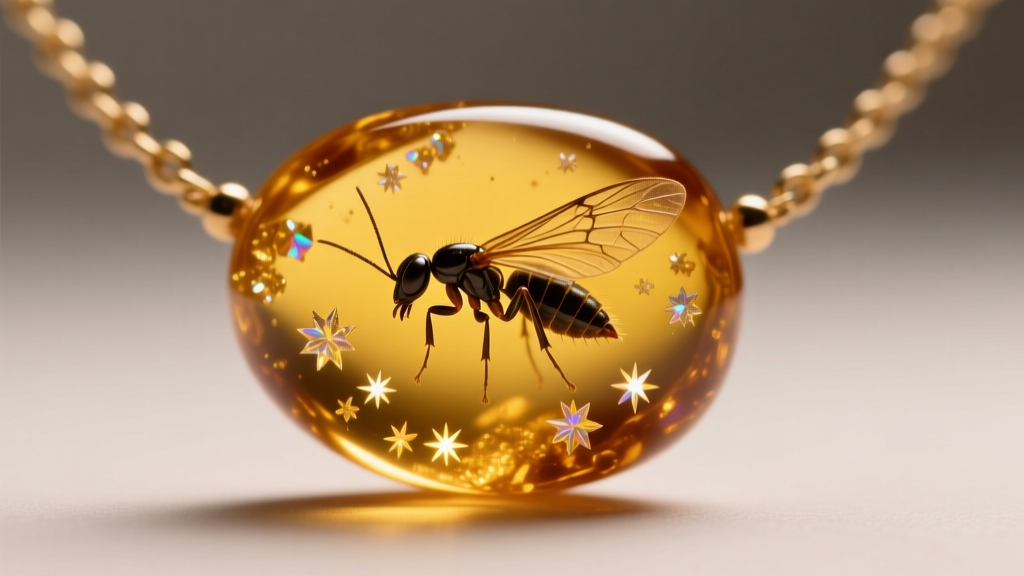
If your necklace features insect or plant inclusions, examine them closely with a jeweler's loupe. In a real amber necklace, trapped insects often display signs of struggle—missing limbs, folded wings, or a dehydrated, shrunken appearance. Furthermore, genuine amber frequently contains 'sun spangles,' which are starburst-like internal fractures caused by stress and temperature changes over millions of years. Conversely, plastic fakes often feature perfectly preserved, modern-looking insects suspended in flawless, bubble-free resin. If the insect looks like it was carefully placed in a museum display rather than trapped in a sticky prehistoric bog, you are likely holding a forgery.
Step 2: The Science-Backed At-Home Tests
Because amber is an organic gemstone, it reacts to its environment in highly specific ways. The following two non-destructive tests are the gold standard for home authentication.
The Saturated Saltwater Float Test
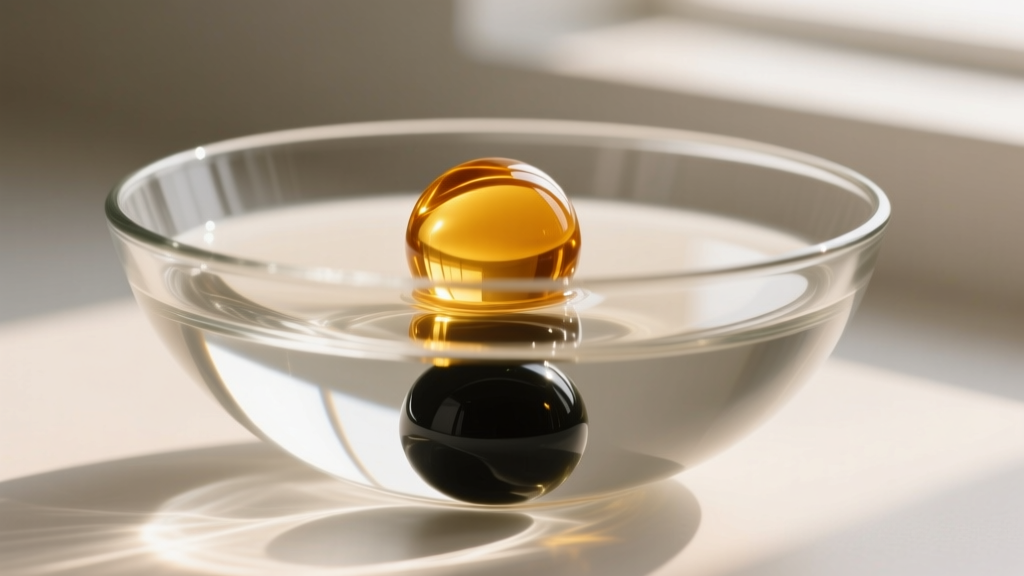
This test leverages amber's low specific gravity. To perform it, mix one cup of warm water with seven to eight tablespoons of table salt, stirring until the salt is completely dissolved. This creates a solution with a specific gravity of approximately 1.12. When you drop your unstrung amber beads into the solution, genuine amber will float to the surface. Glass, quartz, and most dense plastics will sink immediately to the bottom. Note: Copal may also float or suspend in the middle, so this test must be combined with others to rule out immature resins.
The UV Fluorescence Test
Amber contains aromatic hydrocarbons that fluoresce under ultraviolet light. Using a 365nm UV flashlight in a dark room, shine the beam onto the beads. Genuine Baltic amber will emit a soft, pale blue or greenish-white glow. Dominican amber, famous for its rare blue variety, will fluoresce with an intense, vivid neon blue. Plastic imitations will remain completely dead and dark, while copal typically glows a milky, opaque white or fails to fluoresce uniformly.
Authentication Comparison Chart
| Material | Saltwater Test | UV Fluorescence (365nm) | Tactile Temperature | Mohs Hardness |
|---|---|---|---|---|
| Genuine Baltic Amber | Floats | Pale Blue / Greenish-White | Warm to touch | 2.0 - 2.5 |
| Dominican Amber | Floats | Intense Neon Blue | Warm to touch | 2.0 - 2.5 |
| Copal (Immature Resin) | Floats / Suspends | Milky White / Weak | Warm to touch | 1.5 - 2.0 |
| Plastic / Resin Fakes | Sinks (Usually) | None (Dead) | Neutral / Cool | 2.0 - 3.0 |
| Glass Imitations | Sinks Rapidly | None | Cold to touch | 5.5 - 7.0 |
Step 3: Advanced Verification (Solvent and Destructive Tests)
If the visual and float tests leave you with lingering doubts, you can move on to chemical verification. These tests differentiate between fully fossilized amber and copal, which is essentially 'young' amber that has not yet completed its polymerization process.
The Acetone Solvent Test
Place a single drop of pure acetone (nail polish remover) on an inconspicuous area of the bead, such as near the drill hole. Allow it to evaporate. If the surface becomes tacky, sticky, or leaves a fingerprint when touched, the material is copal or plastic. Genuine amber is highly polymerized and completely impervious to acetone; the drop will simply evaporate without leaving a mark. The International Amber Association frequently cites solvent testing as a primary method for identifying treated or immature resins in the commercial market.
The Hot Needle Test (Use with Caution)
This is a semi-destructive test and should only be used as a last resort on a discreet area of the bead. Heat a sewing needle until it is red-hot, then press it lightly into the amber. Genuine amber will not melt easily; instead, it will emit a faint, pleasant scent of burning pine resin or incense. If the needle sinks in effortlessly and releases an acrid, chemical odor, you are dealing with plastic. If it smells overly sweet and the resin melts into a sticky puddle, it is likely copal.
Step 4: Caring for Your Authenticated Amber Necklace
Once you have confirmed your necklace is a real amber piece, proper maintenance is critical. Amber is exceptionally soft, ranking only 2.0 to 2.5 on the Mohs hardness scale. This means it can be easily scratched by metals, quartz, or even dust particles.
- Cleaning: Never use ultrasonic or steam cleaners, as the vibrations and heat can shatter the internal stress fractures (sun spangles). Clean your necklace using only lukewarm water, a drop of mild dish soap, and a microfiber cloth.
- Chemical Avoidance: Amber is highly sensitive to solvents. Always apply perfumes, hairsprays, and lotions before putting on your necklace. Prolonged exposure to alcohol or harsh cosmetics will permanently cloud the surface polish.
- Storage: Store your amber necklace in a soft velvet pouch, completely separated from diamond, sapphire, or metal jewelry to prevent abrasive scratching.
Sourcing Authentic Amber: Red Flags in the Market
When shopping for a real amber necklace, be highly skeptical of deals that seem too good to be true. Genuine Baltic amber with pristine inclusions commands a premium price. If a vendor is selling large, flawless beads with perfectly centered, photogenic insects for under $50, you are almost certainly looking at plastic molded in a factory. Furthermore, be wary of the term 'pressed amber' or 'ambroid.' While technically made from real amber dust and chips, these pieces are melted and fused together under high pressure, lacking the continuous, natural structure and value of whole, unmodified beads. Always request a certificate of authenticity from reputable gemological laboratories or established members of recognized amber trade associations when making high-value purchases.


