How to Authenticate and Style a Cameo Pearl Necklace
Learn how to authenticate, clean, and style a cameo pearl necklace. Expert tips on shell vs. agate carving, pearl grading, and modern layering.

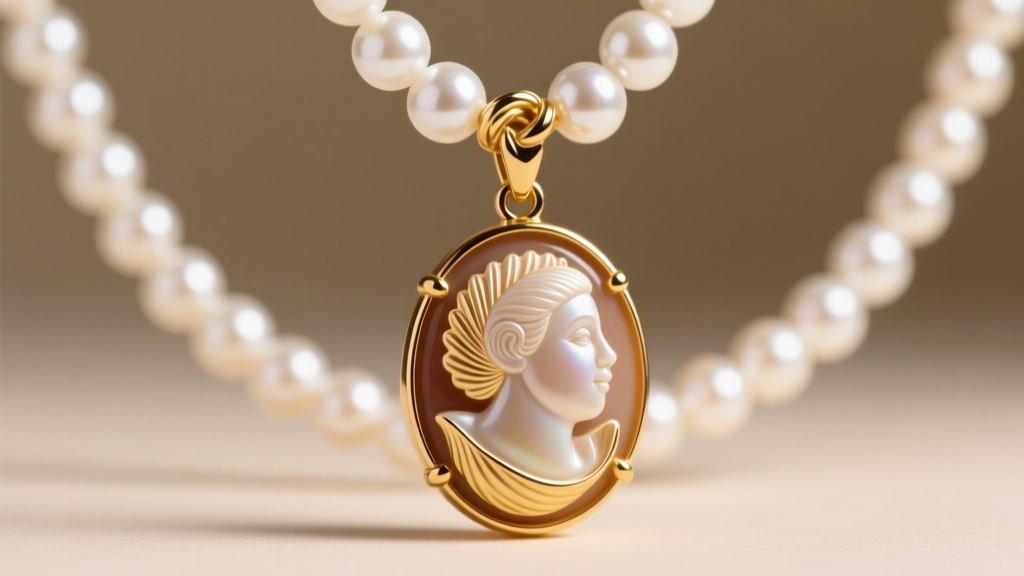
The cameo pearl necklace has transcended its Victorian and Edwardian roots to become a cornerstone of modern heritage styling. In 2026, the juxtaposition of antique carved profiles with contemporary wardrobe silhouettes is a dominant trend in fine jewelry. However, the secondary market is flooded with synthetic replicas, molded resins, and misidentified materials. Whether you are inheriting a family heirloom or hunting for an estate piece, knowing how to authenticate, care for, and style a cameo pearl necklace is essential for any serious collector or jewelry enthusiast.
The Anatomy of a True Cameo Pearl Necklace
A genuine cameo pearl necklace consists of two distinct elements that must be evaluated separately: the carved cameo pendant and the pearl strand. The most prized antique cameos were carved from Cassis rufosa (the bullmouth helmet shell) or Cypraecassis rufa. These marine shells naturally feature a dark orange or brown outer layer and a creamy white inner layer, allowing master carvers to create high-contrast, multi-dimensional profiles.
The pearl strand itself is typically composed of Akoya or high-grade freshwater pearls. According to the Gemological Institute of America (GIA), authentic vintage pearl strands should exhibit individual knotting between each pearl to prevent friction damage and catastrophic loss if the silk thread breaks. Look for Size E or F silk thread, which is standard for 6.0mm to 7.5mm pearls, and ensure the clasp features 'French wire' (a protective metal coil) where the silk loops through the metal jump ring to prevent fraying.
Step-by-Step Authentication Guide
Distinguishing a hand-carved shell cameo from a molded synthetic or a harder agate stone requires a systematic approach. Follow these steps to verify your piece.
Step 1: The Thermal and Tactile Test
Shell and agate react differently to temperature. Hold the cameo against your cheek or the inside of your wrist. Genuine shell and agate will feel distinctly cool to the touch and will take several seconds to warm to your body temperature. Molded plastic, resin, or glass-filled composites will feel room-temperature or warm almost instantly. Furthermore, shell has a Mohs hardness of roughly 3.5, while agate is a 7. If a piece feels unusually heavy and cold, it is likely sardonyx agate, which was also popular in the 19th century but features a flat back rather than a curved one.
Step 2: Inspect the Back Profile and Tool Marks
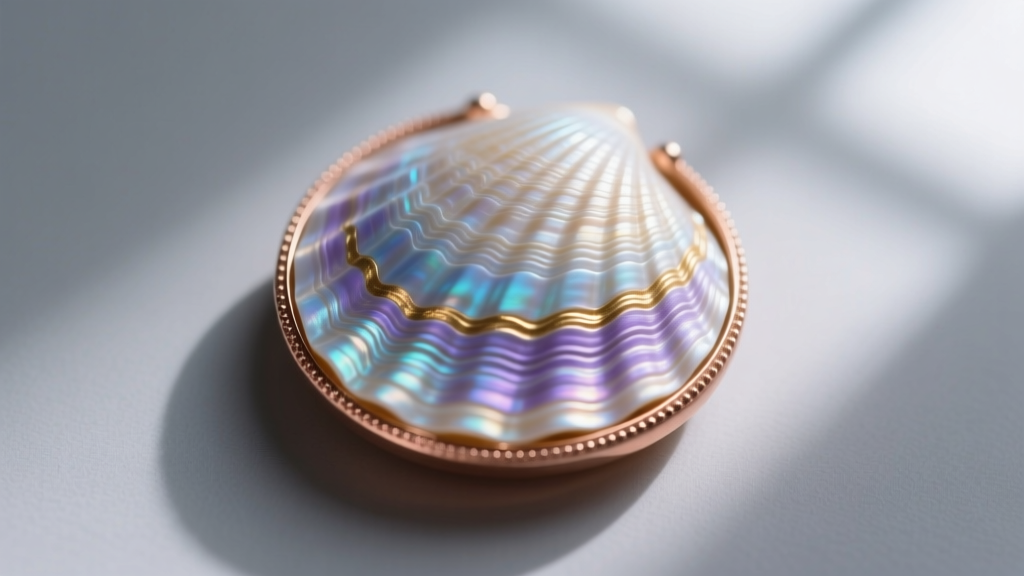
Turn the pendant over. A genuine shell cameo will almost always have a concave (curved inward) back, following the natural curvature of the helmet shell. Under a 10x jeweler's loupe, inspect the carving lines. Hand-carved pieces will show microscopic, directional tool marks and slight asymmetries in the facial features or hair drapery. Molded cameos will have perfectly uniform, rounded edges, and sometimes a faint seam line running along the perimeter where the mold halves met.
Step 3: Evaluate the Pearl Strand
Examine the drill holes of the pearls. Genuine nacre will show a sharp, clean edge at the drill hole. If you see a painted or coated surface chipping away to reveal a white or glassy bead underneath, you are looking at Majorica pearls (simulated glass beads coated in guanine). Authentic vintage strands will also show slight variations in pearl luster and surface blemishes, whereas synthetic strands appear unnaturally flawless.
Cameo Material Comparison Matrix
Use this reference table to quickly identify the material of your cameo pendant based on physical properties and market valuation.
| Material | Back Profile | Thermal Feel | Mohs Hardness | Avg. Estate Price Range |
|---|---|---|---|---|
| Helmet Shell | Concave / Curved | Cool, warms slowly | 3.5 | $300 - $2,500+ |
| Sardonyx Agate | Flat / Carved flat | Very cold, heavy | 7.0 | $500 - $4,000+ |
| Lava Rock | Flat / Slightly rough | Room temp, lightweight | 3.0 - 4.0 | $150 - $800 |
| Resin / Plastic | Flat / Seam lines | Warm, very light | 2.0 | $20 - $75 |
For deeper historical context on carving techniques, the Lang Antiques Antique Jewelry University provides excellent visual databases comparing 19th-century Italian carvings with later mass-produced tourist souvenirs.
How to Style and Layer Your Cameo Pearl Necklace
The key to wearing a cameo pearl necklace today is to break it out of the 'costume jewelry' box by integrating it with modern, minimalist fine jewelry. The goal is to create an eclectic, curated look rather than a rigid, historical replica.
Strategic Layering Framework
A standard cameo pearl choker or princess-length necklace (16 to 18 inches) serves as an anchor piece. To modernize it, layer it with delicate gold chains of varying gauges and lengths:
- Base Layer (16 inches): Your knotted cameo pearl necklace sitting at the collarbone.
- Mid Layer (18 inches): A 1.2mm 14k or 18k yellow gold cable chain. The thin, utilitarian nature of the cable chain contrasts beautifully with the ornate, organic shapes of the pearls and shell.
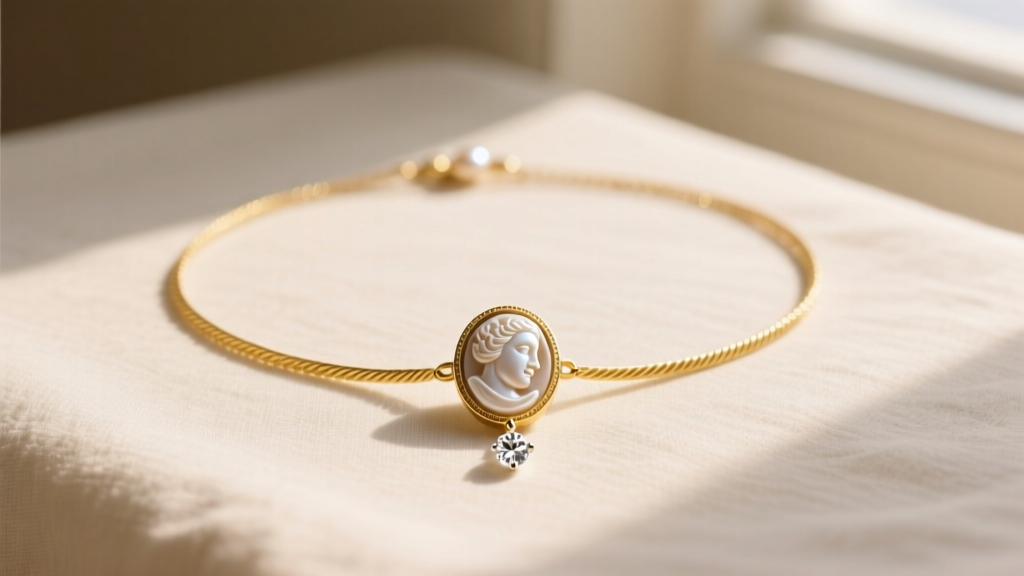
- Outer Layer (20-22 inches): A 1.5mm gold rope chain featuring a single, bezel-set diamond or gemstone solitaire drop. This draws the eye downward, elongating the neckline and balancing the visual weight of the cameo.
Neckline Pairings
Cameos require negative space to be appreciated. The Victoria and Albert Museum (V&A) notes that historical cameos were often worn high on the bodice. Today, the best canvas for a cameo pearl necklace is a deep V-neck, a sweetheart neckline, or a structured, collarless blazer. Avoid high ruffled collars or busy, patterned fabrics, which will compete with the intricate carving of the shell and the luster of the pearls.
Essential Care and Re-stringing Protocols
Both shell and pearls are highly porous organic materials. They are exceptionally vulnerable to acids, perfumes, and ultrasonic vibrations.
The Strict 'No-Ultrasonic' Rule
Never place a cameo pearl necklace in an ultrasonic cleaner. The high-frequency waves will shatter the nacre of the pearls and can easily fracture the delicate, thinly carved edges of a shell cameo (such as the tip of the nose or the carved hair tendrils). Instead, clean the piece using a slightly damp, lint-free microfiber cloth. If the pearls have accumulated skin oils, use a drop of pH-neutral castile soap on the cloth, wipe gently, and dry immediately.
When to Re-string
Silk thread degrades over time due to friction, sweat, and environmental humidity. If you wear your cameo pearl necklace weekly, it must be professionally re-strung every 2 to 3 years. Perform the 'stretch test': gently pull the strand between your hands. If you see visible gaps of thread between the knots, or if the silk appears grey and frayed near the clasp, the structural integrity is compromised. Take it to a master stringer who uses 100% silk thread and French wire finishing to ensure the heirloom survives for the next generation.


