A Beginner's Guide to Buying a Vintage Amber Necklace
Learn how to authenticate, price, and style a vintage amber necklace. Discover testing methods, era guides, and care tips for fossilized resin.

The Allure of Fossilized Resin: Why Vintage Amber?
Unlike diamonds or sapphires, amber is not a mineral; it is the fossilized resin of ancient, extinct trees. When you purchase a vintage amber necklace, you are acquiring a piece of organic history that has been cherished for millennia. For beginners, navigating the antique jewelry market can be daunting. The market is saturated with modern plastics, copal (immature resin), and heat-treated stones masquerading as genuine antique pieces. This guide will equip you with the gemological knowledge, historical context, and practical testing methods required to confidently identify, evaluate, and care for authentic vintage amber.
Decoding the Eras: What Defines "Vintage" Amber?
To accurately value a vintage amber necklace, you must first identify its era. The construction, bead shape, and metal findings offer critical clues about the piece's origin and authenticity.
Victorian Era (1837–1901)
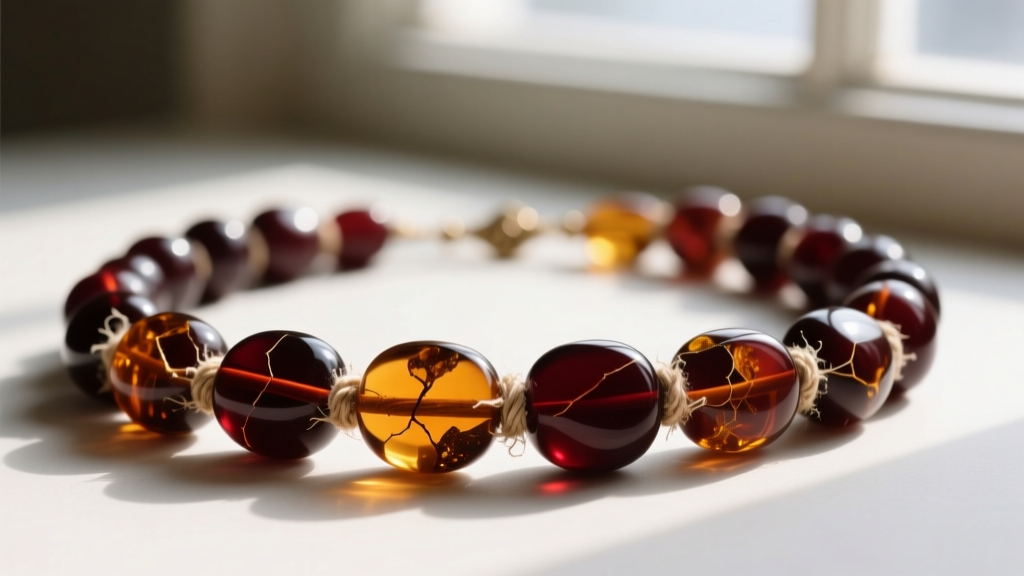
During the Victorian mourning period, dark, opaque amber—often referred to as "cherry" or "oxblood" amber—was highly prized. Necklaces from this era typically feature graduated, hand-carved barrel beads strung on natural silk thread. Look for heavy tarnish on silver clasps and hand-filed bead holes, which are often slightly irregular due to the lack of modern diamond-tipped drills.
Art Deco Era (1920s–1930s)
The Art Deco movement favored long, dramatic sautoir necklaces. Amber was frequently paired with geometric Bakelite elements, onyx, or sterling silver filigree. Beads from this period are often faceted or cut into distinct geometric shapes like rectangles and hexagons. According to the Gemological Institute of America (GIA), the introduction of pressed amber (ambroid) became widespread during this time to meet the high demand for uniform, large beads.
Mid-Century Modern (1940s–1960s)
Scandinavian designers like Aase Lund Jensen and Georg Jensen revolutionized amber jewelry in the mid-20th century. They favored chunky, unpolished "nugget" amber set in heavy, oxidized sterling silver. If your vintage amber necklace features raw, asymmetrical stones in minimalist silver cages, it likely originates from this highly collectible mid-century Danish movement.
The Science of Amber: Natural, Pressed, and Copal
Before attempting to authenticate a piece, you must understand the material hierarchy. Not all amber is created equal, and knowing the difference will save you from overpaying.
- Natural Baltic Amber (Succinite): Formed 35 to 50 million years ago from the resin of Pinus succinifera trees. It contains 3-8% succinic acid and is the gold standard for vintage jewelry.
- Ambroid (Pressed Amber): Created by melting and fusing small amber chips and dust under high heat and pressure. While it is technically real amber, it lacks the continuous flow lines of natural stones and is significantly less valuable. It is incredibly common in vintage pieces from the 1920s to the 1950s.
- Copal: Immature tree resin that is only hundreds or thousands of years old. It is softer, melts easily, and lacks the geological stability of true amber. It is frequently sold to tourists as "young amber" but is not considered genuine fossilized resin by gemologists.
For a deeper dive into the geological formation of these resins, the Natural History Museum provides excellent resources on the paleobotany of succinite.
4 Non-Destructive Tests to Authenticate Vintage Amber
Never use destructive tests like the "hot needle" test on a vintage piece, as it will permanently damage the bead and devalue the necklace. Instead, rely on these four non-destructive gemological methods.
| Test Method | Procedure | True Baltic Amber Result | Plastic / Copal Result |
|---|---|---|---|
| Saltwater Float | Mix 1 part salt to 2.5 parts water. | Floats (Specific gravity 1.05-1.10) | Sinks (Plastic is denser) |
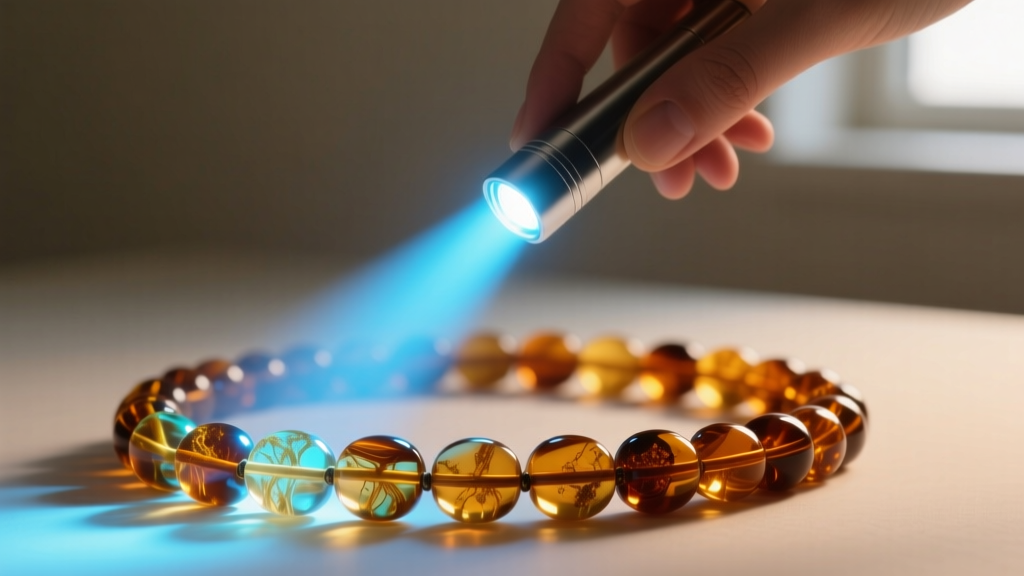
| UV Light (365nm) | Shine longwave UV light on beads. | Glows pale blue or green | Copal glows white; Plastic is dead |
| Electrostatic | Rub bead vigorously on wool cloth. | Attracts small paper scraps | Little to no static charge |
| Visual Flow Lines | Examine under 10x jeweler's loupe. | Swirling, natural flow lines | Stretch marks (pressed) or uniform |
Note: The saltwater test is highly effective for separating amber from glass and most plastics, but copal will also float. Therefore, you must combine the float test with the UV light test for a definitive conclusion.
Pricing Tiers: What Should You Actually Pay?
The value of a vintage amber necklace is dictated by its era, color, clarity, and whether the beads are individually knotted. According to the International Amber Association, color classification plays a massive role in market valuation. Here is a realistic pricing framework for genuine vintage pieces in good condition:
- Cognac (Translucent Brown): The most common color. Expect to pay $150 to $400 for a standard 18-inch vintage necklace with graduated beads.
- Butterscotch (Opaque Yellow): Highly sought after due to its rarity and creamy appearance. Vintage butterscotch necklaces command premium prices, often ranging from $500 to $1,500+, especially if the beads are large and unpressed.
- Cherry / Oxblood (Deep Red): Naturally occurring red amber is exceptionally rare. Most vintage "cherry" amber was created by heating cognac amber to induce oxidation. Authentic, unheated Victorian cherry amber can exceed $2,000.
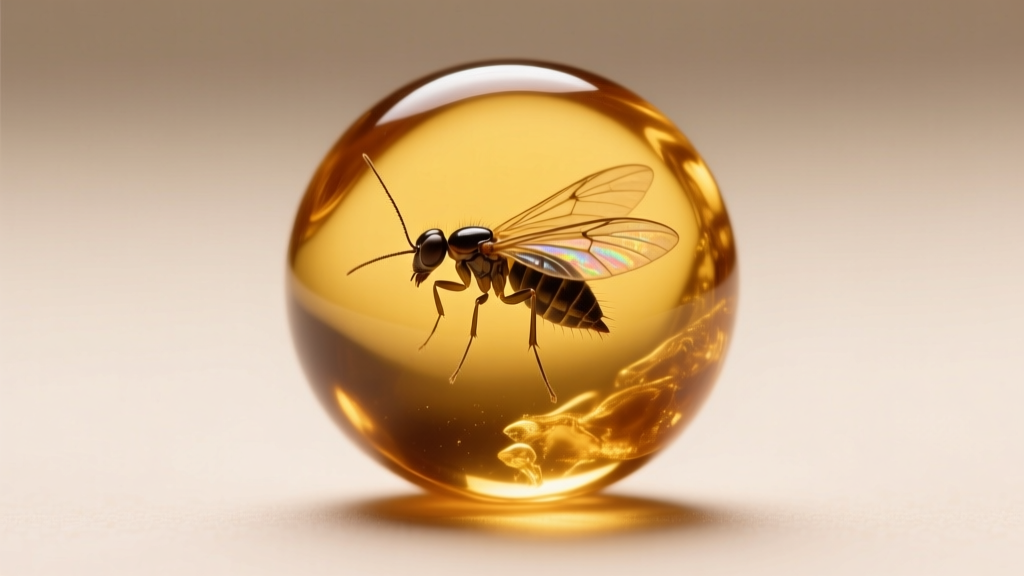
- Inclusions: If a vintage bead contains a clearly visible, intact prehistoric insect or flora inclusion, the value of that single bead can skyrocket into the hundreds of dollars, independent of the rest of the necklace.
Preserving Your Fossilized Resin: Care and Maintenance
Amber is remarkably soft, ranking only 2.0 to 2.5 on the Mohs hardness scale. This means it can be easily scratched by a copper coin or even a steel sewing needle. Proper care is non-negotiable for preserving antique jewelry.
- Check the Knotting: Authentic vintage amber necklaces should be individually knotted between each bead. Amber dust is abrasive; if the beads rub against one another, they will slowly grind away and lose their polish over decades of wear.
- Avoid Solvents and Alcohol: Never clean amber with jewelry dips, ultrasonic cleaners, or alcohol-based products. Hand sanitizers, perfumes, and hairsprays can chemically degrade the surface of the resin, leaving it permanently cloudy or sticky.
- Storage: Store your necklace in a soft flannel pouch, completely separate from diamond, sapphire, or quartz jewelry, which will easily gouge the amber.
By understanding the geological origins, historical eras, and physical properties of fossilized resin, you can confidently navigate the antique market. A genuine vintage amber necklace is not just an accessory; it is a wearable artifact that connects the modern wearer to the ancient forests of the Eocene epoch.


