Authenticating a Vintage Citrine Necklace: An Expert's Guide
Master the technical nuances of buying a vintage citrine necklace. Learn to identify natural vs. heat-treated stones, assess prong wear, and verify eras.

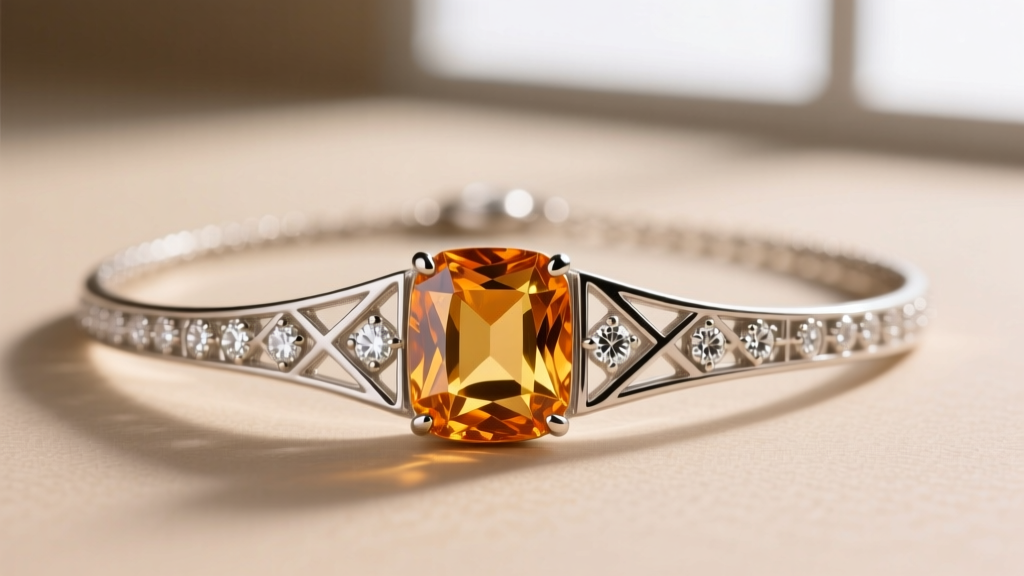
The secondary market for estate jewelry has seen a massive resurgence, and the vintage citrine necklace remains one of the most highly sought-after pieces for collectors and everyday wearers alike. However, the romanticized vision of acquiring an antique golden gemstone is often clouded by gemological misrepresentations, frankenstein settings, and undetected structural fatigue. As a domain expert, I am pulling back the curtain on the technical realities of vintage citrine. This deep dive will equip you with the precise gemological, structural, and historical frameworks necessary to authenticate, evaluate, and preserve these remarkable pieces.
The Gemological Reality: Natural Citrine vs. Heat-Treated Amethyst
The most critical technical hurdle when evaluating a vintage citrine necklace is determining the stone's origin. True, naturally occurring citrine is exceptionally rare. According to the Gemological Institute of America (GIA), the vast majority of citrine on the market—especially in mid-century and retro vintage pieces—is actually amethyst that has been thermally altered.
Heat treatment involves baking purple amethyst at temperatures between 470°C and 550°C. This process oxidizes the iron impurities within the quartz crystal lattice (SiO2), shifting the absorption spectrum and resulting in a yellow-to-orange hue. While the gemological community accepts this treatment (and it does not negatively impact the stone's durability), it fundamentally alters the valuation and historical authenticity of a vintage piece.
Diagnostic Separation Under Magnification
To separate natural citrine from baked amethyst, you must use a 10x triplet loupe or a gemological microscope. You are looking for specific inclusion patterns and color zoning:
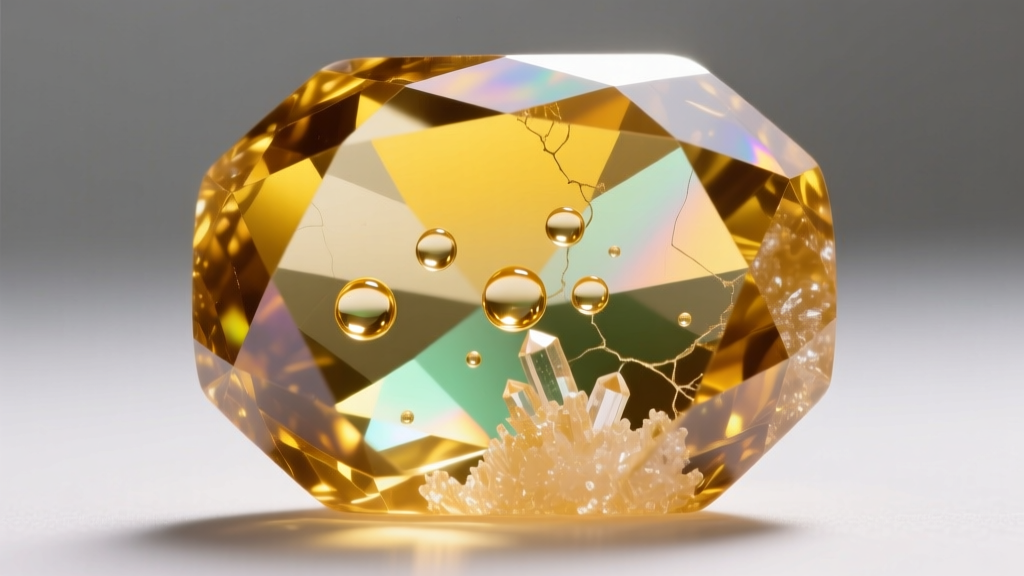
- Natural Citrine: Exhibits irregular, patchy color zoning. Under polarized light, you may observe two-phase liquid inclusions (liquid and gas bubbles trapped together) and needle-like rutile inclusions. The color distribution is rarely uniform.
- Heat-Treated Amethyst: Often displays distinct linear striations or "tiger stripe" color zoning. A dead giveaway is an opaque, chalky white section at the culet or base of the stone, which is a remnant of the original amethyst crystal structure that failed to fully oxidize during the baking process.
Refractive Index and Specific Gravity
While both natural and heat-treated citrine share the same physical constants—a Refractive Index (RI) of 1.544 to 1.553 and a Specific Gravity (SG) of 2.65—testing these metrics is vital for ruling out glass or paste imitations, which were rampant in vintage costume jewelry. Glass imitations will typically have a lower RI (around 1.50), lack birefringence (showing no double refraction under a polariscope), and may contain spherical air bubbles or swirl marks from the molding process. For precise mineralogical data on quartz varieties, Mindat.org remains an indispensable reference for crystallographic properties.
Era-Specific Construction: Art Deco vs. Retro Period Mountings
A genuine vintage citrine necklace will exhibit manufacturing techniques specific to its era. The two most prominent periods for citrine jewelry are Art Deco and Retro. Understanding the metallurgical and design hallmarks of these eras is crucial for authentication.
Art Deco (1920–1935): Geometric Precision
Art Deco citrine necklaces are characterized by stark geometric contrasts. Jewelers favored step-cuts, emerald cuts, and baguette accents. Because citrine was often used as a vibrant contrast to diamonds and onyx, the mountings were primarily crafted in platinum or 14k/18k white gold. Look for intricate milgrain edging, filigree openwork, and hand-engraved gallery wires beneath the stone. The prongs will be low-profile and meticulously filed.
Retro (1935–1950): Bold Gold and Scalloped Settings
During World War II, platinum was declared a strategic metal and restricted from civilian use. Consequently, Retro-period vintage citrine necklaces are almost exclusively set in 14k rose or yellow gold. The design language shifted to massive, three-dimensional, and sculptural forms. Citrine stones from this era are often enormous cushion cuts or oval cabochons, held in place by heavy, scalloped bezels or thick, rounded prongs. The metalwork often features "scroll" or "ribbon" motifs to maximize visual volume while using less actual gold weight.
| Feature | Art Deco (1920-1935) | Retro (1935-1950) |
|---|---|---|
| Primary Metals | Platinum, White Gold | 14k Rose Gold, Yellow Gold |
| Stone Cuts | Emerald, Step, Baguette | Cushion, Oval Cabochon, Kite |
| Setting Style | Milgrain, Filigree, Channel | Scalloped Bezel, Heavy Prong |
| Accent Stones | Diamonds, Onyx, Sapphire | Small Diamonds, Rubies (often synthetic) |
Structural Integrity: Assessing Chain and Clasp Wear
The pendant may be the star, but the chain and clasp dictate the structural viability of a vintage citrine necklace. Many estate pieces have been altered, repaired, or strung on modern chains, which drastically reduces their collector value.
Clasp Typology and Dating
The clasp is the most reliable indicator of a necklace's age. If you are examining a purported 1920s piece and it features a modern lobster claw clasp, the chain has been replaced.
- Spring Ring Clasps: Invented in the early 1900s, these were ubiquitous through the mid-century. Vintage spring rings often have a slightly thicker, less machined appearance and may lack the tiny soldered jump ring found on modern iterations.
- Dog Clip / Trigger Clasps: Commonly found on heavier Retro chains from the 1940s. These feature a lever mechanism that snaps into a closed loop.
- Push-Box Clasps: Used on multi-strand or heavy link chains. Check the internal spring mechanism; if it is stamped with modern laser-etched hallmarks rather than hand-stamped maker's marks, it is a replacement.
Prong Wear and Re-Tipping
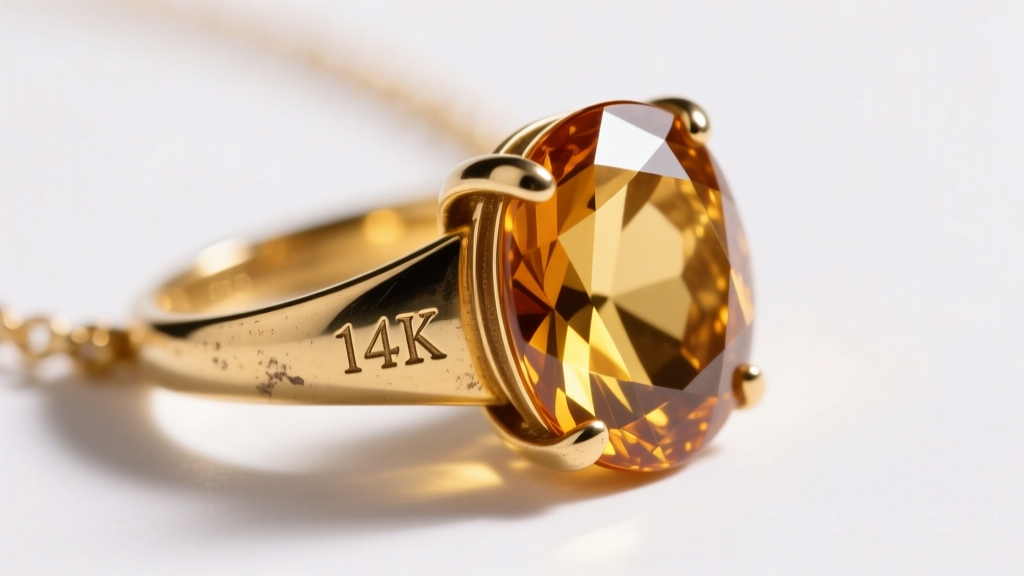
Citrine registers a 7 on the Mohs hardness scale. While durable, it is softer than diamonds and sapphires, meaning it does not cause the same level of abrasive wear to the metal prongs. However, decades of wear will cause "mushrooming"—where the tip of the prong flattens and thins out against clothing. Inspect the prongs under a loupe. If the prongs look perfectly rounded and uniform, but the rest of the mounting shows heavy patina and wear, the prongs have likely been re-tipped. Re-tipping is a standard and acceptable restoration, but it must be factored into the valuation, and you must ensure the heat from the jeweler's torch did not cause thermal shock to the citrine (which can induce internal fracturing).
Valuation and Pricing Matrix for Vintage Citrine
Pricing a vintage citrine necklace requires synthesizing gemological origin, metal weight, and historical provenance. Below is a current market matrix based on condition and era:
- Tier 1: Art Deco Platinum & Natural Citrine ($3,500 - $12,000+)
Requires a GIA or AGL report confirming no heat treatment. Must feature original platinum mounting, diamond accents, and intact maker's marks (e.g., Cartier, Boucheron, or prominent American houses like Marcus & Co.). - Tier 2: Retro 14k Gold & Heat-Treated Citrine ($800 - $3,500)
Valued primarily on gold weight and design execution. Large, unchipped cushion cuts in pristine rose gold settings command the higher end of this bracket. Chips on the girdle will reduce value by 30-50%. - Tier 3: Mid-Century Gold-Filled & Paste ($50 - $250)
Costume jewelry from the 1950s-1970s often utilized glass or synthetic corundum to mimic citrine. Valuable only for its aesthetic appeal or if designed by a notable costume house like Trifari or Miriam Haskell.
Expert Restoration and Care Protocols
Proper maintenance of a vintage citrine necklace requires an understanding of its physical vulnerabilities. Quartz has no true cleavage, meaning it does not split along defined crystallographic planes like a diamond. However, it exhibits a conchoidal fracture, making it highly susceptible to chipping at the girdle or culet if struck against a hard surface.
Critical Warning: Never place a vintage citrine necklace in an ultrasonic cleaner. Natural citrine frequently contains microscopic liquid inclusions. The high-frequency vibrations and localized heat generated by ultrasonic waves can cause these inclusions to expand, leading to catastrophic internal fracturing and total stone failure.
For routine cleaning, use a solution of warm distilled water and a pH-neutral dish detergent. Agitate gently with a soft-bristled infant toothbrush, paying special attention to the gallery beneath the stone where skin oils and cosmetic residues accumulate. Dry with a lint-free microfiber cloth. When storing, keep the necklace in a separate, soft-lined compartment; while citrine is a 7 on the Mohs scale, it can easily be scratched by diamond, sapphire, or topaz pieces stored in the same jewelry box.
Final Thoughts on Sourcing
Acquiring a vintage citrine necklace is an exercise in forensic gemology. By moving beyond superficial aesthetics and demanding structural and mineralogical proof, you protect your investment and preserve a tangible piece of jewelry history. Always request high-resolution macro photography of the inclusions and clasp mechanisms before purchasing from estate dealers, and never hesitate to require a conditional return policy pending verification by an independent, Graduate Gemologist (GG).


