Authenticating a Cross Necklace Vintage Piece: Hallmarks & Eras
Learn how to authenticate a cross necklace vintage piece. Expert insights on hallmarks, era-specific construction, metal grades, and pricing tiers.

The Technical Challenge of Vintage Cross Authentication
The secondary jewelry market is saturated with reproduced devotional and fashion pendants, making the authentication of a true cross necklace vintage artifact a rigorous technical endeavor. Unlike modern cast jewelry, antique and vintage crosses were frequently hand-fabricated, die-stamped, or assembled using era-specific metallurgical techniques. For collectors and horologists, evaluating these pieces requires moving beyond superficial aesthetic assessments and into the microscopic analysis of hallmarks, soldering methods, and structural wear patterns.
When evaluating a cross necklace vintage collectors often overlook the suspension bail and the chain pairing, focusing solely on the pendant face. However, the bail is the primary indicator of age and authenticity. A genuine mid-19th-century piece will exhibit distinct friction wear and historical torch soldering that modern laser welders simply cannot replicate. This deep dive explores the metallurgical and structural frameworks required to accurately date and value vintage cross pendants.
Decoding Eras: Construction and Material Clues
The architectural silhouette and material composition of a cross pendant are intrinsically linked to its decade of origin. Understanding these era-specific markers is the first step in verifying provenance.
Victorian Mourning and Devotional Crosses (1837–1901)
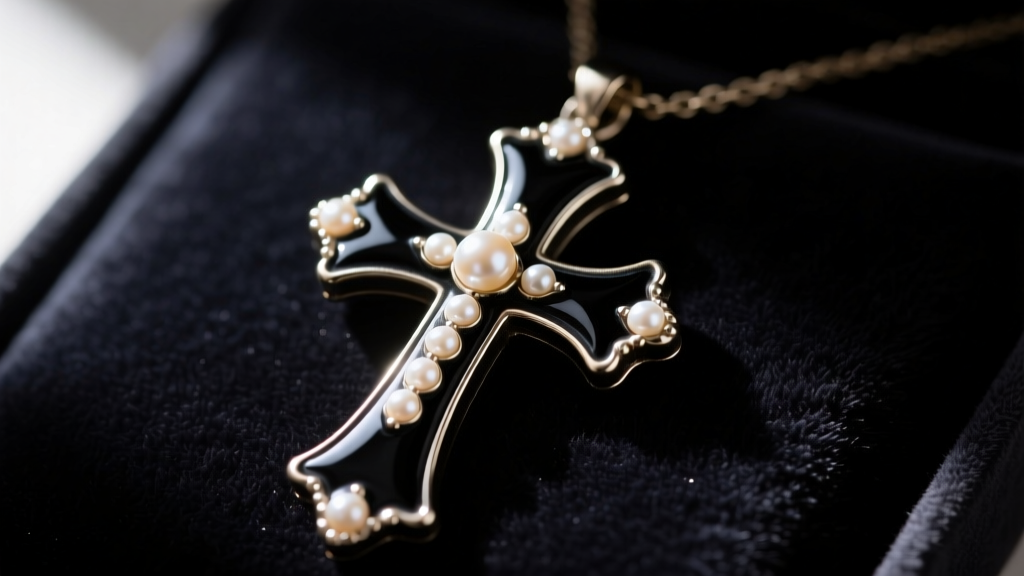
Victorian crosses, particularly those from the Grand and Late Victorian periods, heavily feature black enamel, gutta-percha, vulcanite, and seed pearls. Mourning crosses often contain woven hair compartments on the reverse. Technically, these pieces were frequently crafted in 15k gold (a standard in the UK until 1932) or silver gilt. Look for hand-applied enamel; modern reproductions will show perfectly uniform, machine-sprayed enamel, whereas genuine Victorian pieces exhibit slight pooling and microscopic crazing under 10x magnification.
Edwardian Filigree and Milgrain (1901–1910)
The Edwardian era introduced platinum to mainstream jewelry fabrication. Edwardian crosses are characterized by intricate, lace-like filigree, die-stamped openwork, and hand-applied milgrain edges. Because platinum has a high melting point, these pieces were often backed with 18k or 14k yellow gold to reduce costs and prevent the white metal from warping during fabrication. A genuine Edwardian platinum cross will feel remarkably lightweight yet rigid, a hallmark of master-level die-stamping.
Art Deco Geometry (1920–1935)
Art Deco crosses abandoned the flowing curves of the Edwardian era in favor of stark geometry, stepped shoulders, and high-contrast materials. You will frequently see rock crystal, black onyx, coral, and marcasite paired with white gold or platinum. Authentic Deco marcasite should be hand-set with tiny beads of metal pushed over the stone's girdle; if the stones are glued into smooth settings, the piece is a later 20th-century reproduction.

Technical Authentication: Hallmarks, Soldering, and Wear
Visual styling can be mimicked, but metallurgical evidence is exceedingly difficult to fake. According to the Victoria and Albert Museum's jewelry archives, historical manufacturing techniques leave distinct forensic signatures.
Hallmark Forensics
- UK 15k Gold: Stamped '15' or '15k'. This alloy was abolished in Britain in 1932, replaced by 14k. A cross bearing a crisp 15k hallmark alongside a worn date letter is a strong indicator of pre-1930s origin.
- French Eagle Head: Indicates a minimum of 18k gold. On vintage French crosses, this stamp is often found on the bail or the upper arm of the cross, sometimes heavily worn due to friction.
- Maker's Marks: Genuine vintage pieces feature cartouche stamps that are often asymmetrical or slightly blurred from hand-striking, unlike the laser-sharp, uniform stamps applied by modern CNC machines.
Soldering and Bail Integrity
The bail is the highest-friction component of any pendant. In a genuine cross necklace vintage piece, the bail will show directional wear consistent with decades of rubbing against a specific chain type. Furthermore, examine the solder joints where the bail meets the pendant loop. Pre-1950s pieces typically used lead-based or low-temperature silver solders, which oxidize to a dull, matte grey over time. Modern repairs or fakes will exhibit bright, shiny solder lines indicative of modern laser welding or high-temperature silver brazing.
"The presence of lead-based solder oxidation at the bail joint, combined with asymmetrical hand-struck hallmarks, remains one of the most reliable indicators of 19th-century fabrication." — Lang Antique Jewelry University
Chain Pairing: Matching the Era to the Suspension
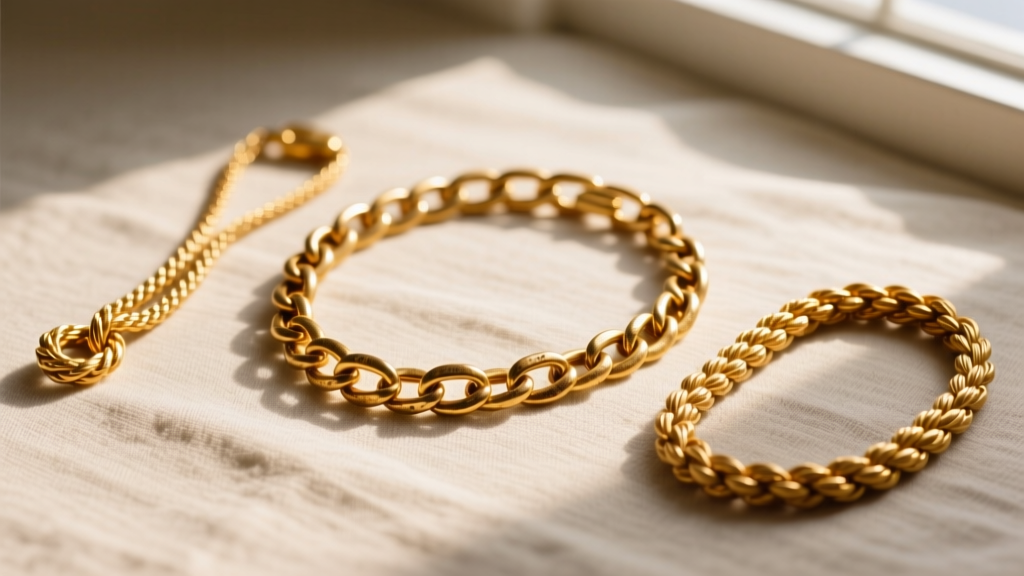
A critical error in vintage jewelry curation is pairing an antique pendant with a modern, machine-made chain. The gauge, link style, and clasp mechanism of the chain must align with the pendant's era. The Gemological Institute of America (GIA) notes that original chain-pendant pairings command a 20-30% premium in the collector's market.
| Era | Authentic Chain Style | Typical Gauge / Thickness | Clasp Mechanism |
|---|---|---|---|
| Victorian | Albert Chain, Curb Link, Snake Chain | 1.5mm – 3.0mm (Heavy) | Dog-clip, Spring Ring (late 1800s) |
| Edwardian | Fancy Link, Watch Chain, Fine Rope | 1.0mm – 1.5mm (Delicate) | Spring Ring, Early Lobster |
| Art Deco | Wheat (Spiga), Box Chain, Filigree | 1.2mm – 2.0mm (Medium) | Lobster Claw, Push-Pull Box |
| Mid-Century | Herringbone, Rope, Figaro | 1.5mm – 4.0mm (Variable) | Modern Lobster, Hook & Eye |
Market Valuation and Common Failure Modes
Pricing a vintage cross necklace requires deducting for structural compromises and material degradation. While a pristine Edwardian platinum and diamond cross can easily command $4,500 to $12,000, pieces with specific failure modes see drastic reductions in value.
Identifying Material Failure Modes
- Enamel Crazing and Loss: In Victorian mourning crosses, black enamel frequently chips or crazes. While minor wear is acceptable, enamel loss extending to the bare metal reduces value by up to 40%.
- Seed Pearl Dehydration: Seed pearls are organic and prone to drying out, cracking, or yellowing. Re-stringing or replacing them with modern cultured pearls destroys the historical integrity of the piece.
- Bail Thinning: If the interior of the bail has worn completely through due to chain friction, the piece requires immediate stabilization. A clumsily soldered replacement bail will immediately flag the piece as damaged to expert appraisers.
- Die-Strike Fatigue: In thin, die-stamped Edwardian crosses, the metal can develop micro-fractures along the milgrain edges. Flexing the pendant will reveal these stress points.
Current Pricing Tiers (2026 Market Estimates)
- Entry-Level ($150 – $400): Late 20th-century vintage (1970s-1990s), 9k or 10k gold, simple cast designs, minimal gemstone accents.
- Mid-Tier Collector ($500 – $1,800): Art Deco marcasite or onyx crosses, Mid-Century 14k yellow gold textured crosses, Victorian silver-gilt pieces with minor enamel wear.
- Investment Grade ($2,500 – $10,000+): Edwardian platinum filigree with Old European Cut diamonds, pristine Victorian 15k gold and hairwork mourning crosses, pieces with verified historical provenance or maker marks from renowned houses like Boucheron or Fabergé.
Final Verification Protocols
Acquiring a genuine cross necklace vintage piece is an exercise in historical preservation. Always utilize a 10x or 20x jeweler's loupe to inspect the bail joints, hallmark cartouches, and stone settings. Demand high-resolution macro photography from sellers, specifically requesting images of the reverse side and the suspension loop. By relying on metallurgical evidence and era-specific construction techniques rather than superficial design cues, collectors can confidently navigate the vintage market and preserve these intricate artifacts of devotional and horological history.


