Avon Flower Necklace Repair: Fix Tarnish & Missing Stones
Learn how to clean, restore, and repair your vintage Avon flower necklace. Expert troubleshooting for tarnish, missing stones, and enamel.

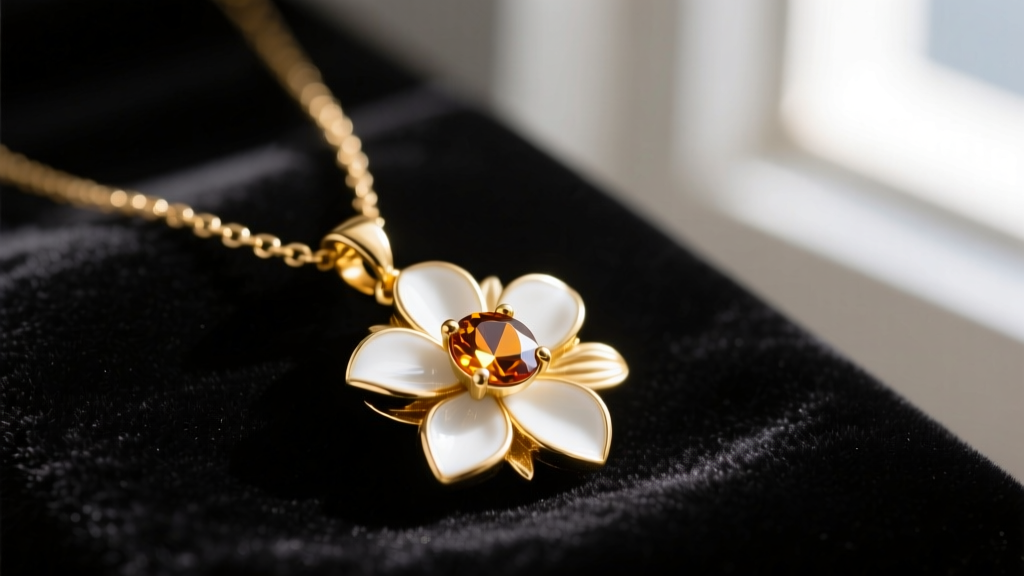
Vintage Avon floral jewelry, particularly the intricate flower necklaces produced between the 1970s and late 1990s, remains a staple in costume jewelry collections. However, as we move through 2026, these beloved pieces are increasingly showing their age. Unlike solid gold or platinum fine jewelry, vintage Avon pieces are primarily crafted from base metals with thin electroplating, cold enamel, and foil-backed glass rhinestones. When these materials degrade, standard jewelry cleaning methods can cause irreversible damage.
Whether you have inherited a 1980s gold-tone daisy pendant or found a 1970s silver-tone rose choker at an estate sale, troubleshooting the specific failure modes of costume jewelry requires a specialized approach. Below is a comprehensive, expert-level guide to diagnosing, repairing, and preserving your vintage Avon flower necklace.
Diagnosing Common Avon Flower Necklace Failures
Before applying any cleaning solution or adhesive, you must accurately diagnose the material degradation. According to the Smithsonian Museum Conservation Institute, the interaction between human sebum, environmental humidity, and base metals creates unique chemical reactions that dictate your restoration strategy.
The "Green Skin" Reaction (Base Metal Exposure)
If your Avon floral pendant leaves a green or black mark on your chest, the gold or silver electroplating has worn through, exposing the underlying brass or nickel-silver alloy. The copper in the brass reacts with the chlorides and lactic acid in your sweat to form copper chloride, which transfers to the skin. This is not an allergic reaction, but a chemical oxidation process.
Enamel Flaking and Cloudy Rhinestones
Avon primarily used cold enamel (an epoxy-based resin) for their floral petals in the 1980s and 90s. Over time, UV exposure causes this resin to yellow and become brittle, leading to micro-fractures. Similarly, if the glass rhinestones in the center of your flower look cloudy, grey, or black, moisture has breached the prong setting and oxidized the delicate metallic foil backing that gives the stone its sparkle.
Step-by-Step Troubleshooting & Restoration
Safe Cleaning Methods for Gold-Tone and Enamel
Never use commercial silver dips, ultrasonic cleaners, or baking soda pastes on an Avon flower necklace. Ultrasonic vibrations will shatter the foil backs of vintage stones, and baking soda is highly abrasive, stripping the remaining 0.2-micron gold electroplate instantly.
- The Solution: Mix 3 drops of pH-neutral dish soap (like Dawn) into a bowl of distilled water. Tap water contains chlorine and minerals that can spot base metals.
- The Technique: Dip an extra-soft baby toothbrush into the solution and gently agitate the crevices of the floral pendant. Avoid scrubbing the surface of the enamel.
- The Drying Phase: Rinse quickly under a slow stream of distilled water, then immediately pat dry with a microfiber cloth. Use a hair dryer on the "cool" setting to blow moisture out from under the rhinestone prongs.
Replacing Missing Foil-Back Rhinestones
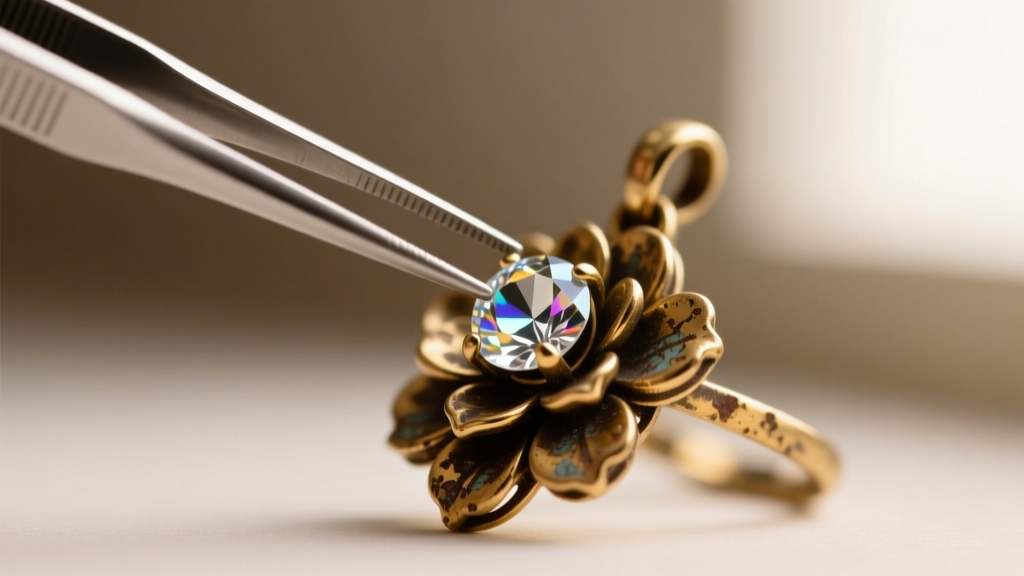
If your floral pendant is missing a stone, do not use cyanoacrylate (Super Glue). It emits fumes that permanently fog the glass and eats through the foil backing. Instead, use a jeweler's adhesive like GS Hypo Cement or E6000.
- Measure the Setting: Use a digital caliper to measure the empty prong setting in millimeters. Vintage Avon stones are typically flat-back (FB) or pointed-back (PB) in sizes ranging from 3mm to 6mm.
- Prep the Cavity: Use a wooden toothpick to gently scrape away old, crystallized glue from the setting. Never use a metal needle, as it will scratch the brass base.
- Apply Adhesive: Apply a microscopic dot of GS Hypo Cement to the base of the setting. Wait 15 seconds for it to become tacky.
- Set the Stone: Using wax-tipped tweezers, place the replacement glass rhinestone into the setting. Gently push the metal prongs over the girdle of the stone using a bezel pusher tool.
Material Breakdown: Avon Floral Eras
Understanding the era of your necklace helps predict its vulnerabilities. The Costume Jewelry Collectors International notes distinct shifts in Avon's manufacturing processes over the decades.
| Era | Primary Base Metal | Plating / Finish | Enamel Type | Primary Failure Mode |
|---|---|---|---|---|
| 1970s | Heavy Brass | Thick Gold Electroplate | Kiln-Fired / Vitreous | Clasp spring fatigue, heavy tarnish |
| 1980s | Pewter & Brass | Matte / Brushed Gold-Tone | Cold Epoxy Resin | Enamel yellowing, stone foil oxidation |
| 1990s | Zinc Alloy (Pot Metal) | High-Shine Silver/Gold | Acrylic Paint / Resin | Pot metal cracking, prong snapping |
Troubleshooting Chain and Clasp Failures
The pendants on Avon flower necklaces often outlast their chains. Avon frequently utilized lightweight, machine-made cable chains that are prone to kinking and snapping at the jump rings.
"If the original jump ring connecting the floral pendant to the chain has stretched into an oval shape, it is a critical failure point. Replace it with a modern, soldered sterling silver or brass jump ring to prevent the loss of the vintage pendant."
If the chain is hopelessly tangled or broken, avoid aggressive pulling. Lay the chain on a flat surface, apply a drop of mineral oil to the knot, and use two fine sewing needles to gently work the kink loose from the outside in.
Preventative Maintenance & Archival Storage
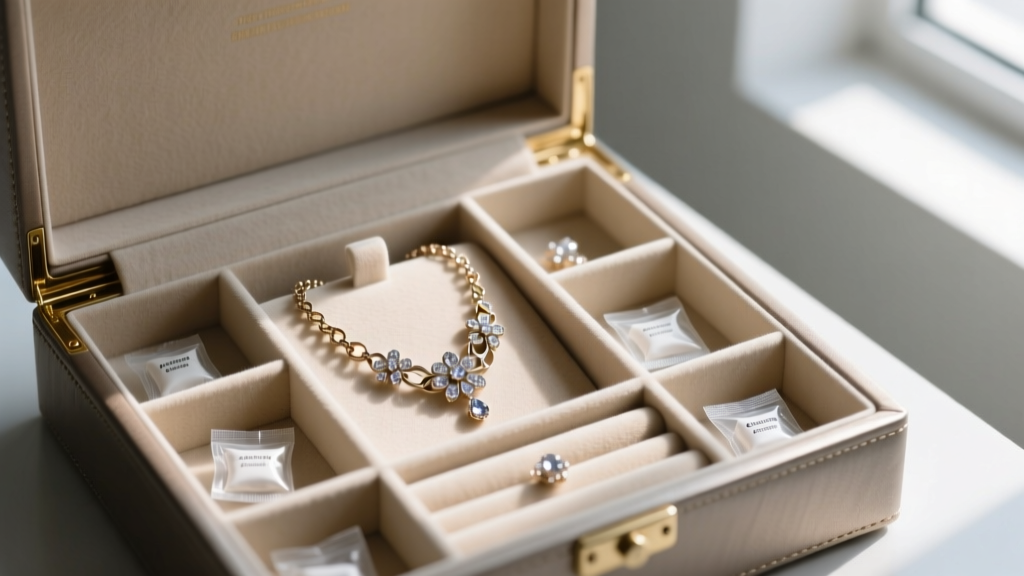
Once your Avon flower necklace is restored, proper storage is vital to halt further chemical degradation. Base metals require a stable, low-humidity environment.
- Use Anti-Tarnish Strips: Place 3M anti-tarnish strips in your storage area. These strips absorb airborne sulfur compounds that cause brass and silver-tone metals to turn black.
- Control Humidity: Include silica gel desiccant packets in your jewelry boxes to keep relative humidity below 40%, preventing moisture from reaching the rhinestone foil backs.
- Avoid Polyethylene Bags: Never store vintage costume jewelry in standard plastic ziplock bags. Many commercial plastics emit sulfur gases and trap ambient moisture, creating a micro-climate that accelerates tarnishing and enamel clouding.
- Apply Renaissance Wax: For pieces where the gold plating has worn thin, apply a micro-thin layer of Renaissance Wax using a soft cotton cloth. This museum-grade microcrystalline wax creates a barrier against skin acids and environmental oxygen, stopping the "green skin" reaction without altering the piece's visual luster.
Restoring a vintage Avon flower necklace requires patience and a departure from traditional fine jewelry maintenance. By understanding the specific chemical and structural vulnerabilities of mid-century costume materials, you can ensure these intricate floral pendants remain vibrant and wearable for decades to come.