Troubleshooting the Ideal Necklace for Backless Dress Outfits
Struggling with bare-back styling? Discover expert troubleshooting tips to find the perfect necklace for backless dress outfits, from lengths to clasps.
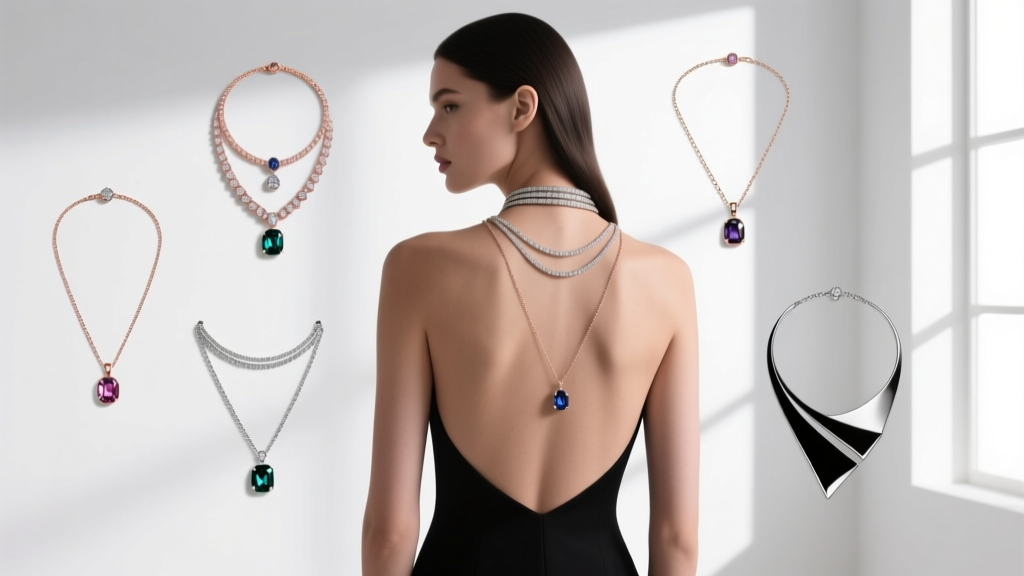

Finding the right necklace for backless dress ensembles is one of the most common styling dilemmas in modern formalwear. While a bare back offers a stunning canvas, standard jewelry proportions often fail dramatically against exposed skin. Chains that sit perfectly over a crewneck sweater can look stunted, awkward, or entirely invisible when paired with a plunging halter or a scoop-back gown. As we navigate the architectural silhouettes dominating 2026 eveningwear, the rules of negative space and hardware placement have fundamentally shifted.
This guide moves beyond generic styling advice to troubleshoot the specific mechanical, material, and geometric failures that occur when pairing necklaces with bare-back garments. From preventing chain kinking to solving the nape-of-neck clasp problem, here is your comprehensive problem-solving matrix.
The Core Dilemma: Why Standard Lengths Fail
The average woman's neck circumference is roughly 13 to 14 inches. Standard princess-length necklaces (18 inches) are designed to rest on the collarbone. When you remove the backdrop of fabric, an 18-inch chain simply chokes the nape of the neck, leaving the vast expanse of the upper back completely barren. Conversely, a standard 24-inch chain often terminates exactly where the dress's fabric line begins, creating a harsh visual cutoff that disrupts the flow of the spine.
To troubleshoot this, we must abandon standard length categories and adopt drop-based geometry. The goal is to elongate the torso and draw the eye vertically down the spine, rather than horizontally across the shoulders.
Length & Drop Matrix: Matching Neckline to Chain
The cut of your dress dictates the exact chain length and pendant drop required. Use the troubleshooting table below to identify your specific garment type and the corresponding jewelry solution.
| Dress Silhouette | Required Chain Length | Optimal Chain Style | Troubleshooting Note |
|---|---|---|---|
| Halter Neck (High Back Cutout) | 30" to 36" (Opera/Lariat) | Y-Drop or Lariat | Anchor the drop with double-sided fashion tape to prevent spine-bumping while dancing. |
| Deep V-Plunge Back | 42"+ (Sautoir) | Continuous Loop or Endless Rope | Ensure the terminal pendant weighs at least 5 grams to maintain a straight vertical line. |
| Scoop Back (Mid-Scapula) | 26" to 28" (Matinee) | Box or Cable Chain | Avoid snake chains; they kink when pressed against chair backs. |
| Cowl Back (Draped Fabric) | 16" (Choker) + Body Chain | Layered Multi-Strand | Keep the neck bare and route a body chain under the arms to frame the drape. |
Hardware Troubleshooting: Hiding Clasps and Preventing Snags
Nothing ruins the illusion of a seamless bare back faster than a bulky lobster clasp resting against the cervical spine. Furthermore, the fine vellus hair (peach fuzz) on the nape of the neck is highly susceptible to snagging in poorly finished chain links.
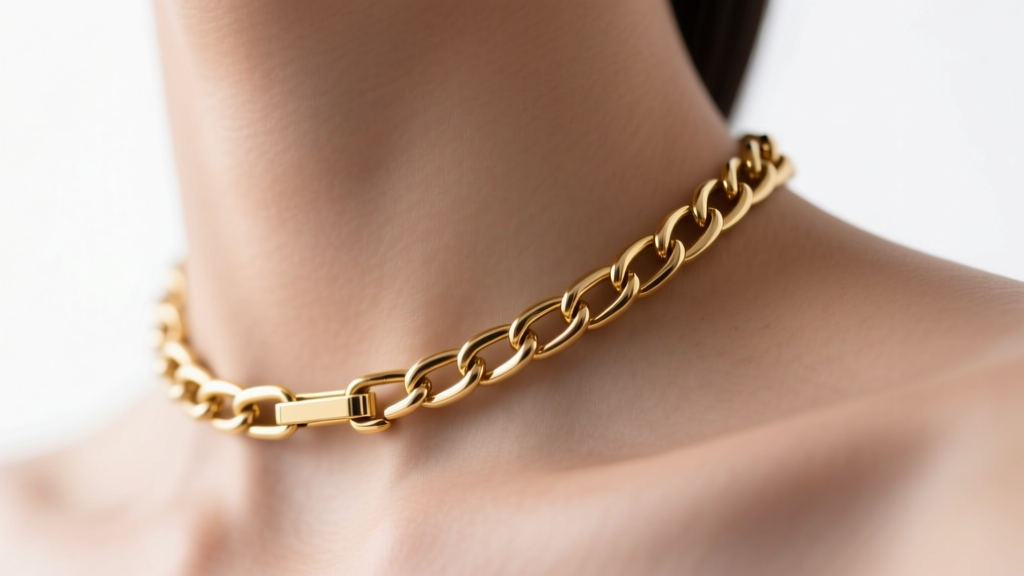
The Nape-of-Neck Clasp Problem
If your necklace requires a clasp, you must upgrade the hardware. Standard spring-ring clasps are difficult to fasten blindly and dig into the skin. Solution: Retrofit your chain with a silicone-lined slide clasp or a high-grade neodymium magnetic clasp. Magnetic clasps must feature a smooth, polished barrel exterior to prevent pinching the delicate hair at the nape. Alternatively, invest in an "endless" or continuous-loop chain that slips over the head, entirely eliminating the need for posterior hardware.
Chain Gauge and Skin Friction
When a chain rests directly on bare skin, friction increases exponentially compared to resting on silk or cotton. A delicate 20-gauge (0.8mm) chain will frequently tangle in hair or catch on dry skin. For backless styling, upgrade to a 16-gauge (1.2mm) or 18-gauge (1.0mm) chain. Box chains and rounded cable chains are superior here; avoid herringbone or snake chains, as their flat, interlocking plates are notorious for kinking permanently when the wearer leans back against a car seat or dining chair.
Material Failures: Sweat, pH, and Skin Tarnish
The upper back and shoulders contain a high density of sebaceous glands. When you combine natural skin oils, sweat, and the friction of a moving chain, base metals will rapidly oxidize, leaving a green or black smudge across your bare spine. This is not just a cosmetic failure; it is a dermatological one.
"Allergic contact dermatitis from jewelry is most commonly triggered by nickel, but cobalt and chromium found in cheap alloy platings can also cause severe reactions when exposed to sweat and friction over large surface areas of the body." — American Academy of Dermatology
To troubleshoot material failures, strictly avoid gold-plated brass or copper-alloy chains for bare-back wear. The plating will wear through within hours of friction. Instead, opt for:
- 316L Surgical Stainless Steel: Highly resistant to tarnish and hypoallergenic. An excellent, affordable choice for body chains.
- Solid 14k or 18k Gold: Will not react with skin pH. Avoid gold-filled for heavy-sweat events, as the outer layer can still degrade over time with high acidity.
- Platinum or Palladium: The ultimate friction-resistant, hypoallergenic metals, though at a premium price point.
For a deep dive into how specific alloy compositions react to environmental factors, the Gemological Institute of America (GIA) provides extensive research on metal allergies and jewelry degradation.
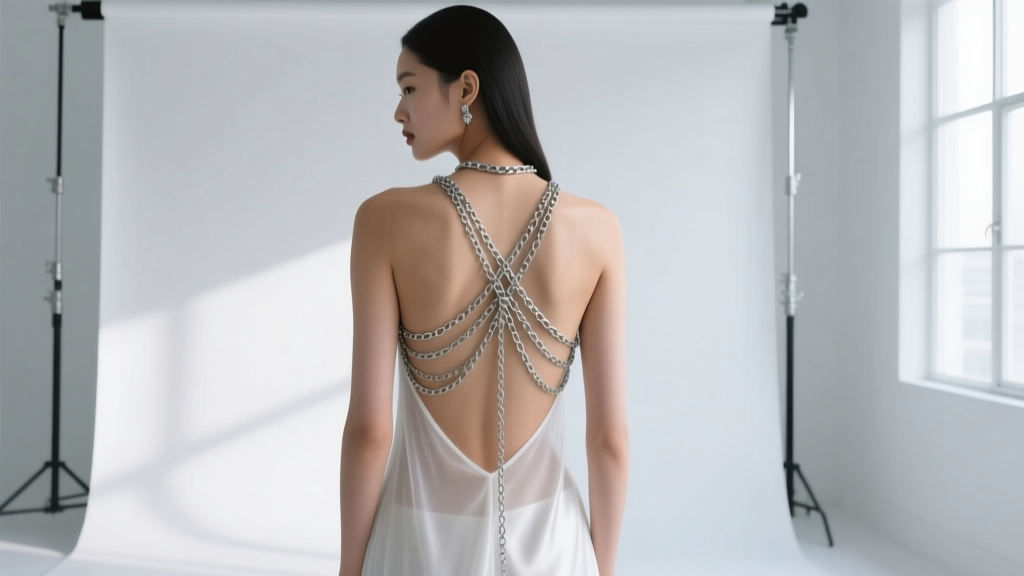
Advanced Styling: Body Chains and Sautoir Reversals
When a traditional pendant necklace fails to provide the necessary visual weight, it is time to pivot to alternative structures. Body chains have evolved from festival wear to high-end evening accessories. A multi-strand 18-gauge body chain that loops around the neck, crosses the sternum, and wraps around the ribcage provides a structural, harness-like effect that perfectly complements a minimalist slip dress.
Another expert troubleshooting technique is the Sautoir Reversal. Take a long, 45-inch tassel or geometric drop necklace, wear it backwards, and allow the pendant to rest between the shoulder blades. This works exceptionally well with dresses that feature a high neck but a completely open back. Ensure the terminal drop has a slight weight to it; otherwise, it will swing laterally and look unbalanced.
Quick-Fix Troubleshooting Checklist
Before you leave for your event, run through this rapid diagnostic checklist to ensure your jewelry will survive the evening:
- The Chair Test: Sit in a rigid-backed chair and lean back. Does the chain kink or dig into your spine? If yes, switch to a rounded cable chain or shorten the drop.
- The Tape Anchor: If wearing a lariat Y-drop, apply a tiny square of double-sided silicone fashion tape to the back of the drop pendant to secure it to your skin, preventing it from swinging wildly.
- The Hair Sweep: If your hair is worn down, the friction between hair ends and the chain will cause severe tangling. Use a silicone-based hair serum on the ends of your hair to reduce static and friction against the metal.
- The Clasp Check: If using a magnetic clasp, ensure it is positioned slightly off-center (about one inch to the left or right of the cervical spine) to prevent it from pressing directly into the bone when you recline.
Mastering the bare-back aesthetic requires treating your jewelry not just as an accessory, but as an architectural component of your overall silhouette. By addressing gauge, length, hardware, and material science, you can transform a styling liability into a breathtaking focal point.


