Using Baking Soda for Cleaning Silver Necklace: Material Guide
Discover the material science behind using baking soda for cleaning silver necklace tarnish. Learn which alloys, platings, and gems survive.

The internet is flooded with DIY jewelry hacks, but when it comes to using baking soda for cleaning silver necklace tarnish, the line between a brilliant chemical trick and catastrophic material damage is remarkably thin. As jewelry metallurgists and conservationists know, silver is not a monolith. A solid .925 sterling silver Figaro chain reacts entirely differently to alkaline baths than a micron-plated brass pendant or an oxidized artisan piece. In this comprehensive material guide, we break down the exact electrochemical properties of the baking soda method, map its compatibility across different silver grades, and provide a definitive gemstone safety matrix.
The Electrochemistry of Silver Tarnish and Baking Soda
To understand why this method works, we must first look at the material degradation of silver. Pure silver (.999) is highly resistant to tarnish. However, jewelry is predominantly crafted from .925 sterling silver—an alloy containing 92.5% silver and 7.5% copper, a standard strictly regulated by the Federal Trade Commission Jewelry Guides. It is the copper content that reacts with atmospheric sulfur and moisture to form silver sulfide ($Ag_2S$), the blackish-grey film we recognize as tarnish.
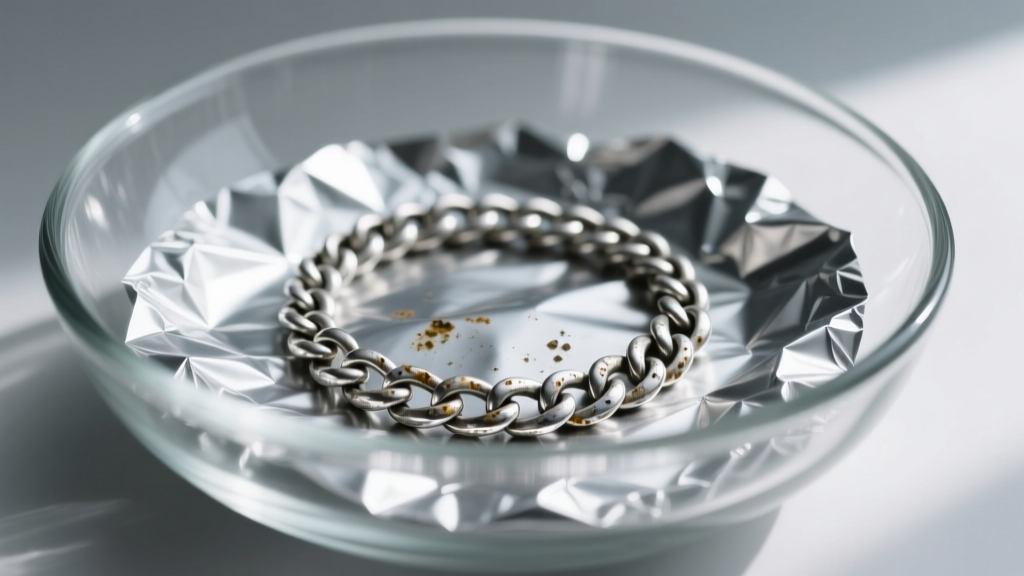
When you submerge a tarnished necklace in a hot solution of baking soda (sodium bicarbonate) while it touches aluminum foil, you are creating a primitive galvanic cell. The hot, alkaline water acts as an electrolyte. Because aluminum is higher on the reactivity series than silver, it becomes the anode, and the silver necklace becomes the cathode. The sulfur atoms are literally pulled off the silver sulfide and transferred to the aluminum. You aren't polishing the tarnish away; you are reversing the chemical bond.
Material Breakdown: Compatibility and Risks
The electrochemical bath is a miracle for certain materials and a destructive force for others. Here is how different necklace constructions respond to the baking soda treatment.
Solid Sterling Silver (.925) and Argentium (.935)
For solid, un-plated sterling silver chains (like rope, box, or curb links), the aluminum-foil bath is exceptionally safe and highly effective. It reaches deep into the microscopic crevices of complex weaves where polishing cloths cannot reach. Argentium silver, which substitutes some copper with germanium, is even more resilient, though it rarely requires such aggressive desulfurization due to its inherent tarnish resistance.
Silver-Plated and Gold-Vermeil Necklaces
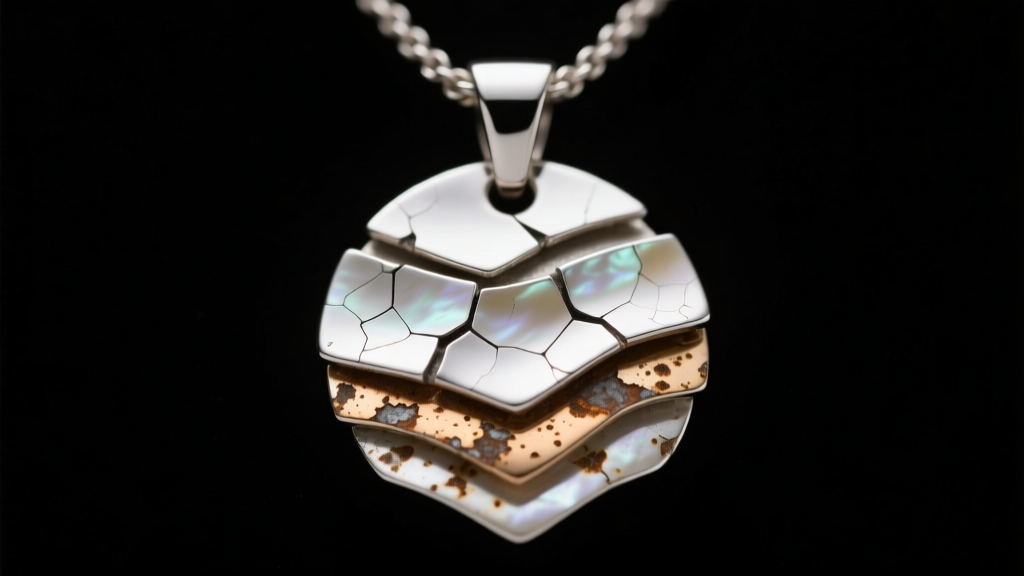
Proceed with extreme caution. Silver-plated necklaces consist of a base metal (usually brass or copper) coated with a microscopic layer of silver, typically ranging from 0.5 to 3 microns thick. While the galvanic reaction itself will not strip the silver, the heat and alkalinity of the baking soda bath can compromise the adhesion layer if the plating has micro-pores or existing scratches. Furthermore, if you attempt to use baking soda as an abrasive paste rather than a dissolved bath, you will instantly sand through the plating, permanently exposing the base metal.
Oxidized and Rhodium-Plated Silver
Many artisan necklaces feature intentional oxidation—often achieved using liver of sulfur—to create dark, antiqued contrasts in the recesses of a pendant. The baking soda and aluminum bath is indiscriminate; it will strip this intentional patina, leaving the necklace looking flat and overly bright. Similarly, rhodium-plated silver (used to mimic white gold) does not tarnish. If a rhodium-plated necklace looks dull, it is due to a buildup of skin oils and lotions, not silver sulfide. A baking soda bath will not restore rhodium and may cloud the finish.
The Precision Electrochemical Bath Protocol
If your necklace is solid sterling silver and free of vulnerable gemstones, follow this exact metallurgical protocol to ensure maximum ion transfer without thermal shock.
- The Vessel: Use a glass or ceramic bowl. Never use a metal bowl, as it will interfere with the galvanic circuit.
- The Catalyst: Line the bowl with heavy-duty aluminum foil, dull side down, shiny side up.
- The Electrolyte: Add 1 tablespoon of baking soda and 1 tablespoon of non-iodized sea salt per cup of water. The salt increases the ionic conductivity of the water.
- The Activation: Pour boiling water (minimum 85°C / 185°F) into the bowl. The reaction requires high thermal energy to proceed rapidly.
- The Submersion: Using wooden tongs, lower the necklace so it physically touches the aluminum foil. You will immediately smell rotten eggs (hydrogen sulfide gas releasing).
- The Limit: Leave for exactly 2 to 4 minutes. Prolonged exposure to high heat and alkalinity can cause the copper in the sterling alloy to oxidize, resulting in a stubborn pinkish hue.
Material Comparison: Baking Soda vs. Commercial Alternatives
How does this DIY method compare to commercial silver cleaning products on a material science level? The table below contrasts the chemical mechanics and physical impact on the silver lattice.
| Cleaning Method | Active Mechanism | Abrasiveness (Mohs) | Effect on Intentional Patina | Best Use Case |
|---|---|---|---|---|
| Baking Soda + Foil Bath | Electrochemical ion transfer | 0 (Dissolved) | Strips completely | Heavily tarnished, complex solid chains |
| Baking Soda Paste | Mechanical abrasion | ~2.5 | Strips and scratches | Never use on jewelry |
| Commercial Silver Dip | Acidic chemical dissolution (Thiourea) | 0 (Liquid) | Strips completely | Quick fixes, but leaves porous surface |
| Jeweler's Polishing Cloth | Mechanical removal + chemical polish | ~1.5 (Impregnated) | Preserves recessed patina | Maintenance, high-polish flat surfaces |
Expert Insight: Commercial silver dips often rely on thiourea, a toxic organic compound that strips tarnish by dissolving the top layer of silver. While fast, it leaves the silver surface microscopically pitted and highly susceptible to rapid re-tarnishing. The baking soda bath is vastly superior for the long-term integrity of the metal lattice because it converts the tarnish back into silver rather than dissolving it.
Gemstone and Pearl Compatibility Matrix
The most catastrophic failures in DIY jewelry cleaning occur not to the metal, but to the stones. The combination of 85°C water and a pH 8.3 alkaline solution is lethal to many organic and porous gemstones commonly set in silver pendants.
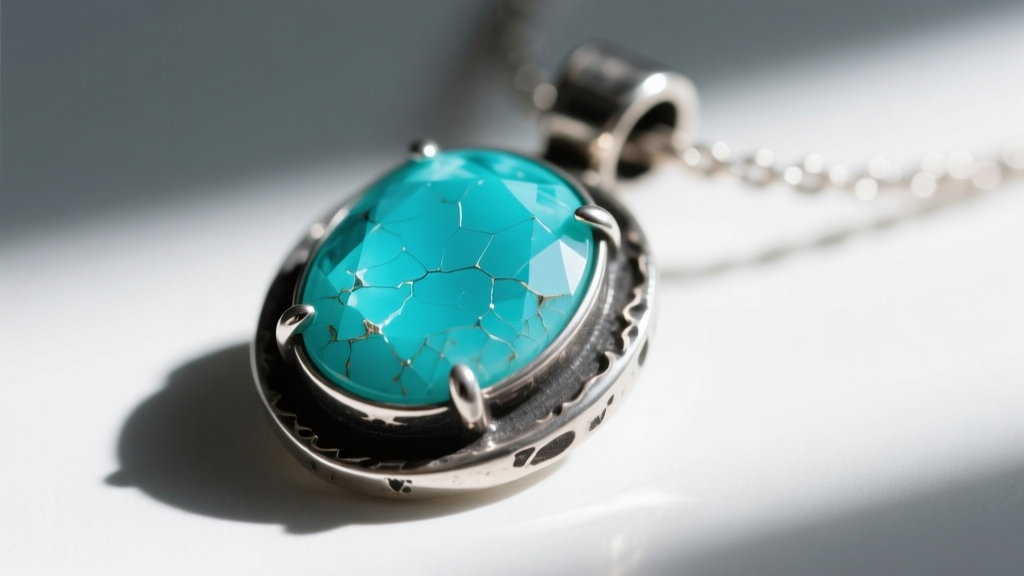
According to the Gemological Institute of America (GIA), organic gems require highly specific, neutral-pH environments. Below is the survival matrix for common necklace centerpieces:
- Diamonds, Sapphires, Rubies (Corundum): Safe. These stones possess high Mohs hardness (9-10) and chemical inertness. They will easily survive the bath.
- Pearls and Mother of Pearl: Fatal. Pearls are composed of calcium carbonate and conchiolin. Alkaline solutions will dissolve the nacre, permanently destroying the luster and causing structural delamination.
- Turquoise, Malachite, Lapis Lazuli: Fatal. These are highly porous, hydrous stones. The hot baking soda solution will penetrate the micro-fissures, altering the stone's internal chemistry and causing severe discoloration or cracking upon drying.
- Opals: Fatal. Opals contain up to 20% water. The thermal shock of boiling water will cause immediate crazing (internal fracturing), while the alkalinity degrades the silica structure.
- Cubic Zirconia and Glass: Safe, though the foil backing on some cheap glass rhinestones may detach in hot water.
Expert Troubleshooting: Residue and Micro-Scratches
If you have previously used baking soda as a physical paste to scrub your necklace, you likely introduced thousands of micro-scratches. Because baking soda and silver share a similar Mohs hardness of roughly 2.5 to 3, rubbing them together creates a matte, cloudy finish that traps future tarnish. To restore a mirror polish, the necklace must be professionally buffed with a jeweler's rouge (iron oxide) on a high-speed muslin wheel.
Alternatively, if your necklace emerged from the electrochemical bath with a chalky, white film, this is sodium carbonate residue—a byproduct of the baking soda breaking down under high heat. Do not scrub it. Simply submerge the necklace in a bowl of distilled white vinegar for 30 seconds to neutralize the alkaline salts, rinse thoroughly with distilled water, and dry immediately with a microfiber cloth to prevent water spotting.
Final Material Verdict
Using baking soda for cleaning silver necklace tarnish is a masterclass in applied electrochemistry, provided you respect the material boundaries. It is the ultimate restoration tool for solid, gemstone-free sterling chains that have been neglected for years. However, it is entirely unsuited for plated jewelry, oxidized artisan pieces, or any necklace featuring porous or organic gemstones. By understanding the metallurgical and chemical realities of your jewelry, you can reverse decades of tarnish in mere minutes without compromising the structural integrity of your most prized pendants and chains.


