Amber Necklaces: Baltic vs Dominican Material Guide
Compare Baltic and Dominican amber necklaces. Learn about material properties, inclusions, authenticity tests, and pricing for your collection.

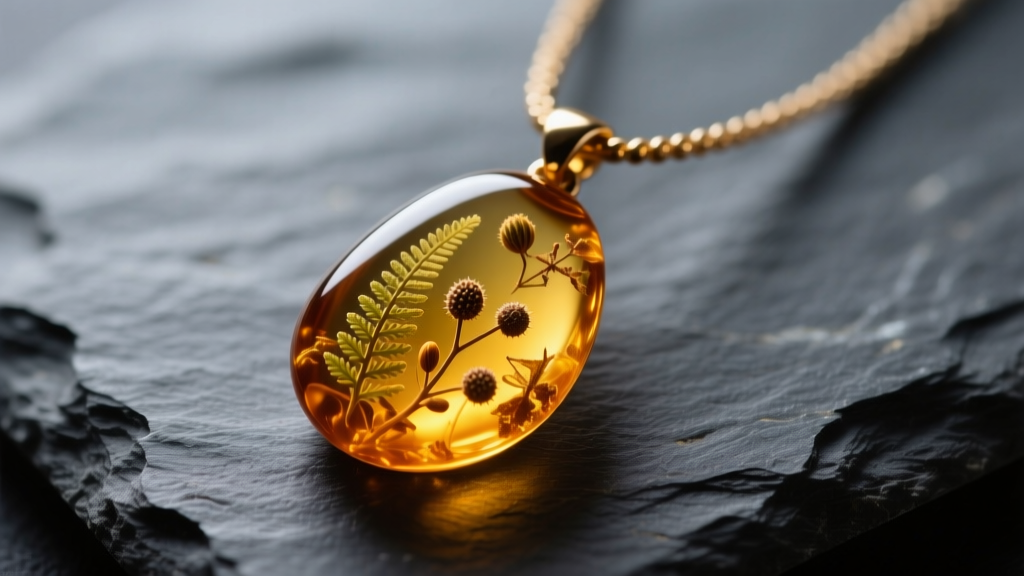
When shopping for organic gemstone jewelry, few materials carry the historical weight and botanical fascination of amber. However, not all amber is created equal. For collectors and jewelry enthusiasts, understanding the distinct material properties of amber necklaces is crucial for making informed purchases, verifying authenticity, and appreciating the geological history trapped within each bead. The market is primarily dominated by two heavyweights: Baltic amber and Dominican amber. While both are fossilized tree resins, their chemical compositions, visual characteristics, and market values differ significantly.
The Geological Divide: Succinite vs. Retinite
To truly understand amber necklaces, we must first look at their chemical origins. The term 'amber' is often used as a blanket statement, but gemologists classify these resins based on their molecular structure and botanical origins.
Baltic Amber (Succinite)
Baltic amber, sourced primarily from the shores of Lithuania, Poland, and Russia, is chemically classified as succinite. It originated from the extinct conifer Pinus succinifera approximately 44 million years ago during the Eocene epoch. The defining characteristic of Baltic succinite is its high concentration of succinic acid (typically 3% to 8%). This chemical signature not only gives the amber its distinct piney scent when heated but also contributes to its slightly softer, more pliable nature, making it ideal for carving and polishing into uniform beads for necklaces.
Dominican Amber (Retinite)
Dominican amber, mined in the mountainous regions of the Dominican Republic, is classified as retinite. It is significantly younger, dating back 15 to 20 million years to the Miocene epoch, and originated from the extinct legume tree Hymenaea protera. Unlike its Baltic counterpart, Dominican retinite contains virtually no succinic acid. Instead, its chemical makeup is rich in polycyclic hydrocarbons, which results in a harder, more brittle resin that is renowned for its exceptional natural clarity and striking fluorescence.
Visual & Physical Properties Comparison
When selecting a necklace, the visual and physical properties of the amber will dictate both its aesthetic appeal and its durability. Below is a comprehensive comparison of the two primary amber types.
| Property | Baltic Amber (Succinite) | Dominican Amber (Retinite) |
|---|---|---|
| Mohs Hardness | 2.0 - 2.5 (Softer, easily scratched) | 2.5 - 3.0 (Slightly harder, more brittle) |
| Specific Gravity | 1.05 - 1.10 | 1.05 - 1.10 |
| Clarity | Often cloudy; frequently heat-treated for clarity | Naturally high clarity; rarely requires treatment |
| Color Palette | Butterscotch, cherry, honey, cognac, white | Honey, cherry, rare blue, green, deep red |
| UV Fluorescence | Weak to moderate yellowish-green | Intense milky-blue to green under 365nm UV |
| Refractive Index | 1.539 - 1.545 | 1.539 - 1.545 |
As noted by the Gemological Institute of America (GIA), the heat treatment of Baltic amber is a widespread, accepted industry practice used to clarify cloudy stones and induce 'sun spangles' (internal fractures that reflect light). Dominican amber, prized for its natural transparency, is almost never heat-treated, preserving its original geological state.
Inclusions and the 'Scene' Value
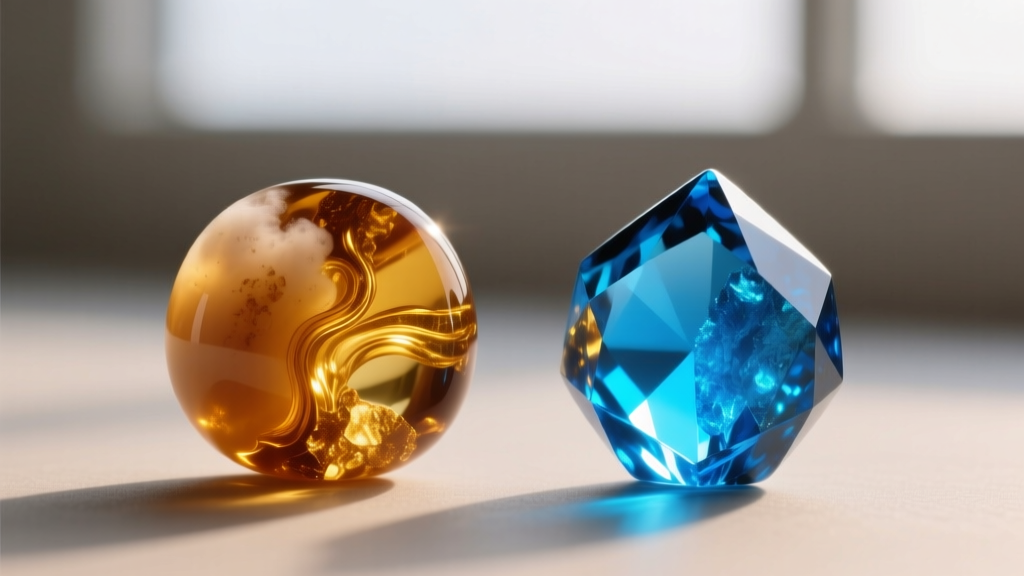
For many collectors, the true value of an amber necklace lies not in the gemstone itself, but in the prehistoric life suspended within it. Inclusions dramatically alter the pricing and desirability of amber jewelry.
Flora vs. Fauna
Baltic amber is famous for its botanical inclusions—fragments of ancient pine needles, oak leaf hairs, and seeds. While beautiful, flora inclusions are relatively common and only command a slight premium over standard beads. Fauna inclusions (insects, arachnids, and small vertebrates) are much rarer in Baltic deposits due to the sticky, viscous nature of the original pine resin, which often trapped debris before it could fully encase larger creatures.
Conversely, Dominican amber is world-renowned for its spectacular faunal inclusions. The Hymenaea protera resin was highly fluid, allowing it to perfectly encapsulate mosquitoes, ants, frogs, and even small lizards with microscopic detail. According to research highlighted by the American Museum of Natural History, Dominican amber provides some of the most detailed genetic and morphological snapshots of Miocene insect life. A necklace featuring a single, perfectly preserved insect inclusion can easily command prices 10 to 50 times higher than a standard clear bead.
Authenticity Testing: Separating Resin from Plastic
The market is flooded with counterfeit amber necklaces made from Bakelite, celluloid, polyester, and modern epoxy resins. Furthermore, 'Copal'—immature, sub-fossilized resin that is only a few hundred to a few thousand years old—is frequently sold as true amber. As a buyer, you must rely on material science to verify your jewelry.
- The Saturated Saltwater Float Test: True amber has a specific gravity of roughly 1.08. In a solution of 1 part table salt to 2 parts warm water, genuine amber and copal will float, while most plastics and glass will sink. This is the safest, non-destructive test for necklaces.
- The Acetone Swab Test: This test identifies Copal. Apply a drop of pure acetone (nail polish remover) to an inconspicuous area of the bead. True amber (both Baltic and Dominican) is highly polymerized and will not react. Copal, lacking millions of years of polymerization, will become tacky and sticky within seconds.
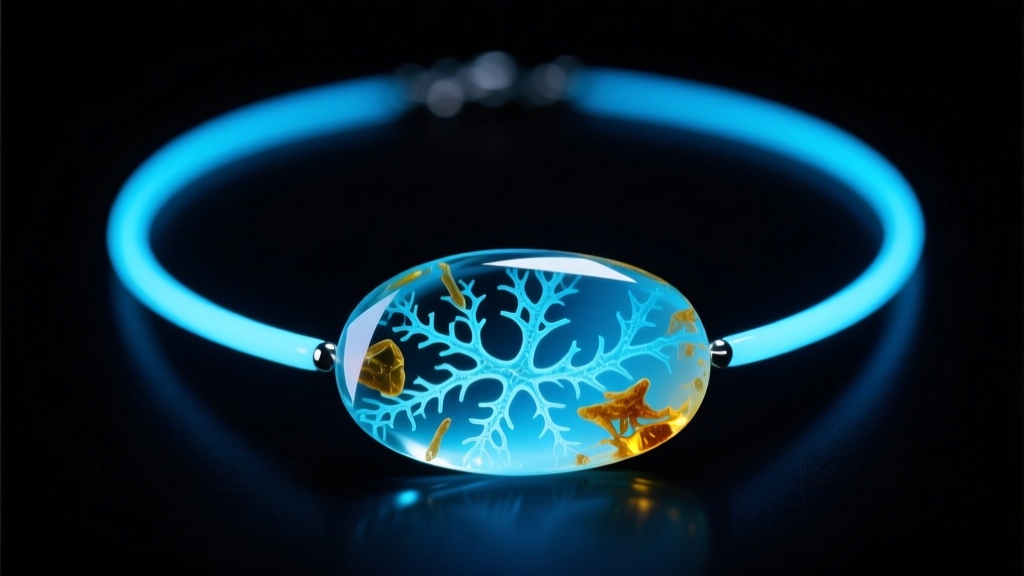
- UV Fluorescence (365nm vs 395nm): To see the true optical properties of Dominican amber, you must use a 365nm UV blacklight. While cheap 395nm flashlights will make both plastics and amber glow slightly, a 365nm wavelength will cause genuine Dominican retinite to emit a brilliant, deep milky-blue fluorescence. Plastics will generally appear dull or purple.
- The Hot Needle Test (Destructive): Heat a needle until it is red hot and touch it to a hidden area of the bead. Genuine amber will emit a pleasant, woodsy pine or incense scent and leave a small white mark. Plastic will emit an acrid, chemical odor and melt into a black, sticky residue.
Expert Warning: Never use the hot needle test on a necklace you do not already own, as it causes permanent thermal damage to the bead. Rely on the saltwater and UV tests for point-of-sale verification.
Pricing Tiers and Market Value
Understanding the material properties directly translates to understanding market pricing. Amber is typically priced by the gram for raw material, but finished necklaces are priced based on bead size, clarity, color rarity, and inclusions.
| Amber Type & Grade | Average Price Per Gram (Raw) | Estimated 18' Necklace Price (8mm Beads) |
|---|---|---|
| Baltic Butterscotch (Opaque) | $2.00 - $4.00 | $80 - $150 |
| Baltic Cognac (Heat Clarified) | $3.00 - $6.00 | $120 - $250 |
| Dominican Honey (Clear) | $5.00 - $10.00 | $200 - $400 |
| Dominican Blue (Rare) | $20.00 - $50.00+ | $800 - $2,500+ |
| Insect Inclusion (High Clarity) | $50.00 - $200.00+ | $500 - $3,000+ (per focal bead) |
Data sourced from global gemological markets and Mindat.org mineral databases indicate that while Baltic amber is more abundant and affordable, the rarity of unheated, naturally blue Dominican amber continues to drive its value upward among serious collectors.
Care, Oxidation, and Crazing
Amber is an organic gemstone, meaning it is susceptible to environmental degradation. Over decades, exposure to oxygen and UV light causes the surface of amber beads to oxidize, forming a dark, reddish-brown patina. While some collectors prize this 'antique' look, it can obscure internal inclusions.
More concerning is crazing—a network of fine surface cracks caused by rapid temperature changes or extreme dryness. To preserve your amber necklaces, store them in a soft cloth pouch away from direct sunlight and extreme heat. Never clean amber with ultrasonic cleaners, steam, or harsh chemical jewelry dips, as these will strip the natural polish and accelerate surface degradation. Simply wipe your necklace with a soft, damp microfiber cloth after wearing to remove skin oils and perfumes.


