Budget Necklace Hanging Ideas: High-Value Storage Hacks
Discover high-value, budget necklace hanging ideas to prevent tangles and tarnish. Compare DIY, acrylic, and wood organizers for the best cost-per-piece ROI.

When evaluating jewelry storage, the initial price tag of the organizer is only a fraction of the true cost. A cheap, poorly designed jewelry box that causes chain tangling can lead to permanent kinks in delicate 14k gold box chains or sterling silver cable chains. Repairing a severely kinked chain via laser soldering typically costs between $45 and $85 in 2026, instantly wiping out any savings from buying a budget-friendly but ineffective storage unit. When searching for budget necklace hanging ideas, the goal is not just to spend less upfront, but to maximize the long-term value, preservation, and accessibility of your jewelry collection.
As a jewelry style and valuation expert, I assess storage solutions based on their cost-per-piece ROI, hardware durability, and material safety. Let us break down the most cost-effective, high-value hanging methods, analyzing their exact hardware specifications, weight limits, and long-term viability.
The Tension Rod Method (Under $15)
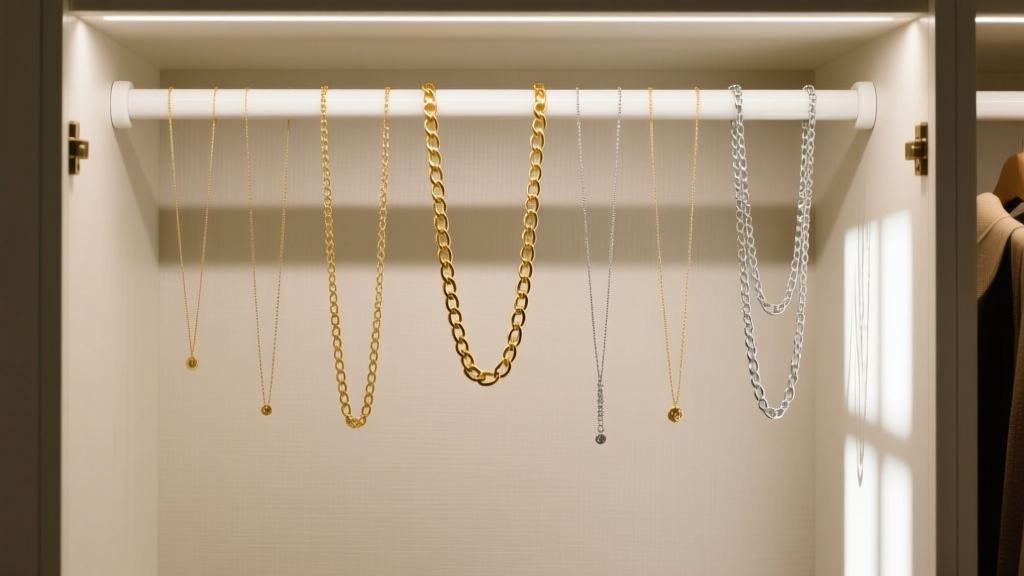
The highest ROI budget necklace hanging idea utilizes a simple spring-loaded tension rod, typically priced between $12 and $15 at hardware stores. By mounting this rod inside a closet door frame or a narrow alcove, you create a high-capacity hanging zone that keeps chains fully extended and tangle-free.
Hardware Specifics and Weight Limits
For jewelry storage, opt for a rod with a 1/4-inch to 3/8-inch diameter. Thicker rods (5/8-inch) are designed for heavy curtains and make it difficult to slide small jewelry clasps over the ends. A standard 1/4-inch steel tension rod can support up to 15 pounds of static weight. Since an average 18-inch 14k gold rope chain weighs roughly 8 to 12 grams, a single rod can safely hold over 40 lightweight necklaces without sagging.
Pro-Tip: To prevent the metal clasps from scratching the painted steel rod, wrap the rod in a layer of microfiber cloth or clear heat-shrink tubing. This creates a soft, friction-appropriate surface that protects both the rod and your jewelry findings.
Wall-Mounted Rail Systems ($20 - $40)
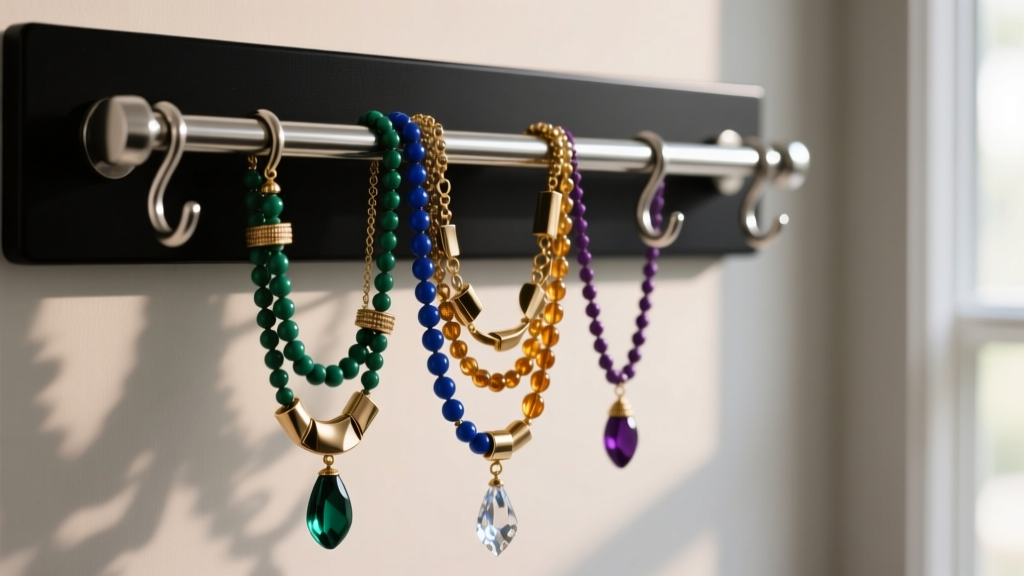
If closet space is limited, wall-mounted rail systems offer a boutique-style display that doubles as room decor. Rather than buying overpriced "jewelry-specific" wall racks, look for budget-friendly kitchen or bathroom towel rails, or slatwall accessories.
The Importance of S-Hook Gauges
The hidden cost of wall rails is the hanging hardware. Most cheap organizers include 22-gauge brass hooks that easily bend under the weight of heavy pendant necklaces or layered Cuban chains. For a high-value setup, purchase 16-gauge or 18-gauge stainless steel (Grade 304) S-hooks. Grade 304 stainless steel is crucial because it is highly resistant to oxidation; cheap, uncoated iron hooks will eventually rust and transfer iron oxide stains directly onto your silver and gold chains.
Acrylic Wall Organizers ($25 - $50)
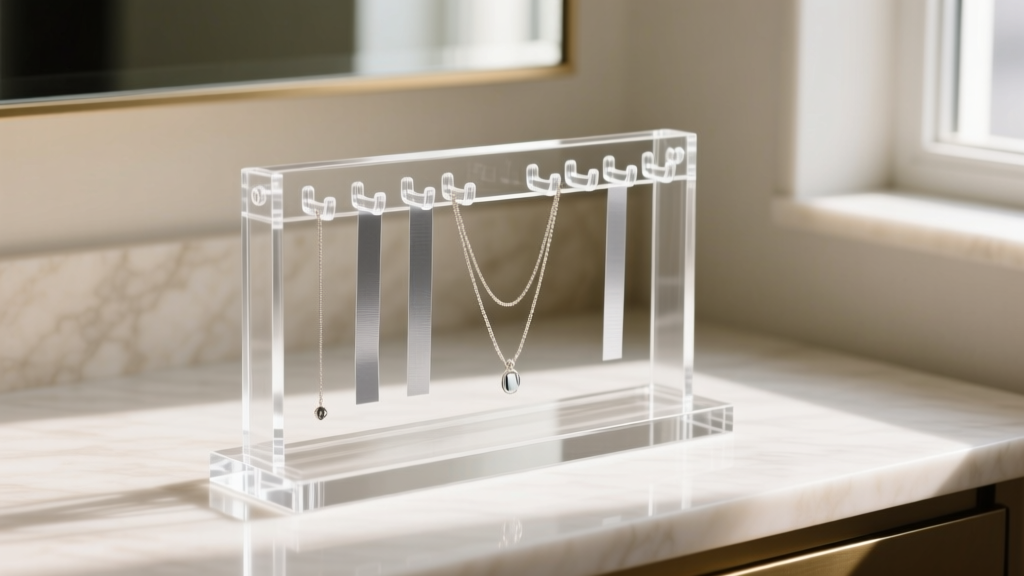
Clear acrylic pegboards are incredibly popular for their modern aesthetic and visibility. However, from a value perspective, they require careful selection. Many budget acrylic boards use pegs that are spaced only 1 inch apart. If you hang an 18-inch or 20-inch necklace on adjacent pegs, the chains will overlap at the bottom, defeating the purpose of a hanging organizer and leading to the exact tangles you are trying to avoid.
When shopping for acrylic boards, ensure the pegs are spaced at least 2.5 to 3 inches apart horizontally. Additionally, look for UV-stabilized acrylic; cheap, non-stabilized plastics will yellow and become brittle within 12 to 18 months if exposed to direct sunlight near a vanity window.
Cost-Per-Piece ROI Analysis
To truly assess the value of these budget necklace hanging ideas, we must look at the cost-per-piece metric. This table breaks down the financial efficiency of each method based on average 2026 market pricing.
| Storage Method | Upfront Cost | Avg. Capacity | Cost-Per-Piece | Hardware Durability |
|---|---|---|---|---|
| Tension Rod (Closet) | $12 - $15 | 30 - 40 | $0.30 - $0.50 | High (Steel Core) |
| Wall Rail + S-Hooks | $25 - $40 | 20 - 25 | $1.00 - $2.00 | High (If 304 SS) |
| Acrylic Peg Board | $25 - $50 | 12 - 18 | $1.38 - $4.16 | Medium (Plastic Pegs) |
| DIY Cork & Fabric | $18 - $25 | 15 - 20 | $0.90 - $1.66 | Low (Pushpins Bend) |
Material Matters: Preventing Tarnish on a Budget
The greatest flaw of open-air hanging organizers is their exposure to ambient air, which accelerates tarnishing. According to the Gemological Institute of America (GIA), sterling silver tarnishes when it reacts with hydrogen sulfide in the atmosphere, forming a dark layer of silver sulfide (Ag2S). Leaving a $200 silver pendant exposed on an acrylic board will result in visible yellowing and blackening within weeks, especially in high-humidity environments like bathrooms.
The Budget Anti-Tarnish Protocol
You do not need to buy a $300 climate-controlled jewelry armoire to prevent this. The most cost-effective solution is to integrate 3M Anti-Tarnish Strips or generic copper-based sacrificial anode strips directly into your hanging zone. These strips cost roughly $0.50 to $1.00 per month and work by absorbing sulfur gases before they can reach your silver.
For hanging systems like the tension rod or wall rail, simply use a small binder clip to attach an anti-tarnish strip to the rod every 4 to 6 inches. As noted by home organization experts at The Spruce, combining open-air display with localized chemical absorbers provides 80% of the protection of a sealed velvet-lined box at 10% of the cost.
Weight Limits and Hardware Gauge Specifics
A common failure point in budget necklace hanging ideas is the mounting hardware. Many DIYers rely on adhesive command strips to mount wall rails or acrylic boards. While fine for delicate 10k gold cable chains (which weigh under 5 grams), adhesive strips will catastrophically fail under the dynamic load of heavy statement pieces.
A solid 14k gold Cuban link chain with a large gemstone pendant can easily exceed 80 to 120 grams. If you have five heavy chains on a single rail, the total downward force can exceed 1.5 pounds, which, combined with the leverage of the rail bracket, will rip adhesive strips off drywall. Always use #4-6 x 1-inch plastic drywall anchors and steel screws for any wall-mounted necklace hanging system. The $3 investment in proper anchors protects thousands of dollars worth of precious metals from crashing to the floor.
Final Verdict: Where to Spend and Where to Save
When executing budget necklace hanging ideas, the golden rule of value assessment is to save on the structure, but spend on the contact points. You do not need to buy a branded, aesthetically marketed "jewelry organizer" when a $12 hardware store tension rod or a $20 matte-black bathroom towel rail performs the exact same mechanical function.
However, you must never compromise on the hardware that actually touches the jewelry. Upgrading to 16-gauge stainless steel S-hooks, applying heat-shrink tubing to metal rods, and utilizing anti-tarnish strips are non-negotiable investments. By applying these high-value storage hacks, you maintain a tangle-free, visually accessible collection while entirely eliminating the hidden costs of chain repair and silver polishing.


