How to Layer and Style a Necklace on a Woman: A Step-by-Step Guide
Learn how to perfectly measure, match, and layer a necklace on a woman. Our step-by-step guide covers necklines, chain gauges, and anti-tangle tricks.

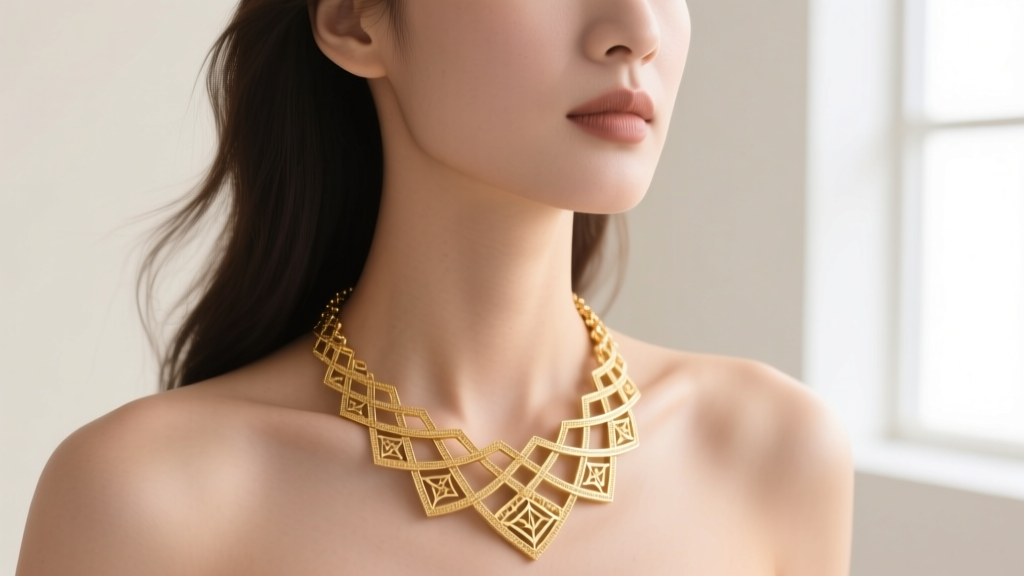
The Anatomy of Proportion: Measuring for the Perfect Fit
Finding and styling the perfect necklace on a woman is an exercise in geometry, metallurgy, and personal aesthetics. A chain that looks elegant on a mannequin can easily overwhelm a petite frame or disappear against a high neckline. To achieve a flawless drape, you must first understand the baseline measurements of the human neck and how standard jewelry lengths interact with individual anatomy.
According to standard sizing charts published by Jewelers of America, the average woman's neck circumference ranges from 13 to 15 inches. However, simply buying a standard 16-inch choker is a gamble. To measure accurately, use a flexible tailor's tape measure or a piece of string, wrapping it around the base of the neck where a collar would naturally sit.
- The Two-Finger Rule: Once you have the base measurement, add two inches for a comfortable choker, four inches for a standard collarbone-grazing chain, and six to eight inches for a pendant drop.
- The Pendant Factor: If you are adding a heavy pendant (over 5 grams), the chain will naturally pull downward. You must subtract roughly half an inch from your target length to account for the pendant's drop weight.
Step 1: Matching the Necklace to the Neckline
The most common mistake in styling a necklace on a woman is ignoring the geometry of her clothing. The neckline of a garment dictates the negative space available on the chest. Your goal is to fill that space without competing with the fabric's hemline.
| Neckline Type | Ideal Necklace Length | Recommended Chain Style & Gauge | Styling Objective |
|---|---|---|---|
| Crew Neck | 20" - 24" (Matinee) | 3.5mm Rope or Figaro chain | Break up the solid block of fabric; create a vertical illusion. |
| V-Neck | 18" (Princess) with Y-drop | 1.5mm Cable with a lariat or teardrop pendant | Mirror the V-shape of the fabric to elongate the torso. |
| Strapless / Sweetheart | 14" (Choker) + 16" Layer | 2.0mm Box chain layered with a 1.0mm Wheat chain | Highlight the exposed collarbones and décolletage. |
| Turtleneck | 28" - 32" (Opera) | 4.0mm Cuban link or heavy Snake chain | Provide a bold, swinging focal point over heavy winter fabrics. |
| Scoop Neck | 16" - 18" (Collar/Princess) | Delicate 1.2mm Rolo chain with a solitaire gemstone | Sit just above or perfectly parallel to the fabric's curve. |

Step 2: The Layering Formula and Chain Gauges
Layering is no longer just a trend; it is a fundamental styling technique. However, throwing multiple chains together usually results in a tangled mess. The secret to a curated, intentional look lies in the Rule of Thirds and understanding chain gauge weights.
The 2-Inch Separation Rule
When layering, each subsequent chain must drop at least two inches below the previous one. If you start with a 14-inch choker, your next chain should be 16 inches, and your third should be 18 or 20 inches. This prevents the pendants and clasps from overlapping and tangling.
Balancing Chain Gauges and Weights
A frequent failure mode in layered necklaces is the heavier chain pulling the lighter chain out of alignment. To prevent this, you must anchor your layers by weight:
Pro Tip: Your bottom layer should always be the thickest and heaviest chain. A 3.0mm wheat chain (approx. 12 grams) will anchor a 1.2mm cable chain (approx. 3 grams), keeping the entire arrangement sitting flat against the sternum.
Step 3: Metallurgy and Clasp Mechanics
The longevity and drape of a necklace on a woman depend heavily on the metal alloy and the hardware used. According to the Gemological Institute of America (GIA), the purity of gold drastically affects its tensile strength and scratch resistance.
Choosing the Right Karat
- 14k Gold (58.5% pure gold): The ultimate choice for daily-wear chains, especially delicate gauges under 2.0mm. The higher alloy content (copper, zinc, silver) makes it highly resistant to stretching and snapping.
- 18k Gold (75% pure gold): Offers a richer, deeper yellow hue but is significantly softer. Best reserved for thicker chains (3.0mm+) or special occasion pieces that won't endure the friction of daily layering.
- Platinum & Palladium: Exceptional for diamond pendant settings due to their high density and secure prong grip, but often too heavy for delicate, multi-strand layering.
Clasp Mechanics: The Weakest Link
Never pair a heavy pendant with a weak clasp. Spring-ring clasps are notorious for failing on chains exceeding 5 grams. For standard layering, a lobster clasp is mandatory. If you are styling a heavy opera-length chain or a solid gold piece weighing over 15 grams, upgrade to a box clasp with a figure-8 safety latch to prevent catastrophic loss if the primary mechanism jams.
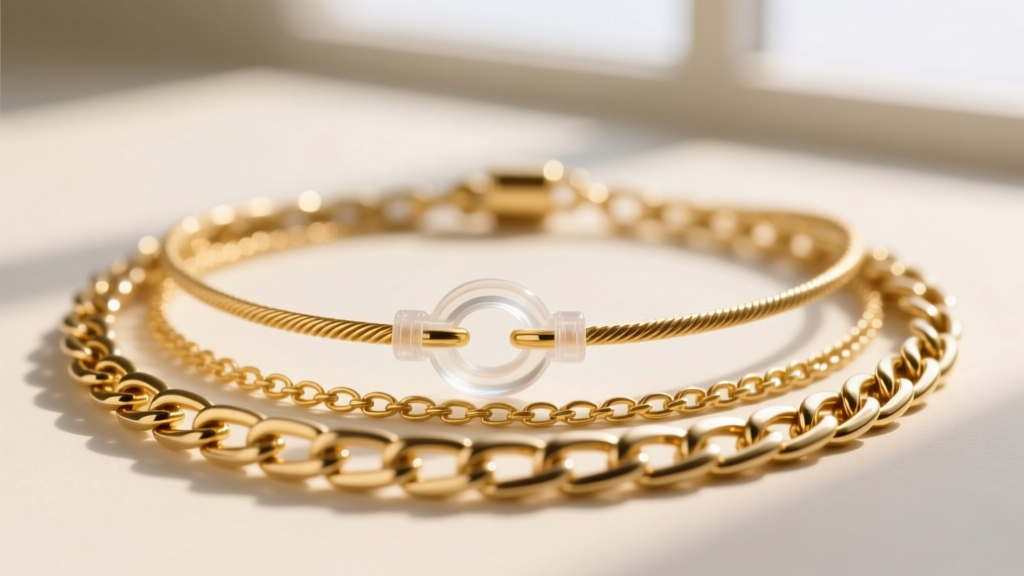
Troubleshooting: Tangling and Drape Issues
Even with perfect measurements, certain chain styles are inherently prone to tangling due to their link geometry. Understanding these mechanical flaws will save you hours of frustration.
Which Chains to Avoid for Layering
Snake chains feature tightly interlocked rings that create a smooth, tubular surface. While beautiful on their own, they are a nightmare for layering. The microscopic gaps between the links act like velcro, catching on the hairs of the wearer's neck and the links of adjacent chains. Furthermore, if a snake chain is bent sharply, it will permanently kink and weaken.
Herringbone chains lie incredibly flat but lack structural integrity. They twist easily and are nearly impossible to untangle without the use of jewelry pliers and a magnifying loupe.
The Best Anti-Tangle Chains
For a hassle-free layered look, rely on Wheat (Spiga) chains and Box chains. Wheat chains feature interlocking, twisted oval links that move fluidly in one direction, making them highly resistant to knotting. Box chains, with their wide, flat geometric links, slide past one another smoothly and rarely catch on fabrics or other jewelry.
The Hardware Hack: Silicone Spacer Clasps
If you are determined to layer chains that tend to tangle, invest in a multi-strand silicone clasp or spacer bar. These small, discrete findings gather the ends of two or three chains into a single, unified lobster clasp connection. This ensures the chains remain perfectly spaced at the nape of the neck, eliminating the primary friction point where 90% of tangles originate.
Final Thoughts on Proportional Styling
Mastering how to drape and layer a necklace on a woman requires looking beyond the jewelry case and considering the entire canvas. By respecting the geometry of the neckline, balancing the physical weight of the chain gauges, and selecting hardware built for longevity, you transform a simple accessory into a masterclass of proportional styling. Whether you are opting for a minimalist 14k cable chain or a bold, layered matinee arrangement, these structural rules ensure the jewelry enhances the wearer, rather than wearing her.


