Decoding and Fixing Color Meanings on a Mood Necklace
Is your jewelry stuck on black? Learn the science behind color meanings on a mood necklace and how to troubleshoot thermochromic liquid crystal issues.

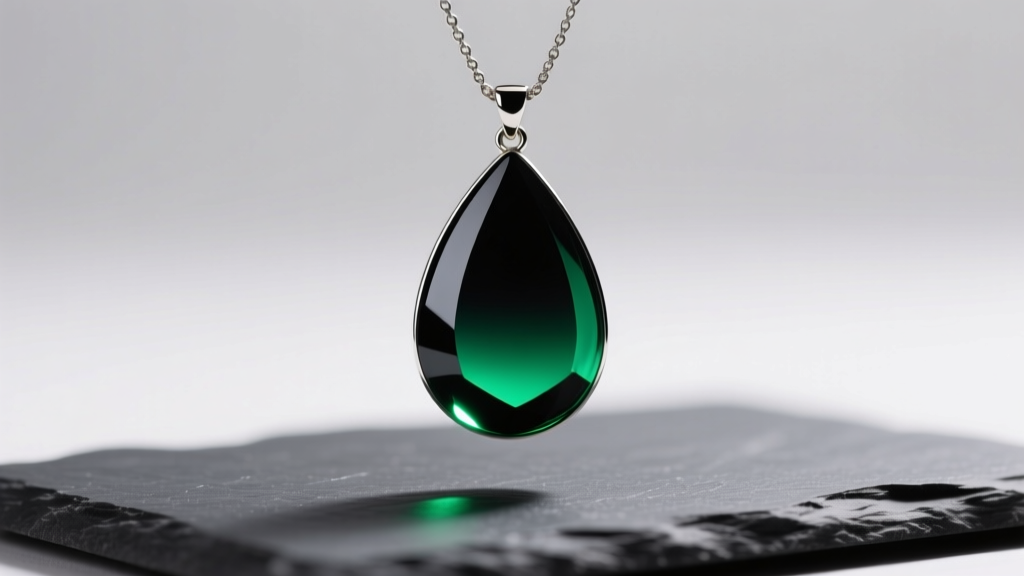
There are few jewelry experiences as frustrating as purchasing a piece of interactive, color-changing accessories only to find the stone perpetually stuck on a lifeless, inky black. If you have been searching for the true color meanings on a mood necklace, you have likely noticed that the cheap paper charts included in packaging rarely match reality. More importantly, they completely fail to explain what to do when the jewelry stops changing color altogether.
As a jewelry materials specialist, I see countless questions about 'broken' thermochromic pendants. The truth is that mood necklaces do not measure your emotions, your aura, or your stress hormones. They measure peripheral skin temperature using a highly sensitive layer of liquid crystals. When the necklace stops working, it is usually due to specific environmental or chemical failures. In this comprehensive troubleshooting guide, we will decode the actual science behind the colors, map out the real temperature thresholds, and provide actionable fixes for a stuck or 'dead' mood stone.
The Real Science: Cholesteric Liquid Crystals and Bragg Diffraction
To troubleshoot a mood necklace, you must first understand what is happening beneath the quartz or glass cabochon. The active ingredient in these pendants is a layer of cholesteric liquid crystals. These are not solid crystals, nor are they standard liquids; they exist in a mesophase that flows like a liquid but has a highly ordered molecular structure like a crystal.
According to materials chemistry experts at Compound Interest, these molecules are arranged in a helical (spiral) structure. When the temperature of your skin changes, the pitch of this spiral twists or expands. This physical twisting alters the wavelength of light that the crystals reflect—a phenomenon known as Bragg diffraction. The black backing glued to the bottom of the stone is entirely functional; without it, the thermochromic layer would appear completely transparent, and you would see no color at all.
Decoding the True Color Meanings on a Mood Necklace
Forget the marketing myths that claim 'amber means you are nervous' or 'pink means you are romantic.' The color meanings on a mood necklace are strictly tied to the thermal conductivity of your skin, which is dictated by blood flow (vasodilation and vasoconstriction). Below is the accurate, science-backed temperature chart for modern thermochromic jewelry.
| Observed Color | Skin Temperature | Physiological State | Marketed 'Mood' |
|---|---|---|---|
| Black / Brown | Below 82°F (28°C) | Vasoconstriction (blood pulled to core) | Stressed, Anxious, or Cold |
| Red / Orange | 82°F - 86°F (28-30°C) | Warming up, mild peripheral blood flow | Excited, Active |
| Yellow / Green | 86°F - 90°F (30-32°C) | Normal resting surface temperature | Calm, Relaxed, Normal |
| Blue / Indigo | 90°F - 95°F (32-35°C) | Increased peripheral circulation | Happy, Peaceful |
| Violet / Purple | Above 95°F (35°C) | Maximum vasodilation (flushing) | Passionate, Romantic |
Note: Data thresholds are based on standard thermochromic polymer formulations used in contemporary jewelry manufacturing, as detailed by chemistry educators at ThoughtCo.
Troubleshooting: Why Is My Mood Necklace Stuck on Black?
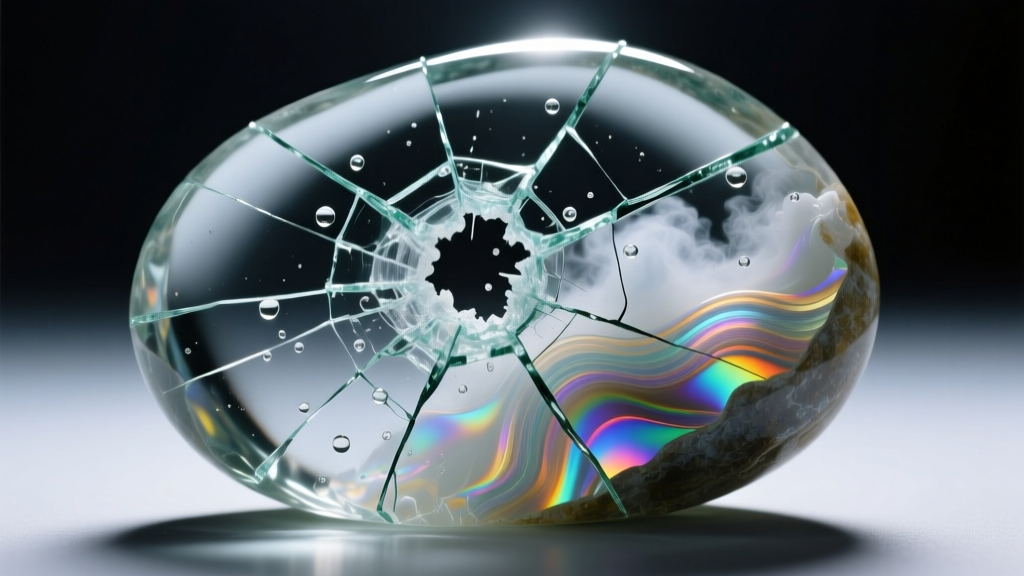
If your pendant is stubbornly black and refuses to shift to green or blue when worn, you are dealing with one of three distinct failure modes. Here is how to diagnose and potentially fix the issue.
1. Ambient Temperature and Vasoconstriction
The most common reason for a black stone is simply a cold environment. If your room is below 68°F (20°C), your body naturally restricts blood flow to the extremities and the surface of your chest to preserve core heat. Without warm blood reaching the surface of your skin, the necklace will read 'cold' and remain black. The Fix: Hold the stone flat against the pulse point on your wrist or the side of your neck for 60 seconds. If it shifts to green or blue, the stone is perfectly fine; your chest skin is just too cool.
2. Moisture Ingress and Delamination
Water is the ultimate enemy of thermochromic jewelry. If you shower, swim, or sweat heavily while wearing the necklace, microscopic amounts of moisture can breach the resin seal around the glass cabochon. When water gets trapped between the glass and the liquid crystal layer, it disrupts the helical alignment of the molecules. The Diagnosis: Look closely at the stone under a bright LED light. If you see cloudy, web-like patches or a 'fog' inside the glass that does not change color, the liquid crystals have been ruined by water. The Fix: Unfortunately, moisture damage is irreversible. The stone must be replaced.
3. UV Polymer Degradation
Prolonged exposure to direct ultraviolet sunlight breaks down the chemical bonds in the thermochromic polymers. If you leave your necklace on a sunny dashboard or windowsill for a few weeks, the crystals will lose their ability to twist. A UV-dead stone will usually default to a muddy, translucent amber or a permanent, dull black. The Fix: There is no chemical reversal for UV damage. Store thermochromic jewelry in a dark, opaque jewelry box when not in use.
The Warm Water Diagnostic Test
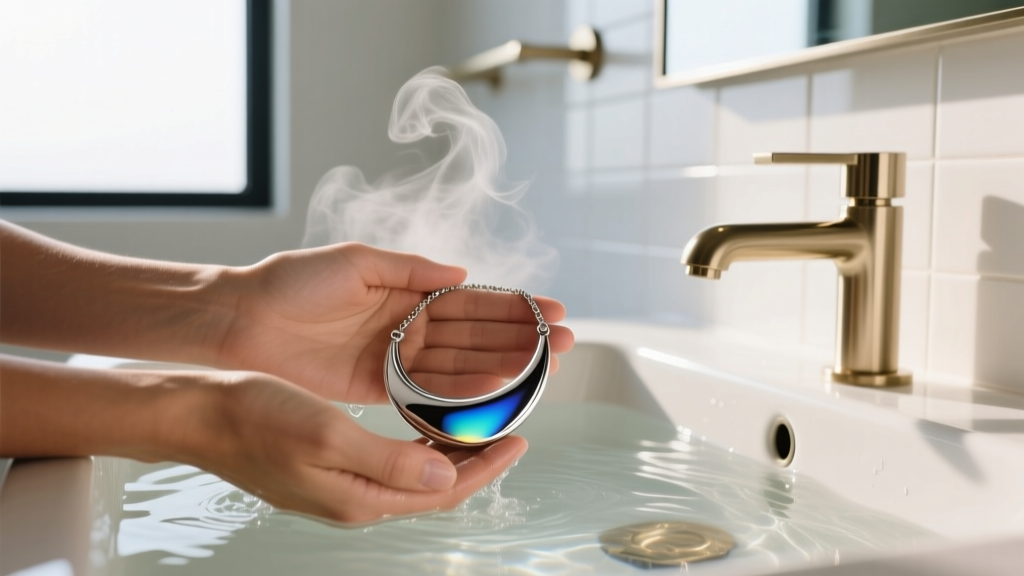
If you cannot determine whether your necklace is broken or just reacting to a cold room, perform the Warm Water Diagnostic Test. This isolates the jewelry from your body's variable biology.
- Prepare the Bath: Run your tap water until it is comfortably warm to the touch—aim for roughly 90°F to 95°F (32°C to 35°C). Do not use boiling or scalding hot water, as extreme heat can shatter the glass cabochon or melt the adhesive backing.
- Submerge the Stone: Hold the pendant by the chain and dip only the stone into the stream of warm water for 10 to 15 seconds. Avoid submerging the metal bail or chain to prevent oxidation.
- Observe the Shift: A healthy thermochromic stone will rapidly shift from black to vibrant green, and then to deep blue or purple as the heat penetrates the glass.
- The Verdict: If the stone turns blue/purple in the water but stays black on your chest, your peripheral circulation is low, or the metal backing of the necklace is acting as a heat sink, pulling warmth away from the stone. If the stone remains black in the warm water, the liquid crystals are dead.
Why Won't My Necklace Turn Purple?
Many users troubleshoot the opposite problem: the necklace works, but it never reaches the coveted 'passionate' purple stage, capping out at a bright teal or blue. This is not a defect in the jewelry; it is a limitation of human physiology. To trigger the purple/violet color, the surface temperature of your skin must exceed 95°F (35°C). For most people, the skin on the chest and collarbone simply does not get that hot unless they are experiencing a fever, intense cardiovascular exertion, or a severe hot flash. If your necklace hits a beautiful, vibrant blue and stays there, it is functioning exactly as engineered.
Long-Term Care for Thermochromic Jewelry
To ensure the color meanings on a mood necklace remain accurate and vibrant for years, you must protect the chemical integrity of the stone. Follow these strict care protocols:
- The 'Last On, First Off' Rule: Always put your mood necklace on after applying perfumes, body lotions, and sunscreens. The alcohol and lipid compounds in cosmetics can slowly dissolve the resin sealant, allowing microscopic moisture to enter the stone.
- Avoid Chemical Cleaners: Never use silver polish, ultrasonic cleaners, or ammonia-based jewelry dips on a mood pendant. The harsh chemicals will strip the black backing paint off the bottom of the stone, rendering the liquid crystals invisible.
- Polish the Metal Only: If the silver or gold-plated chain tarnishes, remove the pendant entirely before using a polishing cloth. If the pendant must be cleaned, wipe only the glass surface with a dry, lint-free microfiber cloth.
By understanding the precise thermal mechanics and chemical vulnerabilities of your jewelry, you can move past the marketing gimmicks and appreciate the genuine materials science happening right at your collarbone.


