Care Guide: Our Lady of Guadalupe Necklace Gold Pendants
Learn expert cleaning and maintenance tips to protect the intricate details and gold finish of your Our Lady of Guadalupe necklace.

The Devotion and the Metal: Why Specific Care Matters
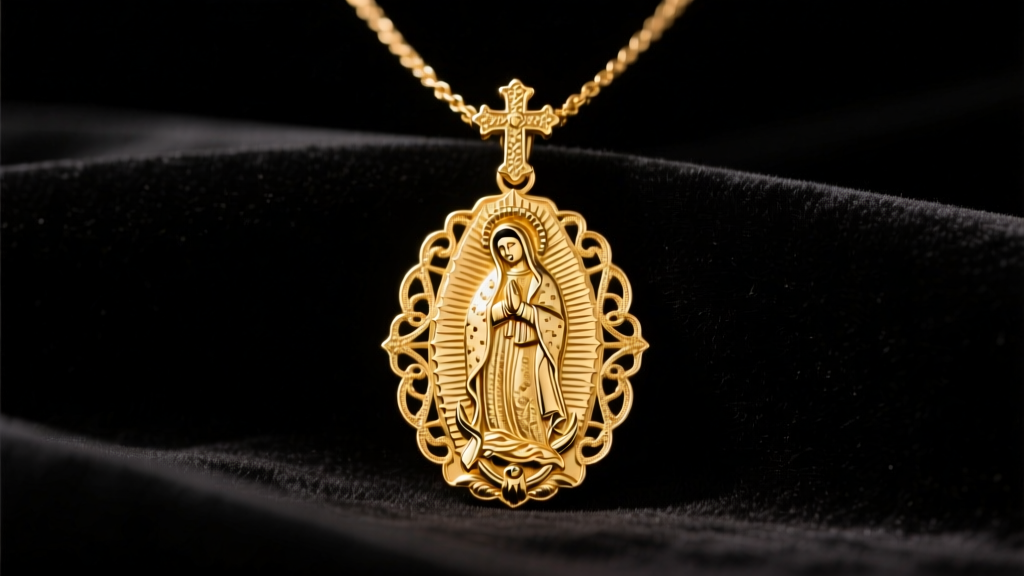
An Our Lady of Guadalupe necklace gold pendant is more than just a piece of jewelry; it is a profound symbol of faith, heritage, and devotion. Often passed down through generations or gifted during pivotal spiritual milestones like baptisms and quinceañeras, these medals demand meticulous care. However, the intricate engravings, delicate milgrain borders, and frequent use of colorful enamels make cleaning them far more complex than polishing a standard gold band.
As we navigate jewelry care in 2026, many consumers mistakenly apply aggressive modern cleaning techniques to heirloom religious medals. According to the Gemological Institute of America (GIA), the alloy composition of your gold, combined with the specific manufacturing techniques used for Mexican and South American religious artifacts, dictates a highly specialized cleaning protocol. Using the wrong method can permanently strip gold vermeil, fracture champlevé enamel, or dull the microscopic facial details of the Virgin Mary engraving.
Understanding Your Gold Composition
Before introducing any liquid or abrasive to your pendant, you must identify the metallurgical makeup of your necklace. Pure 24k gold is virtually immune to tarnish but is too soft for daily-wear chains and detailed stamping. Therefore, most our lady of guadalupe necklace gold pieces are crafted from lower-karat alloys or plated bases.
| Gold Type | Composition | Tarnish Risk | Cleaning Vulnerability |
|---|---|---|---|
| 14k Solid Gold | 58.5% Gold, 41.5% Alloy (Copper/Silver/Zinc) | Low to Moderate | Copper alloys can oxidize; safe for mild surfactants. |
| 18k Solid Gold | 75% Gold, 25% Alloy | Very Low | Softer metal; highly susceptible to micro-scratching from stiff brushes. |
| Gold Vermeil | Sterling Silver base, ≥2.5 microns Gold | High (if gold wears off) | Aggressive polishing will strip the gold layer down to the silver. |
| Gold Plated | Brass/Copper base, <0.5 microns Gold | Extreme | Friction and chemical dips will immediately destroy the finish. |
The Step-by-Step Cleaning Protocol for Engraved Medals
For solid gold and high-quality vermeil pieces without painted details, a gentle surfactant bath is the safest method to lift sebum, dead skin cells, and environmental pollutants from the deep crevices of the engraving.
What You Need
- Distilled Water: Never use tap water. Municipal water contains chlorine and trace minerals that can cause localized galvanic corrosion on copper-heavy 14k alloys.
- Mild Surfactant: A single drop of phosphate-free dish soap (like Dawn Ultra).
- Ultra-Soft Baby Toothbrush: Look for bristles rated at 0.15mm or softer. Standard 'soft' adult toothbrushes have 0.20mm bristles that can act like sandpaper on high-polish gold over time.
- Lint-Free Microfiber Cloth: For final drying and buffing.
The Soak and Agitation Method
- Warm the distilled water to roughly 85°F (29°C)—lukewarm to the touch. Extreme heat can shock and crack any hidden resin fills.
- Add the surfactant and create a gentle lather.
- Submerge the pendant and chain for exactly 3 to 5 minutes. This allows the soap to break down lipid bonds.
- Using the baby toothbrush, agitate the bristles parallel to the engraved lines. Never scrub in tight circles, as this traps dirt in the corners of the stamping.
- Rinse thoroughly under a gentle stream of fresh distilled water.
- Pat dry with the microfiber cloth, ensuring no moisture remains trapped in the chain links or the clasp mechanism.
Protecting Enamel and Painted Details
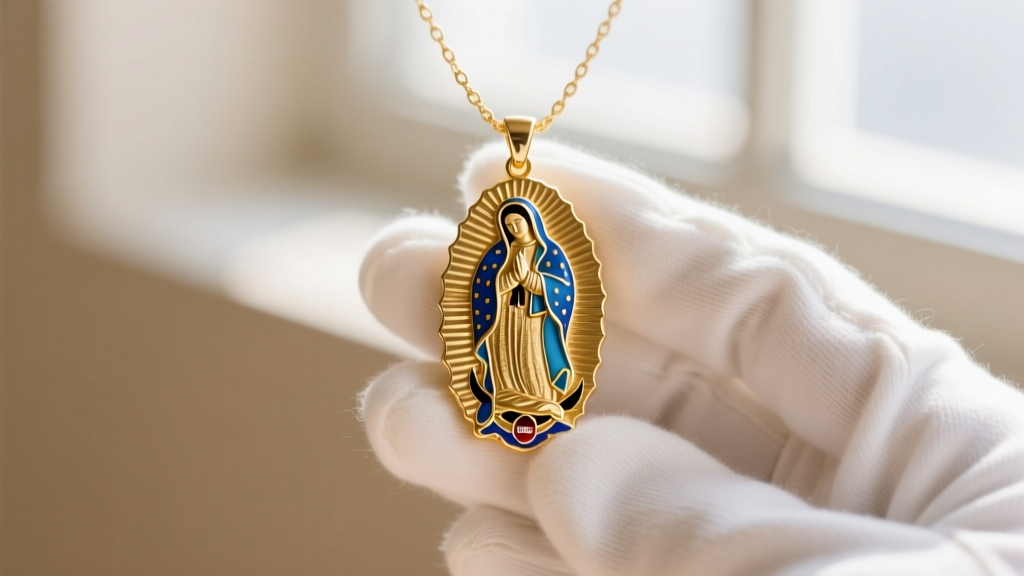
Many authentic Our Lady of Guadalupe medals feature vibrant blue, green, and red accents to highlight the Virgin's mantle and the radiant sunburst. These are typically achieved through champlevé (fired glass enamel) or cold enamel (epoxy resin fills). This is where modern cleaning habits often cause catastrophic damage.
Critical Warning: Never place an enameled religious medal in an ultrasonic cleaner. The high-frequency cavitation bubbles will create microscopic shockwaves that shatter glass enamel and lift resin fills directly out of their gold bezels.
Furthermore, avoid any cleaning solutions containing alcohol, ammonia, or acetone. While these are excellent for degreasing plain diamond rings, they will chemically dissolve cold enamel, leaving you with a dull, cloudy, or entirely stripped pendant. If your enameled medal requires cleaning, bypass the soak entirely. Instead, lightly dampen a cotton swab with distilled water and a trace of mild soap, gently rolling it over the gold surfaces while meticulously avoiding the colored fills.
Chain Maintenance and Clasp Inspection
The chain holding your our lady of guadalupe necklace gold pendant endures immense mechanical stress. The most common failure point is not the chain snapping, but the jump ring (the small circular loop connecting the chain to the clasp) slowly pulling apart due to friction against the pendant bail.
Inspect your jump rings every six months. If you see a visible gap, take it to a professional jeweler to be laser-welded or soldered shut. Additionally, pay close attention to springring clasps. Inside the tiny gold shell of a springring is a minuscule steel spring. If water gets trapped inside this mechanism after a shower or cleaning, the steel spring will rust, causing the clasp to stick or fail entirely. Always blow compressed air into the clasp mechanism after washing your necklace to displace hidden moisture.
Storage and Environmental Hazards
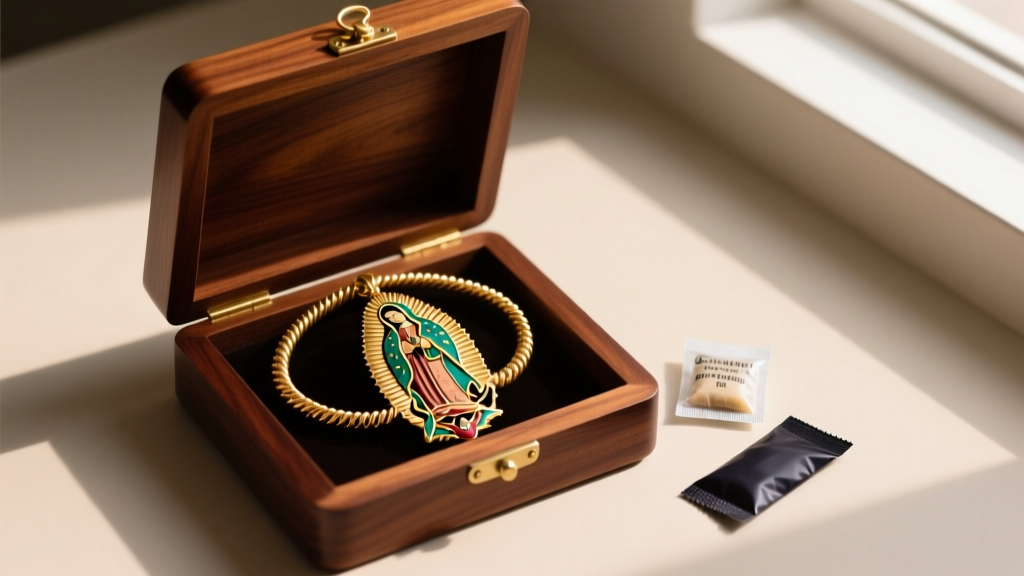
Proper storage is the cornerstone of low-maintenance jewelry care. The Jewelers of America organization emphasizes that environmental sulfur is the primary enemy of gold alloys. Sulfur in the air reacts with the copper and silver in 14k gold to form copper sulfide and silver sulfide—the dark tarnish that obscures intricate engravings.
- Use Anti-Tarnish Strips: Place 3M anti-tarnish tabs inside your jewelry box. These strips absorb airborne sulfur compounds before they can reach your metal.
- Control Humidity: Store the necklace in a sealed ziplock bag with a small silica gel desiccant packet to maintain a low-humidity microclimate.
- Avoid the Bathroom: Never store your necklace on a bathroom vanity. The fluctuating humidity and aerosolized chemicals from perfumes and hairsprays create a highly corrosive environment for both gold alloys and enamel.
Troubleshooting Common Issues
Even with meticulous care, vintage or heavily worn pieces may develop specific issues. Here is how to address them without causing further harm:
1. Verdigris Buildup on Chain Links
If you notice a green, crusty buildup (verdigris/copper carbonate) near the clasp or jump rings, it indicates the base metals are oxidizing. Do not scrape it with a metal tool. Soak a cotton swab in a 50/50 mix of white vinegar and distilled water, apply it strictly to the affected link for 30 seconds to dissolve the carbonate, and immediately neutralize it by wiping with a baking soda and water paste.
2. Cloudy or Faded Enamel
If cold enamel has lost its luster due to years of skin oils and UV exposure, it cannot be 'cleaned' back to life. It must be professionally re-poured by a jeweler specializing in religious artifacts. Attempting to buff it will only generate heat that melts the resin further.
3. Stiff Springring Clasp
If the clasp lever is difficult to pull back, do not force it. Apply a microscopic drop of synthetic sewing machine oil to the seam using a needle tip. Work the lever back and forth to distribute the lubricant, then wipe away all excess oil with a microfiber cloth to prevent dirt attraction.
Preserving a Legacy
Caring for an Our Lady of Guadalupe gold necklace requires a shift in mindset from aggressive polishing to gentle preservation. By understanding the specific vulnerabilities of your gold's alloy, respecting the delicate nature of religious enamels, and maintaining the mechanical integrity of your chain, you ensure that this sacred heirloom remains pristine. Treat your pendant with the same reverence it represents, and it will continue to shine for generations to come.


