Crafting the Perfect Chunky Red Bead Necklace: Technical Guide
Explore the technical anatomy of a chunky red bead necklace. We break down gemstone grades, stringing tensions, bead sizing, and clasp mechanics.

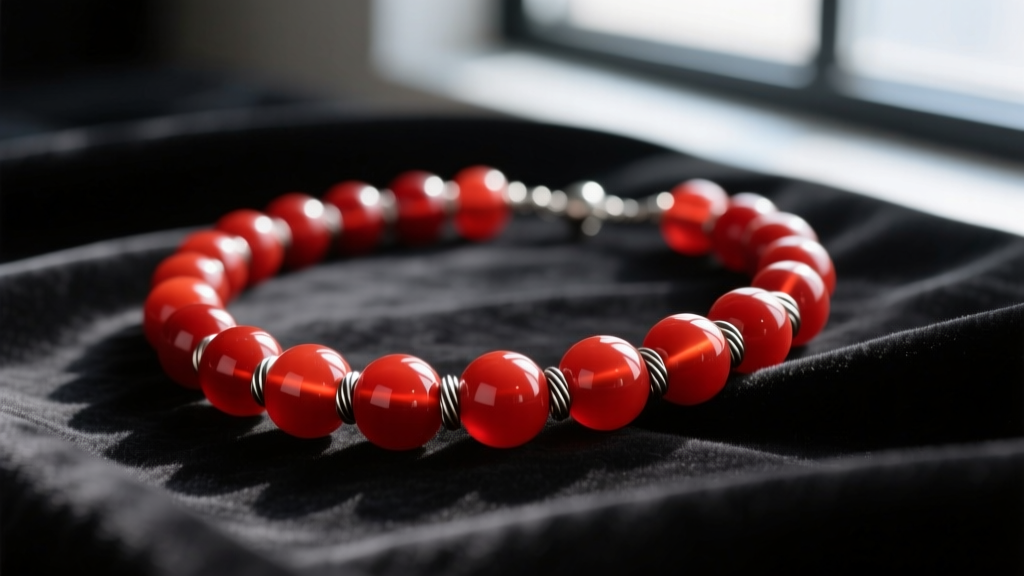
The chunky red bead necklace is a masterclass in visual weight, color theory, and structural engineering. While fashion trends continuously cycle through delicate chains and minimalist pendants, the bold geometry of oversized red beads remains a permanent fixture in high-impact jewelry design. However, transitioning a chunky red bead necklace from a conceptual sketch to a wearable, durable garment requires a deep understanding of material science, tensile strength, and ergonomic drape. In this technical deep dive, we deconstruct the anatomy of heavy bead stringing, analyzing everything from specific gravity to clasp failure points.
The Architecture of Statement Beads
Defining the parameters of 'chunky' is the first step in the design process. In gemological and jewelry manufacturing terms, standard round beads range from 4mm to 8mm in diameter. A necklace enters the chunky category when the primary beads exceed 12mm, with true statement pieces utilizing spheres between 16mm and 25mm. At 20mm, a single natural stone bead can weigh upwards of 10 grams. A standard 16-inch strand comprising twenty 20mm beads will weigh approximately 200 grams (over 7 ounces) before accounting for the clasp, wire, and crimp covers. This massive payload introduces severe lateral tension on the stringing medium and the clasp mechanism.
Graduation Geometry and Center of Gravity
Uniform strands of large beads suffer from a common structural flaw: the center of gravity sits too high, causing the necklace to flip outward and rest awkwardly against the collarbone. To counteract this, expert stringers employ graduation geometry. By placing 14mm beads at the nape of the neck and gradually increasing the diameter to 22mm or 24mm at the sternum, the center of gravity is lowered. This graduated drape ensures the necklace lays flat against the chest, distributing the physical weight across the trapezius muscles rather than concentrating it on the cervical spine.
Material Breakdown: Natural vs. Synthetic Reds
The visual impact of a red bead necklace is heavily dependent on the material's refractive index and specific gravity (SG). Natural carnelian offers a rich, banded opacity with a Mohs hardness of 6.5 to 7, making it highly resistant to scratching. However, its SG of 2.59 means a 20mm carnelian bead is exceptionally heavy. For designers seeking the chunky aesthetic without the physical burden, high-grade optical lucite (SG 1.18) or cherry quartz (a glass-quartz composite) provide vibrant translucency at a fraction of the weight. According to the International Gem Society, understanding the thermal conductivity and hardness of these materials is vital for long-term wearability, as softer resins will scratch and cloud over time if stored improperly against harder minerals.
| Material | Specific Gravity | Mohs Hardness | Avg. Price (16-inch, 16mm) |
|---|---|---|---|
| Natural Carnelian | 2.59 - 2.61 | 6.5 - 7.0 | $120 - $180 |
| Cherry Quartz (Composite) | 2.20 - 2.40 | 5.5 - 6.0 | $45 - $75 |
| Optical Lucite / Acrylic | 1.18 - 1.20 | 2.0 - 3.0 | $15 - $30 |
| Lab-Grown Corundum | 3.98 - 4.00 | 9.0 | $350 - $600+ |
Stringing Mechanics and Tension Management
The failure point of 90% of heavy bead necklaces is the stringing material. Traditional nylon threads, such as Nymo or Silamide, are entirely unsuited for beads exceeding 12mm due to their susceptibility to UV degradation, stretching, and abrasion against the sharp inner edges of drilled gemstones. The industry standard for a heavy statement piece is 49-strand micro-fused stainless steel wire, coated in a smooth nylon sheath. For beads in the 16mm to 20mm range, a .024-inch diameter wire is mandatory. This thickness provides the necessary rigidity to prevent the necklace from kinking while maintaining enough flexibility to drape elegantly.
Wire Guardians and Abrasion Prevention
When stringing heavy beads, the metal clasp ring will eventually saw through the nylon coating of the steel wire if left unprotected. To prevent this, jewelers must use wire guardians (also known as French wire or wire protectors). These tiny, horseshoe-shaped metal findings create a protective metal-on-metal barrier at the termination points, extending the lifespan of the necklace by decades.
The 40-Pound Tensile Rule and Crimping
Securing a .024-inch steel wire requires precision crimping. A standard 2x3mm sterling silver or gold-filled crimp tube is threaded onto the wire, passed through the clasp ring, and looped back through the tube. Using a micro-crimper tool, the tube is first compressed into a U-shape, which separates the two wires and prevents them from sawing against each other, and then folded into a clean, rounded bead. This mechanical lock, detailed in manufacturing guides by Soft Flex Company, can withstand up to 40 pounds of tensile pull, far exceeding the 200-gram payload of the necklace itself.
Clasp Engineering for Heavy Payloads
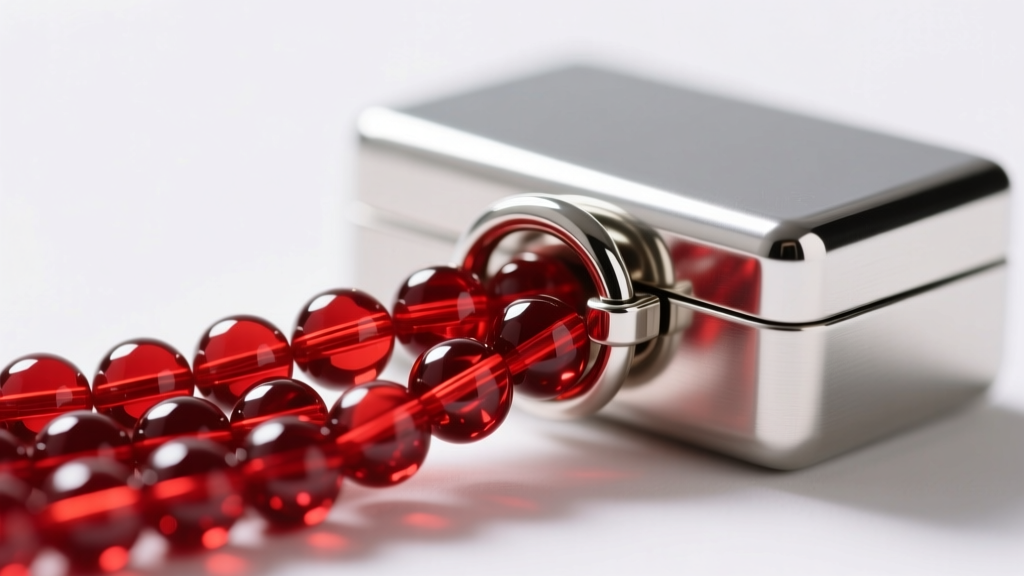
Clasp selection is where aesthetic desires often clash with mechanical realities. Magnetic clasps, while highly accessible, are categorically unsafe for heavy necklaces. Most standard jewelry magnets fail under 45 grams of lateral pull; a sudden jerk will snap the magnetic bond, sending a heavy strand of carnelian crashing to the floor. The only mechanically sound choice is a heavy-duty stainless steel or solid brass box clasp equipped with a figure-8 safety catch. The box mechanism provides a positive mechanical lock, while the secondary figure-8 wire acts as a fail-safe, ensuring that even if the primary tongue dislodges, the necklace remains secured around the wearer's neck.

Sourcing and Market Pricing in 2026
As we navigate the 2026 jewelry market, sourcing large-caliber natural red gemstones has become increasingly cost-prohibitive due to mining restrictions and the rarity of flawless, inclusion-free rough material large enough to yield 20mm spheres. Consequently, the market has seen a massive pivot toward lab-grown alternatives and high-density resins. When sourcing materials for your next project, consider these current market tiers:
- Tier 1 (Budget & Lightweight): UV-stabilized optical lucite. Ideal for massive 25mm+ beads where weight is a primary concern. Highly saturated, though prone to micro-scratches.
- Tier 2 (Mid-Range & Classic): Natural carnelian and dyed agate. Offers excellent hardness and a traditional, organic look with natural banding inclusions.
- Tier 3 (Luxury & Heirloom): Lab-grown ruby and synthetic corundum composites. Delivers the exact refractive index of natural ruby (1.76) without the astronomical price tag of mined 16mm+ spheres.
Expert Insights on Drilling and Finishing
Expert Tip: When drilling your own natural stone beads for a chunky necklace, always use a diamond-tipped core drill with a continuous water feed. Drilling dry generates micro-fractures that will eventually cause the bead to split along the stringing wire under the tension of a heavy strand.
Conclusion
Crafting a high-quality chunky red bead necklace is an exercise in balancing bold visual aesthetics with rigorous structural engineering. By respecting the physics of specific gravity, utilizing 49-strand steel wire with proper wire guardians, and deploying mechanical box clasps, jewelers can create heirloom-quality statement pieces that are as durable as they are striking. Whether you opt for the organic warmth of natural carnelian or the modern brilliance of lab-grown composites, mastering these technical fundamentals ensures your designs will withstand both the test of time and the physical demands of daily wear.


