Abalone Necklaces: Material Properties, Sourcing & Care Guide
Discover the material properties of abalone necklaces. Compare natural Paua, mother of pearl, and synthetics, plus expert care and setting tips.

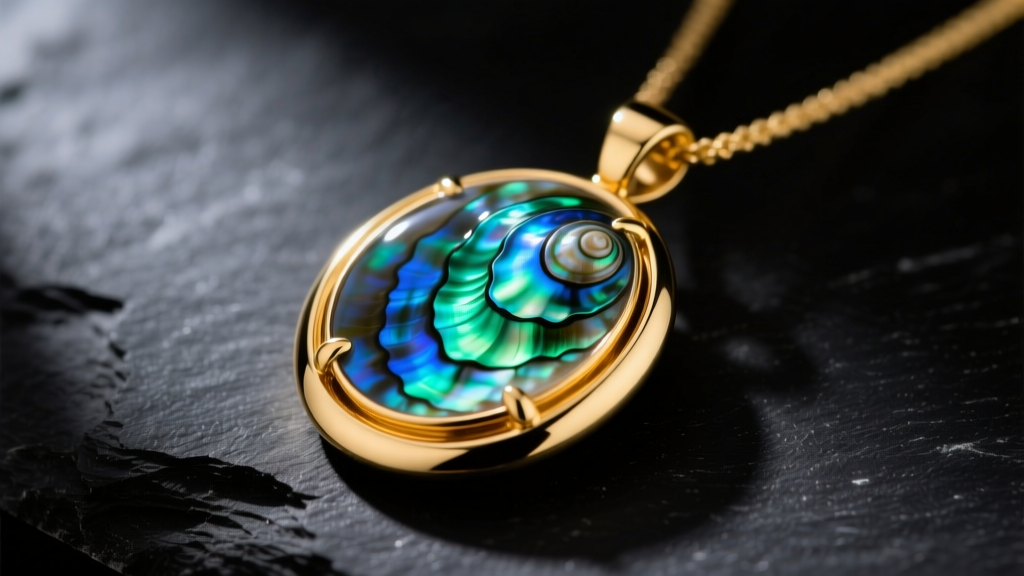
The Science of Iridescence: Understanding Abalone Nacre
Abalone necklaces are celebrated for their mesmerizing play of color, but to truly appreciate this material, one must understand its microstructure. Abalone shell is composed of nacre, also known as mother-of-pearl, which is secreted by the mantle tissue of the marine gastropod. According to the GIA Gem Encyclopedia, nacre is a biomineral composite consisting of microscopic hexagonal platelets of aragonite (a crystalline form of calcium carbonate) layered with an elastic biopolymer called conchiolin.
The signature iridescence of abalone is not caused by pigments, but by structural coloration. When light enters the shell, it refracts and reflects off the multiple layers of aragonite platelets. The varying thicknesses of these layers cause light waves to interfere with one another, amplifying specific wavelengths and producing vivid flashes of blue, green, purple, and pink. From a lapidary perspective, abalone is relatively soft, registering between 2.5 and 4.0 on the Mohs hardness scale. This low hardness dictates strict limitations on how the material can be cut, set, and worn in jewelry.
Material Showdown: Abalone vs. Mother of Pearl vs. Paua
Consumers often use the terms "abalone," "mother of pearl," and "Paua" interchangeably, but they refer to distinct biological sources with unique material properties. While all produce nacre, their visual output, density, and market value differ significantly.
| Material | Biological Source | Color Profile | Mohs Hardness | Typical Jewelry Use |
|---|---|---|---|---|
| Standard Abalone | Haliotis species (Global) | Mixed greens, blues, pinks, whites | 2.5 - 4.0 | Cabochons, inlay work |
| New Zealand Paua | Haliotis iris (Endemic) | Deep, vibrant blues, greens, purples | 3.0 - 4.0 | High-end pendants, statement rings |
| Mother of Pearl | Pinctada maxima (Oyster) | Mostly white, cream, pale silver | 2.5 - 4.5 | Watch dials, button inlays, beads |
| Imitation Shell | Glass/Resin with foil backing | Static, repeating unnatural patterns | 5.0 - 6.0 (Glass) | Fast fashion, costume jewelry |
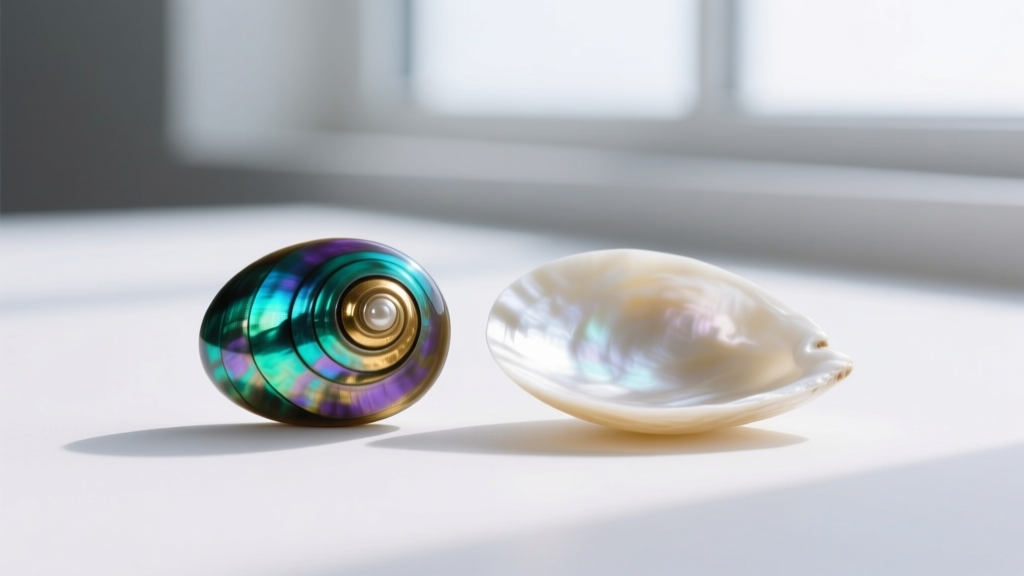
Construction and Setting: Protecting Soft Shells
Because abalone is brittle and prone to cleavage along its growth layers, jewelers must employ specialized construction techniques to ensure the longevity of an abalone necklace.
The Doublet Backing Technique
Rarely is a high-quality abalone pendant carved from a single, solid piece of thick shell. Instead, lapidaries use a "doublet" technique. A thin slice of premium abalone shell is epoxied onto a rigid backing material, most commonly black onyx, dark glass, or dyed howlite. This serves two critical purposes: first, it provides structural integrity, preventing the fragile shell from snapping under minor impacts. Second, the dark backing absorbs transmitted light, forcing it to reflect back through the aragonite layers, which drastically intensifies the iridescent colors.
Bezel vs. Prong Settings
Prong settings are fundamentally incompatible with abalone. The pressure required to bend a metal prong over the edge of the shell will almost certainly cause the nacre to chip or delaminate. Furthermore, prongs leave the edges exposed to daily wear and tear. Expert jewelers exclusively use bezel settings for abalone pendants. A smooth, continuous rim of sterling silver or 14k gold is pushed entirely around the perimeter of the cabochon, securing it safely while protecting the vulnerable edges from lateral impacts.
Chain Pairings for Heavy Shell Pendants
Abalone cabochons, especially those with thick onyx backings and heavy bezel wraps, carry surprising weight. Pairing them with the wrong chain is a common point of failure. Avoid delicate chains like 0.8mm cable or thin snake chains, which will kink or snap under the pendant's dynamic movement.
For optimal durability and aesthetic balance, select chains in the 1.5mm to 2.5mm range. A sterling silver rope chain offers excellent tensile strength and a twisted texture that complements the organic swirls of the shell. Alternatively, a 2.0mm oxidized silver box chain provides a modern, industrial contrast to the vibrant, natural iridescence of the abalone. Always ensure the jump ring connecting the pendant to the chain is soldered shut or features a secure lobster clasp mechanism to prevent accidental loss.
Ethical Sourcing and CITES Regulations
As a marine organism, abalone is subject to strict environmental protections. Overharvesting and poaching have decimated wild populations in several regions. When purchasing an abalone necklace, provenance is paramount.
New Zealand Paua is widely considered the gold standard for ethical sourcing. The New Zealand government enforces a rigorous quota management system (QMS) that strictly limits commercial harvesting to sustain the population. Conversely, certain species, such as the Black Abalone (Haliotis cracherodii) native to the Pacific coast of North America, are critically endangered. According to NOAA Fisheries, the black abalone is listed under the Endangered Species Act, making its commercial trade illegal. Furthermore, international trade of specific endangered Haliotis species is heavily monitored under the CITES Appendices. Reputable jewelers will always provide documentation verifying that their shell material is sourced from certified, sustainable aquaculture farms or strictly regulated wild quotas.
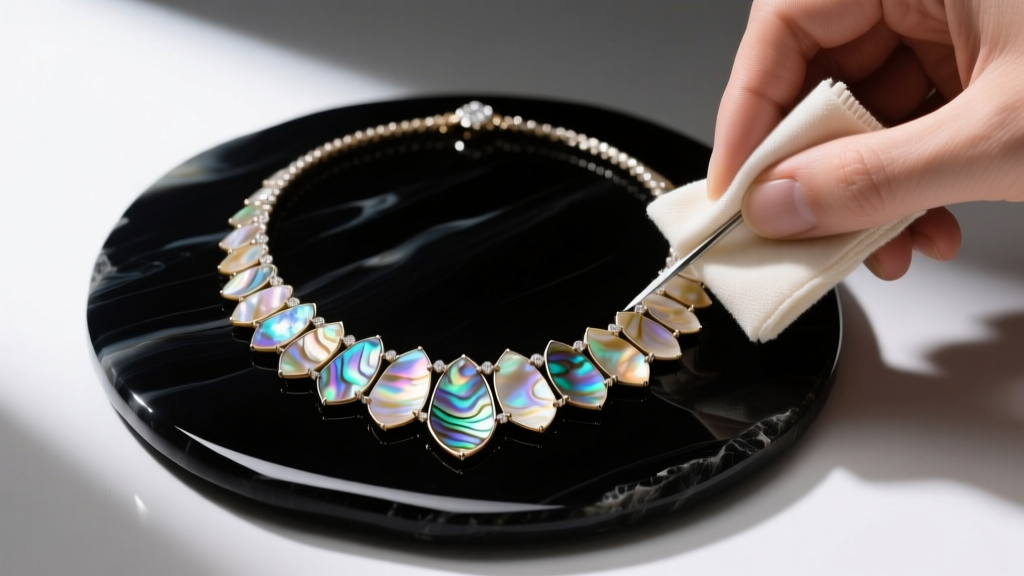
Expert Care Protocol: Preserving the Aragonite Structure
The calcium carbonate composition of abalone makes it highly reactive to acids and vulnerable to extreme environmental shifts. Improper cleaning will permanently etch or shatter the nacre layers.
- Never Use Ultrasonic Cleaners: The high-frequency vibrations will cause the microscopic aragonite platelets to separate, leading to catastrophic delamination and a cloudy, ruined surface.
- Avoid Chemical Exposure: Perfumes, hairsprays, lotions, and even natural body sweat contain mild acids that will eat away at the calcium carbonate over time, dulling the iridescence. Always put your abalone necklace on last when getting dressed.
- The Microfiber Method: To clean the pendant, use only a slightly damp, lint-free microfiber cloth. Gently wipe the surface to remove oils, then immediately dry it with a second soft cloth. Do not use commercial jewelry dips or silver polishing liquids, as these will destroy the shell even if they are safe for the metal bezel.
- Storage:Store the necklace in a soft pouch separate from harder gemstones like diamonds, sapphires, or quartz, which will easily scratch the 3.0 Mohs surface of the abalone.
Identifying Synthetics and Imitations
Due to the high cost of premium Paua and large abalone slices, the market is flooded with imitations. Glass or resin pendants coated with an iridescent foil backing are common in fast-fashion jewelry. To identify genuine abalone, rely on thermal and visual tests. Real abalone is a dense biomineral; it will feel distinctly cool to the touch when first picked up, whereas plastic or resin will quickly adopt room temperature. Visually, genuine abalone features natural growth lines, subtle asymmetrical flaws, and a dynamic color shift that changes based on the angle of light. Imitations often display a static, perfectly uniform, and repeating pattern that lacks the deep, three-dimensional "fire" of natural nacre.


