How to Clean and Care for Your Baroque Pearl Necklace
Learn expert techniques to clean, store, and maintain your baroque pearl necklace. Protect the nacre and silk thread with our detailed care guide.

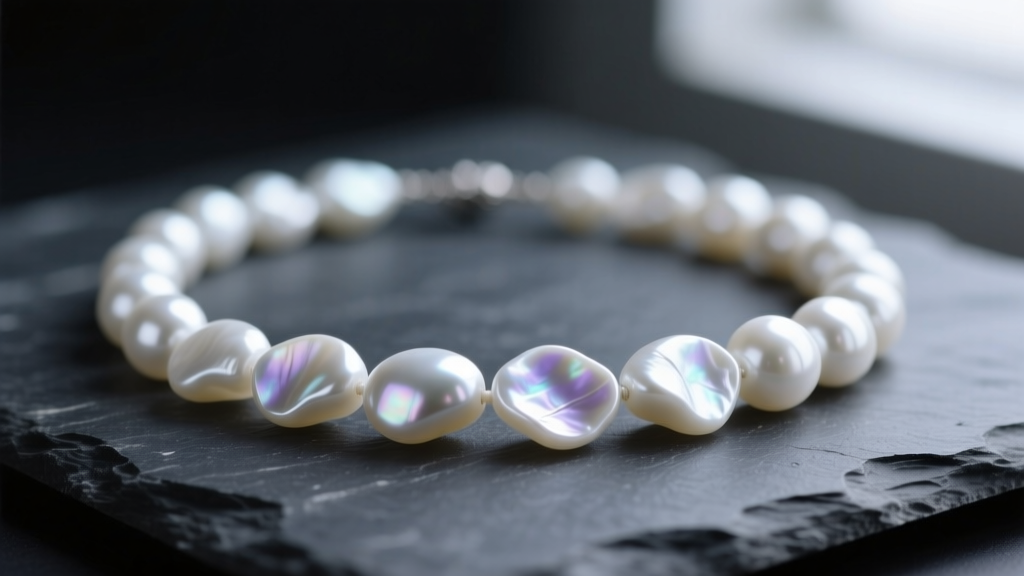
Baroque pearls have surged in popularity due to their organic, asymmetrical shapes and unique, one-of-a-kind luster. Unlike perfectly spherical cultured pearls, every baroque pearl necklace tells a distinct geological story. However, their irregular topography and organic composition make them significantly more vulnerable to environmental damage, chemical etching, and dehydration. Proper maintenance is not just about keeping them clean; it is about preserving the structural integrity of the nacre and the silk thread that holds the piece together.
The Science of Nacre: Why Organic Gems Require Special Care
To understand how to care for a baroque pearl necklace, you must first understand its chemical makeup. Pearls are organic gemstones primarily composed of calcium carbonate (in the form of aragonite crystals) held together by an organic protein called conchiolin. This combination gives pearls their breathtaking iridescence but also leaves them with a Mohs hardness rating of just 2.5 to 4.5. For context, a copper penny sits at a 3.5 on the Mohs scale, meaning everyday objects can easily scratch your pearls.
Furthermore, calcium carbonate is highly reactive to acids. According to the Gemological Institute of America (GIA), even mildly acidic substances can dissolve the aragonite crystals, leading to a permanent loss of luster, surface pitting, and structural degradation. Because baroque pearls are natural and unpolished, their surface is exactly as it was formed in the mollusk, meaning any chemical etching is immediately visible and irreversible.
The Vulnerability of Baroque Grooves
The defining feature of a baroque pearl—its asymmetrical ridges, undulations, and deep grooves—presents a unique maintenance challenge. In perfectly round pearls, the nacre layers are deposited evenly. In baroque shapes, the nacre in the deep crevices is often subjected to different stress vectors and can be microscopically thinner. These grooves also act as traps for dead skin cells, cosmetic residues, and acidic oils. If left uncleaned, this trapped debris slowly breaks down the conchiolin protein glue, leading to flaking or peeling in the pearl's deepest recesses.
Daily Wear Protocol: Navigating Acids and Chemicals
The golden rule of pearl jewelry is "Last On, First Off." Your baroque pearl necklace should be the very last item you put on when getting dressed and the first item you take off when you return home. This protocol is designed to protect the nacre from a barrage of daily chemical hazards.
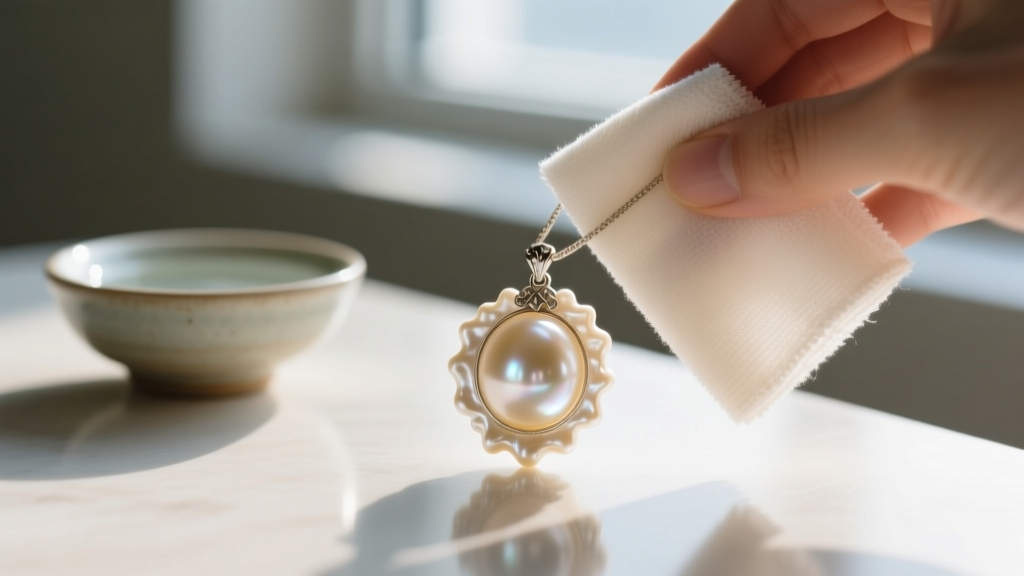
- Cosmetics and Fragrances: Hairspray, perfume, and lotions contain alcohols and synthetic chemicals that strip the pearl of its natural moisture. Always apply these products at least 30 minutes before putting on your necklace.
- Human Sweat: The pH level of human sweat typically ranges from 4.5 to 7.0. After a long day of wear, acidic sweat accumulates on the pearls, particularly where the necklace rests against the décolletage. Always wipe the pearls down after wearing them.
- Chlorine and Saltwater: Never wear your baroque pearls in the pool or the ocean. Chlorine causes severe chemical burns to the nacre, while saltwater can degrade the silk thread and corrode the metal clasp.
The Safe Cleaning Method: A Step-by-Step Guide
Never use ultrasonic cleaners, steam cleaners, or commercial jewelry dips on pearls. The high-frequency vibrations of an ultrasonic cleaner will shatter the delicate nacre layers, and heat will dehydrate the conchiolin. Instead, follow this gentle, expert-approved cleaning protocol every 3 to 4 months, or whenever the pearls appear dull.
- Prepare the Solution: Fill a small glass bowl with lukewarm distilled water. Avoid tap water, as it contains chlorine, fluoride, and heavy metals that can leave microscopic deposits on the nacre. Add a single drop of pH-neutral liquid castile soap or baby shampoo. Do not use dish soap, as heavy-duty degreasers will strip the pearl's essential moisture.
- The Wipe-Down: Dip a clean, lint-free microfiber cloth into the solution and wring it out until it is only slightly damp. Gently wipe each individual baroque pearl, taking care to trace the grooves and ridges to lift trapped oils.
- Avoid Submersion: Never submerge the entire necklace in water. Soaking weakens the silk thread, causing it to stretch and eventually snap. It also risks waterlogging the drill holes, which can lead to internal rot.
- Drying: Lay the necklace flat on a dry, absorbent cotton towel in a cool, shaded area. Never hang a wet pearl necklace, as the weight of the water will permanently stretch the silk. Ensure it is 100% dry before storing.
Debunking the Olive Oil Myth
A pervasive internet myth suggests that rubbing pearls with olive oil or mineral oil will "restore their luster." As highlighted by master jewelers at Mikimoto, this is a disastrous practice. While oil might provide a temporary, artificial shine, it quickly goes rancid, attracts microscopic dust particles into the baroque grooves, and accelerates the breakdown of the conchiolin. True luster comes from the internal light reflection of pristine aragonite crystals, not from an external oily coating.
Storage Environments: The Danger of Dehydration
Pearls contain roughly 2% to 4% water. If they are stored in an overly dry environment, they will undergo a process called "crazing," where the nacre develops a network of fine, irreversible cracks. Proper storage is about balancing protection from scratches with adequate humidity.
| Storage Method | Humidity Impact | Verdict for Baroque Pearls |
|---|---|---|
| Airtight Plastic Bags | Traps dry air, causes severe dehydration | Avoid: Leads to nacre crazing, cracking, and yellowing |
| Velvet-Lined Jewelry Boxes | Moderate breathability, limits airflow | Good: Protects from scratches, but requires occasional airing out |
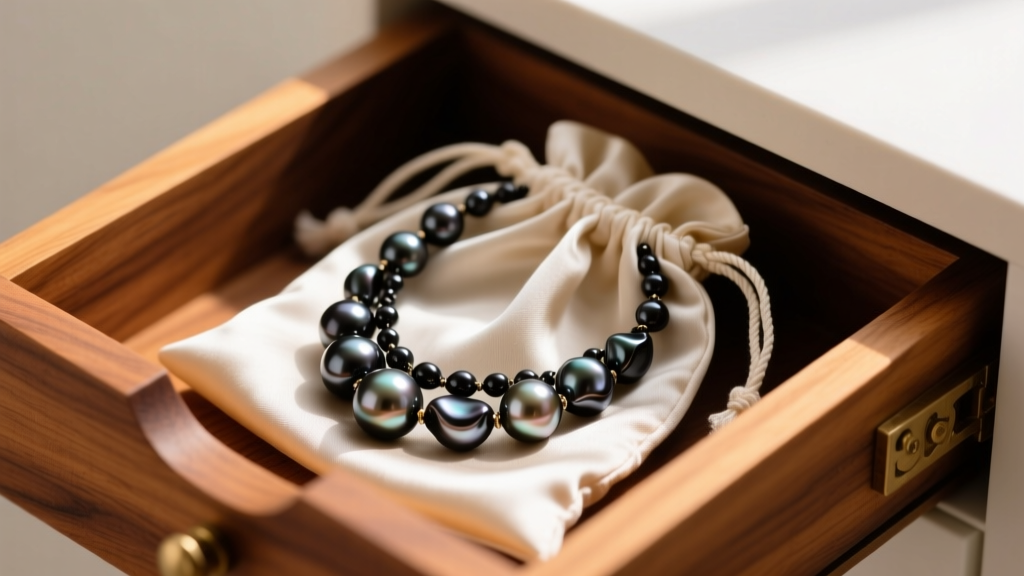
| 100% Silk Pouches | Retains ambient moisture naturally | Best: Prevents drying while guarding against surface abrasion |
Store your baroque pearl necklace in a soft silk pouch, separate from harder gemstones like diamonds or sapphires. If you live in an extremely arid climate or use central heating heavily during the winter, place a small, damp cotton ball in the corner of your jewelry box (not touching the pearls) to maintain ambient humidity.
Restringing: Silk Thread and Knotting Mechanics
The structural foundation of a high-quality baroque pearl necklace is its knotting. Pearls should be strung on 100% silk thread, with a hand-tied knot between every single pearl. These knots serve two purposes: they prevent the pearls from rubbing against each other (which causes friction wear), and they ensure that if the strand breaks, you only lose one pearl rather than the entire necklace.
Because baroque pearls are often heavier and more irregularly shaped than round pearls, they place uneven tension on the silk thread. You should inspect the thread every 6 months. If you notice gaps between the knots and the pearls, or if the silk appears frayed or discolored, it is time for a professional restringing. For most baroque pearls, jewelers use Size E or Size F silk thread, paired with French wire (gimp) at the clasp to prevent the metal from cutting through the silk. Expect to have your necklace professionally restrung every 1 to 3 years, depending on how frequently you wear it.


