2026 Baroque Pearl Necklace Trends & Style Analysis
Explore 2026 baroque pearl necklace trends, layering techniques, and grading guides. Expert styling analysis for modern, asymmetrical pearl jewelry.

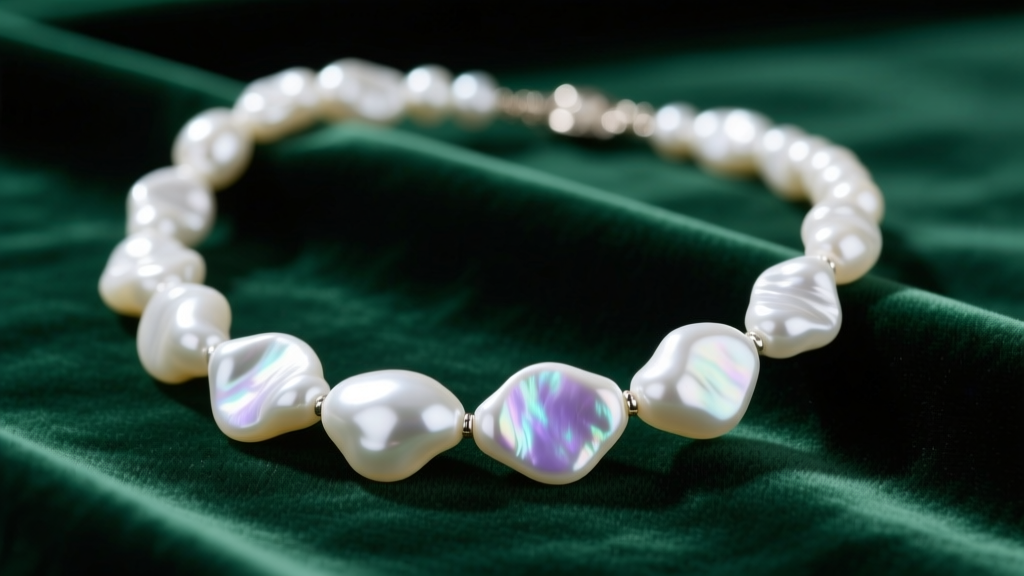
The jewelry landscape has undergone a massive tactile shift. While the perfectly spherical Akoya strand remains a heritage staple, the contemporary pearl necklace market is now entirely captivated by organic, asymmetrical, and baroque silhouettes. As we navigate the 2026 style cycle, the demand for uniformity has been replaced by a desire for individuality. Collectors and stylists are no longer seeking flawless rounds; they are hunting for the unique ridges, undulations, and keshi formations that make every single strand a one-of-one artifact.
This analysis dives deep into the material specifications, grading frameworks, and advanced layering techniques defining the modern pearl necklace. Whether you are sourcing high-grade Tahitian drops or styling freshwater Edison pearls, understanding the structural and aesthetic nuances of these gems is critical for building a future-proof collection.
The Shift from Spherical to Baroque: A 2026 Perspective
Historically, the value of a pearl necklace was dictated by its symmetry. Round pearls were the pinnacle of luxury, while irregular shapes were relegated to lower-tier fashion jewelry. Today, that hierarchy has been completely inverted by high-fashion runways and independent jewelers. The 'quiet luxury' movement of the early 2020s has evolved into what Vogue describes as 'organic maximalism'—a trend that celebrates the raw, unpolished beauty of natural formations.
Baroque pearls, which encompass any pearl that is not perfectly round, offer a distinct play of light. Because their surfaces are undulated, they refract light across multiple planes, creating a complex, mirror-like luster that perfectly round pearls often lack. In 2026, the most sought-after variants include:
- Keshi Pearls: Formed without a nucleus, these are essentially solid nacre. They are lightweight, highly lustrous, and resemble abstract petals or flakes.
- Coin Pearls: Cultivated with flat, disc-shaped nuclei, offering a geometric yet organic aesthetic perfect for modern pendants.
- Edison Pearls: Large, bead-nucleated freshwater pearls that rival South Sea pearls in size (often 11mm–16mm) but exhibit wild, metallic baroque shapes and deep purples or bronzes.
Grading and Material Specifications: What to Look For
When evaluating a baroque pearl necklace, traditional grading systems (like the A-AAA scale) must be adapted. Symmetry is no longer a factor; instead, the focus shifts entirely to nacre quality, luster, and surface cleanliness.
Nacre Thickness and Luster Grades
According to the Gemological Institute of America (GIA), nacre thickness is the primary determinant of a pearl's longevity and optical performance. For bead-nucleated baroque pearls (like Tahitians or South Seas), you must demand a minimum nacre thickness of 0.8mm. Anything thinner risks peeling or 'blinking' (where the internal bead nucleus shows through the nacre).
However, freshwater baroque and keshi pearls are typically solid nacre throughout, often measuring 2.0mm to 4.0mm in thickness. This makes them incredibly durable and resistant to chipping, though they may lack the deep, mirror-like 'orient' of a high-grade saltwater pearl. When assessing luster, look for 'Gem Grade' or 'AAA' designations, which indicate sharp, distinct reflections on the pearl's surface rather than blurry, milky glows.
Pricing Tiers and Market Analysis
The pricing of baroque pearl necklaces varies wildly based on origin, size, and color rarity. Below is a structural breakdown of what you should expect to pay for an 18-inch princess-length strand in the current market.
| Pearl Type | Origin | Nacre Type | Avg. Price (18" Strand) | Best Styling Use |
|---|---|---|---|---|
| Freshwater Baroque | China | Solid Nacre | $150 – $450 | Everyday layering, casual wear |
| Freshwater Edison | China | Bead-Nucleated | $400 – $1,200 | Statement pieces, evening wear |
| Tahitian Baroque | French Polynesia | Bead-Nucleated | $800 – $2,800 | High-contrast layering, formal |
| South Sea Baroque | Australia/Indonesia | Bead-Nucleated | $2,500 – $8,000+ | Luxury investment, standalone |
Note: Prices reflect high-luster (AA to AAA) grades. Commercial-grade strands with heavy blemishing or chalky luster can be found for significantly less, but they lack the optical depth required for fine jewelry styling.
Advanced Layering Frameworks for Asymmetrical Pearls
Styling a baroque pearl necklace requires a departure from traditional, single-strand elegance. The 2026 approach relies on the 3-Point Anchor System, which balances the visual weight of irregular pearls with structured metallic chains.
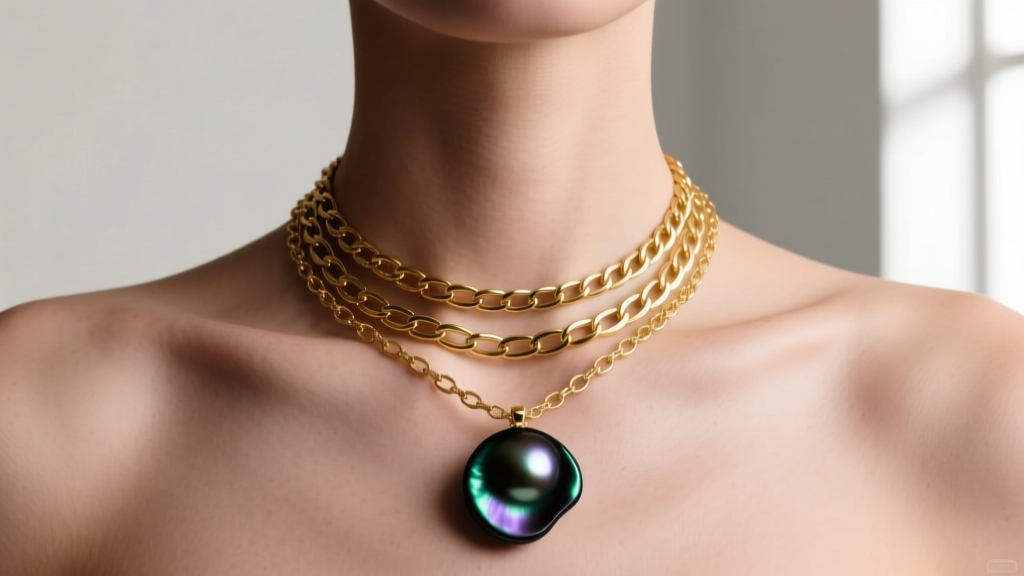
- The Base Anchor (14" - 16"): Start with a delicate, rigid metal chain. A 14k solid gold snake chain or a minimalist herringbone chain sits flush against the collarbone. This provides a sleek, reflective baseline that contrasts with the matte or textured elements above it.
- The Focal Point (18" - 20"): This is where your primary pearl necklace sits. Opt for a single, large baroque pearl pendant (such as a 14mm Tahitian drop) suspended on a fine cable chain, or a strand of mid-sized (7-9mm) freshwater keshi pearls. The asymmetry of the pearls will naturally draw the eye downward.
- The Extension (24" - 30"): Finish with a long opera-length strand of seed pearls or tiny, irregular baroque chips. This elongates the torso and adds a bohemian, fluid movement to the overall silhouette.
"The secret to modern pearl layering is tension. You want the rigid geometry of a gold chain to fight slightly with the organic, chaotic curves of the baroque pearl. That visual friction is what makes the styling look intentional rather than accidental." — Senior Jewelry Stylist, JewelStyleRadar
Hardware and Clasp Failure Modes
A pearl necklace is only as strong as its stringing material and hardware. Because baroque pearls are often heavier and more irregularly shaped than round pearls, they place uneven stress on the strand.
Stringing Materials: Silk vs. Wire
Traditional pure silk thread with hand-knotted gaps between each pearl is the gold standard for high-end necklaces. The knots prevent pearl-on-pearl abrasion and ensure that if the strand breaks, you only lose one pearl. However, silk is organic; it absorbs body oils, stretches over time, and typically requires professional restringing every 3 to 5 years.
For heavier Edison or South Sea baroque pearls, many modern jewelers use nylon-coated stainless steel wire (often branded as Beader's Secret). While this material will never stretch or snap under normal wear, it is prone to kinking if stored improperly. If a wire strand kinks, the structural integrity is compromised, and it must be replaced immediately.
Clasp Selection
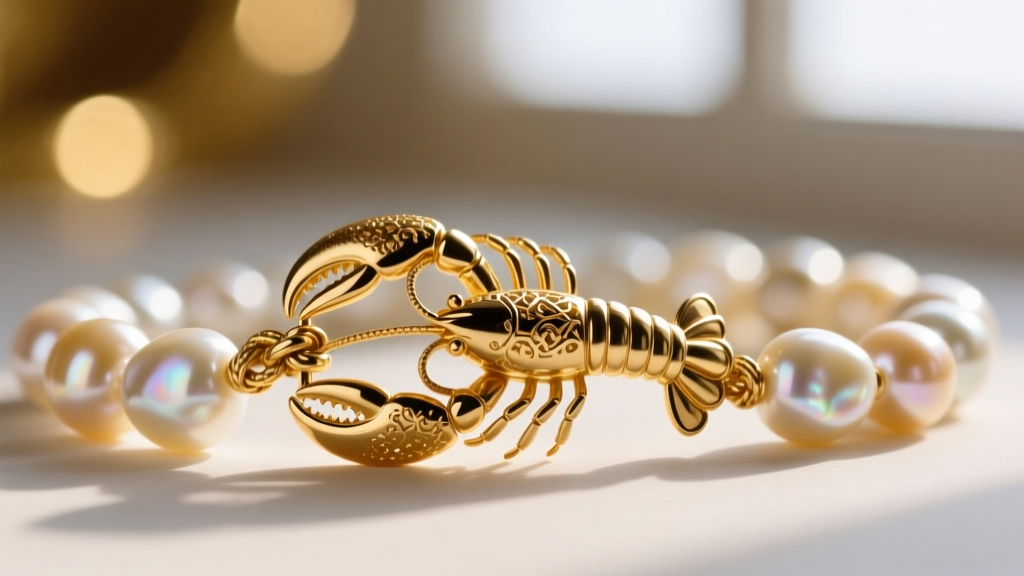
Avoid standard spring-ring clasps for any pearl necklace valued over $500. The internal springs are notoriously weak and fail frequently. Instead, insist on solid 14k or 18k lobster claw clasps with a welded jump ring. For heavier, multi-strand baroque pieces, a neodymium magnetic clasp with a safety catch provides the best combination of security and ease of use, especially for those with limited dexterity.
Care and Maintenance Protocols
Baroque pearls, with their deep ridges and crevices, are more susceptible to trapping cosmetics, perfumes, and environmental pollutants than smooth, round pearls. To maintain the nacre's luster, strictly adhere to the 'Last On, First Off' rule. Pearls should never be exposed to the alcohol in perfumes or the acidic pH of hairsprays.
Never use ultrasonic cleaners or steamers on any pearl necklace. The high-frequency vibrations can shatter the nacre, especially around the drill holes where the pearl is most vulnerable. Instead, wipe the strand gently with a damp, lint-free microfiber cloth after every wear, and store it flat in a breathable cotton pouch—never in a sealed plastic bag, as pearls require ambient moisture to prevent the nacre from drying out and cracking.
Final Styling Verdict
The 2026 pearl necklace market is a celebration of imperfection. By understanding the specific grading metrics for baroque pearls, investing in proper hardware, and utilizing structured layering frameworks, you can build a collection that feels both deeply personal and undeniably modern. The era of the uniform strand is paused; the era of the organic artifact is here.


