Bead Necklace Ideas: Material Properties & Styling Guide
Explore advanced bead necklace ideas through a material science lens. Compare gemstone, glass, and organic bead durability, weight, and drape.

Beyond Aesthetics: The Science of Bead Selection
When brainstorming bead necklace ideas, most designers and jewelry enthusiasts start with color palettes, bead shapes, and overall silhouettes. However, as we move through 2026, the most successful and enduring jewelry designs are rooted in material science. A visually stunning strand of beads will quickly become a tangled, broken mess if the material properties—specifically hardness, density, and porosity—are ignored during the design and stringing phases.
Whether you are working with natural gemstones, lab-grown crystals, organics, or manufactured glass, understanding the physical limitations and structural advantages of your materials is non-negotiable. This guide breaks down the engineering behind bead necklaces, providing actionable frameworks to match your design vision with the correct material grades and stringing mediums.
The Mohs Scale & Bead Durability: What Survives Daily Wear
The Mohs scale of mineral hardness is the ultimate arbiter of whether your bead necklace will survive years of wear or scratch into a cloudy, degraded state within months. When beads rub against one another, or against external surfaces, the softer material will always yield.
High-Durability Gemstones (Mohs 7+)
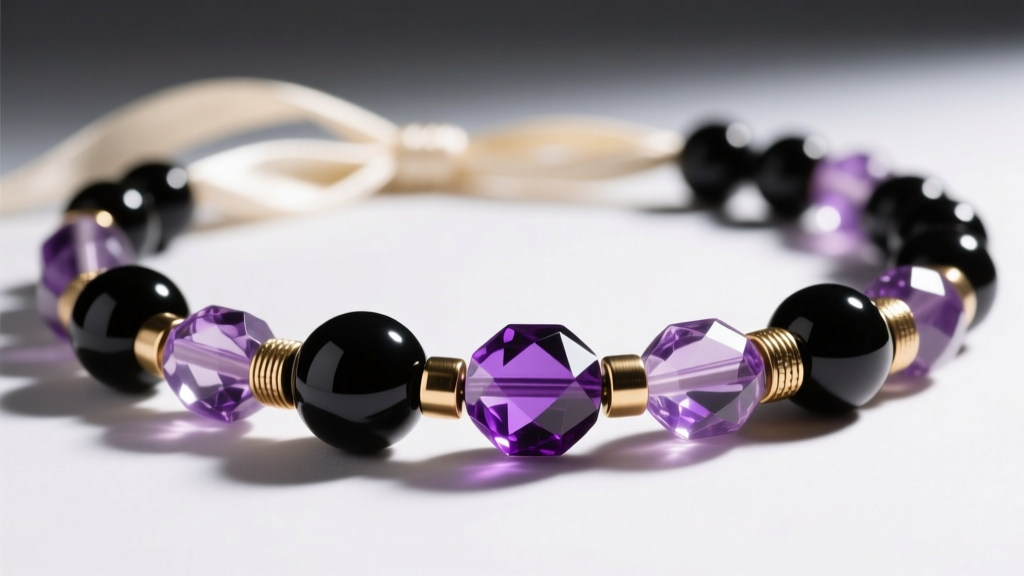
For everyday layering pieces that endure friction and accidental impacts, stick to materials that sit at or above 7 on the Mohs scale. Quartz varieties (amethyst, citrine, onyx) rate a 7, making them highly resistant to scratching from common environmental dust (which contains silica, also a 7). Beryl (emerald, aquamarine) and corundum (ruby, sapphire) rate between 7.5 and 9. According to the Gemological Institute of America (GIA), these materials maintain their polish indefinitely under normal wear conditions, making them ideal for tight, multi-strand chokers where bead-on-bead friction is constant.
The Delicate Tier (Mohs 2.5 - 6)
Organic and porous materials require entirely different design parameters. Pearls and coral (calcium carbonate) rate a mere 2.5 to 4, while turquoise and lapis lazuli sit between 5 and 6. Amber is exceptionally soft at 2 to 2.5. Designing a necklace with these materials requires incorporating spacer beads (like smooth gold or platinum) to prevent the softer gemstones from grinding against one another, which causes permanent surface pitting and loss of luster.
Weight & Drape: Engineering the Perfect Silhouette
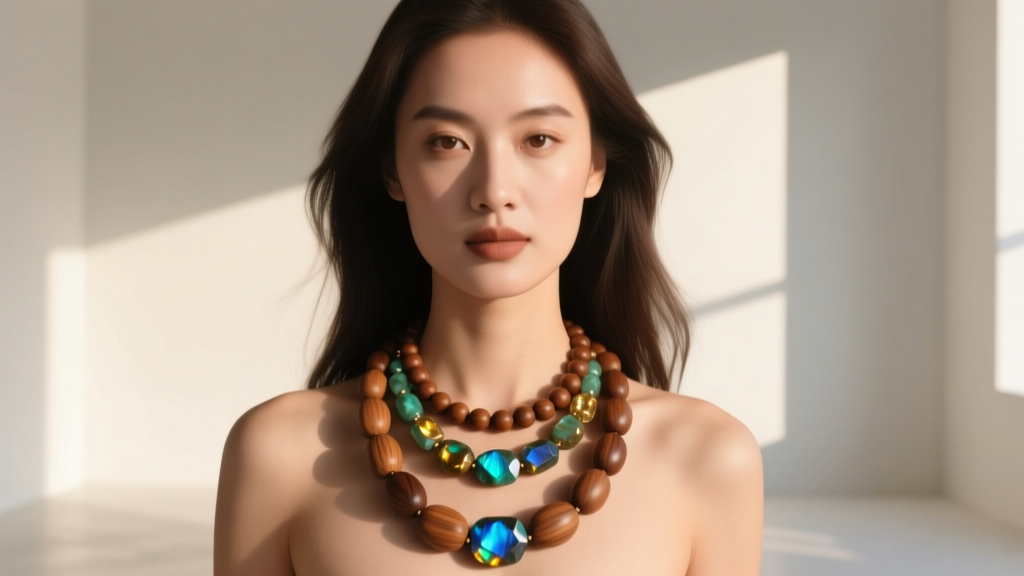
A common failure mode in amateur bead necklace design is ignoring material density. A 10mm round bead of acrylic weighs a fraction of a 10mm round bead of lead crystal or hematite. The density of your beads dictates the maximum length of the necklace before the weight causes the stringing material to stretch, the clasp to pull uncomfortably on the nape of the neck, or the drape to hang rigidly rather than flowing naturally.
| Material | Average Density (g/cm³) | Max Recommended Bead Size for 24" Strand | Best Stringing Medium |
|---|---|---|---|
| Acrylic / Resin | 1.18 | 20mm+ | Elastic or Braided Nylon |
| Soda-Lime Glass | 2.50 | 12mm | 49-Strand Wire (0.018") |
| Quartz (Gemstone) | 2.65 | 10mm | 49-Strand Wire (0.018") |
| Lead Crystal | 3.10 | 8mm | 49-Strand Wire (0.024") |
| Hematite / Steel | 5.20+ | 6mm | Heavy-Gauge Steel Wire |
If you are designing a 30-inch opera-length necklace, utilizing heavy materials like hematite or large glass beads will result in a piece that is physically exhausting to wear. For longer lengths, transition to lighter materials like wood, hollow metal beads, or acrylic, reserving high-density gemstones for 16-inch chokers or collar-length pieces where the weight is distributed across the collarbone.
Porosity and Chemical Sensitivity: Hidden Failure Modes
Durability is not just about physical scratches; chemical degradation is a silent killer of beaded jewelry. Many popular bead materials are highly porous and chemically reactive.
Expert Troubleshooting: If a client complains that their turquoise or pearl beads are 'chalking' or losing their luster after a few months, the culprit is almost always lactic acid and urea found in human sweat, combined with the alkaline environment of commercial soaps. These materials must be wiped with a damp, untreated microfiber cloth after every wear.
Turquoise is notoriously porous. Untreated, natural turquoise beads will absorb skin oils and cosmetics, permanently darkening and altering their color matrix. When sourcing turquoise beads for a design, look for 'stabilized' turquoise, which has been impregnated with a clear epoxy resin under pressure to seal the pores without altering the stone's natural matrix. Similarly, pearls are highly sensitive to the volatile organic compounds (VOCs) found in perfumes and hairsprays. Always advise clients to put pearl bead necklaces on after applying cosmetics and fragrances.
3 Engineered Bead Necklace Ideas by Material Grade
Applying these material properties, here are three highly specific, structurally sound bead necklace ideas tailored for different wear scenarios and budgets.
1. The Indestructible Everyday Layering Strand
- Materials: 4mm faceted lab-grown quartz (Mohs 7) interspersed with 2mm 14k gold-filled spacer beads.
- Stringing: 0.015-inch 49-strand stainless steel micro-wire (e.g., Beadalon).
- Why it Works: The 4mm size keeps the weight negligible, allowing for a 22-inch length that layers perfectly without pulling. The 49-strand wire provides extreme flexibility and kink-resistance, while the quartz硬度 ensures the facets will never dull against the metal spacers. Price point for materials: $35–$50.
2. The Architectural Statement Collar
- Materials: 14mm polished lapis lazuli (Mohs 5.5) and geometric brushed brass tubes.
- Stringing: 0.024-inch heavy-duty 49-strand wire with sterling silver crimp tubes and crimp covers.
- Why it Works: Lapis lazuli is heavy and relatively soft. By using large 14mm beads in a short 16-inch collar layout, the weight is supported by the collarbone rather than hanging freely. The heavy 0.024-inch wire prevents the sharp edges of the brass tubes from sawing through the cord over time. Brass provides an architectural contrast to the organic, porous lapis. Price point for materials: $80–$120.
3. The Biocompatible Sensitive Skin Piece
- Materials: 6mm anodized niobium beads and medical-grade PTFE (Teflon) O-rings as spacers.
- Stringing: 1mm solid PTFE cord, heat-knotted at the clasp.
- Why it Works: For clients with severe contact dermatitis or nickel allergies, standard metal spacers and steel wires can cause reactions. Niobium is highly biocompatible, and PTFE is completely inert. This creates a vibrant, hypoallergenic bead necklace that is entirely free of reactive metals and protein-based stringing materials like silk. Price point for materials: $40–$60.
Stringing Materials: Matching the Cord to the Bead
The final pillar of material-based design is selecting the correct stringing medium. According to jewelry supply experts at Rio Grande, the bead's hole finish and weight dictate the cord.
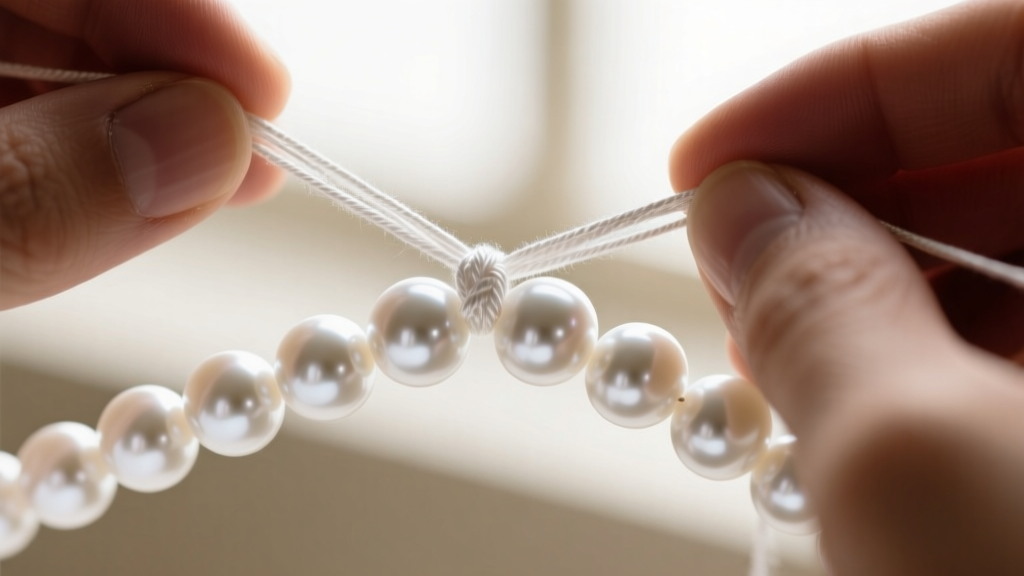
- Silk Thread: Reserved exclusively for pearls and lightweight organics. Requires knotting between every bead to prevent loss if the strand breaks, and to keep porous pearls from rubbing together.
- Nylon Braided Cord (e.g., PowerPro): Excellent for heavy, smooth-holed beads like glass or polished gemstones. Offers high tensile strength but can be cut by sharp, unpolished crystal holes.
- Stainless Steel Wire (49-strand): The industry standard for 90% of gemstone and crystal bead necklaces. The nylon coating protects the metal, while the stranded core provides drape. Never use wire with pearls, as the metal will eventually abrade the soft nacre around the drill hole.
Conclusion
Generating brilliant bead necklace ideas requires looking past the surface. By evaluating the Mohs hardness, specific gravity, and chemical porosity of your chosen materials, you transition from simply stringing beads to engineering heirloom-quality jewelry. Whether you are designing a delicate organic strand or a heavy, geometric statement piece, letting material science guide your structural choices ensures your designs are as durable as they are beautiful.


