The Ultimate Beginner Guide to Choosing an Athletic Necklace
Discover how to choose the perfect athletic necklace for your workout. Learn about safe materials, breakaway clasps, and sweat-proof designs for any sport.

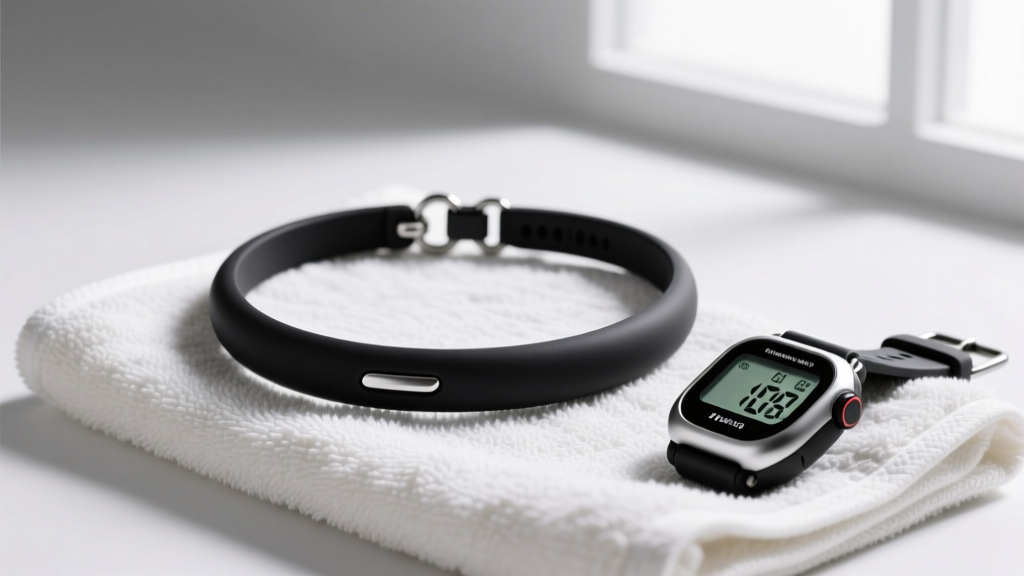
Whether you are training for a marathon, hitting a heavy lifting PR, or swimming laps at dawn, wearing standard jewelry during intense physical activity is a recipe for disaster. An athletic necklace is not just a stylistic choice; it is a specialized piece of performance gear designed to withstand extreme friction, corrosive sweat, and sudden impacts. For beginners transitioning into active lifestyles, understanding the material science and safety mechanics behind sports jewelry is crucial. This guide breaks down everything you need to know to choose a necklace that survives your toughest workouts without compromising your safety or skin health.
The Biomechanics of Jewelry Failure: Why Standard Chains Break
To understand why an athletic necklace is necessary, we first have to look at the chemical and physical environment of a workout. Human sweat is not just water; it is a complex saline solution with a pH ranging from 4.5 to 7.0, containing lactic acid, urea, and chlorides. When you wear a standard sterling silver (925) or gold-plated chain, the copper alloys and base metals react rapidly with these chlorides. This galvanic corrosion weakens the structural integrity of the jump rings and clasps, leading to sudden snapping under minimal tension.
Furthermore, the biomechanics of movement create repetitive micro-abrasions. A standard lobster clasp, which relies on a tiny internal steel spring, is highly susceptible to failure when subjected to the rhythmic bouncing of a run or the sudden upward jerk of a barbell. According to safety guidelines published by the National Federation of State High School Associations (NFHS), hard, unyielding jewelry poses a severe laceration and degloving hazard in contact sports and weight rooms, which is why traditional chains are universally banned in competitive environments.
Top Materials for Athletic Necklaces: A Breakdown
The best athletic necklaces utilize materials engineered for high tensile strength, chemical inertness, and low specific gravity. Here are the top three materials dominating the sports jewelry market in 2026.
1. Medical-Grade Silicone
Silicone is the undisputed king of contact sports and swimming. High-quality athletic silicone is rated at a Shore A hardness of 50 to 60, providing the perfect balance between skin-comfort flexibility and tear resistance. It boasts a tensile strength exceeding 1,000 PSI and is completely impervious to chlorine, salt water, and acidic sweat. Because it lacks microscopic pores, it will not harbor odor-causing bacteria, making it ideal for daily wear.
2. Aerospace-Grade Titanium (Ti-6Al-4V)
For athletes who prefer a metallic aesthetic, Grade 5 or Grade 23 (ELI) titanium is the only viable option. Titanium has a specific gravity of 4.43 g/cm³, making it nearly 45% lighter than steel while offering superior strength. More importantly, it is highly biocompatible and hypoallergenic. The ASTM International standards for surgical and athletic implants frequently cite Ti-6Al-4V for its exceptional corrosion resistance, ensuring it will never tarnish or cause contact dermatitis, even when drenched in sweat.
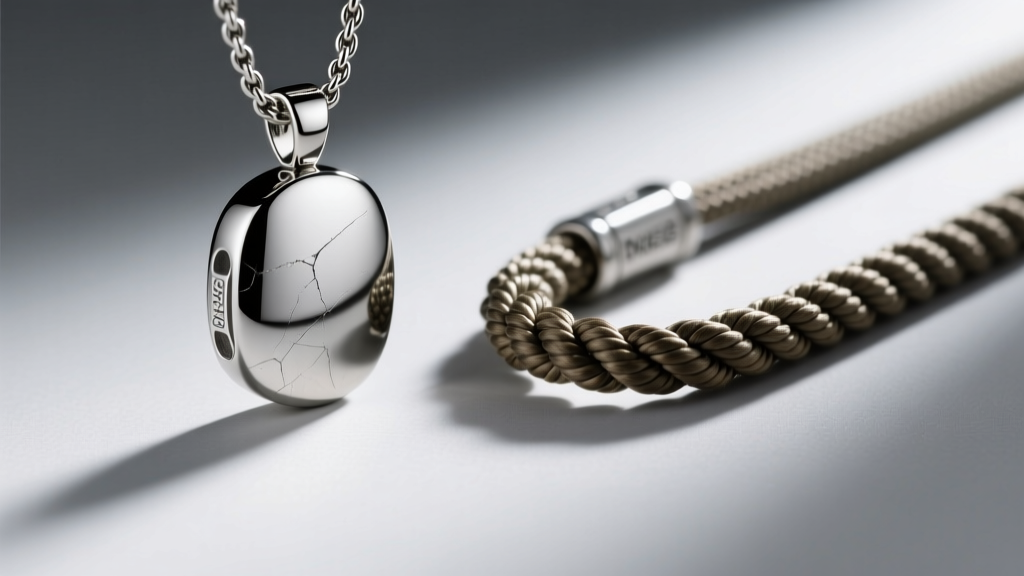
3. UHMWPE (Dyneema / Spectra) Paracord
Ultra-High-Molecular-Weight Polyethylene (UHMWPE) fibers are used in ballistic armor and deep-sea mooring lines. When braided into a cord for an athletic necklace, it offers a tensile strength up to 15 times greater than steel by weight. It is entirely waterproof, UV-resistant, and will not stretch or degrade when exposed to harsh gym environments or outdoor elements.
The Non-Negotiable Safety Feature: Breakaway Clasps
The most critical component of any athletic necklace is the clasp. A traditional clasp that refuses to yield can turn a necklace into a strangulation hazard if it catches on a squat rack, a tree branch during a trail run, or an opponent's gear. Modern athletic necklaces utilize magnetic breakaway clasps engineered with precise neodymium (NdFeB) pull-force ratings.
A properly calibrated athletic breakaway clasp should release between 5 to 8 pounds of lateral or downward force. This threshold is high enough to keep the necklace secure during the vigorous bouncing of a sprint, but low enough to instantly detach before causing cervical spine injury or asphyxiation if snagged.
When shopping, always test the breakaway mechanism. It should snap apart smoothly with a firm, deliberate tug, and the internal neodymium magnets should realign effortlessly for secure reattachment. Avoid mechanical snap-clasps made of rigid plastics, as they tend to micro-fracture over time and fail unpredictably.
Sizing and Length Matrix: Avoiding the Snag and the Choke
Choosing the correct length and thickness is just as important as the material. A chain that is too long will swing into your face during a bench press, while one that is too tight will restrict breathing during high-cardio intervals. Use the matrix below to find your ideal fit based on your primary sport.
| Primary Sport | Ideal Length | Recommended Thickness | Material Priority |
|---|---|---|---|
| Distance Running | 16" - 18" | 2mm - 4mm | Silicone or UHMWPE (Lightweight, zero bounce) |
| Weightlifting / CrossFit | 22" - 24" (Tucked) or 16" (Choker) | 4mm - 6mm | Titanium or Thick Silicone (Barbell clearance) |
| Swimming / Triathlon | 18" - 20" | 3mm - 5mm | Silicone only (Chlorine/Salt resistance) |
| Trail Running / Cycling | 16" (with breakaway) | 3mm | UHMWPE (Snag resistance, high visibility) |

The Pendulum Effect in Weightlifting
If you are a weightlifter, the 'pendulum effect' is your biggest enemy. A standard 20-inch chain will swing forward and strike you, or worse, catch the knurling of a barbell during a clean and jerk. If you must wear a longer athletic necklace in the gym, opt for a 24-inch length that can be safely tucked under a compression shirt, or stick to a snug 16-inch choker style that sits above the collarbone and completely out of the barbell's path.
Maintenance: Cleaning Your Athletic Necklace
Even the most advanced materials require basic maintenance to prevent the buildup of dead skin cells, sebum, and environmental grime. Here is how to care for your sports jewelry:
- Silicone: Wash weekly with warm water and a mild dish soap. For deep sanitization, wipe down with a 70% isopropyl alcohol solution. Never use bleach, as it will degrade the silicone polymers and cause micro-tearing.
- Titanium: Titanium is virtually maintenance-free, but it can accumulate skin oils. Simply scrub with a soft-bristled toothbrush and mild hand soap once a month to restore its matte or polished finish.
- UHMWPE Paracord: Rinse with fresh water after exposure to salt water or heavy sweat. Allow to air dry completely before storing to prevent mildew from forming in the braided crevices.
Final Thoughts on Active Jewelry
Investing in a purpose-built athletic necklace is an investment in both your safety and your gear's longevity. By prioritizing inert materials like medical-grade silicone and aerospace titanium, and demanding a calibrated magnetic breakaway clasp, you ensure that your jewelry enhances your active lifestyle rather than endangering it. Leave the delicate gold and silver chains in your jewelry box, and equip yourself with performance-grade accessories built for the grind.


