The Ultimate Beginner Guide to the Ball Chain Necklace
Discover everything about the ball chain necklace. Learn about gauge sizes, metal grades, clasp types, and how to style this versatile staple.

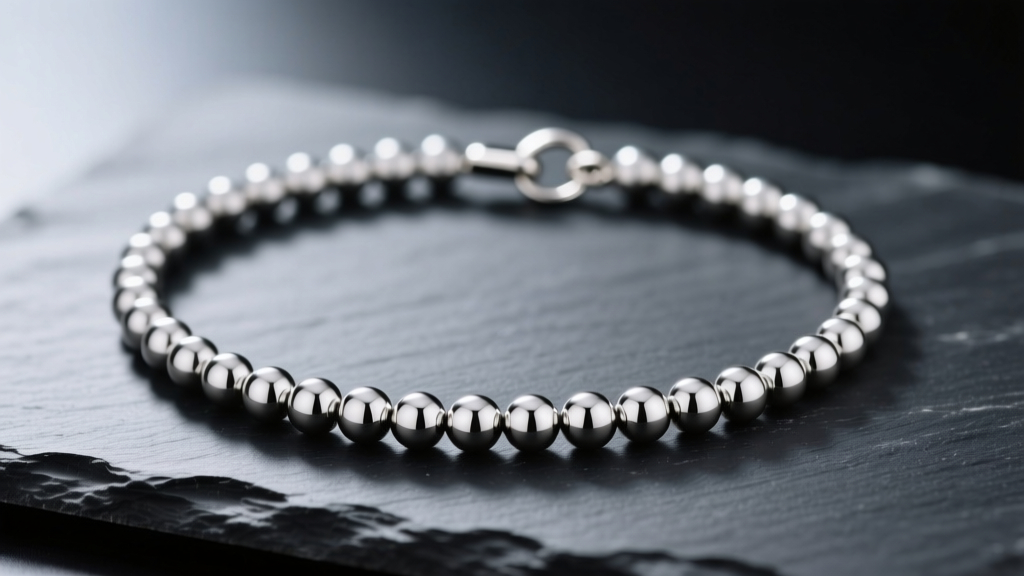
What Exactly is a Ball Chain Necklace?
The ball chain necklace—often referred to as a bead chain—is a marvel of functional jewelry design. Unlike traditional cable or curb chains that rely on interlocking oval links, a ball chain is constructed from a series of small, hollow or solid spherical beads connected by short, rigid wire links. This unique anatomy gives the chain a fluid, fabric-like drape that resists kinking and tangling, making it a favorite for both minimalist everyday wear and heavy streetwear aesthetics.
Historically popularized by military dog tags and industrial pull-cords, the bead chain has evolved into a high-fashion staple. However, because of its distinct mechanical structure, choosing the right ball chain requires understanding specific gauge sizes, metallurgy, and clasp mechanics. This guide will break down everything a beginner needs to know before purchasing their first bead chain.
Decoding Gauge Sizes and Bead Spacing
When shopping for a ball chain necklace, the most critical metric is the bead diameter, usually measured in millimeters (mm). The spacing between the beads also drastically alters the chain's flexibility and visual weight. According to chain manufacturing experts at Halstead Bead, the ratio of bead size to wire link length dictates the chain's drape.
| Bead Diameter | Wire Link Spacing | Visual Weight | Best Use Case | Avg. Price Range (Steel) |
|---|---|---|---|---|
| 2.0mm - 2.4mm | Spaced or Bead-on-Bead | Micro / Delicate | Dog tags, subtle layering, lightweight pendants | $10 - $20 |
| 3.0mm - 4.0mm | Spaced (1-2mm gap) | Medium / Standard | Everyday solo wear, medium pendants | $15 - $35 |
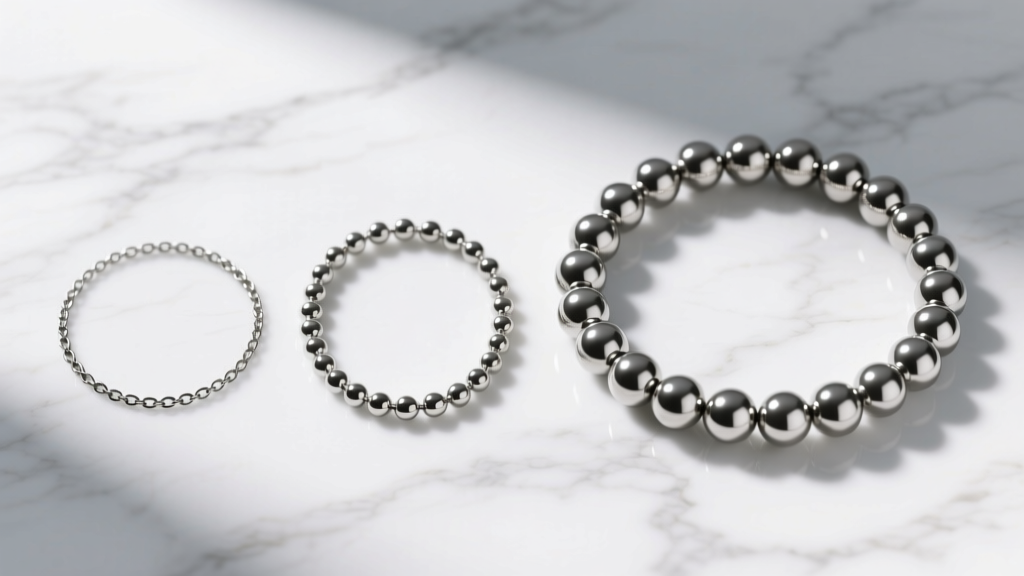
| 5.0mm - 7.0mm | Bead-on-Bead | Chunky / Statement | Streetwear, standalone statement pieces | $25 - $60 |
Pro-Tip: If you plan to wear a pendant, a 3.0mm spaced chain is the sweet spot. The small gaps between the beads allow standard pendant bails to slide freely without catching on the rigid wire links.
Material Grades: Which Metal Should You Choose?
The spherical beads of a ball chain catch light from every angle, meaning the metal's finish and alloy composition are highly visible. Here is how the most common metals perform:
316L Surgical Stainless Steel
For beginners, 316L stainless steel is the undisputed champion. Unlike standard 304 steel, 316L contains molybdenum, which drastically increases its resistance to corrosion and chlorides (like sweat and pool water). It is highly hypoallergenic and maintains a bright, white-metal luster without plating. The Gemological Institute of America (GIA) frequently cites 316L as a safe alternative for those with contact dermatitis.
925 Sterling Silver
Sterling silver ball chains offer a premium, luxurious shine but come with a maintenance caveat. The tiny crevices between the beads and wire links trap moisture and sulfur, making bead chains prone to rapid tarnishing. If you choose silver, look for pieces that are rhodium-plated to create a barrier against oxidation.
14k and 18k Solid Gold
Gold ball chains are iconic in hip-hop and streetwear. However, because solid gold is sold by weight, a 6.0mm solid gold bead chain can cost thousands of dollars and feel uncomfortably heavy. To solve this, jewelers often use hollow gold beads for gauges above 4.0mm, reducing the price and weight while maintaining the chunky aesthetic.
The Weak Point: Understanding Clasp Mechanics
The most common failure point on any ball chain necklace is the clasp. Factory-made bead chains typically ship with a ball chain connector—a small, hollow metal cylinder with a slit down the side that snaps over the terminal beads via tension.
Jeweler's Insight: The standard barrel connector is notorious for failing under sudden tension and is a primary culprit for hair snagging. The tiny slit in the metal cylinder easily catches fine hair strands, causing painful pulls and eventual chain breakage.
The Actionable Fix: If you buy a chain with a factory barrel connector, consider upgrading it. Using a pair of flat-nose pliers, gently pry open the slit on the cylinder to release the terminal bead. Replace it with a soldered jump ring and a secure lobster clasp. This simple $5 modification increases the chain's security tenfold and eliminates hair snagging.

How to Style and Layer Your Bead Chain
The ball chain's uniform, geometric texture makes it an exceptional anchor for layered necklace stacks. Because it lacks the complex interlocking links of a rope or box chain, it provides visual breathing room when paired with more intricate pieces.
- The Rule of Thirds: When layering three chains, use a 2.0mm ball chain as your shortest choker (16 inches), a 3.0mm cable chain in the middle (18 inches), and a heavy 5.0mm ball chain as your longest piece (22 inches).
- Mixing Metals: A silver bead chain layered with a yellow gold box chain creates a striking, modern contrast. The matte-to-bright light reflection of the beads bridges the gap between the two metal tones.
- Pendant Pairing: Avoid pendants with sharp, angular bails. The rigid wire links of the ball chain can cause friction against sharp edges. Opt for pendants with smooth, rounded bails or use a flexible jump ring adapter to connect the pendant to the chain.
Care, Maintenance, and Snag Prevention
Despite their durability, ball chains require specific care routines to maintain their structural integrity and shine.
Cleaning the Crevices
Because dirt and skin oils accumulate in the microscopic gaps between the wire links and the beads, wiping the chain with a cloth is rarely enough. The most effective cleaning method for a ball chain is an ultrasonic jewelry cleaner. The high-frequency sound waves create microscopic cavitation bubbles that blast grime out of the tiny wire joints without requiring manual scrubbing. Follow up with a gentle wash in warm water and mild dish soap.
Sleeping and Tension
Never sleep in a ball chain necklace. While they resist tangling, the rigid wire links are vulnerable to bending if you roll over them. Once a wire link is bent at a sharp angle, it weakens the metal's crystalline structure, leading to a snap. Furthermore, the tension can cause the terminal beads to pull through the barrel connector, resulting in lost chains.
By understanding the mechanics, materials, and proper maintenance of the ball chain necklace, you can confidently select a piece that will remain a versatile, snag-free staple in your jewelry rotation for years to come.


