How to Style a Flower Necklace Choker for Any Outfit
Discover how to choose, style, and care for a flower necklace choker. Learn about materials, lengths, and neckline pairings.

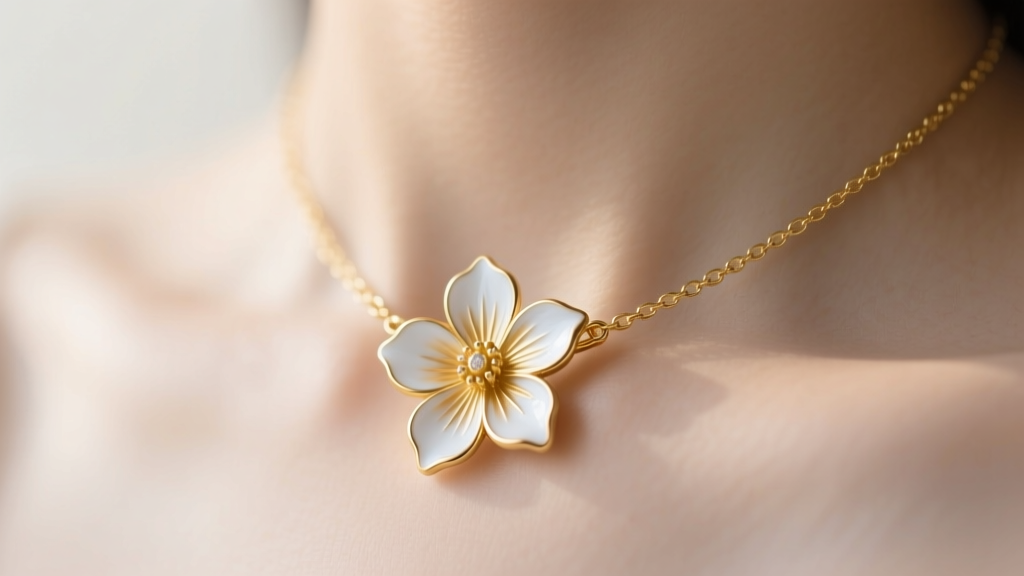
The Botanical Shift: Beyond 90s Nostalgia
When evaluating a flower necklace choker, the untrained eye might only notice the floral motif. However, as we navigate the refined jewelry trends of 2026, the botanical aesthetic has matured far beyond the plastic tattoo chokers and cheap alloy daisies of the late 1990s. Today, floral chokers are sophisticated statements of craftsmanship, blending precise metallurgical standards with artistic enamelwork. For beginners stepping into the world of statement neckwear, understanding the anatomy, material grades, and styling geometry of a floral choker is essential to avoid the 'costume jewelry' trap and invest in pieces that elevate your wardrobe.
This beginner-friendly explainer will dissect everything you need to know about selecting, wearing, and maintaining a premium flower necklace choker, ensuring your jewelry choices are as structurally sound as they are visually striking.
Decoding Choker Lengths and the Extender Rule
The most common failure point for beginners buying a flower necklace choker is ignoring neck circumference. Unlike a standard 18-inch princess necklace that drapes loosely, a choker sits flush against the skin. A necklace that is even half an inch too tight will cause discomfort, while one too loose will sag and ruin the floral presentation.
| Length | Fit Profile | Best For |
|---|---|---|
| 14 Inches | Collar / Tight Choker | Petite necks, high-neck garments, Victorian-inspired floral cameos |
| 15 Inches | Standard Choker | Average necks, sits just above the collarbone, ideal for single pendant florals |
| 16 Inches | Princess Hybrid | Larger necks, rests on the collarbone, accommodates wider floral clusters |
The Golden Rule of Extenders: Never purchase a choker without a built-in extender chain. A high-quality flower necklace choker should feature a 14-inch or 15-inch base chain with a 2-inch extender. This allows for micro-adjustments based on daily fluctuations in skin hydration, temperature, and the collar thickness of your clothing.
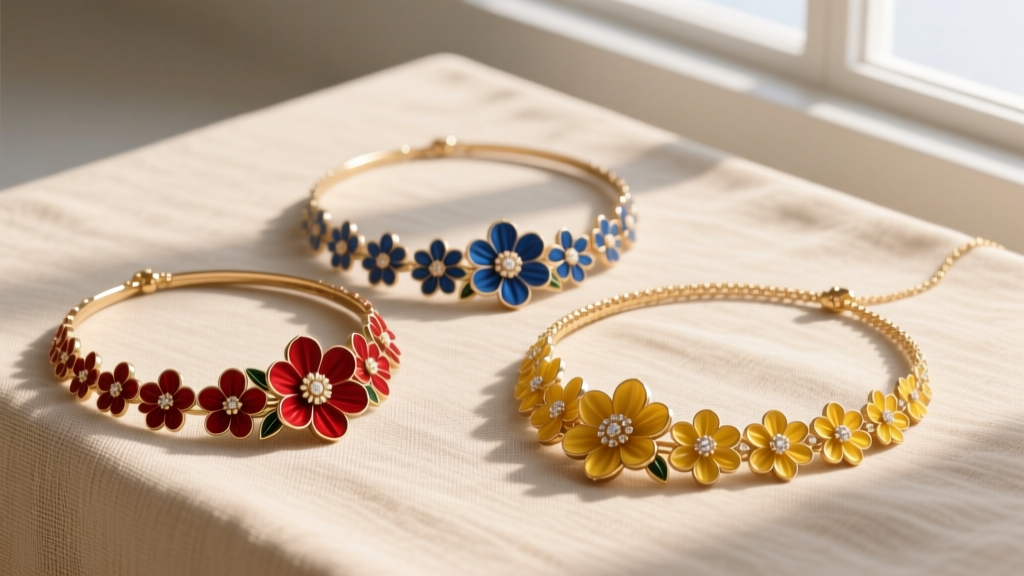
Material Science: Elevating the Bloom
The longevity and skin-compatibility of your choker depend entirely on its material composition. The market is flooded with flash-plated brass, which will oxidize and turn your skin green within weeks. To ensure your floral piece lasts, you must understand the hierarchy of jewelry metals and decorative finishes.
Precious Metals and the Vermeil Standard
If you are purchasing a gold-toned flower necklace choker, look for the term 'Gold Vermeil' rather than 'Gold Plated.' According to the Federal Trade Commission (FTC) Jewelry Guides, true vermeil requires a base of 925 sterling silver that has been plated with 10k, 14k, or 18k gold to a minimum thickness of 2.5 microns. This thickness is crucial for chokers, as the constant friction against the neck and collarbones will quickly wear away standard flash plating (which is often less than 0.5 microns thick).
Enamel vs. Resin Florals
Many floral chokers utilize colored fills to create vibrant petals. Beginners must distinguish between cold enamel (epoxy resin) and vitreous enamel (fused glass powder). Vitreous enamel is fired in a kiln at over 1,400°F, resulting in a scratch-resistant, glass-like finish that will not yellow over time. Cold enamel, while cheaper and capable of brighter translucent colors, is essentially hardened plastic that can scratch easily and degrade with prolonged UV exposure.
Hardware Mechanics: Clasps That Actually Work
The clasp is the unsung hero of any choker. Because chokers are under constant tension from the neck's movement, lightweight or poorly engineered clasps are prone to failure.
- Spring Ring Clasps: Avoid these on chokers. They are notoriously difficult to fasten blindly behind the neck and the internal tension spring frequently fails under the lateral pull of a tight-fitting chain.
- Lobster Claw Clasps: The industry standard for premium chokers. The elongated shape makes it easier to grip, and the internal mechanism is far more robust against lateral tension.
- Magnetic Tube Clasps: An excellent, accessible alternative for those with limited dexterity or long nails. Ensure the magnets are encased in stainless steel or sterling silver to prevent rusting from neck sweat.
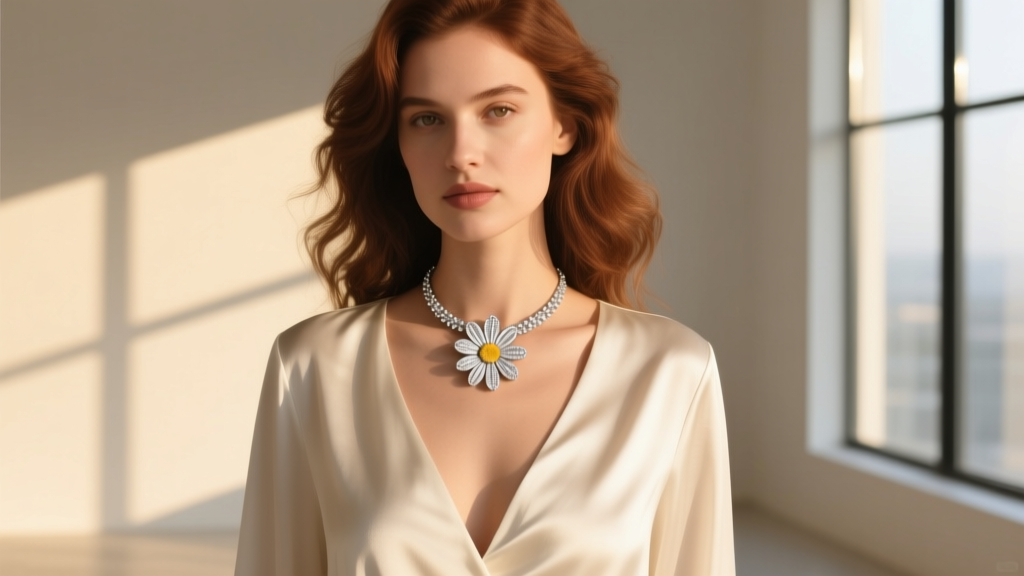
The Neckline Matrix: Styling Your Floral Choker
Styling a flower necklace choker requires an understanding of negative space. The goal is to frame the floral element without allowing it to compete with the structural lines of your clothing. According to styling principles often highlighted by the Gemological Institute of America (GIA) in their jewelry wearability guides, the relationship between the metal and the fabric is just as important as the gemstone or enamel itself.
The 'Two-Inch Rule': Always aim to leave at least two inches of bare skin between the bottom of your choker and the top hemline of your garment. This negative space prevents the jewelry from looking visually tangled in your outfit.
Ideal Neckline Pairings
- The Deep V-Neck: The ultimate canvas for a floral choker. The downward angle of the V-neck draws the eye directly to the center of the collarbone, making a single, symmetrical flower pendant the focal point.
- The Scoop Neck: Works best with multi-floral cluster chokers or botanical vine designs that follow the curve of the neckline. Ensure the choker sits at least an inch above the fabric hem.
- The Collared Button-Down: For a sophisticated, dark-academia or office-appropriate look, wear a delicate 14-inch floral choker fastened tightly around the neck, and leave the top two buttons of the shirt undone.
- Off-the-Shoulder / Boatneck: Avoid standard chokers here, as they will visually chop the neck and widen the shoulders. If you must wear a floral piece, opt for a 16-inch princess hybrid that rests on the exposed upper chest.
Troubleshooting and Long-Term Care
Even the finest 18k gold vermeil and vitreous enamel flower necklace choker requires specific maintenance to survive daily wear. The neck is a high-sweat, high-friction zone, making it a hostile environment for delicate jewelry.
Preventing Chain Kinking
Floral chokers frequently utilize delicate cable or box chains to maintain a lightweight profile. These chains are highly susceptible to kinking if twisted. Never sleep in your choker, and always store it laid flat on a velvet tray or hung from a dedicated jewelry stand. If a box chain kinks, do not pull it; use two pairs of flat-nose jewelry pliers to gently massage the link back into its geometric alignment.
Cleaning Enamel and Plated Metals
Never use ultrasonic cleaners or harsh chemical dips on a floral choker. Ultrasonic vibrations can shatter vitreous enamel and loosen the adhesive on cold enamel. Instead, use a mild, phosphate-free dish soap mixed with lukewarm water. Gently agitate the chain with a baby-soft toothbrush, avoiding direct scrubbing on the enamel petals. Rinse thoroughly and pat dry with a microfiber cloth. For the sterling silver chain links, a dedicated silver polishing cloth can be used weekly to remove sulfur-induced tarnish, but keep the cloth away from any gold vermeil sections to avoid stripping the micron plating.
Final Thoughts for the Beginner
Mastering the flower necklace choker is about balancing proportion, material integrity, and styling geometry. By prioritizing 925 sterling silver bases, demanding proper vermeil thickness, understanding the mechanics of lobster clasps, and respecting the negative space of your necklines, you transform a simple botanical accessory into a cornerstone of your personal style. Approach your purchase with an eye for structural detail, and your floral choker will bloom in your jewelry box for years to come.


