Spiral Silver Necklace Guide: Sterling vs Argentium Alloys
Compare sterling, Argentium, and fine silver for your spiral silver necklace. Learn how alloy properties affect tension, tarnish, and durability.

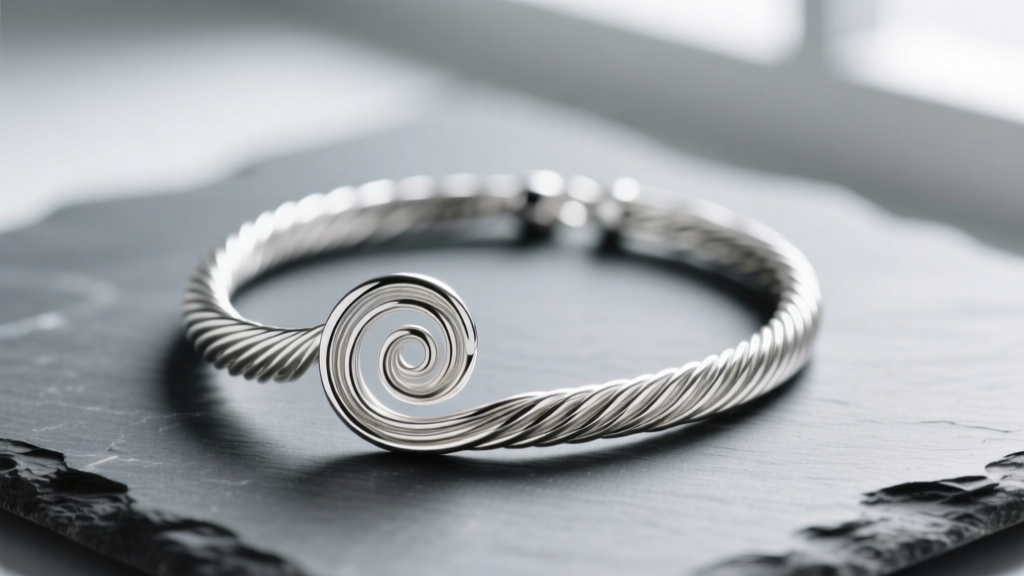
The Metallurgy of the Spiral: Why Alloy Selection is Critical
When browsing for a spiral silver necklace, most buyers focus exclusively on the visual geometry of the coils. However, from a master jeweler’s perspective, the spiral is one of the most mechanically demanding shapes in jewelry design. A spiral relies entirely on continuous tension, structural memory, and work-hardening to maintain its shape. If the metal is too soft, the coils will pull apart under the weight of the chain; if the alloy is improperly annealed or too brittle, the wire will snap at the stress points during fabrication or daily wear.
According to the Gemological Institute of America (GIA), pure silver is exceptionally malleable, which is why it must be alloyed with other metals to achieve the structural integrity required for jewelry. But not all silver alloys behave the same way when twisted into a tight, multi-layered spiral. In this comprehensive material comparison, we deconstruct the properties of Sterling, Argentium, and Fine silver to help you choose a spiral necklace that will last a lifetime without kinking, unspooling, or turning black.
Sterling Silver (925): The Traditional Standard and Its Limits
Sterling silver is the undisputed workhorse of the jewelry industry. Composed of 92.5% pure silver and 7.5% copper, this alloy provides the necessary Vickers hardness (typically around 65-75 HV in an annealed state, work-hardening up to 150+ HV) to hold a spiral shape. The copper acts as a strengthening agent, allowing the jeweler to wrap the wire tightly around a mandrel and rely on the metal's ‘memory’ to keep the coils nested together.
The Tarnish and Firescale Problem
While sterling silver excels in tension, the 7.5% copper content introduces two major failure modes for spiral designs:
- Rapid Tarnishing in Crevices: Spirals naturally trap moisture, skin oils, and environmental sulfur. The copper in sterling silver reacts with sulfur to form copper sulfide, creating a dark, stubborn tarnish deep within the inner coils that is incredibly difficult to polish out without a sonic cleaner or harsh chemical dips.
- Firescale at the Bail: When a jeweler solders the bail (the loop that holds the chain) to the top of the spiral, the heat causes the copper in the sterling to oxidize, forming a dark purple-grey stain known as firescale. While skilled jewelers can pickle and polish this away, mass-produced cast sterling spirals often have hidden porosity or weak solder joints at this critical stress point.
Pricing Expectation: A well-crafted, hand-forged 14-gauge sterling spiral pendant typically ranges from $45 to $110, depending on the artisan and the complexity of the nested coils.
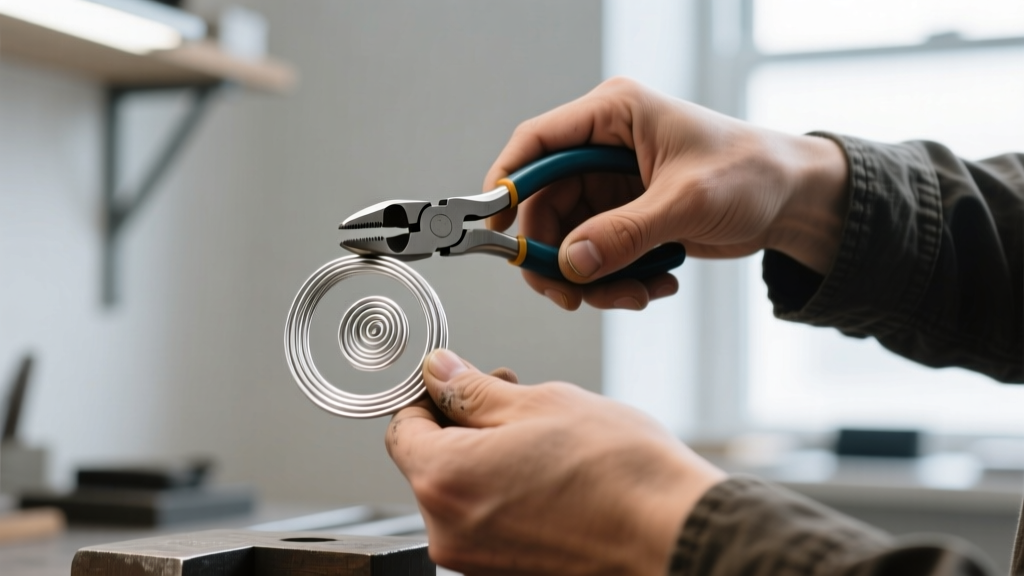
Argentium Silver: The Modern Upgrade for Spiral Tension
For buyers seeking a premium spiral silver necklace that solves the inherent flaws of traditional sterling, Argentium silver is the superior metallurgical choice. Argentium replaces a portion of the copper with the metalloid germanium. This seemingly small alteration fundamentally changes how the metal interacts with the environment and the jeweler's torch.
Why Argentium Excels in Spiral Designs
According to The Silver Institute, modern silver alloys are continuously evolving to meet consumer demands for low-maintenance jewelry. Argentium forms a transparent layer of germanium dioxide on its surface when exposed to oxygen. This layer acts as an invisible shield, blocking sulfur and moisture from reaching the copper atoms beneath.
- Extreme Tarnish Resistance: Because the inner coils of a spiral are rarely polished by the friction of clothing, they are highly susceptible to permanent discoloration. Argentium’s germanium oxide layer keeps the deep crevices of the spiral bright and reflective for years, even with daily wear.
- Firescale Elimination: When the jeweler solders the bail to the spiral, Argentium does not produce firescale. This results in a cleaner, structurally sounder solder joint at the exact point where the necklace bears the most mechanical stress.
- Fusion Welding: Unlike sterling, which requires solder, Argentium can be fusion-welded. This means the jeweler can melt the end of the spiral wire directly into the bail without adding a weaker filler metal, creating a seamless, high-tension joint.
Pricing Expectation: Due to the cost of germanium and the specialized tools required to work it, an Argentium spiral pendant generally commands a premium, ranging from $85 to $220.
Fine Silver (999) and Plated Alternatives: Why They Fail
It is crucial to understand why certain silver types are entirely inappropriate for spiral necklaces, despite their marketing appeal.
The Fine Silver (999) Collapse
Fine silver is 99.9% pure. While it is completely hypoallergenic and highly tarnish-resistant, it lacks the tensile strength required for structural jewelry. If a jeweler wraps a fine silver wire into a spiral, the metal will not work-harden sufficiently to hold its shape. Within weeks of wearing a fine silver spiral, the weight of the chain and the natural pulling of the neckline will cause the coils to stretch, unspool, and permanently distort. Fine silver should be reserved for bezel settings or delicate filigree, never for tension-bearing spirals.
The Plated Brass Deception
Many fast-fashion retailers sell ‘silver’ spiral necklaces that are actually brass or copper wire plated with a microscopically thin layer of silver. The friction of the chain rubbing against the bail, combined with the natural oils from your skin, will wear through the plating at the top coil within months. Once the base metal is exposed, it will oxidize rapidly, often leaving a green or black residue on your skin and ruining the aesthetic of the spiral.
Material Comparison Matrix
| Alloy Type | Composition | Spiral Tension Memory | Tarnish Resistance | Best Use Case |
|---|---|---|---|---|
| Sterling (925) | 92.5% Ag, 7.5% Cu | Excellent (High Work-Hardening) | Moderate (Requires Polishing) | Budget-friendly, everyday wear |
| Argentium (935/960) | Ag, Cu, Germanium | Superior (Spring-Back Properties) | Exceptional (Germanium Oxide Layer) | Heirloom pieces, low-maintenance wear |
| Fine (999) | 99.9% Ag | Poor (Too Soft, Will Unspool) | High | Not recommended for spirals |
| Silver-Plated | Brass Core, Ag Coating | Variable (Depends on Core) | Very Low (Plating Wears Off) | Temporary costume jewelry |
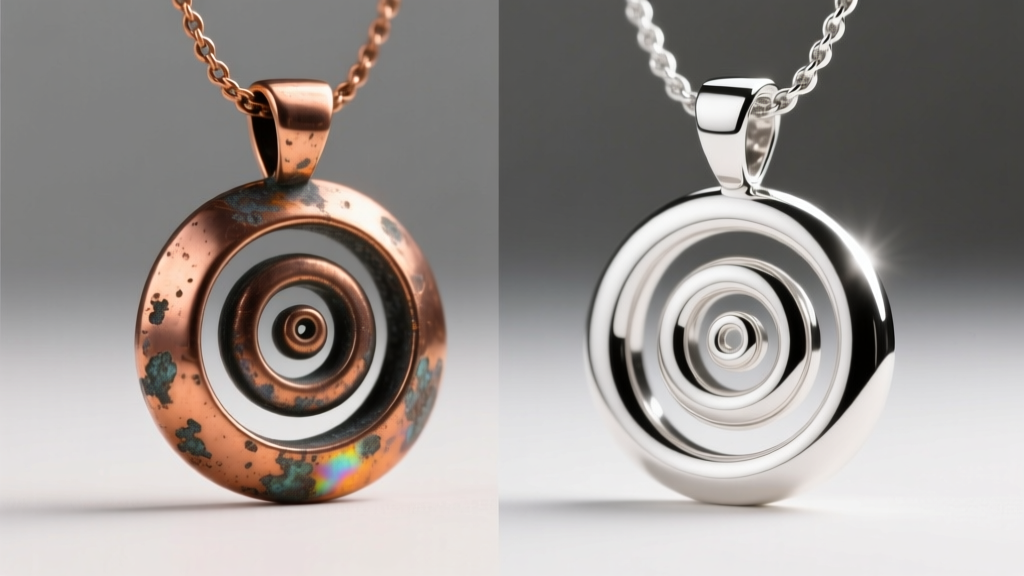
Real-World Troubleshooting: Kinking, Tarnish, and Skin Chemistry
Even the best-crafted spiral silver necklace requires an understanding of real-world wear and tear. Here is how to troubleshoot common issues based on material properties.
Fixing a Kinked or Stretched Spiral
If your sterling or Argentium spiral gets caught on a sweater and pulls out of shape, do not try to bend it back with your bare fingers. Human hands apply uneven torque, which will create sharp creases (kinks) in the wire. A kink is a severe structural weak point where the metal's crystalline lattice is fractured; it will eventually snap at this exact spot. Instead, take the pendant to a jeweler who can slide it back onto a steel mandrel and use a rawhide mallet to gently tap the coils back into their original, mathematically even spacing.
Navigating Skin Chemistry and Sulfides
Some individuals have highly acidic sweat or take medications that alter their skin's pH, causing sterling silver to turn black almost overnight. The tight inner coils of a spiral trap this acidic moisture against the metal. If you have this skin chemistry, an Argentium spiral necklace is not just a luxury—it is a functional necessity. The germanium oxide layer is completely impervious to the acidic sulfides produced by human sweat.
Master Jeweler’s Tip: Never use liquid ‘silver dip’ cleaners on a spiral necklace. These harsh thiourea-based chemicals strip the metal's natural patina and can become permanently trapped in the tight inner coils, causing delayed, aggressive corrosion. Always use a soft, treated polishing cloth and gently run it through the grooves.
Sizing and Gauge Recommendations for Spiral Pendants
The visual weight and structural integrity of your spiral necklace are dictated by the wire gauge (thickness). Understanding gauge sizes will help you select a piece that matches your neckline and lifestyle.
- 12-Gauge (2.05mm) & 14-Gauge (1.63mm): These are thick, heavy-duty wires used for bold, single-layer or double-layer spirals. They offer immense structural rigidity and will never unspool. Best paired with heavy chains like 3mm box chains or thick rope chains. Ideal for outerwear or deep V-necklines where the pendant needs to make a substantial visual statement.
- 16-Gauge (1.29mm): The sweet spot for nested, multi-coil spiral designs (such as the Fibonacci sequence spiral). It provides enough tensile strength to hold complex, tightly packed geometric shapes while remaining light enough for all-day comfort. Pairs beautifully with 1.5mm to 2mm wheat or cable chains.
- 18-Gauge (1.02mm) & 20-Gauge (0.81mm): Used for delicate, flexible spirals that are designed to drape and move fluidly. While beautiful, these thinner gauges are more susceptible to crushing if stored improperly. They must be hung vertically or laid perfectly flat in a jewelry box to prevent the coils from overlapping and tangling.
Final Verdict: Choosing Your Spiral
The spiral silver necklace is a masterclass in jewelry engineering, transforming a simple wire into a symbol of infinity and continuous motion. If you are purchasing a piece for occasional wear or are committed to a regular polishing routine, traditional Sterling Silver (925) remains a reliable, cost-effective choice with excellent structural memory. However, if you demand a piece that can withstand the rigors of daily wear, resist the tarnish-trapping geometry of its own coils, and maintain its brilliant luster without chemical dips, investing in Argentium Silver is the smartest metallurgical decision you can make. By understanding the alloy beneath the art, you ensure your spiral remains perfectly coiled for generations.


