Fixing a Fresh Water Pearls Necklace: Stains, Knots & Restringing
Learn how to troubleshoot a fresh water pearls necklace. Expert fixes for yellowing nacre, stretched silk thread, and slipping knots.

The Anatomy of Pearl Vulnerability
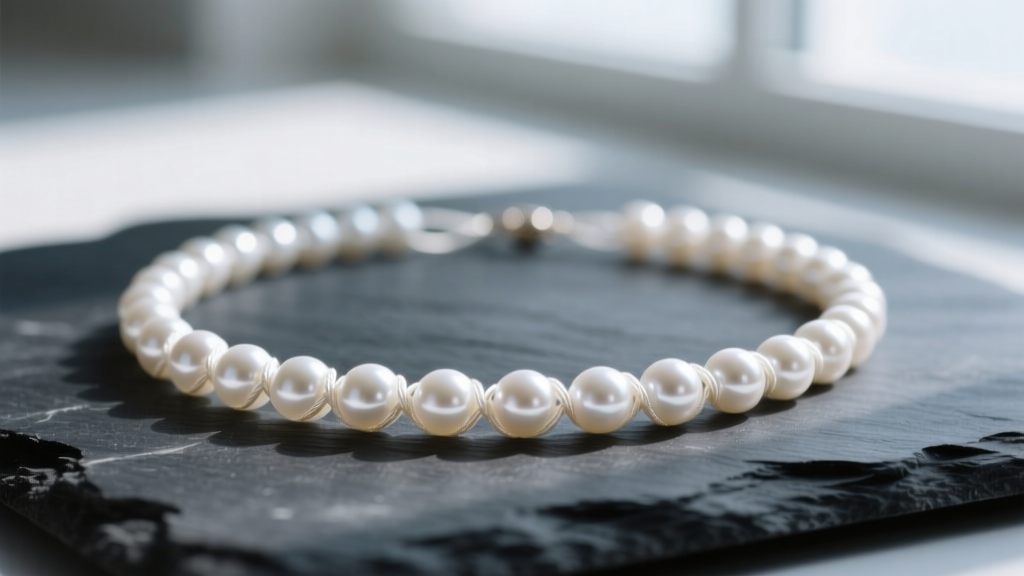
Owning a strand of pearls is an exercise in managing organic fragility. Unlike crystalline gemstones such as diamonds or sapphires, pearls are born from biological processes. When your favorite fresh water pearls necklace begins to show signs of wear—whether through dulling luster, stretching threads, or slipping knots—it is rarely a sudden failure. Instead, it is the cumulative result of chemical interactions, tensile stress, and environmental exposure. Nacre, the iridescent material that gives pearls their orient and luster, is composed of microscopic aragonite (calcium carbonate) platelets held together by an organic protein called conchiolin. This unique structure makes pearls exceptionally susceptible to acidic sweat, cosmetic chemicals, and severe dehydration.
Troubleshooting a pearl necklace requires a departure from standard jewelry repair logic. You cannot simply polish a pearl with a jeweler's rouge, nor can you toss it into an ultrasonic cleaner. According to the Gemological Institute of America (GIA), improper cleaning is the leading cause of irreversible nacre damage. This guide will walk you through the precise diagnostic steps and professional-grade solutions for the most common structural and cosmetic failures in pearl strands.
Diagnostic Matrix: Identifying Your Necklace Issues
Before attempting any repair, you must accurately diagnose the failure point. Use the matrix below to identify the symptoms your necklace is exhibiting and determine whether a DIY intervention is safe or if professional bench work is required.
| Symptom | Underlying Cause | DIY Fix / Intervention | When to See a Professional |
|---|---|---|---|
| Yellowing or chalky dullness | Dehydration of conchiolin; acidic sweat exposure | Gentle damp cloth wipe; mineral oil micro-dosing | If surface pitting or flaking is visible |
| Visible gaps between knots and pearls | Silk thread stretching due to moisture and tension | None (Do not wear) | Immediate professional restringing required |
| Fraying near the clasp | Missing or degraded French wire (gimp) | None (High risk of strand breakage) | Clasp re-tie with sterling silver French wire |
| Knots slipping into drill holes | Improper thread gauge used during last restring | None | Restring using correctly sized silk (e.g., Size F or G) |
Problem 1: Yellowing Nacre and Loss of Orient
The most frequent complaint regarding older pearl strands is a gradual yellowing or loss of the rainbow-like 'orient' effect. This is fundamentally a chemistry problem. The conchiolin protein that binds the calcium carbonate crystals is highly sensitive to pH levels. Human sweat typically has a pH between 4.5 and 6.0 (mildly acidic). When a fresh water pearls necklace is worn directly against the skin during hot weather, the acid slowly etches the aragonite platelets, while the conchiolin dehydrates and yellows.
What NOT to do: Never use baking soda, vinegar, toothpaste, or commercial silver polishes. These will strip the nacre entirely, leaving you with a dull, chalky bead.
The Safe Rehydration Protocol
If your pearls are dull but not pitted, you can attempt a conservative rehydration and cleaning protocol:
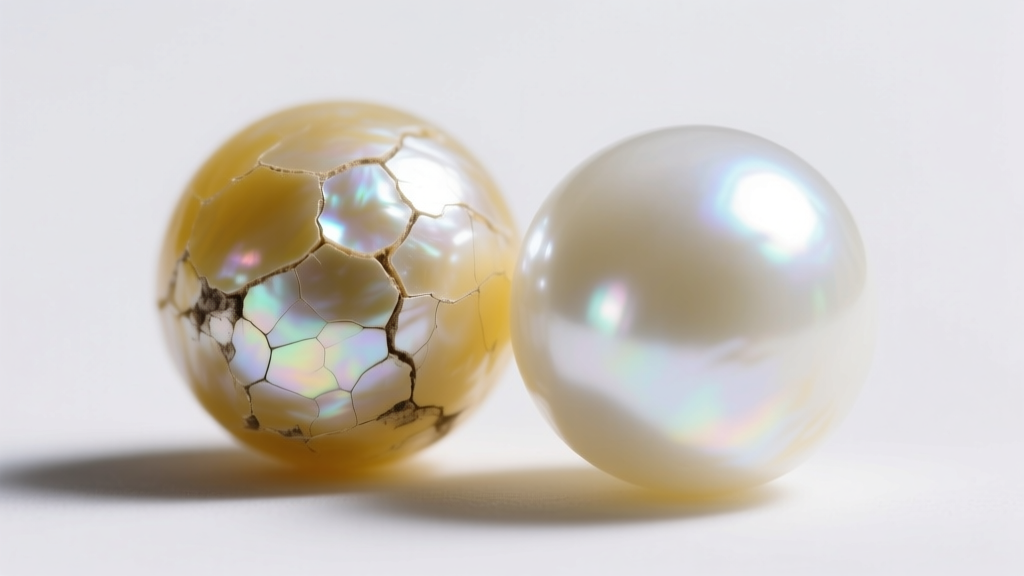
- The Damp Cloth Wipe: Use a lint-free microfiber cloth barely dampened with distilled water (never tap water, which contains chlorine and heavy metals). Gently wipe each pearl individually to remove surface oils and acidic residue.
- The Mineral Oil Micro-Dose: To restore a subtle sheen to dehydrated conchiolin, place a single drop of pharmaceutical-grade mineral oil on a soft cloth. Buff the pearls lightly. The oil penetrates the microscopic pores of the nacre, temporarily restoring the refractive index and hiding minor surface dehydration.
- Air Drying: Lay the strand flat on a dry towel for 12 hours before storing. Never hang a wet pearl strand, as the water weight will stretch the silk.
Problem 2: Silk Thread Stretching and Fraying
High-quality pearl strands are knotted on 100% silk thread. Silk is chosen for its tensile strength and its ability to form tight, secure knots. However, silk is a natural protein fiber that absorbs moisture, stretches under the weight of the pearls, and degrades when exposed to perfumes and lotions. The 'Stretch Test' is the industry standard for determining if your necklace is at risk of catastrophic failure (snapping).
How to perform the Stretch Test: Hold the necklace vertically by the clasp. Run your thumb and forefinger down the strand, gently pushing the pearls upward. If you see more than 1 millimeter of exposed thread between the knot and the pearl, the silk has elongated beyond its recovery point. The strand must be restrung immediately.
Silk Thread Sizing Guide for Restringing
If you are restringing the necklace yourself or instructing a jeweler, matching the silk thread gauge to the pearl's drill hole is critical. Using a thread that is too thin results in knots pulling through the drill hole; using one that is too thick causes friction and fraying.
- Size D (Extra Fine): For very small pearls (3mm - 4mm) with microscopic drill holes (approx. 0.4mm).
- Size E (Fine): Standard for 5mm - 6mm pearls. Fits drill holes of 0.5mm - 0.6mm.
- Size F (Medium): The most common gauge for standard 7mm - 8mm fresh water pearls. Requires a 0.7mm drill hole.
- Size G (Heavy): Used for large, heavy baroque pearls (9mm+) where the weight of the gem requires a thicker thread to support the knot structure.
Problem 3: Slipping Knots and Clasp Abrasion
A common failure point occurs exactly where the silk thread meets the metal clasp. The metal jump ring acts like a microscopic saw blade against the soft silk. Over time, friction cuts the fibers, leading to a snapped strand and lost pearls. Furthermore, if the pearls nearest the clasp are not protected, the metal will rub against the nacre, causing severe abrasion and 'bald spots' on the pearl surface.
The Solution: French Wire (Gimp)
Professional pearl stringers use a component called French wire, or 'gimp'. This is a microscopic, hollow coil of wire (usually sterling silver, gold-filled, or platinum) that the silk thread passes through before looping through the clasp jump ring. The French wire acts as a flexible, sacrificial metal shield. The metal clasp rubs against the metal coil, completely protecting both the silk thread and the adjacent pearls. If your necklace lacks French wire at the clasp, it is highly recommended to have it retrofitted during the next restringing.
Preventative Maintenance Protocol
According to GIA Pearl Quality Factors, the longevity of a pearl strand is directly tied to its storage and wearing habits. Implement these strict protocols to extend the time between professional restringings:
- The 'Last On, First Off' Rule: Pearls must be the last thing you put on after applying cosmetics, hairspray, and perfume, and the first thing you take off at night. Alcohol and aerosols dissolve the conchiolin binder almost instantly.
- Flat Storage Only: Never hang a pearl necklace on a jewelry tree or hook. Gravity will permanently stretch the silk over time. Always store the strand flat in a soft chamois pouch.
- Avoid Airtight Plastic: Pearls require ambient moisture. Storing them in a sealed plastic bag or a safety deposit box without a damp sponge will cause the conchiolin to desiccate, leading to cracking and yellowing.
- Annual Bench Checks: Have a professional jeweler inspect the clasp mechanism and the silk knots every 12 months, especially if the necklace is worn weekly.
When to Seek Professional Restringing
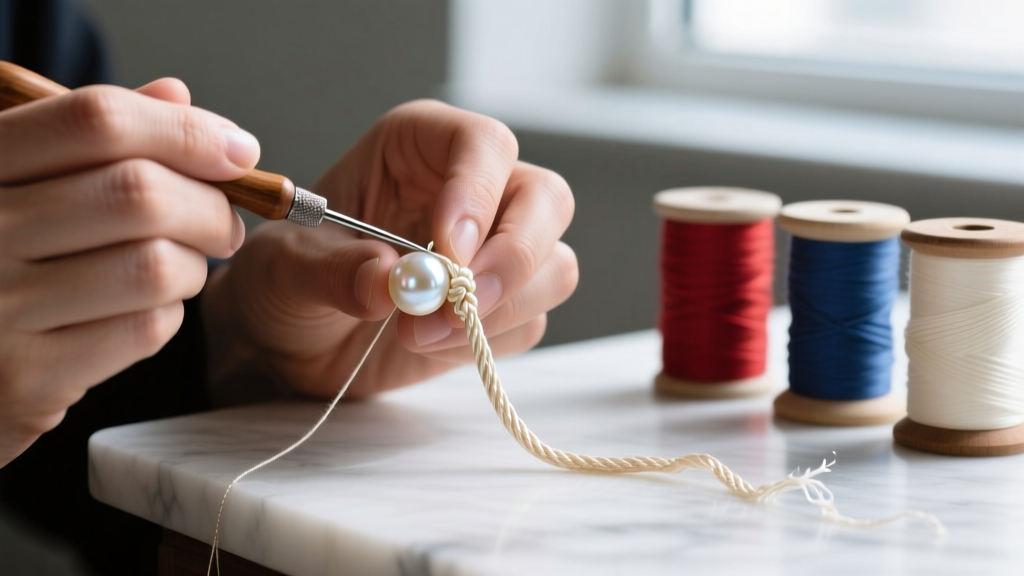
While surface cleaning and minor oiling can be done at home, structural repairs should always be left to master stringers. Hand-knotting between every single pearl is a painstaking process that requires specialized tools like a beading awl, which is used to push the knot flush against the pearl before the silk dries and sets. A properly knotted strand ensures that if the silk ever does snap, you will only lose a single pearl rather than the entire strand scattering across the floor. Expect to pay between $4 to $8 per inch for professional hand-knotting with high-grade Griffin silk, a necessary investment to protect the irreplaceable organic beauty of your gems.