Anatomy of a Vintage Brass Bead Necklace: Material Guide
Discover the material properties of a vintage brass bead necklace. Compare brass to copper and silver, learn about patina, and master safe wear.
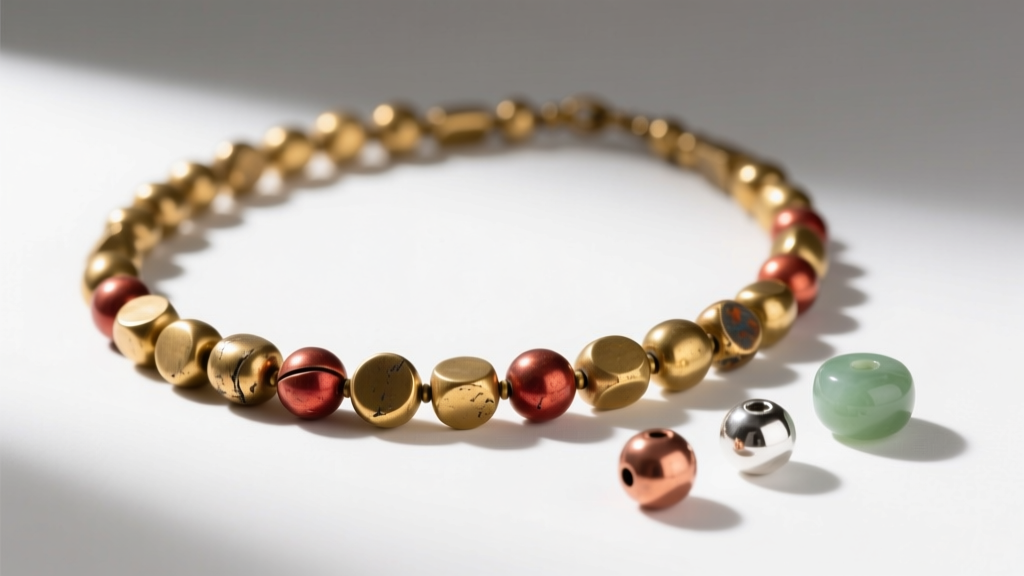
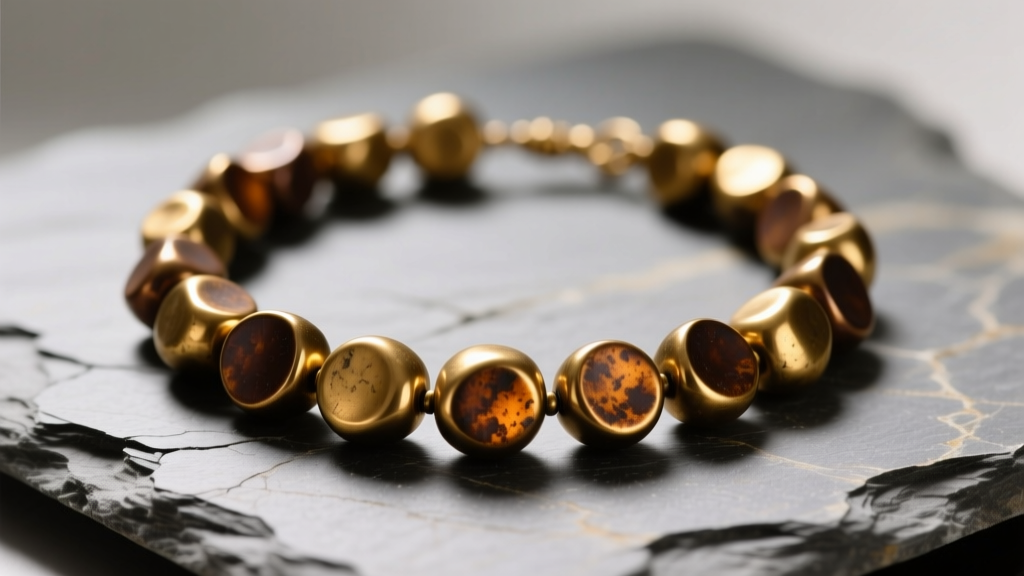
The Metallurgy of Vintage Brass: What Are You Actually Wearing?
When evaluating a vintage brass bead necklace, it is crucial to understand that 'brass' is not a single, uniform metal. It is an alloy primarily composed of copper and zinc, and the specific ratio of these elements dictates the bead's color, weight, hardness, and how it will age over decades. According to metallurgical standards referenced by Rio Grande, vintage jewelry components typically fall into three distinct alloy categories:
- Yellow Brass (67% Copper, 33% Zinc): The most common alloy for mid-century European and American beadwork. It has a bright, gold-like appearance when polished but oxidizes to a warm, muddy brown. It is relatively hard, making it ideal for stamped and faceted vintage beads.
- Red Brass (85% Copper, 15% Zinc): Often found in older African trade beads and early 20th-century rosaries. The high copper content gives it a distinct reddish-pink hue. It is softer, heavier, and develops a much darker, almost chocolate-brown patina over time.
- Cartridge Brass (70% Copper, 30% Zinc): Highly malleable and resistant to dezincification (a form of corrosion where zinc leaches out). This was frequently used for seamless, drawn-metal beads in the 1940s and 1950s.
Understanding the exact alloy of your vintage brass bead necklace allows you to predict its structural longevity and how it will react to modern restringing materials and skin chemistry.
Material Comparison: Vintage Brass vs. Alternative Beads
To truly appreciate the material properties of brass, we must compare it to other common bead materials used in vintage and contemporary jewelry design. The table below breaks down the physical and chemical differences that impact wearability and design choices.
| Material | Copper Content | Density (g/cm³) | Patina Speed | Skin Reactivity | Avg. Price (10mm) |
|---|---|---|---|---|---|
| Vintage Brass | 60% - 85% | 8.4 - 8.7 | Moderate (Months) | Moderate (Green tint) | $0.50 - $2.00 |
| Pure Copper | 99.9% | 8.9 | Fast (Weeks) | High (Pronounced green) | $0.30 - $1.00 |
| Sterling Silver | 0% (92.5% Ag) | 10.4 | Slow (Years) | Low (Hypoallergenic) | $3.00 - $8.00 |
| Lampwork Glass | 0% | 2.5 | None | None | $1.50 - $5.00 |
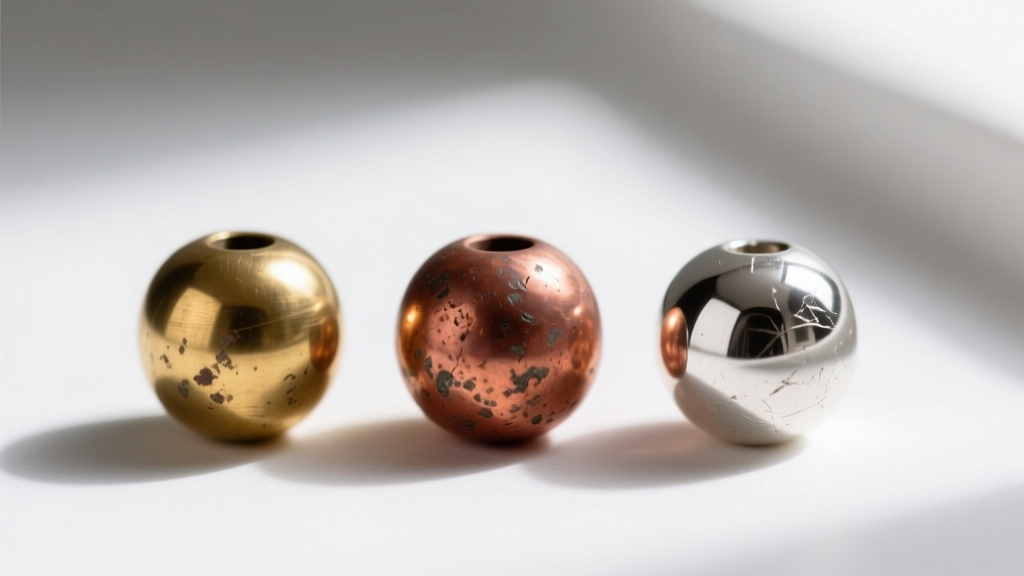
As the data illustrates, a vintage brass bead necklace offers a unique middle ground. It provides the satisfying, heavy drape of copper and silver (due to its high density) but at a fraction of the cost. However, the trade-off is its moderate skin reactivity and the necessity of managing its oxidation.
The Patina Factor: Oxidation and Wear Properties
The most defining characteristic of a vintage brass bead necklace is its patina. Unlike modern, clear-coated brass jewelry, authentic vintage beads were rarely sealed, meaning they interact dynamically with their environment.
The Chemistry of Verdigris and Skin Staining
The dreaded 'green skin' effect is not a sign of cheap metal; it is a basic chemical reaction. When the copper in the brass alloy comes into contact with the lactic acid, sodium chloride (salt), and moisture in human sweat, it forms copper chelates and cupric chloride. These compounds are green and easily transfer to the skin.
Expert Mitigation Strategy: If you wish to wear a vintage brass bead necklace without altering its historical patina or staining your skin, apply a micro-crystalline wax. Products like Renaissance Wax create an invisible, chemically stable barrier that prevents sweat from reaching the metal surface without giving the beads an artificial, glossy 'plastic' look.
Authenticating True Vintage Patina vs. Artificial Aging
The vintage jewelry market is flooded with modern brass beads artificially aged using liver of sulfur or ammonia fuming. You can distinguish true vintage oxidation from chemical faking by examining the bead's crevices. Authentic, decades-old patina pools unevenly in the recesses of stamped or textured beads and often shows microscopic pitting. Artificially aged beads usually have a uniform, powdery darkening that rubs off too easily and lacks the complex, layered translucency of natural oxidation.
Safety and Toxicity: Navigating Vintage Alloys
While brass is generally safe, sourcing a vintage brass bead necklace requires an awareness of historical manufacturing practices, specifically regarding lead content. Prior to the 1980s, 'free-machining brass' (Alloy C36000) was widely used in bead production because the addition of 2% to 3% lead allowed factory lathes to cut and drill the metal faster and with less wear on the tools.
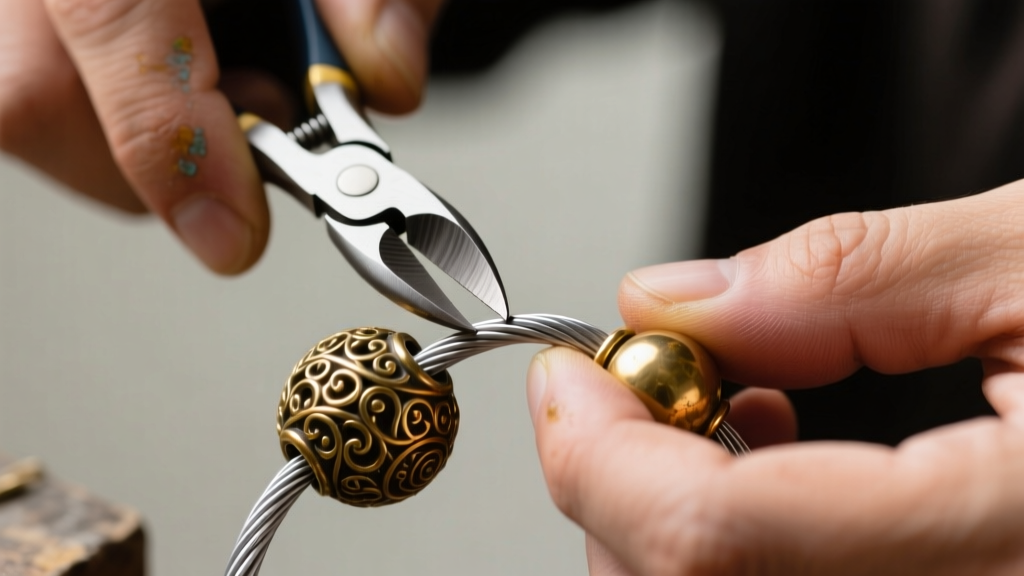
While the lead is encapsulated within the copper-zinc matrix, the friction of beads rubbing against each other, or against the skin, can release microscopic lead dust. The Environmental Protection Agency (EPA) strictly advises caution with vintage metal goods. If you are acquiring a vintage brass bead necklace from an estate sale or antique market, utilize a 3M LeadCheck swab on an inconspicuous bead. If the swab turns pink or red, the beads contain leachable lead. In such cases, the necklace should be sealed with a jewelry-grade epoxy resin or restricted to display-only purposes rather than daily wear.
Restringing and Hardware: Preventing Galvanic Corrosion
One of the most common failure modes for a vintage brass bead necklace is the snapping of the stringing wire due to galvanic corrosion. When two dissimilar metals are in contact in the presence of an electrolyte (like ambient humidity or sweat), a microscopic battery is formed. The more 'anodic' metal corrodes rapidly.
Selecting the Right Wire and Findings
If you are restoring a vintage brass piece, never use bare carbon steel wire or cheap aluminum clasps. Steel will rust and snap within months, while aluminum will rapidly corrode and leave a white, powdery residue on your beautiful vintage beads.
- The Ideal Wire: Use a 49-strand, nylon-coated stainless steel beading wire (such as Beadalon or Soft Flex) in a 0.018-inch or 0.024-inch diameter. The nylon coating acts as a dielectric barrier, preventing the steel core from reacting with the brass beads.
- Crimp Beads and Clasps: Always use solid brass, copper, or sterling silver crimp tubes and clasps. Avoid plated base metals, as the plating will eventually wear off at the friction points, exposing the reactive core metal underneath.
- Knotting Alternative: For heavier, large-hole vintage brass beads, consider stringing them on Griffin silk cord with traditional overhand knots between each bead. This not only prevents the beads from grinding against one another (which destroys the patina) but also eliminates metal-on-metal corrosion risks entirely.
Conclusion
A vintage brass bead necklace is more than just a decorative accessory; it is a wearable piece of metallurgical history. By understanding the specific copper-zinc ratios, respecting the chemistry of its patina, testing for historical lead content, and utilizing galvanically compatible restringing materials, you can preserve these stunning artifacts for another century of wear. Approach your vintage brass with a scientist's eye and a collector's reverence, and it will reward you with a warm, golden luster that no modern alloy can replicate.


