How Much Does a Gold Necklace Weigh? A Step-by-Step Guide
Learn exactly how much a gold necklace weighs in grams and pennyweights. Follow our step-by-step guide to calculate gold weight, purity, and value.

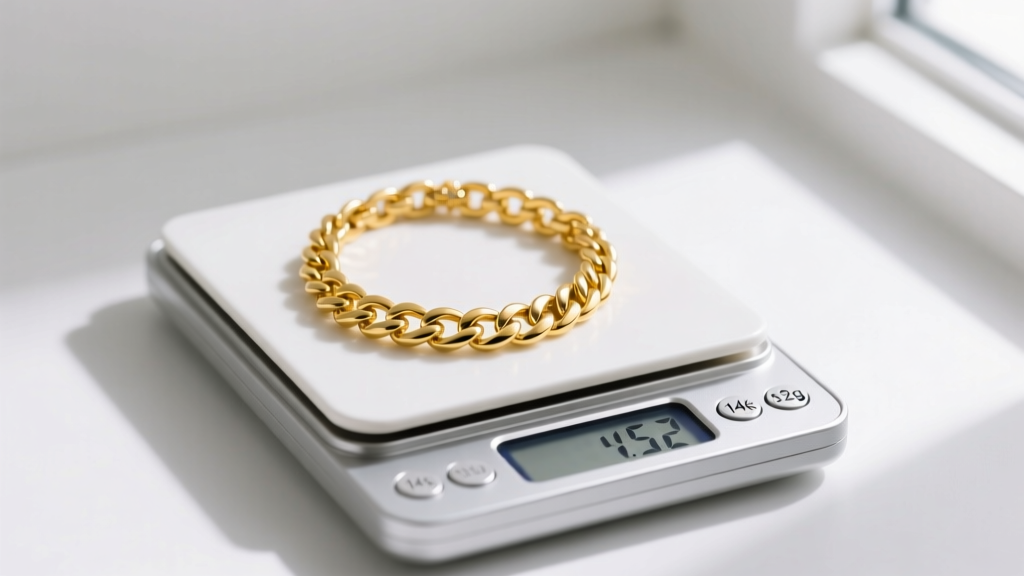
Whether you are evaluating an heirloom, shopping for a durable everyday piece, or looking to liquidate assets, understanding the physical mass of your jewelry is critical. When buyers and sellers ask, "how much does a gold necklace weigh?", they are usually trying to determine three things: durability, comfort, and intrinsic melt value. In 2026, with gold spot prices experiencing significant volatility, knowing how to accurately weigh, measure, and calculate the value of your gold chains is an essential skill for any jewelry enthusiast or investor.
This comprehensive, step-by-step guide will walk you through the exact metrics used by professional jewelers, how to weigh your pieces at home with precision, and how to spot deceptive manufacturing tricks that artificially inflate a necklace's perceived weight.
Why Gold Necklace Weight Matters
The weight of a gold necklace directly dictates its structural integrity and its financial baseline. A lightweight 18-inch cable chain weighing 2.5 grams might be perfect for layering with a delicate pendant, but it will easily snap under the stress of a heavy gemstone or accidental snagging. Conversely, a solid 24-inch Cuban link chain weighing 85 grams offers immense durability but requires a higher budget and a specific aesthetic preference.
From a financial perspective, weight is the primary multiplier for intrinsic value. Retail markups (often 300% to 500% over melt value for luxury brands) obscure the actual gold content. By stripping away the brand premium and focusing strictly on weight and karat purity, you can accurately assess the baseline commodity value of the piece using real-time market data from authorities like Kitco.
The Metrics: Grams, Pennyweights, and Troy Ounces
Before you place your jewelry on a scale, you must understand the units of measurement. The global jewelry trade primarily uses the metric system (grams), but the North American pawn and scrap markets heavily rely on the Troy system (pennyweights and Troy ounces).
| Unit of Measurement | Abbreviation | Conversion to Grams | Primary Use Case |
|---|---|---|---|
| Gram | g | 1.000 g | Global retail, international jewelry tags, scientific measurement |
| Pennyweight | dwt | 1.555 g | US pawn shops, domestic scrap buyers, traditional American jewelers |
| Troy Ounce | ozt | 31.103 g | Bullion trading, large-scale precious metal refining |
Pro Tip: Never confuse a standard avoirdupois ounce (28.35 grams, used for baking and postal mail) with a Troy ounce (31.10 grams). Using the wrong conversion will result in a 10% financial loss when selling your gold.
Step-by-Step: How to Weigh Your Gold Necklace at Home
You do not need a professional gemologist to determine how much your gold necklace weighs. With a small investment in the right tools, you can achieve laboratory-level accuracy on your kitchen table.
Step 1: Procure a Precision Digital Scale
Do not use a kitchen scale. You need a digital pocket scale capable of measuring down to 0.01 grams. Models like the American Weigh Scales GEM20 or the AW Gemini-20 are industry standards for hobbyists and cost under $30. Ensure the scale has a calibration weight (usually 20g) to verify its accuracy before use.
Step 2: Prepare the Weighing Environment
Drafts from ceiling fans, air conditioning vents, or even heavy breathing can cause micro-fluctuations on a 0.01g scale. Place the scale on a hard, perfectly level surface. Avoid glass tables or carpeted areas, which can absorb pressure and skew the reading.
Step 3: Tare and Weigh
- Turn on the scale and ensure it reads
0.00g. - Close the clasp of your necklace to prevent the metal from dragging on the table, which would artificially reduce the measured weight.
- Coil the chain neatly into the center of the weighing pan.
- Wait for the reading to stabilize and lock in the number.
Average Weights by Chain Style and Length
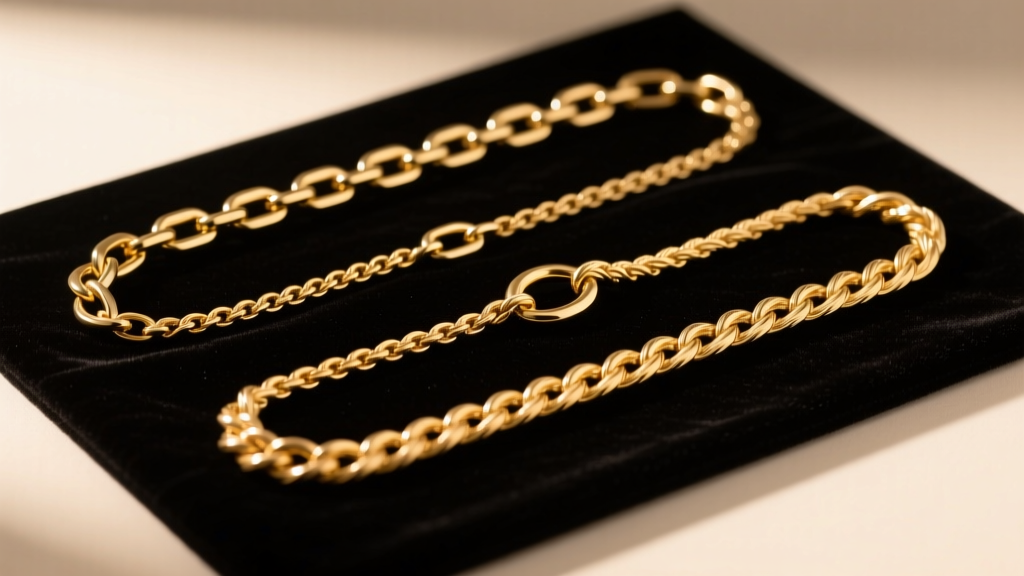
Not all chain styles are created equal. The geometry of the links drastically affects how much gold is required to achieve a specific length. A 20-inch Rope chain will weigh significantly more than a 20-inch Herringbone chain of the same visual width. Below is a data table outlining the expected weight ranges for solid 14k gold chains across standard lengths.
| Chain Style | Width (mm) | 18-Inch Weight (Grams) | 22-Inch Weight (Grams) | Durability Rating |
|---|---|---|---|---|
| Cable (Standard) | 1.5mm | 2.8g - 3.5g | 3.4g - 4.2g | Moderate |
| Figaro | 3.0mm | 8.5g - 11.0g | 10.5g - 13.5g | High |
| Cuban Link (Solid) | 5.0mm | 22.0g - 28.0g | 27.0g - 34.0g | Very High |
| Rope (Woven) | 4.0mm | 18.0g - 24.0g | 22.0g - 29.0g | High |
| Herringbone (Flat) | 4.5mm | 12.0g - 16.0g | 14.5g - 19.5g | Low (Prone to Kinking) |
How Karat Purity Alters Density and Physical Weight
A common misconception is that a 14k gold chain and an 18k gold chain of the exact same dimensions will weigh the same. They will not. Pure 24k gold is exceptionally dense (19.32 g/cm³). However, because pure gold is too soft for jewelry, it is alloyed with lighter metals like copper, silver, and zinc.
According to metallurgical data referenced by the Gemological Institute of America (GIA), 14k yellow gold (58.3% pure gold) has a density of approximately 13.0 g/cm³, while 18k yellow gold (75% pure gold) sits around 15.5 g/cm³. Therefore, if you have two identical 5mm solid Cuban link chains, the 18k version will physically weigh about 15% to 18% more than the 14k version simply due to the higher concentration of dense, pure gold.
Step-by-Step: Calculating Melt Value vs. Retail Price
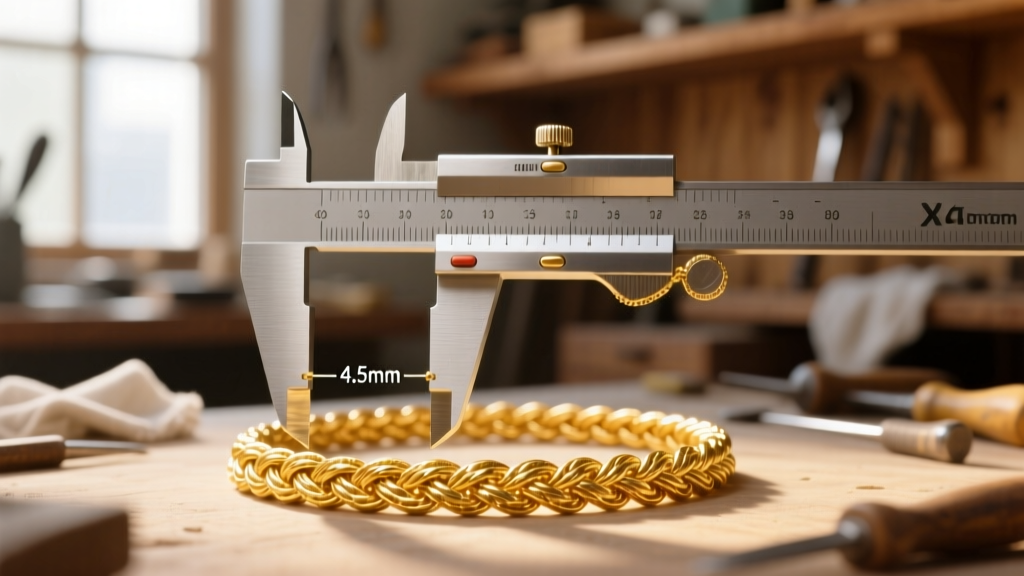
Once you know how much your gold necklace weighs in grams, you can calculate its intrinsic melt value. This is the exact amount of cash a refinery will pay for the raw material, stripping away all craftsmanship and brand premiums.
The Melt Value Formula
Melt Value = (Weight in Grams ÷ 31.1035) × (Karat ÷ 24) × Current Spot Price per Troy Ounce
Real-World Example (2026 Market Context)
Let's assume you have a solid 14k gold Figaro chain that weighs 15.5 grams. The current spot price of gold is $2,450 per Troy ounce.
- Step 1: Convert grams to Troy ounces: 15.5g ÷ 31.1035 = 0.498 ozt.
- Step 2: Calculate purity multiplier: 14 ÷ 24 = 0.5833.
- Step 3: Multiply by spot price: 0.498 × 0.5833 × $2,450 = $711.05.
While the melt value is $711.05, a retail jewelry store might sell this exact chain for $1,800 to $2,500 to account for manufacturing, import duties, marketing, and retail overhead. Understanding this gap is crucial when negotiating purchases or sales.
Red Flags: Hollow Chains and Hidden Weights
When figuring out how much a gold necklace weighs, you must be vigilant against deceptive manufacturing techniques designed to trick the eye and the pocketbook.
The Hollow Tubing Trick
Many large, flashy chains (especially 10mm+ Cuban links and thick Herringbones) are manufactured using hollow gold tubing or electroforming. A hollow 22-inch 10mm Cuban link might weigh only 18 grams, whereas a solid version would weigh upwards of 120 grams. Hollow chains are highly prone to denting, crushing, and are nearly impossible to repair if broken. Always ask the jeweler for the exact gram weight; if a massive chain feels suspiciously light, it is hollow.
Oversized Clasps and Solder
Unscrupulous sellers will sometimes attach heavy, base-metal (brass or steel) lobster clasps to lightweight, hollow gold chains. Because the scale weighs the entire assembly, the heavy clasp artificially inflates the gram weight, tricking buyers who pay a premium based on the total mass. Always inspect the clasp for a matching karat stamp (e.g., "14K") and use a strong rare-earth magnet to ensure the clasp mechanism isn't made of magnetic steel.
Final Thoughts on Weighing Gold Jewelry
Mastering the answer to "how much does a gold necklace weigh" empowers you to navigate the jewelry market with confidence. By investing in a precision scale, understanding the nuances of chain geometry, and applying the melt value formula, you transition from a passive consumer to an informed buyer. For further education on precious metal standards and hallmarking, consult resources provided by the World Gold Council to ensure your portfolio and jewelry box remain secure and accurately valued.


