Types of Necklace Chains: A Material & Durability Guide
Explore how metal alloys define the durability and drape of different types of necklace chains. Compare gold, platinum, and titanium properties.

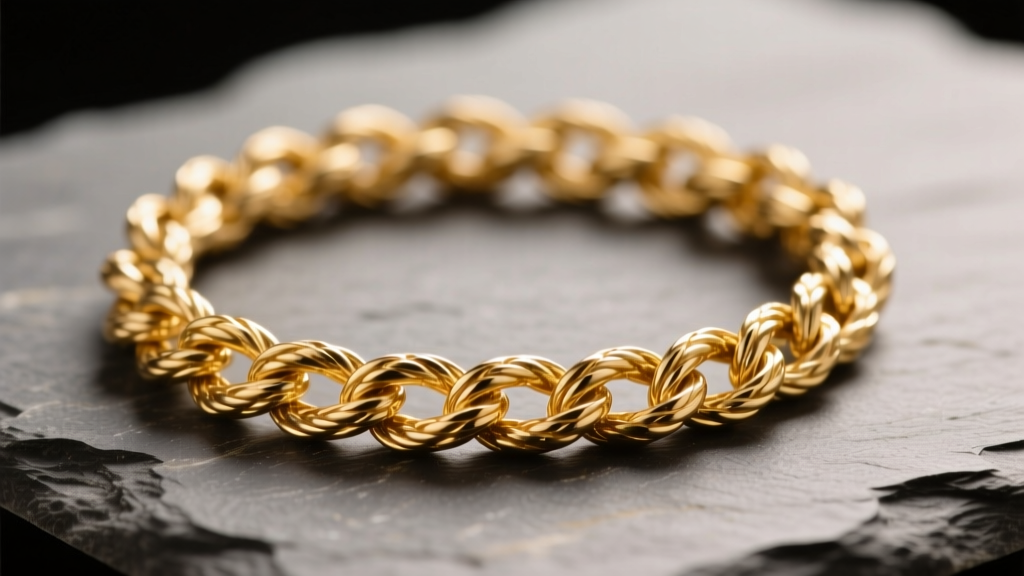
When jewelry enthusiasts and everyday wearers search for the best types of necklace chains, the conversation almost exclusively revolves around link styles—cable, curb, figaro, or rope. However, the true determinant of a chain's longevity, drape, and suitability for heavy pendants lies beneath the surface in its metallurgical composition. A delicate 1.2mm cable chain will behave entirely differently depending on whether it is forged from 14k gold, 950 platinum, or Grade 5 titanium. Understanding material properties is the only way to make a mathematically sound purchasing decision.
In this comprehensive guide, we move beyond basic aesthetics to analyze how specific metal alloys dictate the structural integrity, tensile strength, and wear patterns of your favorite necklace chains. Whether you are suspending a 20-gram diamond pendant or looking for a lightweight, hypoallergenic daily chain, the metal you choose matters just as much as the link style.
Precious Metals: Gold, Platinum, and Palladium
Precious metals remain the cornerstone of fine jewelry, but their varying alloy compositions create vastly different physical properties. According to the Gemological Institute of America (GIA), pure 24k gold is far too soft for chain fabrication, necessitating the addition of alloying metals like copper, silver, and zinc to achieve structural viability.
14k vs. 18k Gold: Hardness and Drape
The debate between 14k and 18k gold is fundamentally a discussion about the Vickers Hardness (HV) scale and yield strength. 14k gold contains 58.5% pure gold, while 18k contains 75%. Counterintuitively, a higher gold content does not mean a stronger chain. 14k gold, particularly yellow and white varieties alloyed with copper and nickel or palladium, typically registers between 130 and 160 HV. 18k gold is softer, usually hovering around 120 to 140 HV.
This metallurgical reality profoundly impacts how different types of necklace chains behave under stress. An 18k gold rope chain, while possessing a richer, deeper yellow hue and superior luster, is highly susceptible to "stretching" if the gauge is under 2.0mm and it is subjected to the constant pull of a heavy pendant. Conversely, a 14k gold wheat chain offers exceptional tensile strength due to its four-strand braided structure combined with the harder alloy, making it a superior workhorse for daily wear.
950 Platinum: The Heavyweight Champion
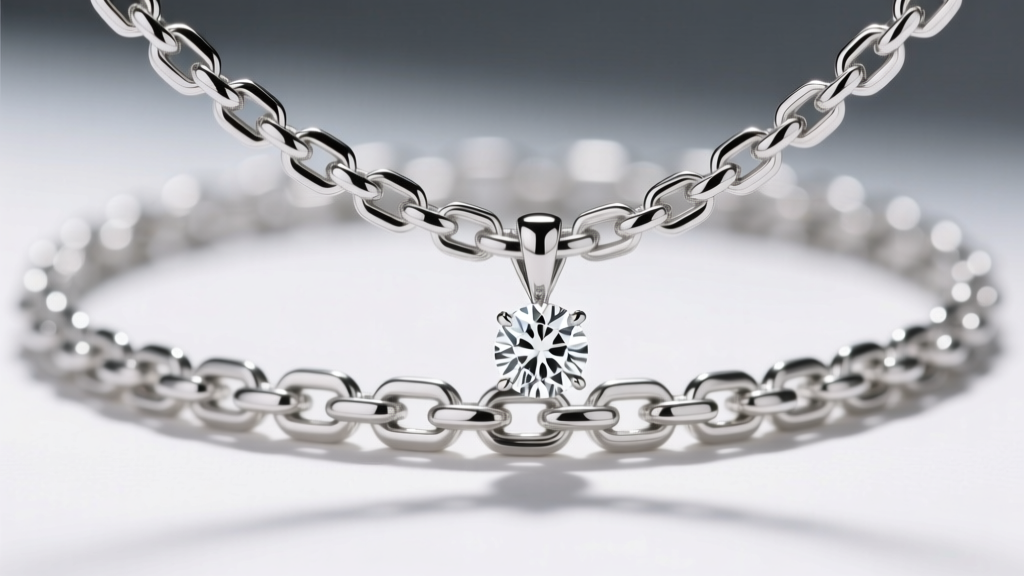
Platinum is the undisputed king of pendant security. Standard jewelry platinum is 95% pure platinum and 5% ruthenium or iridium (stamped 950 Pt). Its density is staggering—approximately 21.45 g/cm³, making it nearly 60% denser than 14k gold. This specific gravity gives platinum box chains and curb chains a substantial, luxurious drape that lighter metals simply cannot replicate.
Unlike gold, which loses microscopic layers of metal when scratched, platinum merely displaces. This phenomenon, known as work-hardening, means a platinum chain actually becomes harder and more resistant to deformation at the points of friction between the links. According to the Rio Grande Metals Handbook, platinum's unique molecular structure allows it to endure decades of daily wear without thinning, making a 2.5mm platinum box chain virtually indestructible for heirloom diamond pendants.
Alternative Metals: Titanium and Stainless Steel
For those prioritizing extreme durability, lightweight comfort, or modern streetwear aesthetics, alternative metals offer compelling advantages, albeit with distinct limitations in repairability and resizing.
Grade 5 Titanium (Ti-6Al-4V)
When discussing titanium jewelry, it is crucial to distinguish between commercially pure titanium (Grades 1-4) and aerospace-grade alloy Ti-6Al-4V (Grade 5). Grade 5 titanium boasts a tensile strength of roughly 900 MPa, rivaling many steel alloys while weighing nearly half as much. A titanium curb chain is remarkably rigid and will never tarnish, oxidize, or trigger nickel allergies.
However, titanium's greatest strength is also its fatal flaw in jewelry fabrication: it cannot be soldered with traditional jewelers' torches. If a link in a titanium rope or cable chain snaps, it cannot be seamlessly repaired; it must be laser-welded in a specialized facility or replaced entirely. Furthermore, titanium's rigidity means it lacks the fluid, liquid-like drape of precious metals, making it less suitable for delicate, intricate link styles.
316L Surgical Stainless Steel
316L stainless steel is an iron-based alloy containing chromium, nickel, and molybdenum. The "L" denotes low carbon, which prevents carbide precipitation and ensures supreme resistance to corrosion and tarnish. Steel chains are highly affordable and possess a brilliant, white-metal polish that mimics white gold or platinum.
Because stainless steel has a high "springback" factor (elastic recovery), it is incredibly difficult to bend permanently. This makes it excellent for chunky, heavy-gauge Cuban link chains that must maintain their exact geometric shape. However, this same stiffness makes steel a poor candidate for flexible, draping styles like the omega or herringbone chain, which require a metal with higher malleability to lay flat against the collarbone.
Material Comparison Matrix
To synthesize these metallurgical properties, refer to the data table below. This matrix highlights how material science directly informs the best use-case for various chain types.
| Material / Alloy | Vickers Hardness (HV) | Density (g/cm³) | Best Chain Style Match | Repairability |
|---|---|---|---|---|
| 14k Yellow Gold | 130 - 160 | 13.0 | Wheat, Cable, Figaro | Excellent (Torch Solder) |
| 18k Yellow Gold | 120 - 140 | 15.5 | Rope, Box, Bead | Excellent (Torch Solder) |
| 950 Platinum | 110 - 130 (Work-hardens) | 21.4 | Box, Curb, Mariner | Excellent (Laser/Torch) |
| Grade 5 Titanium | 330 - 350 | 4.4 | Curb, Rope (Thick Gauge) | Poor (Laser Weld Only) |
| 316L Stainless Steel | 150 - 190 | 8.0 | Cuban Link, Figaro | Poor (Laser Weld Only) |
Matching Metal Properties to Chain Link Styles
Selecting the right metal is only half the battle; pairing it with the correct link architecture is where true jewelry expertise lies. Here is a practical decision framework for matching materials to chain styles based on structural mechanics:
- 14k Gold + Wheat Chain: The braided, four-strand oval links of a wheat chain distribute tension evenly across multiple planes. When forged in harder 14k gold, this creates a chain with immense tensile strength, perfect for suspending heavy religious medallions or gemstone pendants without fear of stretching.
- 950 Platinum + Box Chain: Box chains rely on sharp, 90-degree angles and flat planes. Platinum's resistance to metal loss via abrasion ensures that the sharp corners of the box links will not wear down into thin, fragile wire over decades of friction, maintaining the chain's structural integrity indefinitely.
- 18k Gold + Rope Chain: Rope chains are designed to catch and reflect light from every angle. The softer, richer alloy of 18k gold provides a warmer, more luxurious reflection than 14k gold or steel, maximizing the visual impact of the twisted helix pattern, provided it is worn without an overwhelmingly heavy pendant.
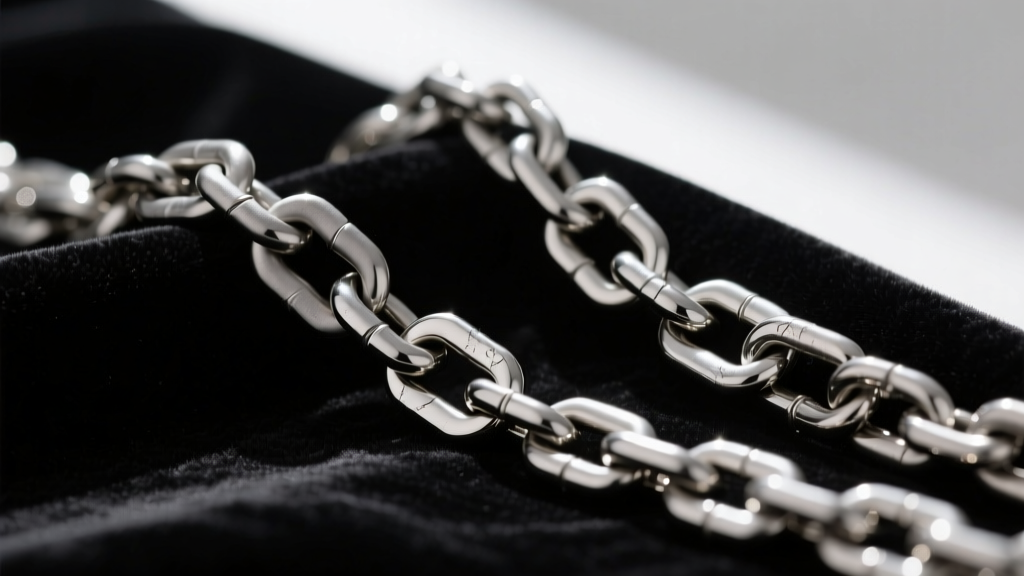
- 316L Steel + Cuban Curb: The interlocking, flat-surfaced links of a Cuban chain require a metal that resists bending and warping. Steel's high yield strength ensures the links remain perfectly flat and tightly interlocked, preserving the aggressive, uniform aesthetic of the chain.
Sizing, Gauge, and Clasp Mechanics
Even the strongest alloy will fail if the gauge (thickness) is insufficient for the load. As a strict rule of thumb for pendant wearers: a chain must possess a minimum thickness of 1.5mm to support a 10-gram pendant, and 2.2mm to 3.0mm for pendants exceeding 20 grams. A 1.0mm 18k gold cable chain, regardless of its beautiful craftsmanship, will inevitably stretch and snap under the dynamic load of a heavy pendant swinging against the chest.
Finally, do not overlook the clasp. The clasp is the most common point of failure on any necklace. Spring ring clasps, commonly found on lightweight gold chains, contain a tiny internal steel spring that is prone to rusting and fatigue. For any chain meant to secure a valuable pendant, always upgrade to a solid lobster clasp or, ideally, a platinum or heavy-gauge gold box-lock clasp, which utilizes a mechanical latch rather than a tension spring, ensuring your chain remains securely fastened for a lifetime.


