Choosing the Best Metal for Your Skull Pendant Necklace
Compare sterling silver, stainless steel, and bronze for your skull pendant necklace. Learn about patina, durability, and skin safety.

The Metallurgy of Macabre: Why Alloy Choice Dictates Longevity
A skull pendant necklace is more than a fleeting fashion statement; it is a permanent fixture in a curated jewelry wardrobe. Whether you lean toward the gothic romance of the Victorian era, the rebellious edge of 1970s punk, or the sleek streetwear aesthetics of 2026, the motif remains timeless. However, the visual impact and physical longevity of your piece are entirely dictated by its metallurgy. Many buyers focus solely on the artistic sculpting of the skull, ignoring the material properties that determine how the piece will age, react to human sweat, and survive daily wear.
Choosing the right metal requires understanding the trade-offs between malleability, corrosion resistance, and patina development. A heavy, intricate skull casting demands a metal that can hold microscopic detail without becoming brittle, while a minimalist geometric skull requires a material that takes a mirror polish and resists scratching. In this comprehensive guide, we dissect the three dominant materials used in skull pendant necklaces—925 sterling silver, 316L surgical stainless steel, and cast bronze—to help you make an informed, expert-level purchase.
925 Sterling Silver: The Bench Jeweler’s Standard
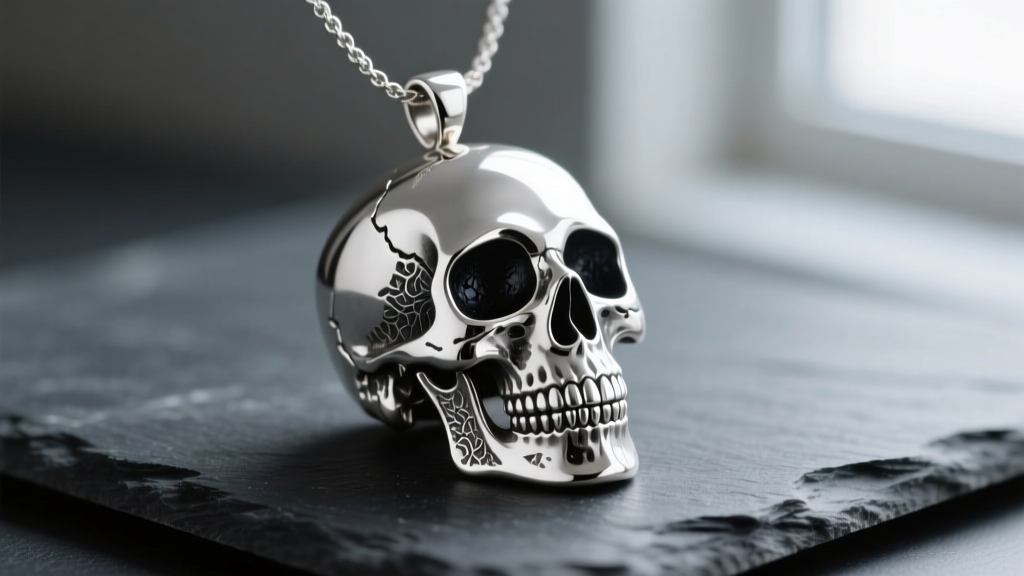
Sterling silver has been the premier choice for fine skull pendants for centuries. Pure silver (999) is far too soft for daily wear, scoring a mere 2.5 on the Mohs hardness scale. To create a durable pendant, refiners alloy 92.5% pure silver with 7.5% copper, resulting in the 925 stamp recognized globally. According to the London Assay Office, this precise ratio provides the ideal balance of precious metal value and structural integrity.
The Oxidation Factor and Detail Enhancement
For skull pendants, the copper content in sterling silver is actually a massive advantage. Silversmiths intentionally expose the piece to sulfur compounds to create black silver sulfide (tarnish) in the recessed areas of the casting. This 'oxidized' finish creates stark contrast, making the hollow eye sockets, nasal cavities, and individual teeth of the skull pop with three-dimensional depth. The high-polish surfaces are then buffed back to a bright white shine.
- Pros: Unmatched detail retention in casting; easily resized or repaired by a bench jeweler; holds intrinsic precious metal value.
- Cons: Requires regular polishing; prone to deep scratching if worn during manual labor; softer than steel.
- Pricing Range: $85 to $250+ for solid cast pieces from independent artisan jewelers.
Rhodium Plating vs. Raw Silver
Many contemporary brands offer rhodium-plated silver skull pendants. Rhodium, a platinum-group metal, provides a hard, tarnish-resistant shield. While this keeps the skull looking permanently bright, it completely ruins the high-contrast oxidized detailing that makes skull jewelry visually striking. For macabre motifs, raw or intentionally oxidized 925 silver is almost always the superior aesthetic choice.
316L Surgical Stainless Steel: The High-Impact Daily Driver
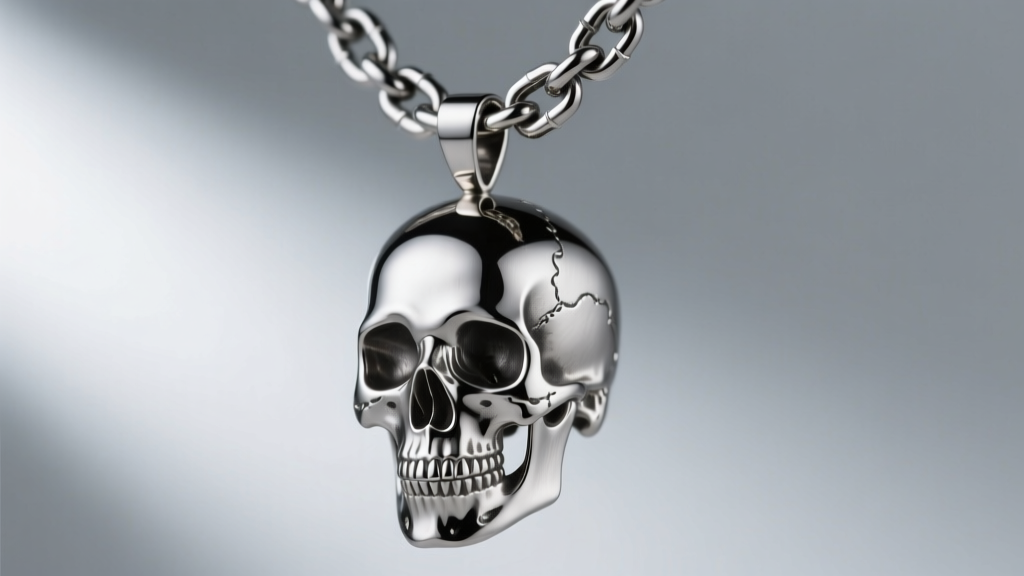
If your lifestyle involves heavy sweating, frequent swimming, or manual labor, sterling silver will quickly degrade. Enter 316L surgical stainless steel. Unlike standard 304 stainless steel, the 316L variant includes 2-3% molybdenum, which drastically increases its resistance to chloride corrosion (saltwater and human sweat). It is practically indestructible in everyday environments and is highly hypoallergenic, making it a safe bet for those with contact dermatitis, a common issue documented by the National Institutes of Health (NIH) regarding base metal jewelry.
Casting Limitations and CNC Machining
The primary failure mode of steel skull pendants is not corrosion, but poor manufacturing detail. Steel has a much higher melting point and viscosity than silver, making traditional lost-wax casting difficult. As a result, cast steel skulls often suffer from porosity and soft, rounded edges. However, the 2026 market has seen a massive influx of CNC-machined and 3D-printed sintered steel pendants. These manufacturing methods yield razor-sharp, aggressive skull geometries that silver casting simply cannot match.
- Pros: Impervious to sweat and water; will not tarnish or turn skin green; highly scratch-resistant (Mohs 5.5-6.3).
- Cons: Cannot be easily resized or soldered by a standard jeweler; cast versions lack fine detail.
- Pricing Range: $30 to $80, offering the highest durability-to-cost ratio.
Cast Bronze (CuSn8): The Living Metal
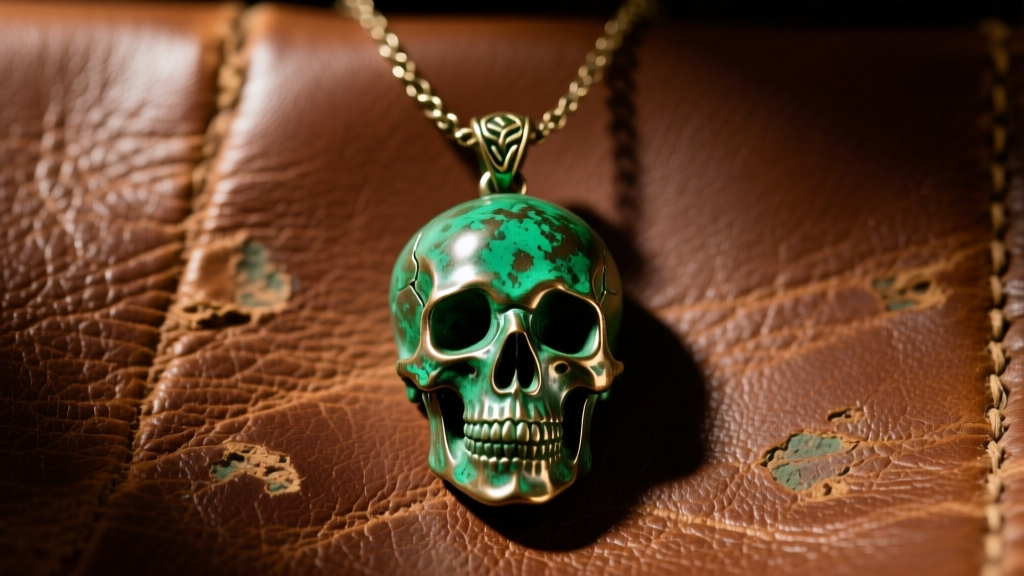
For collectors who view their jewelry as a living artifact, bronze is the ultimate choice. Typically alloyed with 88% copper and 12% tin, bronze skull pendants are heavy, dense, and warm to the touch. Unlike silver, which tarnishes black, bronze reacts with moisture, oxygen, and skin acids to develop a complex, mottled patina known as verdigris.
Embracing the Patina (and Avoiding the Green)
The primary complaint regarding bronze skull pendant necklaces is the transfer of copper chelates onto the skin, leaving a harmless but unsightly green stain on the chest. This is not an allergy or toxicity issue; it is a simple chemical reaction between copper and the acidic pH of your sweat. To mitigate this without stopping the pendant's exterior from aging, expert collectors apply a micro-thin layer of Renaissance Wax or a specialized jewelry clear-coat exclusively to the back plate of the skull that rests against the skin, leaving the front exposed to the elements to develop a rich, ancient-looking crust.
- Pros: Develops a highly personalized, unique patina over time; heavier, more premium feel than steel; excellent for vintage or archaeological skull designs.
- Cons: Will stain the skin green if untreated; requires active patina management; can trigger copper allergies in sensitive individuals.
- Pricing Range: $60 to $140 for artisan sand-cast or centrifugally cast pieces.
The Galvanic Corrosion Risk: Matching Pendant to Chain
A common and costly mistake made by buyers is mixing incompatible metals between the skull pendant and the chain. When two dissimilar metals rest against each other in the presence of an electrolyte (human sweat), a galvanic cell is created. The less noble metal will sacrifice itself and corrode rapidly.
If you pair a 925 sterling silver skull pendant with a cheap brass or copper chain, the chain will corrode aggressively. Conversely, if you hang a silver skull on a 316L steel chain, the harder steel will act like a file, slowly grinding away the silver bail (the loop the chain passes through) due to friction and the difference in Mohs hardness. The Golden Rule: Always match your chain metal to your pendant metal, or use a high-grade titanium or solid gold jump ring as a sacrificial buffer between a steel chain and a silver pendant.
Material Showdown & Pricing Matrix
| Material | Mohs Hardness | Tarnish / Patina | Detail Retention | Ideal Wearer |
|---|---|---|---|---|
| 925 Sterling Silver | 2.5 - 3.0 | Black Silver Sulfide | Exceptional | Collectors, fine jewelry enthusiasts |
| 316L Stainless Steel | 5.5 - 6.3 | None (Stays bright) | Moderate (Cast) / High (CNC) | Active lifestyles, daily wear, beachgoers |
| CuSn8 Bronze | 3.0 - 4.0 | Green/Brown Verdigris | High | Vintage lovers, heritage style fans |
Bail and Jump Ring Failure Modes
The most frequent structural failure in a heavy skull pendant necklace is not the skull itself, but the bail. Skull pendants are notoriously top-heavy, often weighing between 15 and 35 grams. If the bail is cast with thin walls or made from a wire gauge smaller than 16-gauge (1.29mm), the constant friction and weight will eventually cause it to snap, resulting in the loss of the pendant.
When inspecting a skull pendant, always check the bail thickness. For pendants exceeding 20 grams, demand a soldered, heavy-duty 14-gauge (1.63mm) bail or a hidden internal pin-bail system. Avoid flimsy, glued-on bails or thin wire-wrapping, which are guaranteed failure points under the pendulum-like swing of a heavy metal skull.
Final Verdict: Which Material is Right for You?
Your choice of metal should align with your lifestyle and aesthetic goals. If you want a highly detailed, traditional piece that you can pass down as an heirloom and don't mind occasional polishing, 925 sterling silver remains the undisputed king of skull jewelry. If you work with your hands, hit the gym daily, or want a piece you can wear in the ocean without a second thought, invest in a CNC-machined 316L stainless steel skull. Finally, if you want a heavy, historical artifact that ages alongside you and tells a visual story of where it has been, a cast bronze skull pendant is an unparalleled choice. Whichever you choose, ensure the chain gauge and bail thickness are engineered to support the weight of the macabre masterpiece you are wearing.


