Shattered Necklace WoW Classic: Real-World Material Guide
Discover how to recreate the Shattered Necklace from WoW Classic using real-world materials. Compare quartz, resin, and oxidized silver properties.

Translating Azeroth to the Workbench: The Shattered Aesthetic
For artisans and cosplayers in 2026, the shattered necklace wow classic search trend represents more than just a quest for a specific in-game drop or lore artifact; it is a masterclass in fantasy jewelry design. Whether inspired by the corrupted crystals of Outland, the fragmented relics of the Shattered Sun Offensive, or the cursed geodes of Naxxramas, recreating a 'shattered' pendant requires a deep understanding of real-world material properties. Achieving this chaotic, broken aesthetic without compromising structural integrity or skin safety demands a precise balance of gemology, metallurgy, and polymer science.
Gemological Properties: Engineering the Fracture
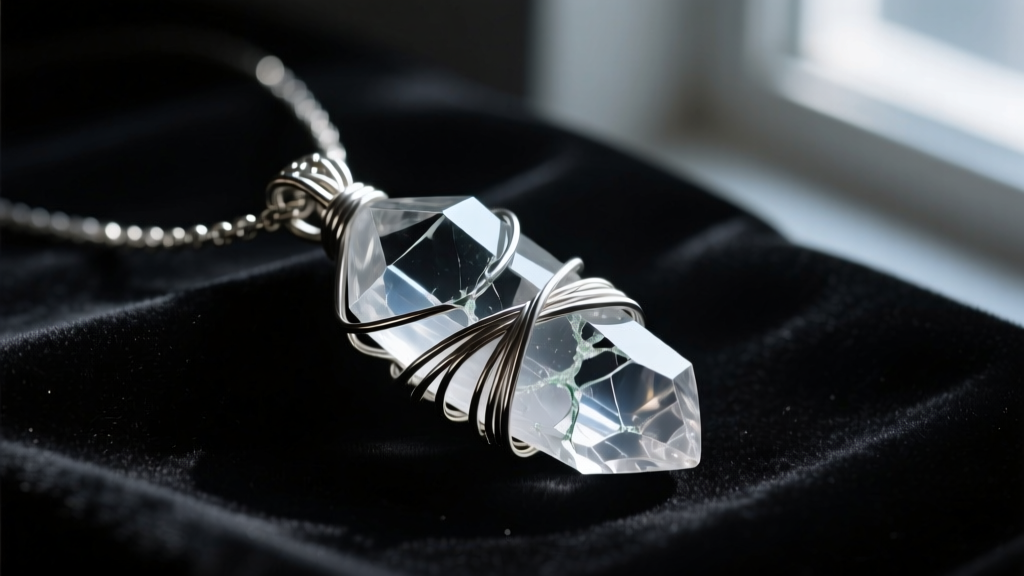
Natural gemstones rarely break in the jagged, aggressive manner depicted in fantasy RPGs. Most crystalline structures follow predictable cleavage planes. To achieve the violent, asymmetrical 'shattered' look, lapidaries must bypass natural cleavage and induce thermal shock or mechanical fracturing.
Thermal Shock Fracturing in Quartz
According to the Gemological Institute of America (GIA), quartz possesses a Mohs hardness of 7 and exhibits a conchoidal (shell-like) fracture rather than true cleavage. To create internal 'shattered' frost lines without pulverizing the stone, artisans heat clear or rutilated quartz to approximately 400°F and rapidly quench it in an ice-water bath. This thermal shock forces microscopic internal fractures that catch the light, mimicking the arcane, corrupted crystals found in WoW Classic dungeons. However, this process compromises the stone's tensile strength, meaning the setting must bear the entire structural load.
Synthetic Alternatives: Dichroic Glass and Epoxy Resin
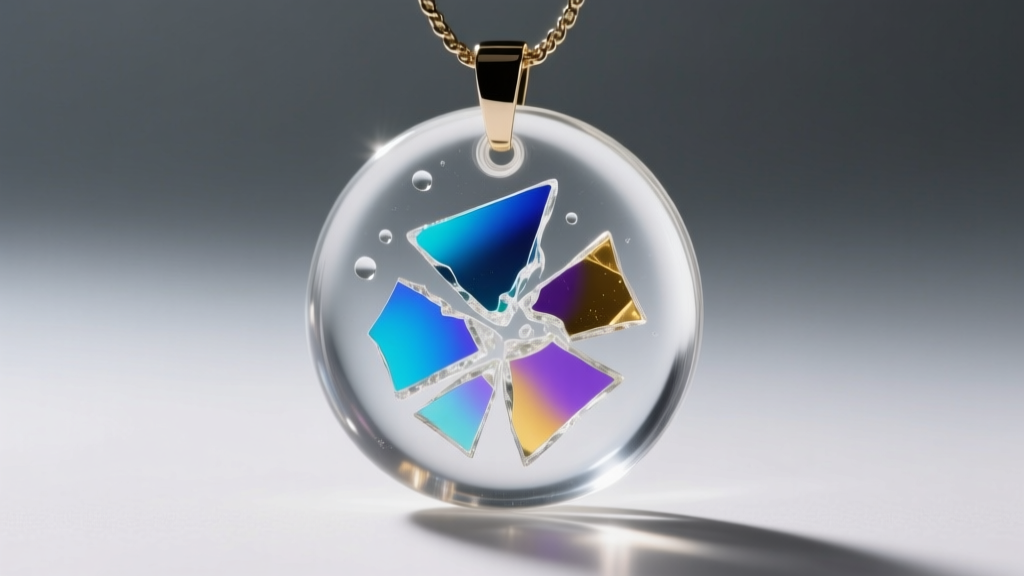
For a more vibrant, magical appearance, many 2026 fantasy jewelers are turning to suspended dichroic glass shards encased in jewelry-grade epoxy resin. Unlike UV-curing resins, which can suffer from the 'halo effect' (incomplete curing around dense inclusions), high-quality two-part epoxies with UV stabilizers offer crystal clarity and a refractive index (RI) of 1.55, closely matching natural quartz. The dichroic glass provides the iridescent, color-shifting 'arcane' glow that shifts from deep violet to emerald green depending on the viewing angle.
Metallurgy of the Setting: Oxidation and Antiquing
A shattered pendant requires a setting that reflects its turbulent history. Bright, polished silver clashes with the ruined aesthetic of a fragmented relic. Instead, the industry standard for fantasy replicas is heavily oxidized 925 sterling silver or antiqued brass.
Liver of Sulfur Patinas
To achieve the dark, abyssal blacks and gunmetal grays characteristic of cursed WoW artifacts, silversmiths utilize Liver of Sulfur (potassium polysulfide). As detailed by the Ganoksin Jewelry Making Community, mixing a weak solution of Liver of Sulfur with warm distilled water allows for gradual, controllable oxidation. By repeatedly dipping the silver and polishing only the high-friction areas with a micro-mesh pad, artisans create a high-contrast, three-dimensional patina that makes the wire-wrapping pop against the dark, jagged stone.
Brass vs. Silver: Tensile Strength and Skin Reactions
While brass offers a warmer, more 'dwarven' or 'steampunk' tone and is significantly cheaper, it lacks the tensile strength of sterling silver for heavy, asymmetrical shards. Furthermore, the copper content in brass can react with acidic skin chemistry, leaving a green residue—a fatal flaw for wearable convention gear. 925 sterling silver, alloyed with copper for hardness but plated or oxidized for color, remains the superior choice for structural bails and heavy wire-wrapping.
Comparative Data: Shattered Pendant Materials
| Material | Mohs Hardness | Structural Integrity | Aesthetic Profile | Est. Cost (per oz/carats) |
|---|---|---|---|---|
| Thermal-Shocked Quartz | 7 | Low (Requires full wire cage) | Frosty, internal fractures, natural | $15 - $40 / 50ct |
| Dichroic Glass Shards | 5.5 | Brittle (Must be resin-encased) | Iridescent, arcane, color-shifting | $8 - $20 / sheet |
| Oxidized 925 Silver | 2.5 - 3 | High (Ideal for structural bails) | Dark, corrupted, high-contrast | $25 - $35 / oz |
| Antiqued Brass Wire | 3 - 4 | Medium (Prone to work-hardening) | Warm, ancient, dwarven | $8 - $12 / oz |
Crafting Techniques: Wire Wrapping Asymmetrical Shards
Setting a shattered, asymmetrical stone is an exercise in tension management. Standard bezel settings are impossible due to the jagged, unpredictable edges. Artisans must rely on advanced wire-wrapping techniques, a skill heavily documented by suppliers like Rio Grande Jewelry Supply.
Gauge Selection and Work-Hardening
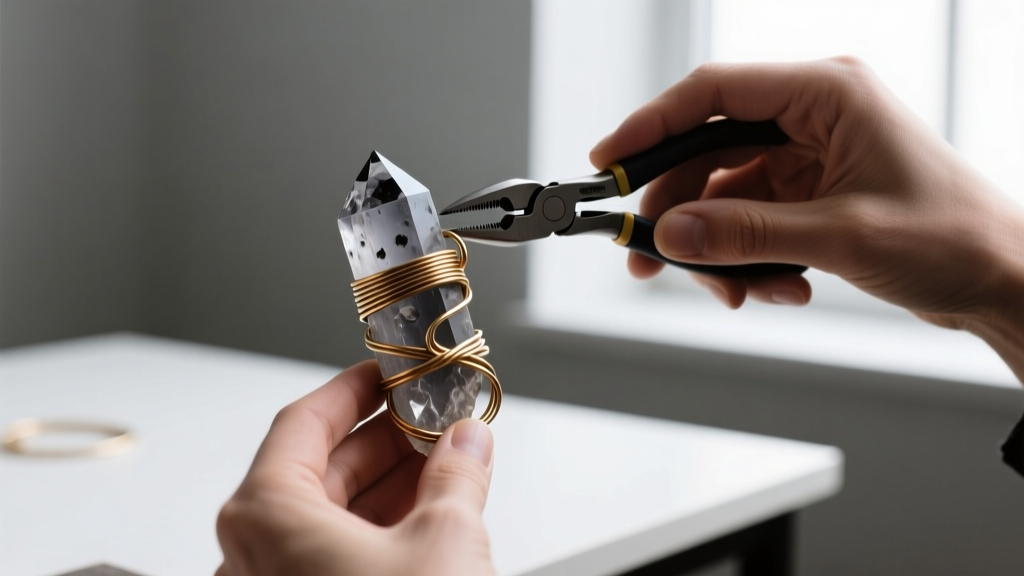
When wrapping jagged shards, using the wrong wire temper will result in catastrophic failure. Dead-soft wire is malleable but will work-harden and snap if bent repeatedly around sharp 45-degree stone edges. For the primary structural frame and the pendant bail, you must use half-hard 18-gauge wire. This provides the necessary rigidity to support the weight of a heavy quartz shard without deforming when pulled against a necklace chain.
For the intricate binding weaves that secure the stone to the frame, dead-soft 24-gauge or 26-gauge wire is essential. This finer wire can be woven tightly into the natural crevices of the shattered stone, creating a secure 'cage' without requiring sharp bends that would compromise the metal's crystalline structure.
Maintenance of Fragmented and Oxidized Relics
A shattered necklace requires specialized care to maintain its dark fantasy aesthetic. The Liver of Sulfur patina on sterling silver is a surface-level chemical reaction, not a permanent plating. Friction from clothing and skin oils will gradually wear away the oxidation on the high points of the wire weave.
- Storage: Store the pendant in an anti-tarnish cloth bag. Paradoxically, while you want the silver to remain dark, uncontrolled environmental tarnish (silver sulfide) can appear yellow or brown and look 'dirty' rather than intentionally oxidized.
- Cleaning: Never use commercial silver dip or ultrasonic cleaners. Ultrasonic vibrations can easily propagate the microscopic internal fractures in thermal-shocked quartz, causing the stone to split entirely. Instead, use a soft-bristled toothbrush and mild dish soap, avoiding the deep, dark crevices where the intentional patina resides.
- Resin Care: If your shattered necklace utilizes epoxy resin, avoid prolonged exposure to direct UV sunlight. Even with modern 2026 UV inhibitors, prolonged solar exposure will eventually cause the polymer chains to break down, resulting in a yellowed, cloudy appearance that ruins the dichroic glass effect.
Final Thoughts on Fantasy Recreations
Recreating a shattered necklace wow classic inspired piece is a rewarding challenge that pushes the boundaries of traditional jewelry making. By understanding the thermal limits of quartz, the chemical reactions of silver oxidation, and the tensile requirements of asymmetrical wire wrapping, artisans can forge wearable artifacts that look as though they were pulled straight from the depths of Azeroth. Whether you are crafting for a convention, a photoshoot, or daily fantasy-inspired wear, respecting the physical properties of your materials is the key to transforming a broken concept into a masterpiece of dark jewelry design.


