Heart Charm Necklace Gold Guide: 10k vs 14k vs 18k Purity
Discover the ultimate heart charm necklace gold purity guide. Compare 10k, 14k, 18k solid gold, vermeil, and plated options for lasting wear.

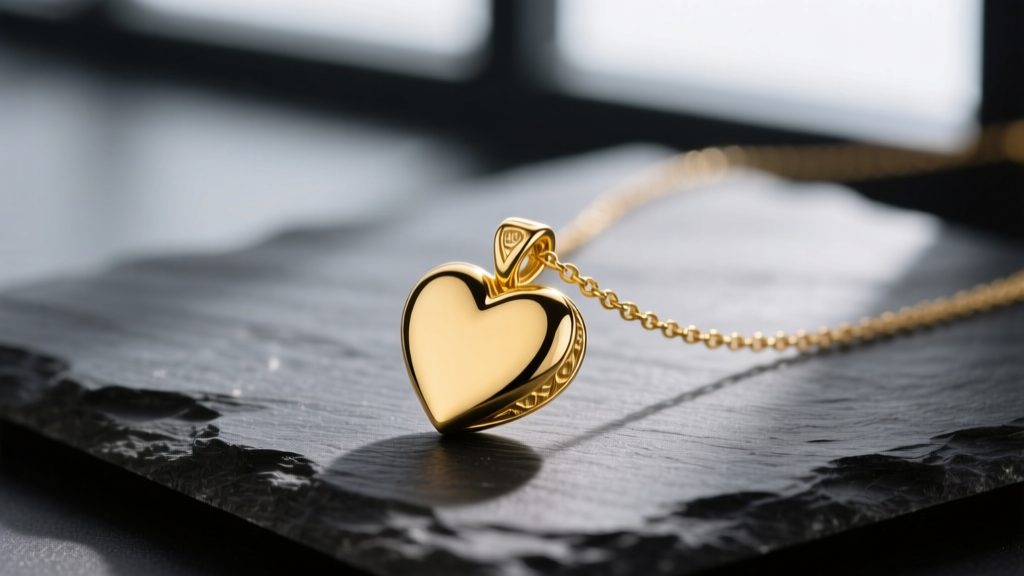
A classic heart charm necklace gold design remains one of the most enduring symbols in fine jewelry. Whether passed down as an heirloom or purchased as a personal milestone marker, the emotional weight of a heart pendant is often matched only by its literal, physical weight. However, when buyers begin researching materials, they are immediately confronted with a labyrinth of karat stamps, micron measurements, and layered metal terminology. Choosing the wrong gold purity for a daily-wear charm can lead to premature scratching, bent bails, or rapid tarnishing.
This comprehensive material comparison breaks down the exact metallurgical properties, failure modes, and pricing structures of solid, layered, and plated gold options. By understanding these specifics, you can select a piece that balances budget, durability, and aesthetic warmth.
Decoding the Karat System for Charm Pendants
Pure gold is measured on a 24-part scale. According to the Gemological Institute of America (GIA), 24k gold is 99.9% pure. While it boasts a rich, buttery yellow hue, it is fundamentally unsuitable for heart charms. On the Vickers hardness scale, 24k gold scores roughly 25 HV, meaning it is soft enough to dent with a fingernail. A 24k heart charm would easily warp if snagged on clothing, and the bail (the loop connecting the charm to the chain) would stretch and break under the pendant's own weight.
To create durable jewelry, gold is alloyed with metals like copper, silver, zinc, and nickel. These alloys manipulate three critical variables: hardness, color, and tarnish resistance. Understanding these trade-offs is essential for selecting the right heart charm necklace gold composition for your lifestyle.
Solid Gold Options: 10k, 14k, and 18k Compared
Solid gold means the metal is uniform throughout; it is not a hollow shell or a plating over a base metal. Here is how the three most common solid gold purities perform in charm manufacturing.
18k Gold (75% Pure)
With a Vickers hardness of approximately 120 HV, 18k gold offers a luxurious, deep yellow color due to its high pure gold content. It is highly hypoallergenic and resistant to tarnish. However, it is prone to micro-scratches and is significantly more expensive. It is best reserved for smaller, lighter heart charms that will not endure heavy physical impact.
14k Gold (58.3% Pure)
The undisputed industry standard for daily-wear pendants. Scoring around 140-160 HV, 14k gold provides the optimal intersection of durability and rich color. The higher alloy content (often copper and silver) gives it enough structural integrity to support heavier, solid-cast heart charms without the bail stretching.
10k Gold (41.7% Pure)
The minimum standard to be legally sold as 'gold' in the US. At roughly 180 HV, it is highly durable and scratch-resistant, but it suffers from a pale, slightly washed-out yellow color. Furthermore, 10k gold often contains higher levels of nickel or zinc, making it a poor choice for wearers with contact dermatitis or metal sensitivities.
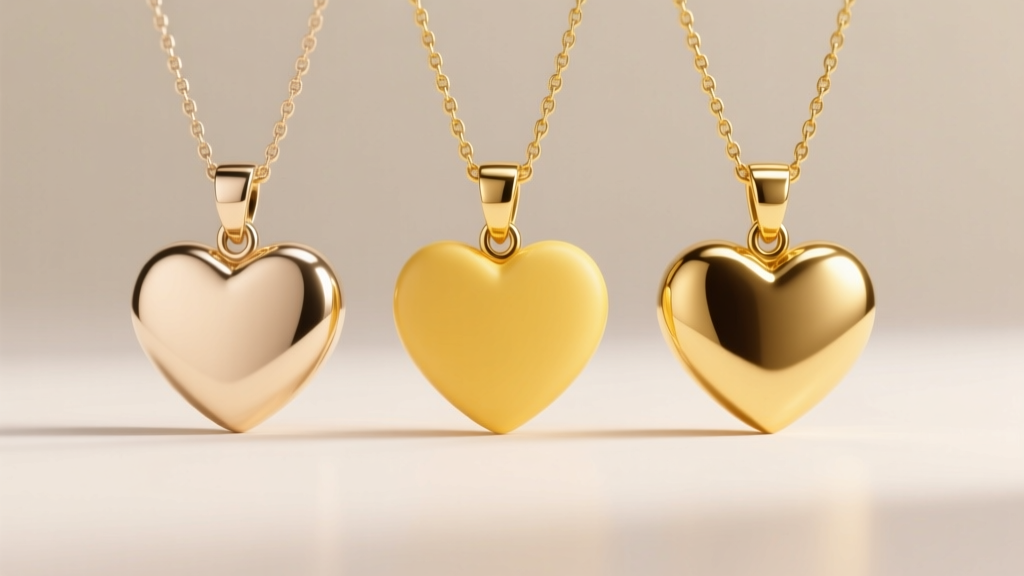
Solid Gold Comparison Matrix
| Karat | Gold Content | Hardness (Vickers) | Avg. Price Range (1g Charm) | Best Use Case |
|---|---|---|---|---|
| 18k | 75.0% | ~120 HV | $80 - $150 | Heirloom pieces, low-impact wear |
| 14k | 58.3% | ~150 HV | $55 - $110 | Everyday wear, heavier charms |
| 10k | 41.7% | ~180 HV | $35 - $70 | Budget-conscious, high-impact wear |
The Layered Alternatives: Vermeil, Gold-Filled, and Plated
If solid gold falls outside your budget, layered metals offer a compelling aesthetic alternative, provided you understand their strict limitations and lifespan.
Gold Vermeil (Pronounced Ver-May)
Vermeil is not merely gold-plated silver. The Federal Trade Commission (FTC) Jewelry Guides dictate that for a piece to be legally labeled as vermeil, it must have a sterling silver (.925) base and be plated with a minimum of 2.5 microns of gold (usually 14k or 18k). A high-quality vermeil heart charm can last 2 to 5 years of daily wear before the silver base begins to show through at high-friction areas like the bail.
Gold-Filled
Gold-filled material is created by mechanically bonding a thick sheet of solid gold to a brass core using heat and pressure. By law, the gold layer must constitute at least 5% (or 1/20th) of the total weight of the item. Gold-filled heart charms are incredibly durable and can last decades, but they are generally limited to flat, stamped designs (like a simple disc or flat heart) because the material cannot be easily cast into complex 3D shapes without exposing the brass core.
Flash Gold-Plated
Standard gold plating involves electroplating a microscopic layer of gold (usually less than 0.5 microns) over a base metal like brass or copper. These charms are highly affordable ($15–$40) but possess a high failure rate. The plating will often wear off within 3 to 6 months of daily wear, exposing the base metal which will rapidly oxidize and turn the wearer's skin green.
Chain Gauge and Clasp Mechanics for Charms
A common mistake buyers make is pairing a dense, solid gold heart charm with an inadequate chain. A solid 14k gold heart pendant measuring 15mm across can easily weigh between 3 to 6 grams. If you hang a 5-gram charm on a delicate 0.8mm cable chain, the chain will eventually kink, stretch, and snap.
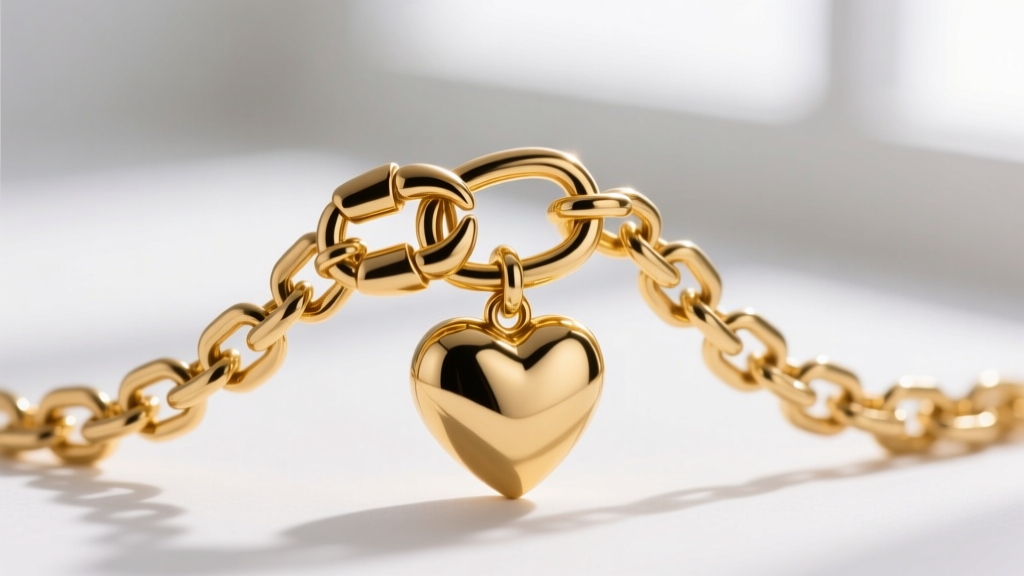
For any heart charm weighing over 3 grams, you must select a chain with a minimum wire gauge of 1.2mm. Curb chains, Figaro chains, or thick rope chains provide the necessary tensile strength. Furthermore, inspect the clasp. Spring-ring clasps are notorious for failing under the pendulum-like motion of a heavy charm; the tiny internal spring degrades, causing the clasp to pop open. Always upgrade to a lobster claw clasp or a specialized lock-clasp for heavy pendants to prevent catastrophic loss.
Bail Sizing and Jump Rings
Check the inner diameter of the charm's bail. If you are using a 1.2mm to 1.5mm chain, the bail must have an inner diameter of at least 3.5mm to 4mm to allow the chain to glide smoothly without causing friction wear on the gold. If the charm utilizes an unsoldered jump ring instead of a cast bail, take it to a jeweler to have the jump ring laser-soldered shut. An unsoldered jump ring will inevitably pull apart when the heart charm catches on a sweater or towel.
Maintenance and Tarnish Resistance by Material
The care required for your necklace depends entirely on its metallurgical makeup.
- Solid 14k & 18k Gold: Will not tarnish. Clean with warm water, a drop of mild dish soap, and a soft baby toothbrush. Avoid ultrasonic cleaners if the charm features soft gemstones like opals or pearls.
- Vermeil: Never use chemical silver dips or abrasive polishing cloths on vermeil, as these will strip the 2.5-micron gold layer directly off the sterling base. Wipe gently with a microfiber cloth.
- Gold-Filled: Highly tarnish-resistant. Can be cleaned with mild soap and water. Store in an anti-tarnish pouch when not in use to preserve the brass core's integrity.
Final Verdict: Choosing Your Ideal Gold
When investing in a heart charm necklace gold buyers must balance their budget against their desired lifespan. For a generational heirloom meant to be worn daily and eventually passed down, a solid 14k gold cast heart on a 1.2mm curb chain with a lobster clasp is the ultimate, fail-proof configuration. For fashion-forward, trend-driven wardrobes where the piece will be rotated seasonally, a heavy 18k vermeil over sterling silver provides the exact visual warmth of fine jewelry at a fraction of the cost, provided it is removed before showering or swimming.


