Yamamoto Blue Sapphire Necklace: The Ultimate Buyer's Guide
Discover what to look for when investing in a Yamamoto blue sapphire necklace. Learn about gem origins, metal settings, and authentication.

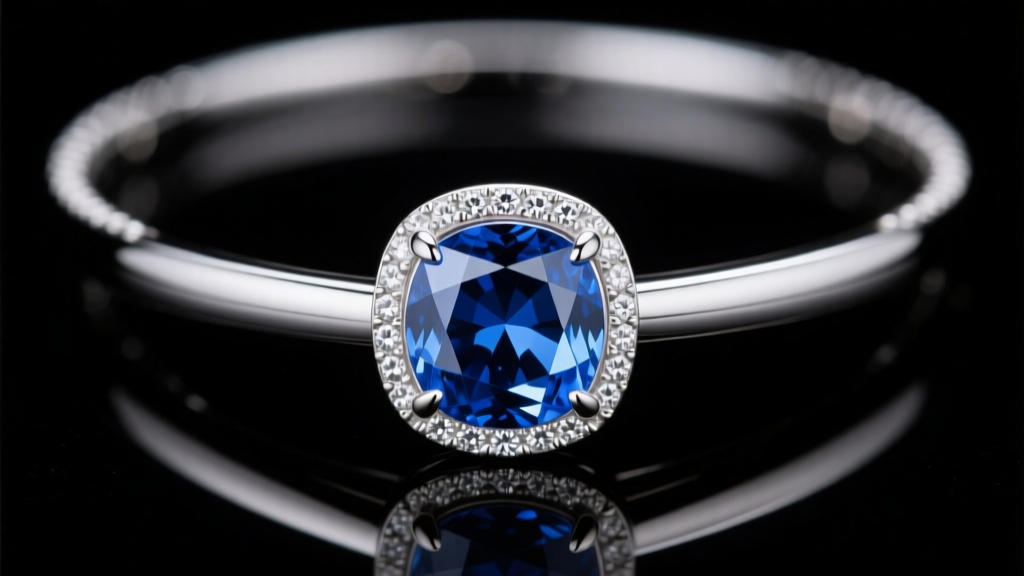
The Allure of the Yamamoto Blue Sapphire Necklace
When evaluating high-end contemporary jewelry, the yamamoto blue sapphire necklace stands out as a masterclass in balancing architectural minimalism with elite gemology. Unlike mass-produced commercial pieces, authentic Yamamoto designs prioritize the optical performance of the center stone, utilizing precision lapidary techniques and low-profile setting architectures. For serious collectors and first-time investors alike, purchasing a sapphire necklace of this caliber requires moving beyond basic aesthetics. You must understand the chemical composition of corundum, the implications of thermal treatments, and the structural integrity of the metalwork. This comprehensive buying guide dissects the exact specifications you need to verify before making a significant investment.
Evaluating the Center Stone: Color, Clarity, and Origin
The value of any premium sapphire necklace is inextricably linked to the geological pedigree of its center stone. Sapphires are a variety of the mineral corundum (aluminum oxide, Al2O3). The blue hue is not inherent to the crystal structure but is instead the result of trace elements—specifically, intervalence charge transfer between iron (Fe2+) and titanium (Ti4+) ions. When assessing a Yamamoto piece, you must scrutinize three primary gemological factors.
The "Cornflower" vs. "Royal Blue" Distinction
Yamamoto typically sources stones that exhibit optimal light return, which means avoiding stones that are overly dark (inky) or overly pale (washed out). The two most coveted color designations are:
- Cornflower Blue: A medium-light, highly saturated violetish-blue. These stones, often originating from Ceylon (Sri Lanka) or Madagascar, possess exceptional brilliance because their lighter tone allows more light to refract through the pavilion facets.
- Royal Blue: A deeper, more intense blue with a subtle violet secondary hue. Often associated with Burmese or high-altitude Madagascar origins, these stones command a premium for their rich, velvety saturation, though they require precise cutting to prevent extinction (dark, lifeless areas in the center of the stone).
Treatment Disclosures: Heated vs. Unheated
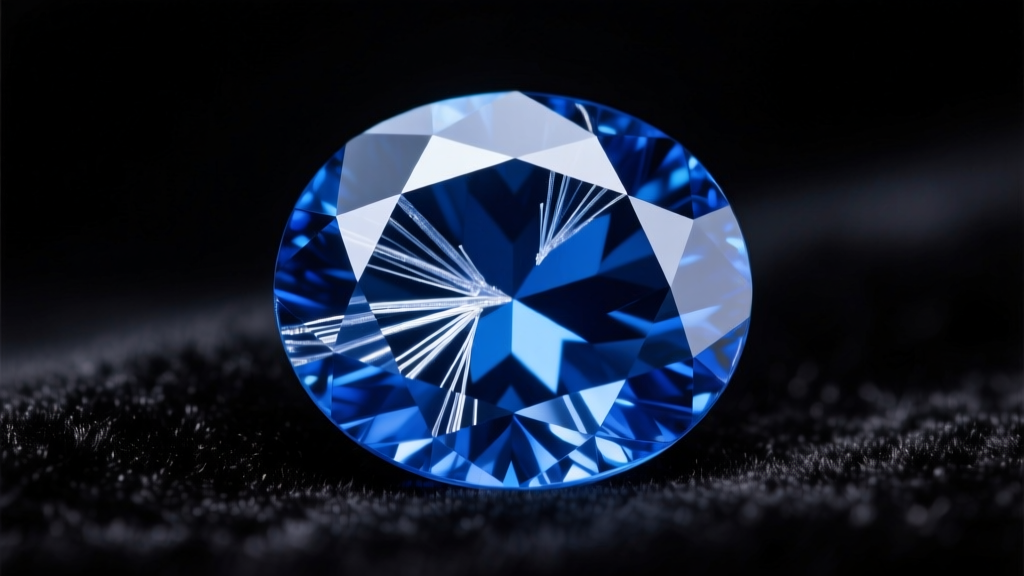
Thermal enhancement is a critical pricing variable. According to the Gemological Institute of America (GIA), traditional heat treatment is a widely accepted practice that improves clarity and color by dissolving rutile silk inclusions. However, an unheated sapphire with top-tier color and clarity is exceptionally rare and commands a 40% to 100% price premium over its heated counterpart. When buying a Yamamoto blue sapphire necklace, always demand explicit documentation stating whether the stone is "No indications of heating" or "Heated." Avoid any stones with evidence of beryllium diffusion or lead-glass fracture filling, as these drastically compromise the stone's structural integrity and long-term value.
Metalwork and Setting Architecture
The setting of a Yamamoto blue sapphire necklace is designed to protect the stone's girdle while maximizing light exposure. The choice of metal is not merely aesthetic; it dictates the piece's longevity and wearability.
| Metal Alloy | Purity Stamp | Pros for Sapphire Settings | Cons & Maintenance |
|---|---|---|---|
| Platinum 950 | PT950 | Hypoallergenic, naturally white, highly durable prongs that do not wear away over time. | Develops a patina over time; heavier on the neck. |
| Platinum 900 | PT900 | Standard in Japanese high jewelry; slightly harder than PT950 due to ruthenium/iridium alloys. | Less common in Western markets; requires specialized jewelers for resizing. |
| 18k White Gold | 750 | Bright initial shine, lower upfront cost than platinum. | Rhodium plating wears off, revealing a yellowish undertone; requires re-plating every 1-2 years. |
| 18k Yellow Gold | 750 | Creates a warm contrast that can enhance the violet secondary hues in Royal Blue sapphires. | Prongs are softer than platinum and may require periodic re-tipping. |
Yamamoto designs frequently utilize a modified bezel or a low-profile four-prong basket setting. This architectural choice lowers the stone's center of gravity, preventing the pendant from flipping upside down on the chest—a common frustration with poorly engineered top-heavy pendants.
Chain Selection and Clasp Mechanics
A frequent oversight when purchasing high-end pendants is ignoring the chain. The chain must support the pendant's weight without distracting from the center stone. For a 3-to-6-carat sapphire pendant, the chain should be a 1.2mm to 1.5mm cable or wheat chain. Anything thinner risks snapping under the dynamic stress of daily wear. Furthermore, inspect the clasp. A standard spring-ring clasp is inadequate for heavy pendants; insist on a solid lobster clasp or a custom magnetic safety clasp with a silicone-lined interior to prevent metal-on-metal scratching.
Authentication and Provenance Documentation
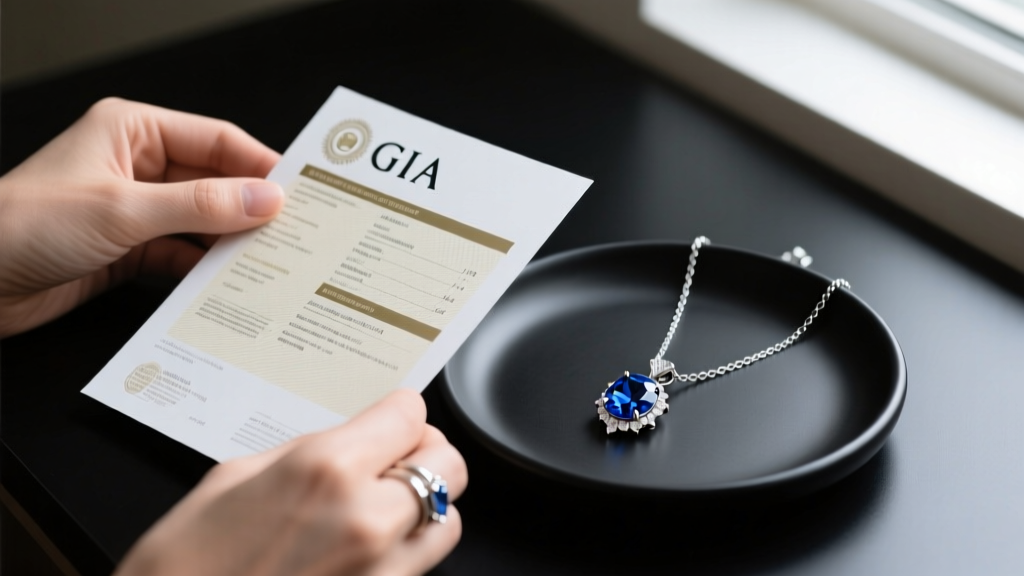
In the high-stakes market of premium gemstones, verbal assurances are worthless. The SSEF Swiss Gemmological Institute and the GIA are the undisputed authorities for sapphire origin and treatment analysis. When purchasing a Yamamoto blue sapphire necklace, the sale must include a laboratory report that explicitly details:
Required Lab Report Data Points:
1. Identification (Natural Corundum / Sapphire)
2. Weight (to the hundredth of a carat)
3. Dimensions (in millimeters)
4. Cut/Shape
5. Color Description
6. Geographic Origin (e.g., Ceylon, Madagascar, Kashmir)
7. Treatment/Enhancement status (Crucial for valuation)
If the seller cannot provide a recent, verifiable certificate from a tier-one laboratory, walk away. Secondary market pieces should also include the original house documentation detailing the diamond melee specifications (typically VS1 clarity, G color minimum for high-end halos).
Pricing Tiers and Market Value
Understanding the pricing matrix protects you from overpaying. The cost of a Yamamoto blue sapphire necklace is heavily weighted toward the center stone's origin and treatment status. Below is a generalized pricing framework for the center stone (excluding the metalwork and diamond accents, which typically add $1,500 to $4,500 to the final retail price):
- Heated Ceylon/Madagascar (3.00 - 5.00 ct): $1,200 – $3,500 per carat. Excellent for daily wear pieces where absolute rarity is secondary to visual brilliance.
- Unheated Ceylon/Madagascar (3.00 - 5.00 ct): $4,000 – $9,000 per carat. The sweet spot for serious investors seeking pristine, untreated stones with high liquidity.
- Unheated Burmese/Kashmir (3.00+ ct): $15,000 – $40,000+ per carat. Museum-grade collector pieces. Kashmir stones exhibit a unique "sleepy" luminescence due to microscopic rutile dust, making them the most expensive sapphires on earth.
Final Verdict: Is It Worth the Investment?
Investing in a Yamamoto blue sapphire necklace is a commitment to both superior lapidary art and enduring geological rarity. By prioritizing unheated stones with tier-one laboratory certification, selecting structurally sound PT950 or PT900 settings, and ensuring the chain mechanics are rated for the pendant's weight, you secure a piece that will appreciate in both aesthetic and monetary value. Always buy the gemstone first, and the designer setting second; a masterfully cut, untreated sapphire will outlast any fleeting jewelry trend.


