Wall Necklace Organizer Care: Prevent Tangles and Tarnish
Learn how to properly use a wall necklace organizer to prevent tangling, reduce tarnish, and maintain your delicate chains and heavy pendants.

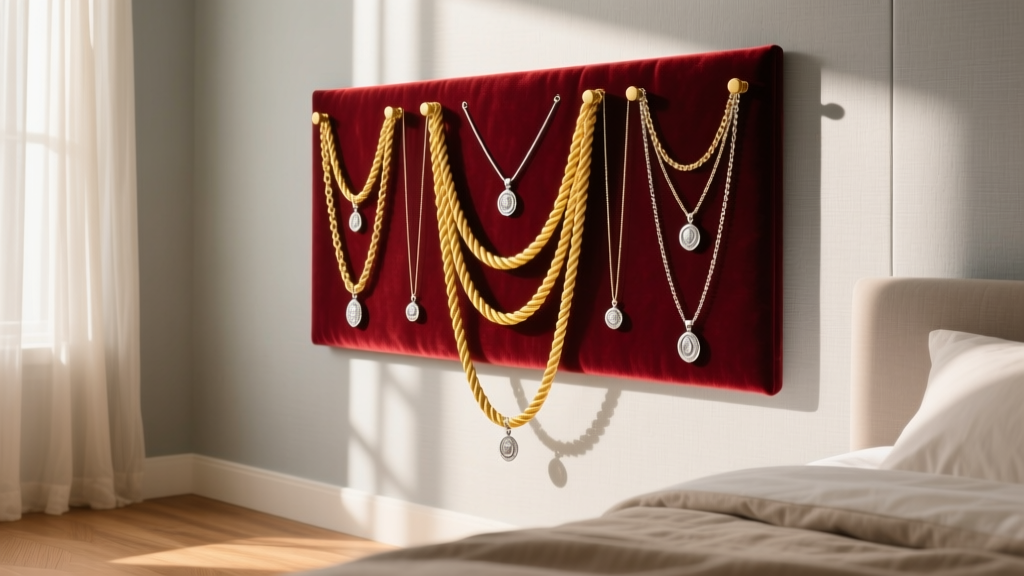
A wall necklace organizer is a stunning, space-saving way to display your jewelry collection, keeping your favorite pieces visible and accessible. However, open-air storage introduces unique environmental and mechanical risks. Without proper care, maintenance, and strategic hanging techniques, your delicate chains can suffer from permanent kinking, galvanic corrosion, and accelerated tarnishing. As of 2026, while modern organizer materials have improved, the fundamental chemistry of precious metals remains unchanged. This comprehensive guide will teach you how to optimize your wall necklace organizer for long-term jewelry preservation.
The Chemistry of Tarnish and the Physics of Tangling
To properly maintain your jewelry on a wall display, you must understand the two primary enemies of necklaces: environmental oxidation and mechanical friction. Tarnish on sterling silver (which is 92.5% silver and 7.5% copper) is primarily caused by the copper alloy reacting with hydrogen sulfide and moisture in the air to form copper sulfide. When you hang silver necklaces in a humid bedroom or bathroom, you accelerate this chemical reaction.
Tangling, on the other hand, is a matter of physics. Chains with high flexibility and low friction, such as cable or rope chains, easily slip through one another when agitated by air currents or accidental bumps. According to the Gemological Institute of America (GIA), improper storage is the leading cause of micro-scratches and structural weakening in fine jewelry chains.
Material Matrix: Selecting and Maintaining Your Organizer
The material of your wall necklace organizer dictates how it interacts with your jewelry. In 2026, the market offers a variety of advanced materials, each requiring specific maintenance routines to ensure they do not harm your collection.
| Organizer Material | Pros | Cons & Risks | Maintenance Protocol |
|---|---|---|---|
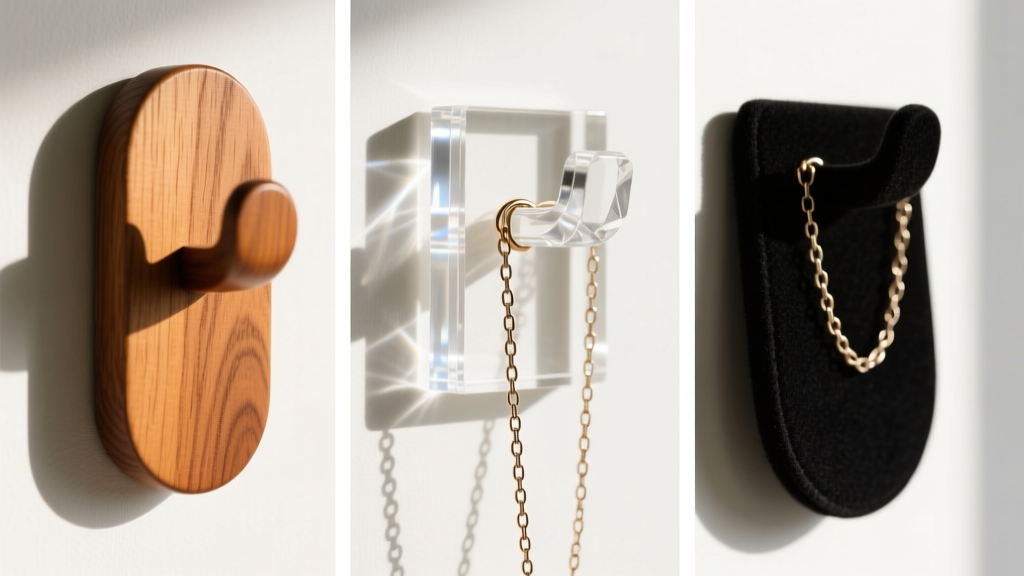
| Sealed Solid Wood | Aesthetically pleasing, sturdy for heavy pieces. | Unsealed or poorly sealed wood emits acidic vapors that degrade pearls and silver. | Re-apply polyurethane sealant every 2 years. Dust with a dry microfiber cloth. |
| Acrylic / Lucite | Modern look, lightweight, inexpensive. | Prone to static buildup, which attracts dust and dirt to your chains. | Wipe with an anti-static electronics cloth. Never use ammonia-based glass cleaners. |
| Velvet or Felt-Lined | Provides a soft barrier, reduces micro-scratches. | Traps ambient moisture against the metal if placed in high-humidity rooms. | Vacuum gently with an upholstery attachment monthly to remove abrasive dust. |
| Bare Metal (Iron/Steel) | Industrial aesthetic, highly durable. | Risk of galvanic corrosion if wet silver or gold touches rusting iron hooks. | Inspect for rust spots. Coat hooks with clear nail polish or wax to create a barrier. |
Pre-Storage Cleaning Protocols by Metal Type
Never hang a necklace on your organizer immediately after taking it off. Human skin produces sebum (oils), sweat, and sheds dead skin cells, all of which coat your jewelry. If left on the chain, these organic compounds attract dust and accelerate tarnishing. Implement a strict pre-storage cleaning routine based on the metal grade.
Gold (14K, 18K, 24K) and Platinum
Gold and platinum are highly resistant to tarnish, but they easily accumulate a film of lotions and skin oils, dulling their brilliance. Wash these chains in a bowl of warm water with a few drops of phosphate-free dish soap (like Dawn). Use a baby-soft toothbrush to gently agitate the links, particularly around the clasp and jump rings where grime accumulates. Rinse with distilled water to prevent hard water spots, and dry completely with a lint-free microfiber cloth before hanging.
Sterling Silver (925)
Silver requires the most vigilant care. For light tarnish, use a dedicated silver polishing cloth impregnated with micro-abrasives and anti-tarnish agents. For heavy oxidation, a chemical reduction bath is necessary. Line a glass bowl with aluminum foil (shiny side up), add 1 tablespoon of baking soda and 1 tablespoon of kosher salt, and pour in boiling water. Submerge the silver chain for 3 to 5 minutes. The electrochemical reaction transfers the sulfur from the silver to the aluminum. Rinse, dry thoroughly, and hang.
Vermeil and Gold-Plated Costume Jewelry
Plated jewelry is incredibly fragile. The gold layer is often less than 2.5 microns thick. Never use polishing cloths or chemical dips, as they will strip the plating. Simply wipe the chain with a slightly damp microfiber cloth to remove oils, dry immediately, and hang. According to Fire Mountain Gems, minimizing friction is the key to extending the life of plated finishes.
Chain-Specific Hanging Mechanics
Not all chains are created equal. The structural integrity of a necklace dictates exactly how it should be suspended on a wall necklace organizer to prevent permanent deformation.
- Herringbone Chains: These consist of flat, closely interlocking links that lie flush against the skin. They are notoriously fragile. If draped over a thin, unpadded hook, the sharp bend angle will exceed the metal’s yield strength, causing a permanent, unfixable kink. Herringbone chains should be hung on wide, padded hooks (at least 1 inch in diameter) or stored flat in drawers.
- Snake Chains: Made of tightly joined rings forming a smooth, flexible tube. Like herringbone, they are prone to kinking if bent sharply. Hang them perfectly straight from a smooth, rounded hook to let gravity maintain their tubular shape.
- Box Chains: Composed of square, interlocking links. These are highly durable and resist kinking. They can be safely draped over standard organizer hooks or pegs without fear of structural damage.
- Rope Chains: Twisted links that mimic the look of a rope. These are highly flexible but can easily snag on rough hook surfaces. Ensure your wall organizer hooks are perfectly smooth or polished to prevent pulling the delicate twists apart.
Heavy Pendants and Weight Distribution
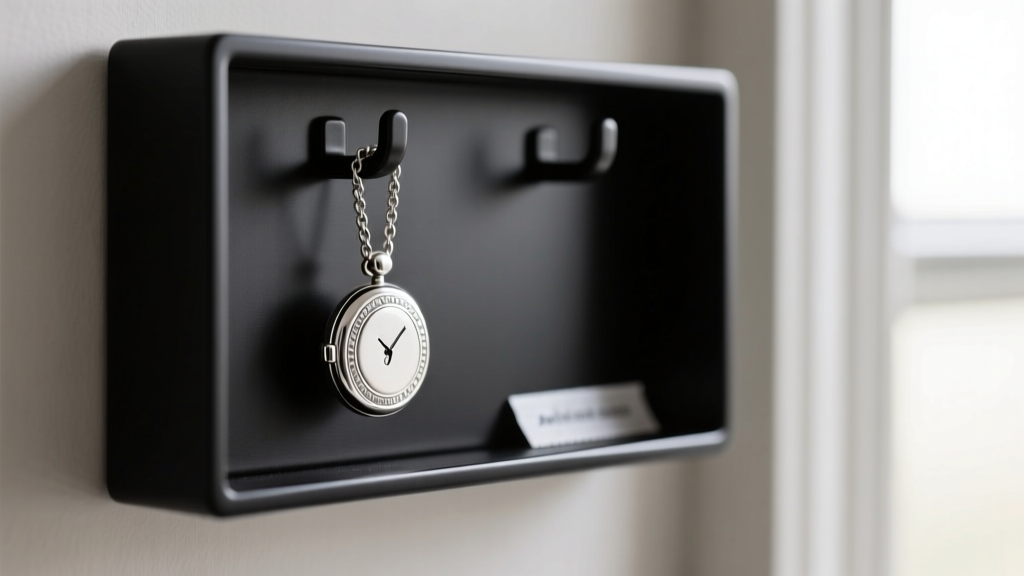
Wall organizers often fail when subjected to the asymmetric weight of heavy pendants, such as large gemstone lockets or solid gold medallions. A heavy pendant pulling on a delicate chain can stretch the links near the clasp over time. Furthermore, the weight can cause lightweight acrylic or thin wooden organizer pegs to bow or snap.
The Solution: For necklaces exceeding 40 grams, upgrade the specific hook on your organizer to a heavy-duty brass screw eye or a steel peg anchored directly into a wall stud or drywall toggle. When hanging a heavy pendant, unclasp the chain and hang it by the jump ring on the pendant itself, allowing the chain to drape evenly on both sides. This distributes the weight symmetrically and prevents the chain links from stretching under localized tension.
Environmental Controls: Humidity and Anti-Tarnish Integration
Because a wall necklace organizer leaves your jewelry exposed to the ambient room environment, you must actively manage the micro-climate around your display.
Integrating Anti-Tarnish Strips
You can drastically slow the oxidation of silver and copper alloys by incorporating 3M Anti-Tarnish strips or Pacific Silvercloth tabs into your organizer design. These strips contain activated carbon and copper particles that absorb airborne hydrogen sulfide before it can reach your jewelry. Tuck a small strip behind the base of the organizer or discreetly pin it to the velvet backing. Replace these strips every 6 months, or when the indicator dots turn from white to black.
UV and Humidity Management
Never mount your wall necklace organizer on a wall that receives direct, prolonged sunlight. UV radiation will fade porous gemstones like amethyst, kunzite, and turquoise, and can degrade the epoxy resins used in some modern pendant settings. Additionally, maintain your bedroom or dressing area at a relative humidity below 50%. If you live in a coastal or tropical climate, consider running a small, silent desiccant dehumidifier in the room, or place decorative silica gel packets on the shelves of your organizer to absorb excess moisture.
By treating your wall necklace organizer not just as a display piece, but as an active preservation system, you ensure that your necklaces remain untangled, untarnished, and ready to wear at a moment’s notice.


