Troubleshooting Your Yu Gi Oh Millennium Necklace Replica
Is your Yu Gi Oh millennium necklace breaking or causing rashes? Learn expert troubleshooting for chain snaps, tarnishing, and alloy allergies.

The Weight Problem: Why Your Chain Keeps Snapping
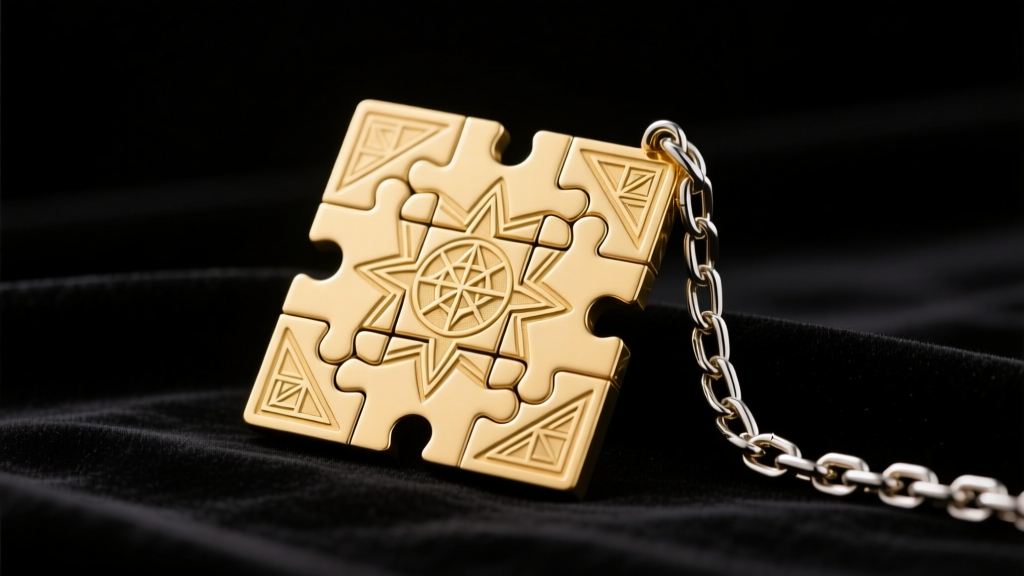
For cosplayers and anime jewelry collectors, the iconic Yu Gi Oh millennium necklace (specifically the Millennium Puzzle) is a mandatory centerpiece. However, mass-produced replicas present a significant structural flaw: weight distribution. A standard die-cast Zamak (zinc alloy) Millennium Puzzle replica weighs between 85g and 150g. When you walk, run at a convention, or lean forward, the dynamic force exerted on the chain can easily exceed 250g of tensile stress.
Most stock replicas ship with 1.5mm to 2.0mm hollow brass or zinc-alloy chains rated for less than 40g of static weight. The result? The chain links stretch, deform, and eventually snap at the clasp or the jump ring. To solve this, you must abandon the stock chain entirely.
The Upgrade: 316L Surgical Stainless Steel
Replace the stock chain with a 316L stainless steel curb or rope chain measuring between 3.5mm and 4.5mm in thickness. 316L steel contains molybdenum, which increases its tensile strength and resistance to pitting from sweat. A 4.0mm stainless steel curb chain boasts a breaking strength of over 40kg, providing a massive safety margin for a 150g pendant. Furthermore, the heavier gauge visually matches the oversized, chunky aesthetic of the original anime design, eliminating the 'cheap toy' look of the factory chain.
The Green Skin Effect: Troubleshooting Alloy Reactions
One of the most common complaints regarding the Yu Gi Oh millennium necklace is the dreaded 'green skin' effect, accompanied by contact dermatitis. This is not actually caused by the gold color, but by the base metal and the plating process. Replicas are typically cast from Zamak (an alloy of zinc, aluminum, magnesium, and copper) and then flash-plated with a brass or nickel underlayer before receiving a gold-toned topcoat.
When the thin gold layer wears off against your sternum, your sweat (which contains chlorides and lactic acid) reacts with the copper and nickel in the underlayer. According to the Mayo Clinic, nickel allergy is one of the most common causes of allergic contact dermatitis, resulting in severe itching, redness, and the oxidation that stains your skin green or black.
Sealing the Pendant
You cannot easily re-plate a Zamak puzzle at home without professional electroplating equipment, but you can effectively seal it. Clean the back of the puzzle with isopropyl alcohol to remove skin oils. Once dry, apply two thin coats of a polyurethane-based jewelry sealant like ProtectaClear or Eternal Jewelry Coating. These coatings are self-leveling, completely invisible when dry, and create an impermeable barrier between the reactive alloys and your skin. Reapply the sealant every 6 to 12 months, as friction from clothing will eventually wear it down.
Chipping Gold and Fading Hieroglyphs: Paint & Plating Repair
The Millennium Puzzle is defined by its intricate, ancient Egyptian hieroglyphs. On factory replicas, these are not deeply engraved and inlaid with enamel; rather, they are shallow-stamped and filled with cheap acrylic paint that chips out within weeks of wear. Additionally, the Federal Trade Commission (FTC) Jewelry Guides note that 'flash plated' items have a gold thickness of less than 0.175 microns, meaning the gold color will rub off on high-contact edges rapidly.
Restoring the Hieroglyphs
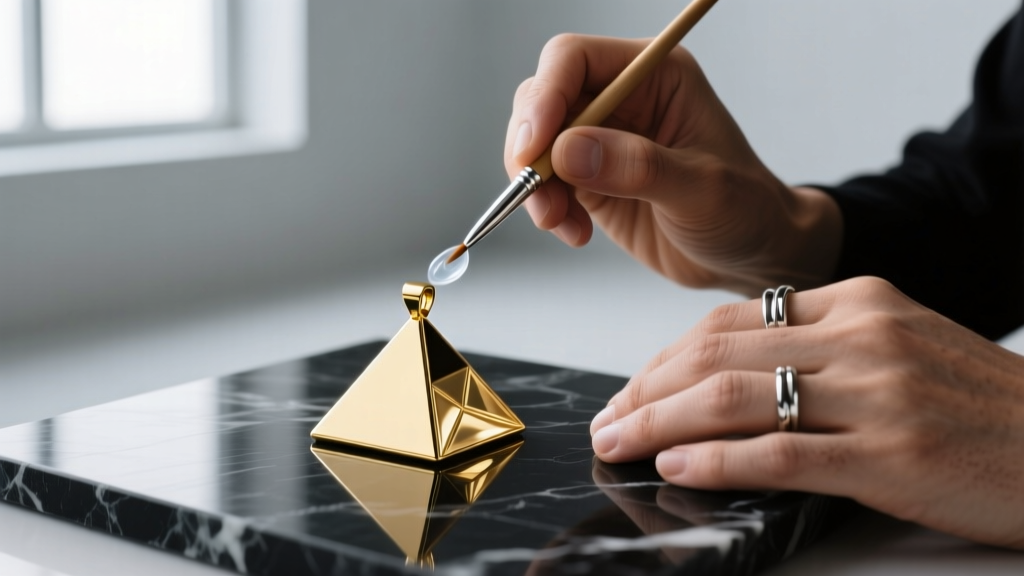
Do not use standard nail polish or hardware store spray paint to fix the chipping glyphs; these will yellow, crack, and peel. Instead, use high-quality model enamel paints. Tamiya X-18 Semi-Gloss Black is the industry standard for this specific repair. Using a 0.5mm detail brush, carefully trace the faded lines. The enamel will bite into the shallow grooves and, once cured for 48 hours, will resist chipping far better than factory acrylics.
Addressing Plating Loss
If the gold plating has worn down to the silver-colored zinc base on the edges, you have two options. For a quick fix, use a gold-colored metallic wax filler (like Gilders Paste) to rub into the worn edges, sealing it afterward with a clear coat. For a permanent fix, you must strip the remaining plating using a mild chemical stripper and take the piece to a local jeweler for a heavy gold electroplate (minimum 2.0 microns), though this can cost between $80 and $150, often exceeding the value of the replica itself.
Bail and Jump Ring Failures: Structural Reinforcement
The bail—the loop at the very top of the puzzle where the chain threads through—is the single biggest point of catastrophic failure on a Yu Gi Oh millennium necklace. Because the puzzle is cast as a single piece of Zamak, the bail is hollow and brittle. A sudden tug can snap the bail cleanly off the pyramid. Furthermore, the factory jump rings (the small circles connecting the bail to the chain) are usually made of soft, unsoldered wire that pulls apart under the pendant's swinging weight.
According to jewelry manufacturing standards outlined by suppliers like Rio Grande, a jump ring must be work-hardened and properly gauged to hold heavy pendants. The stock 20-gauge (0.8mm) brass jump rings on replicas are wholly insufficient.
The Split Ring Solution
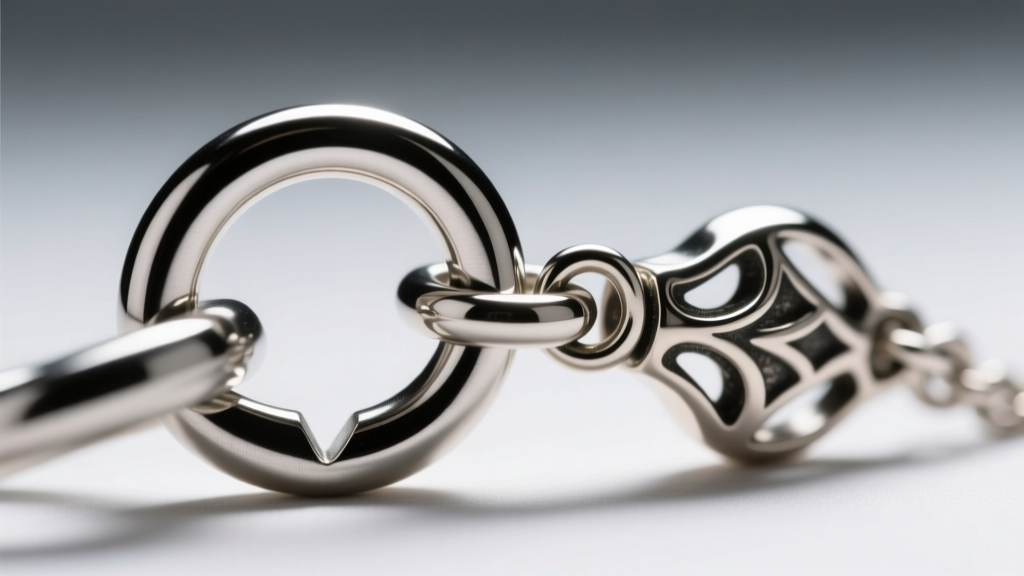
Immediately discard the stock jump ring. Replace it with a 14-gauge (1.6mm thickness) stainless steel split ring with an outer diameter of 8mm to 10mm. A split ring (which looks like a miniature keychain ring) requires the chain and the bail to be threaded through two full coils of steel. This makes it physically impossible for the connection to pull apart under normal wearing conditions, effectively transferring all the stress away from the brittle cast bail and onto the high-tensile steel ring.
Material & Upgrade Comparison Chart
To summarize the necessary modifications for a convention-ready, durable Yu Gi Oh millennium necklace, refer to the troubleshooting matrix below:
| Component | Stock Factory Spec | Failure Mode | Expert Upgrade Recommendation |
|---|---|---|---|
| Chain | 1.5mm Hollow Brass | Snaps under dynamic swinging weight | 4.0mm 316L Stainless Steel Curb |
| Jump Ring | 20-Gauge Soft Wire | Pulls apart, dropping the pendant | 14-Gauge Steel Split Ring (8mm) |
| Base Metal Seal | None (Bare Zamak/Nickel) | Green skin, contact dermatitis | Polyurethane Jewelry Sealant |
| Hieroglyph Paint | Water-based Acrylic | Chips out of shallow stampings | Tamiya X-18 Semi-Gloss Enamel |
Pro-Tip for Convention Wear: Always carry a small repair kit containing a spare 14-gauge split ring, a pair of flat-nose pliers, and a small bottle of jewelry sealant. The chaotic environment of a convention floor—getting bumped in aisles or catching the puzzle on bag straps—can still cause unexpected stress fractures in cheap castings.
By systematically addressing the structural weak points, chemical reactivity, and aesthetic wear of your replica, you transform a fragile piece of merchandise into a robust, screen-accurate garment that can withstand years of daily wear and intense convention weekends. True cosplay craftsmanship isn't just about how a piece looks on day one; it's about how it survives the journey.


