How Much Should a Gold Necklace Cost? 2026 Expert Pricing Guide
Discover how much a gold necklace should cost in 2026. We break down melt value, karat weights, labor premiums, and retail markups to prevent overpaying.

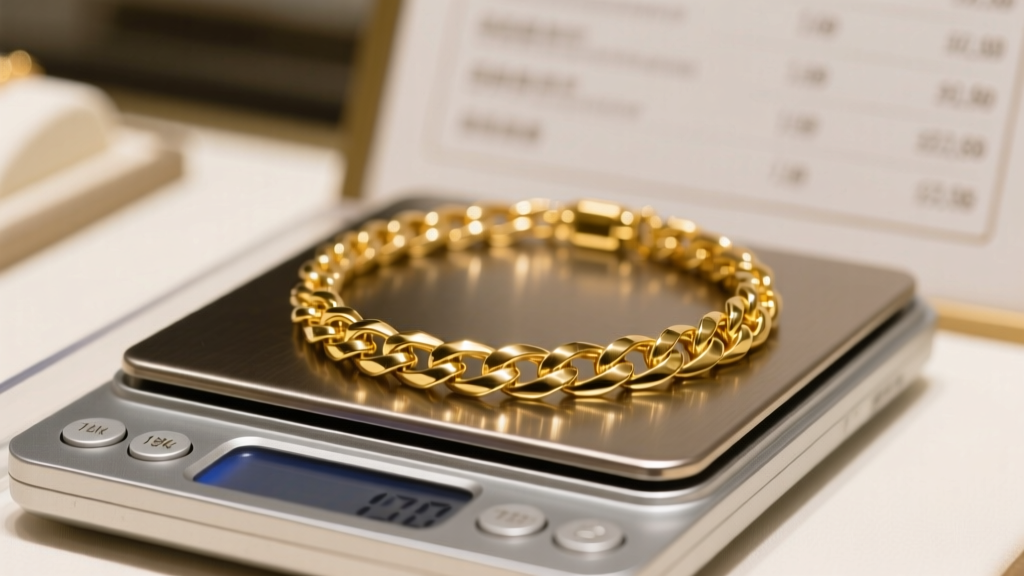
The Anatomy of Gold Necklace Pricing
When shoppers ask, "how much should a gold necklace cost," the answer is rarely a single number. It is a complex equation of raw material value, manufacturing labor, and brand positioning. In 2026, with gold spot prices experiencing historic volatility and hovering near all-time highs, understanding this equation is critical to avoiding severe retail markups. A heavy gold chain from a luxury boutique might cost fifteen times its raw material value, while the exact same weight and purity from a direct-to-consumer bullion dealer might only carry a 20% premium. To navigate the market intelligently, you must deconstruct the price tag into its core components: melt value, labor premiums, and retail multipliers.
Calculating Melt Value: The Mathematical Baseline
The absolute floor for any gold necklace's price is its "melt value"—the raw market value of the pure gold it contains. Gold is traded globally in Troy Ounces (31.1035 grams). To find the baseline price per gram of pure 24k gold, you divide the current spot price by 31.1035. However, pure 24k gold is far too soft for everyday jewelry; it will bend, warp, and lose its shape under minimal tension. Therefore, jewelers alloy it with metals like copper, silver, and zinc to create 22k, 18k, and 14k gold. According to the Gemological Institute of America (GIA), these alloy mixtures not only dictate the color (yellow, white, or rose) but fundamentally alter the tensile strength of the chain links.
| Karat | Purity % | Primary Alloy Metals | Durability Profile | Est. Melt per Gram (at $2,450/oz) |
|---|---|---|---|---|
| 24k | 99.9% | None | Poor (Bends easily) | $78.77 |
| 22k | 91.6% | Copper, Silver | Fair (Prone to scratching) | $72.15 |
| 18k | 75.0% | Copper, Zinc, Silver | Excellent (Ideal balance) | $59.08 |
| 14k | 58.3% | Copper, Nickel, Zinc | Superior (Highly durable) | $45.92 |
Labor, Craftsmanship, and Chain Styles
Once the melt value is established, the next cost driver is labor. Not all chain styles are created equal in terms of manufacturing complexity. A standard 20-gram 14k gold cable or curb chain is typically machine-stamped and assembled in bulk. The labor premium on these machine-made chains is minimal, often adding only 1.2x to 1.5x the melt value to the final price.
Conversely, intricate styles like the Miami Cuban link, Byzantine, or hand-woven Foxtail chains require immense manual labor. A genuine Miami Cuban link chain must be individually hand-soldered, filed flat, and then diamond-cut to achieve its signature interlocking flush surface. This labor-intensive process can easily push the retail price to 2.5x or even 4x the raw melt value. When evaluating how much a gold necklace should cost, you must account for the hours of bench-jeweler time required to construct the specific link pattern.
Manufacturing Methods: Solid vs. Hollow vs. Plated
A critical failure mode in the gold necklace market is the "hollow" chain. Using a process called electroforming, manufacturers can create thick-looking chains (e.g., a 12mm rope chain) that weigh only a fraction of their solid counterparts. This is achieved by plating gold over a resin or base-metal core, which is later dissolved or left inside. While these chains offer a massive look for a lower upfront price, their metallic walls are often less than 0.2mm thick.
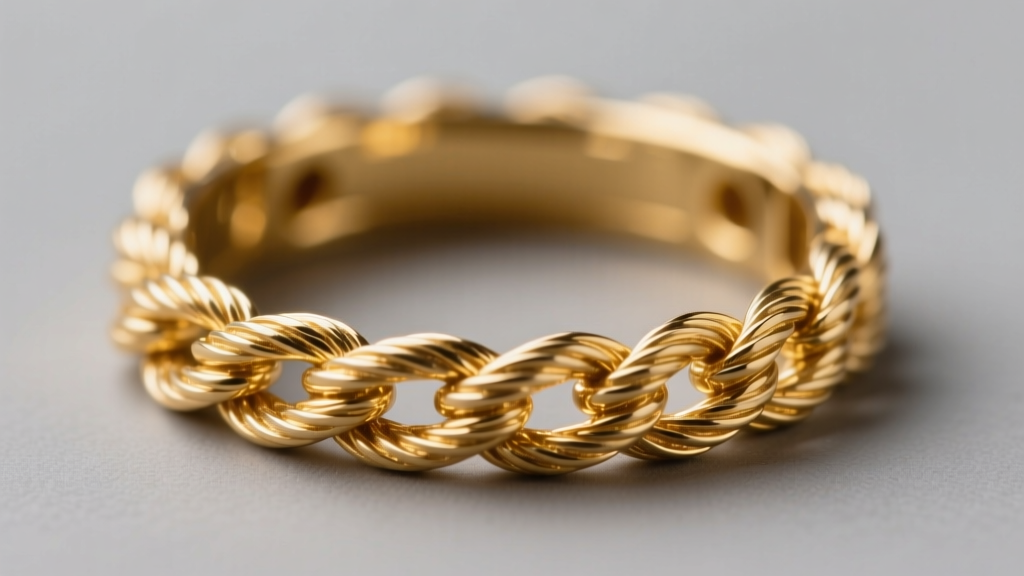
The structural failure mode of hollow chains is catastrophic. If a hollow 14k gold chain is dropped on a hard surface or caught on a sweater, it will dent or crush. Unlike solid gold, which can be soldered and polished by a jeweler to look brand new, a crushed hollow chain is virtually irreparable and loses its residual value entirely. Always ask the jeweler if a chain is "solid" or "semi-solid/hollow" before purchasing, especially for link styles thicker than 6mm.
Retail Markup Multipliers: Where You Buy Matters
The final layer of pricing is the retail markup, which varies wildly depending on the point of purchase. Tracking data from the Kitco Gold Spot Charts helps consumers understand the baseline, but the storefront dictates the premium.
- Direct-to-Consumer & Bullion Dealers: Typically charge 1.2x to 1.6x the melt value. These are the best sources for heavy, solid-gold chain necklaces where the primary value is the metal itself.
- Independent Bench Jewelers: Usually price between 1.8x and 2.5x melt. You are paying for localized customer service, custom sizing, and immediate physical inspection.
- Shopping Mall Jewelers: Often apply a 3x to 5x multiplier. High overhead costs, aggressive sales commissions, and financing plans are baked into the price tag.
- Luxury Designers (e.g., Cartier, Tiffany & Co.): Command 8x to 15x+ the melt value. Here, you are no longer paying for gold; you are purchasing brand heritage, proprietary design patents, and status signaling.
Clasp Engineering and Hidden Costs
An often-overlooked factor in necklace pricing is the clasp assembly. A cheap spring-ring clasp on a heavy 50-gram 18k gold chain is a massive liability; the internal tension spring will inevitably fail, leading to the loss of the necklace. High-quality chains factor in the cost of robust hardware.
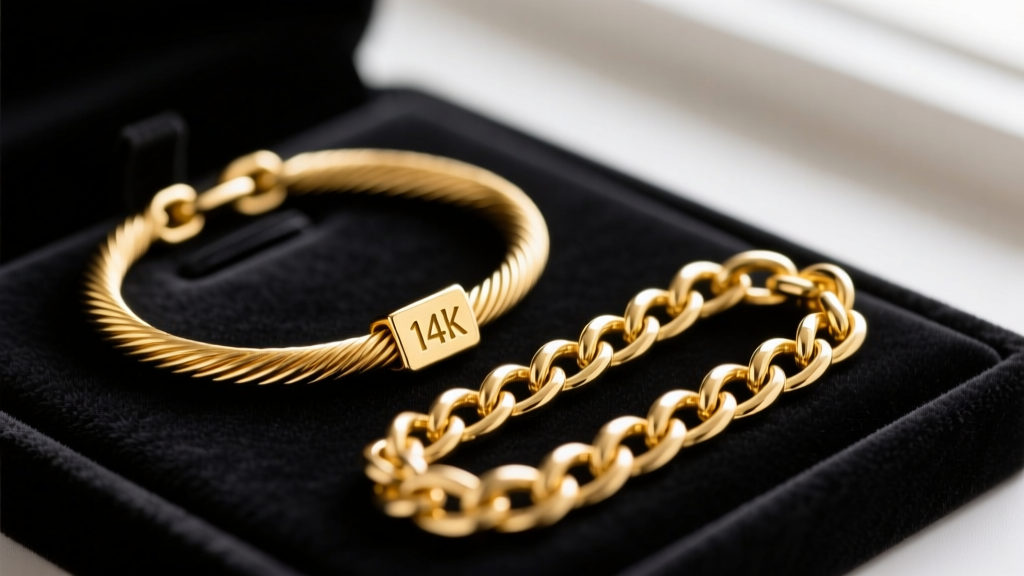
For chains exceeding 30 grams, the price should include a solid box clasp with a secondary figure-8 safety latch. This dual-security mechanism ensures that even if the primary tongue-and-groove clasp disengages, the safety wire catches the pendant or chain. Furthermore, the solder joints connecting the clasp to the end-links must be laser-welded or torch-soldered with high-karat gold solder to prevent galvanic corrosion and snapping at the stress points.
2026 Market Realities: Gold Spot Price Impacts
As noted by the World Gold Council, macroeconomic factors, central bank purchasing, and inflation hedging have kept gold prices elevated throughout the mid-2020s. Because gold is a globally traded commodity, the baseline cost of a gold necklace will naturally fluctuate month-to-month. Savvy buyers monitor the spot price and time their purchases during market dips, rather than buying blindly during localized retail holidays when premiums are artificially inflated.
Expert Checklist for Evaluating a Price Tag
Before swiping your card, run the necklace through this technical evaluation framework:
- Verify the Stamp: Look for a clear "14k", "18k", or "750" hallmark near the clasp. Ensure it is stamped into the metal, not merely laser-etched on a surface.
- Demand the Gram Weight: Reputable jewelers will weigh the piece on a digital scale in front of you. If they refuse or only sell by "the piece" without disclosing weight, walk away.
- Calculate the Melt: Multiply the gram weight by the current daily melt rate for that specific karat.
- Apply the Style Multiplier: Is it a simple machine chain (1.5x melt) or a complex hand-soldered Cuban (3x melt)? Adjust your expected price accordingly.
- Inspect the Hardware: Test the clasp mechanism. Ensure the jump rings connecting the clasp to the chain are fully soldered shut, not just pinched closed.
Expert Insight: Never pay luxury markups for basic gold chains. If you want a 20-inch, 5mm solid 18k gold rope chain, buy it from a specialized precious metals jeweler. Reserve the luxury boutique premiums for pieces that feature proprietary, patented designs or complex gemstone pavé work that justifies the extreme labor markup.


