Religious Necklace Buying Guide: Symbols, Metals & Chain Pairings
Discover how to choose the perfect religious necklace. Compare durable metals, decode sacred symbols, and find the right chain length for daily wear.

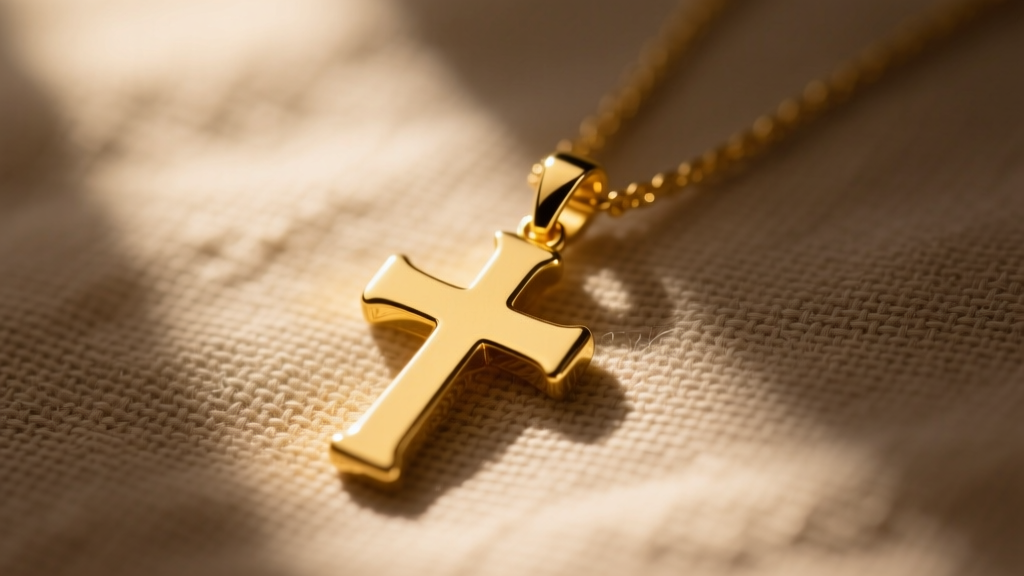
The Significance of Daily Wear: Material Durability
Unlike fashion jewelry that is removed at the end of the day, a religious necklace is often a 24/7 companion. It is worn in the shower, during sleep, and through rigorous daily activities. Because of this constant exposure to sweat, water, and friction, the metallurgical integrity of your pendant and chain is paramount. When selecting a necklace, religious artifacts and symbols demand materials that can withstand a lifetime of devotion without degrading.
As of 2026, the jewelry industry has largely moved away from hollow-core designs for daily-wear spiritual pieces, favoring solid casts and laser-welded components. According to the Gemological Institute of America (GIA), understanding the alloy composition of your precious metals is the first step in ensuring longevity.
Comparing Metals for 24/7 Spiritual Wear
| Metal | Purity Standard | Tensile Strength | Tarnish Resistance | Best For |
|---|---|---|---|---|
| 14k Yellow/White Gold | 58.5% Gold | High | Excellent | Everyday crosses, crucifixes, and medallions |
| 18k Yellow Gold | 75% Gold | Medium | Excellent | Heirloom pieces, occasional wear |
| Platinum 950 | 95% Platinum | Very High | Superior | Luxury pendants, diamond-set religious symbols |
| Sterling Silver 925 | 92.5% Silver | Medium | Poor (Requires Rhodium) | Budget-friendly symbols, youth confirmations |
| Grade 23 Titanium | Ti 6Al-4V ELI | Extreme | Superior | Hypoallergenic needs, active lifestyles |
Expert Insight: If you opt for Sterling Silver (925) for a piece you never intend to take off, ensure it is heavily plated in rhodium. Unplated silver will oxidize rapidly when exposed to the sulfur compounds in human sweat and hard water. Conversely, 14k gold remains the undisputed champion for daily-wear religious pendants due to its optimal balance of gold's natural luster and the structural rigidity provided by copper and zinc alloys.
Decoding Sacred Symbols: Proportions, Weight, and Bail Mechanics
The physical geometry of a religious pendant dictates not only its visual impact but also how it interacts with its chain. A standard Latin cross typically measures 1.5 inches by 1 inch and weighs between 3 to 6 grams. In contrast, a Star of David or a Hamsa hand often features a wider, more horizontal footprint, requiring a different center of gravity to hang flush against the sternum.
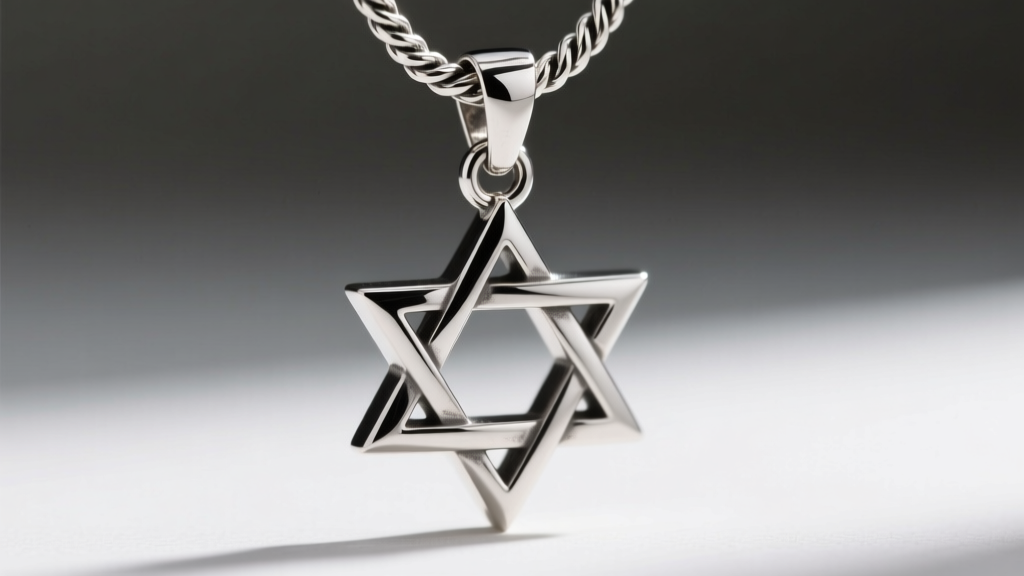
The Bail-to-Pendant Ratio
The most common failure point in any spiritual necklace is the bail—the loop that connects the pendant to the chain. The Federal Trade Commission's Jewelry Guides emphasize the importance of structural integrity in jewelry findings, yet many consumers overlook the bail entirely.
- Under 3 Grams: A standard hidden bail or soldered loop with an inner diameter of 2mm is sufficient. Pair with a 0.8mm to 1.0mm cable or box chain.
- 3 to 8 Grams: Requires a reinforced, laser-welded bail with an inner diameter of at least 3.5mm. This accommodates a 1.2mm to 1.5mm chain, preventing the friction wear that eventually saws through thin metal loops.
- Over 10 Grams: Heavy crucifixes or solid platinum medallions demand an oversized, articulated bail (often 5mm+ inner diameter) to allow the pendant to swing freely without torquing the chain links.
Never force a thick chain through a small bail. The constant metal-on-metal friction, combined with the weight of the pendant, will act like a saw, eventually severing the bail and resulting in the loss of your sacred symbol.
Chain Selection: Matching Tensile Strength to the Vibe
The chain is the unsung hero of your religious necklace. It must be strong enough to bear the weight of the pendant, yet refined enough not to distract from the symbol itself. Furthermore, because religious chains are often worn under shirts, they must resist kinking and tangling.
Top Chain Links for Daily Devotion
1. The Box Chain (1.2mm - 1.5mm): Composed of square links, the box chain is incredibly popular for crosses and crucifixes. It lays flat and reflects light beautifully. However, if a box chain is bent sharply, the hinges can snap. Always buy solid box chains, never hollow ones, for pendants over 4 grams.
2. The Rope Chain (1.5mm - 2.5mm): Featuring twisted, interlocking links, the rope chain offers exceptional tensile strength and is highly resistant to kinking. Its textured surface naturally hides the accumulation of skin oils and lotions, making it a highly practical choice for 24/7 wearers.
3. The Cable Chain (0.8mm - 1.2mm): The classic oval link. While elegant and traditional, standard cable chains have a single weak point per link (the soldered seam). For heavy religious medallions, opt for 'diamond-cut' or 'twisted' cable chains that have been laser-welded for added security.
Sizing and Neckline Pairing for Modesty and Style
Choosing the correct length for your religious necklace depends on where you want the symbol to rest, both for personal comfort and outward expression. The placement of a cross, chai, or evil eye amulet carries different cultural and stylistic weights depending on its drop length.
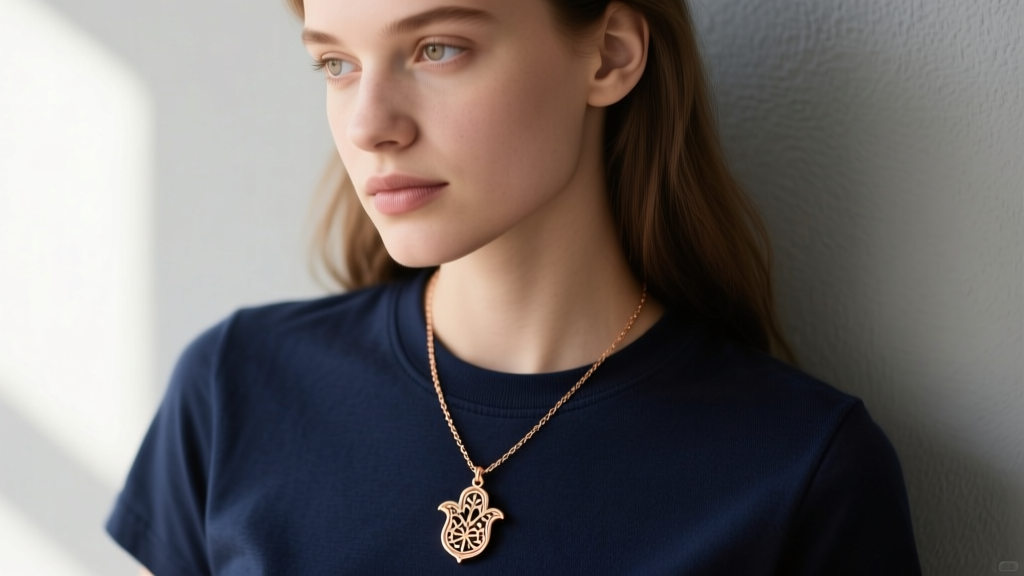
The Length Guide
- 16 Inches (The Collarbone): Sits high on the neck. Best for delicate, minimalist symbols like a tiny gold Hamsa or a subtle evil eye bead. Often worn by women with open necklines or off-the-shoulder tops.
- 18 Inches (The Base of the Throat): The universal standard. An 18-inch chain allows a medium-sized cross or Star of David to rest perfectly on the upper chest, visible with most unbuttoned collars but easily tucked under a t-shirt for modesty or professional settings.
- 20 to 22 Inches (The Shirt Line): Falls just below the collarbone, resting on the fabric of a standard crewneck t-shirt. This is the preferred length for men wearing medium-to-large crucifixes or dog-tag style religious medals.
- 24 to 30 Inches (The Sternum): Traditional for oversized, heavy rosary-style crosses, large orthodox crucifixes, or prominent medallions. This length allows the piece to swing freely and makes a bold, unmistakable statement of faith over any garment.
Ethical Sourcing and Authenticity Hallmarks
Because religious jewelry is deeply tied to personal values, the ethical sourcing of the metals is increasingly important to modern buyers. When investing in a high-quality piece, always inspect the clasp and the pendant bail for proper hallmarks.
Look for stamps such as '14K', '18K', 'PT950', or '925'. In the United States, the FTC mandates that any piece stamped with a purity mark must also bear the registered trademark or hallmark of the manufacturer, ensuring accountability. If a piece lacks a maker's mark alongside its purity stamp, its authenticity and ethical sourcing cannot be verified.
For those seeking conflict-free assurance, ask your jeweler for documentation regarding the Kimberley Process (for diamond-accented religious pendants) or inquire if the gold is SCS Recycled Certified. Ultimately, a religious necklace is a physical manifestation of your inner beliefs; ensuring it is crafted with integrity, durability, and respect for the symbol it bears will allow it to serve as a faithful companion for decades to come.


